Artwork
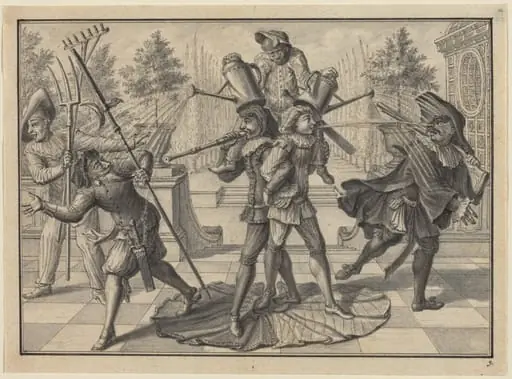
Scaramouche Distracts Pantalon
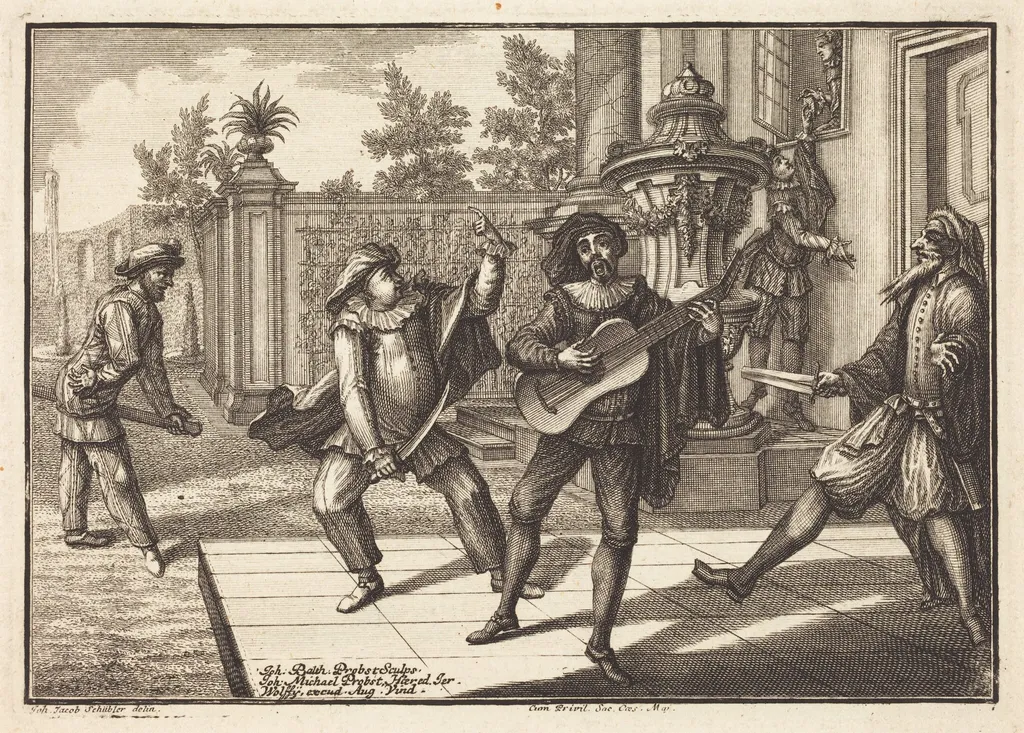
Scaramouche Distracts Pantalon is an ink print by the Baroque artist Johann Balthasar Probst. It dates from 1729 and is held in the collection of the National Gallery of Art.
About this work
Overview
The background includes architectural elements and a potted tree, suggesting an outdoor stage setting common in commedia dell'arte performances.
Created in 1729 by Johann Balthasar Probst, this black-and-white print depicts a theatrical moment using etching and engraving on laid paper. Five figures populate a compact scene, engaged in dynamic interaction. The composition captures a moment of diversion, with movement and gesture central to its narrative. The background includes architectural elements and a potted tree, suggesting an outdoor stage setting common in commedia dell'arte performances.
Subject & Meaning
The scene references stock characters from Italian commedia dell'arte, particularly Scaramouche, a mischievous trickster, and Pantalone, a greedy old man. Scaramouche’s actions appear to divert Pantalone’s attention, likely as part of a comedic scheme. The guitarist, dancer, and onlookers reinforce the theatrical context. The work reflects the popularity of these characters in 18th-century European entertainment, translating stage farce into a visual anecdote.
Technique & Style
Probst employed fine, incised lines typical of etching and engraving to convey motion and texture. The sharp contours define the figures' postures and clothing folds, while varying line density creates contrast and depth. The background is rendered with lighter, sparser marks, directing focus to the central figures. The absence of tone or shading emphasizes linear clarity, characteristic of printmaking practices of the period.
History & Provenance
The print was produced in 1729, during a period when theatrical imagery was widely circulated in print form across Europe. Probst, active in southern Germany, specialized in genre and theatrical subjects. While specific early ownership records are unverified, similar prints from this era were often sold as standalone images or collected in albums by art enthusiasts interested in popular culture.
Context
In early 18th-century Europe, commedia dell'arte troupes toured major cities, influencing visual arts and print culture. Artists like Probst translated live performances into accessible images for domestic consumption. This print aligns with a broader trend of documenting theatrical life, reflecting public fascination with masked characters and improvised comedy as both entertainment and social commentary.
Legacy
Probst’s print contributes to a documented visual archive of commedia dell'arte, preserving the physicality and humor of its characters beyond the stage. Though not widely known today, such works informed later illustrators and satirists. The print remains a tangible record of how popular theater was absorbed into print media, bridging performance and visual culture in the Enlightenment era.
Artist & collection


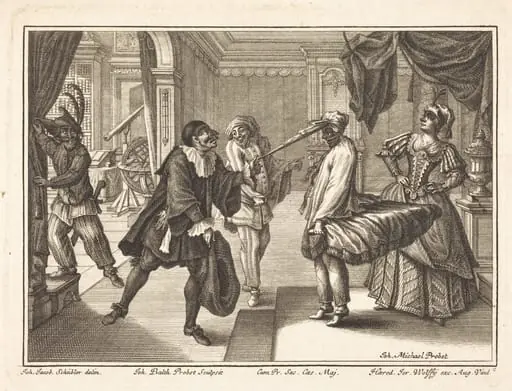
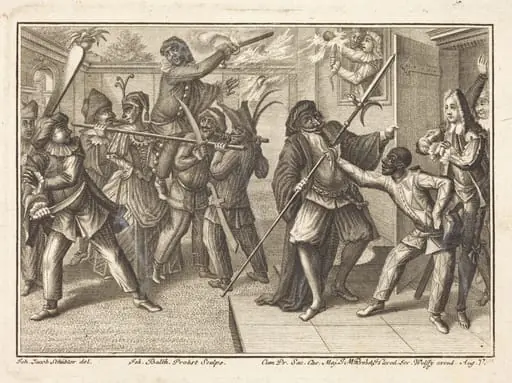
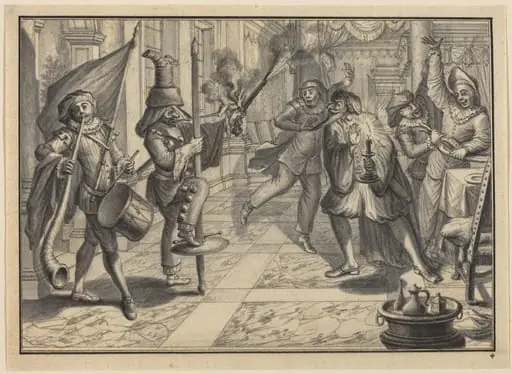 Mezzetin and Harlequin, Disguised as the Captain, Disrupt Pantaloon's Dinner
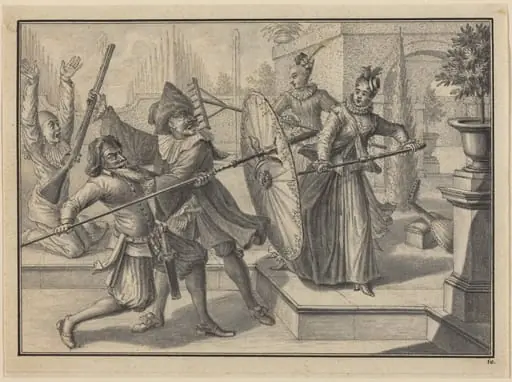 Pantaloon and the Doctor Fighting with Columbine and Brigatella in the Garden
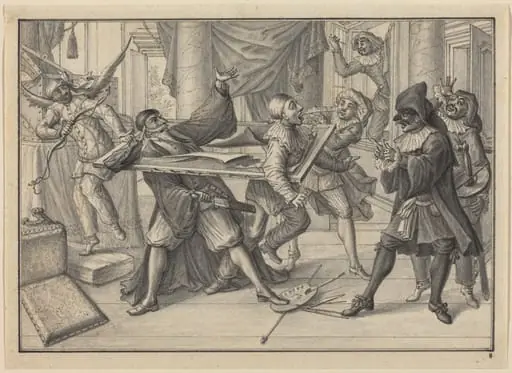 Mezzetin and Harlequin Use the Picture Frame to Catch Pantaloon and Pierrot
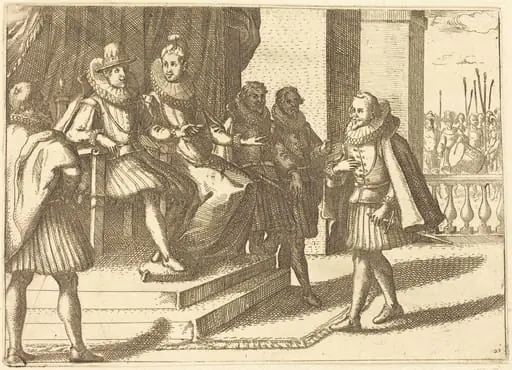 King and Queen in Consultation about the Turks
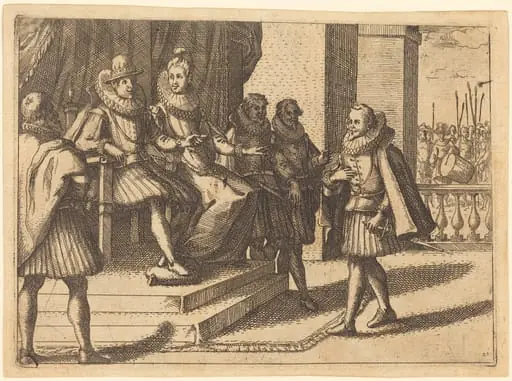 King and Queen in Consultation about the Turks
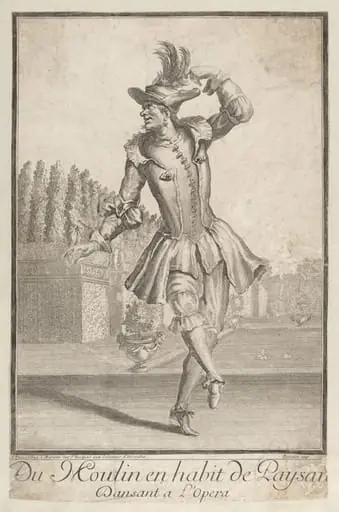 H Beard Print Collection
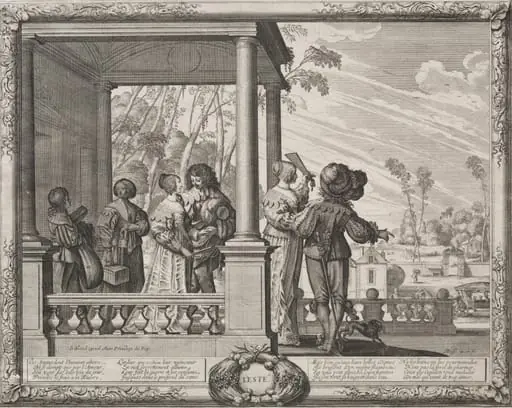 The Four Seasons: Summer
![King and Queen in Consultation about the Turks [recto], by Jacques Callot](https://artifactworldgallery.com/img/jacques-callot--king-and-queen-in-consultation-about-the-turks-recto--5b03792b86815455-w320.webp) King and Queen in Consultation about the Turks [recto]
King and Queen in Consultation about the Turks [recto]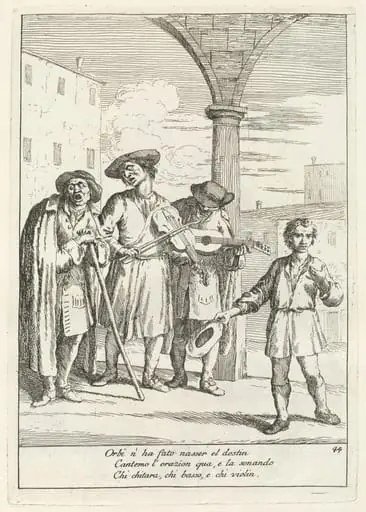 Fà ballar i Cani (Street Entertainer)
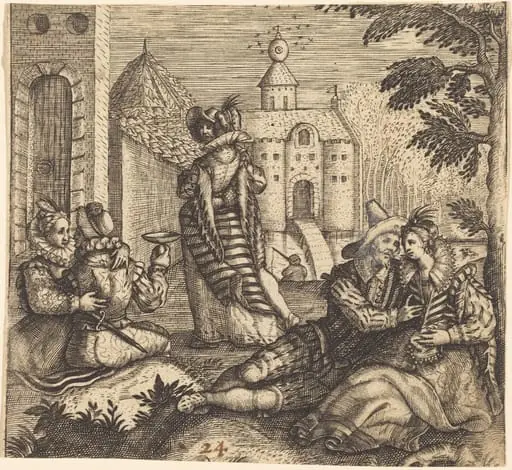 Exempel und Lehr Jetziger Welt Lauf
 Harlequin and Scaramouche Create a "Fountain"