Artwork
Harlequin and Scaramouche Create a "Fountain"
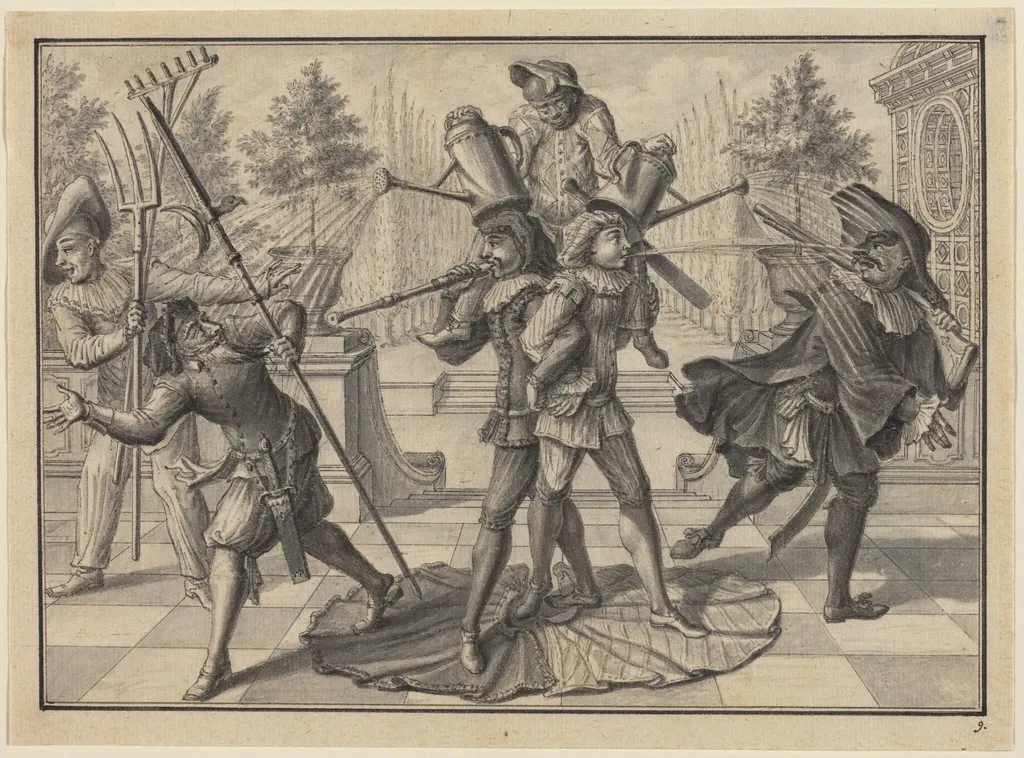
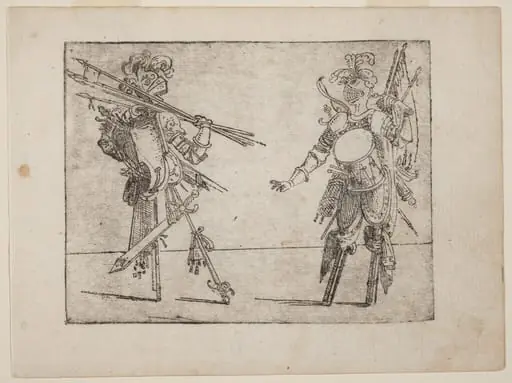
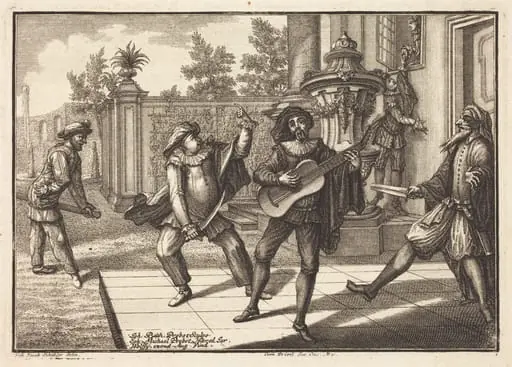
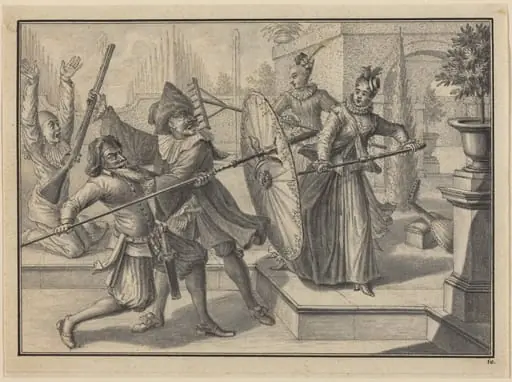
Harlequin and Scaramouche Create a "Fountain" is an ink drawing by the Baroque artist Johann Jacob Schübler. It dates from 1729 and is held in the collection of the National Gallery of Art.
About this work
Overview
Created in 1729 by Johann Jacob Schübler, this drawing depicts two commedia dell’arte figures constructing a whimsical fountain. Executed in pen and black ink with gray wash on laid paper, the work was scored for transfer, suggesting it was intended as a design for reproduction, possibly in print or decorative arts.
Subject & Meaning
Harlequin and Scaramouche, traditional comic characters from Italian theater, are shown engaged in an absurd act of creation—building a fountain from theatrical props. The scene blends satire and fantasy, mocking the pretensions of grandeur while celebrating the improvisational spirit of performance culture in early 18th-century Europe.
Technique & Style
The drawing employs precise pen lines and subtle gray washes to suggest volume and shadow, with careful scoring along contours to facilitate transfer onto another surface. The composition is lively and compact, emphasizing gesture and interaction over spatial depth, characteristic of preparatory designs for decorative motifs.
History & Provenance
The work originates from Schübler’s circle of designers active in southern Germany, likely produced for use in textile, porcelain, or architectural ornamentation. Its survival as a standalone sheet indicates it was valued beyond its original functional purpose, though its early ownership remains undocumented.
Context
In the early 1700s, commedia dell’arte figures were popular motifs in decorative arts across Europe, symbolizing wit and theatricality. Schübler’s drawing reflects a broader trend of translating stage performance into visual design, particularly in regions where courtly and bourgeois patrons favored playful, exotic imagery.
Legacy
Though Schübler is not widely known today, this drawing exemplifies the quiet influence of minor artists in disseminating popular imagery through transfer techniques. It stands as a modest but clear record of how theatrical archetypes permeated everyday visual culture in the Baroque era.
Artist & collection


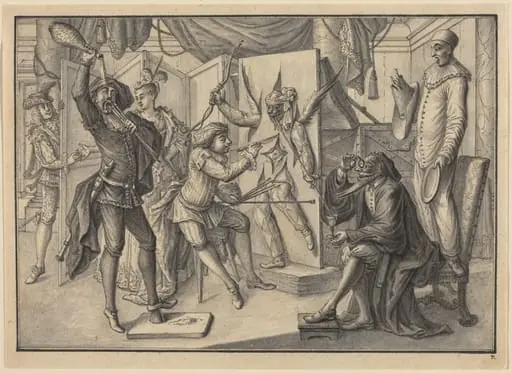 Mezzetin "Paints" a Portrait of Cupid by Cutting the Canvas to Reveal Harlequin
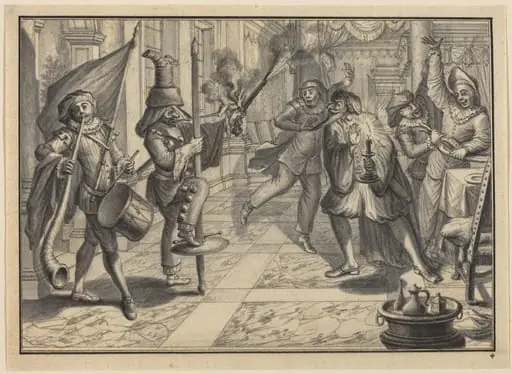 Mezzetin and Harlequin, Disguised as the Captain, Disrupt Pantaloon's Dinner
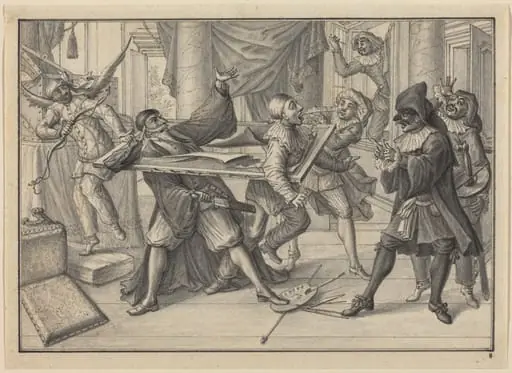 Mezzetin and Harlequin Use the Picture Frame to Catch Pantaloon and Pierrot
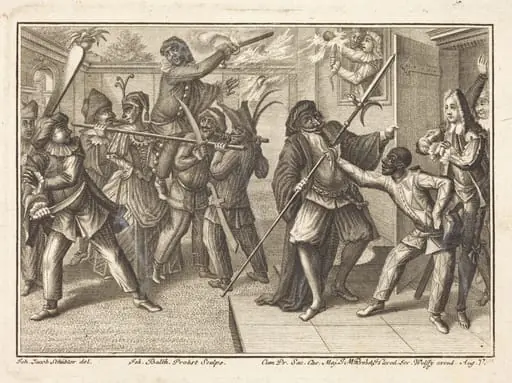
 Pantaloon and the Doctor Fighting with Columbine and Brigatella in the Garden