Artwork
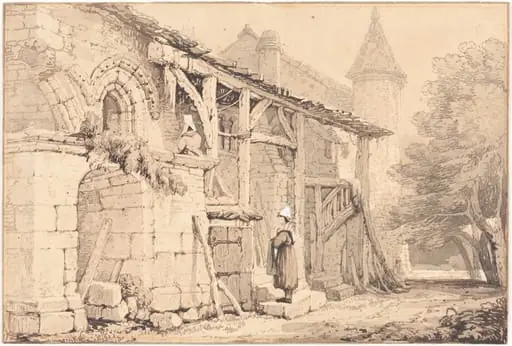
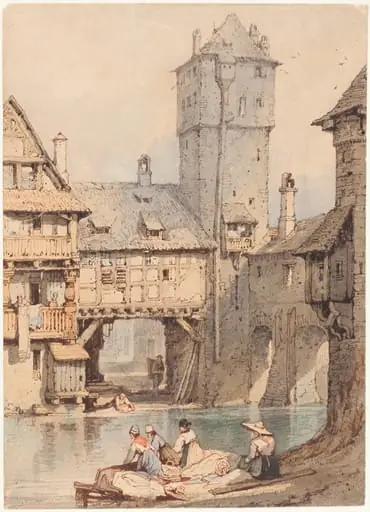
French Street Scene with a Medieval Turret
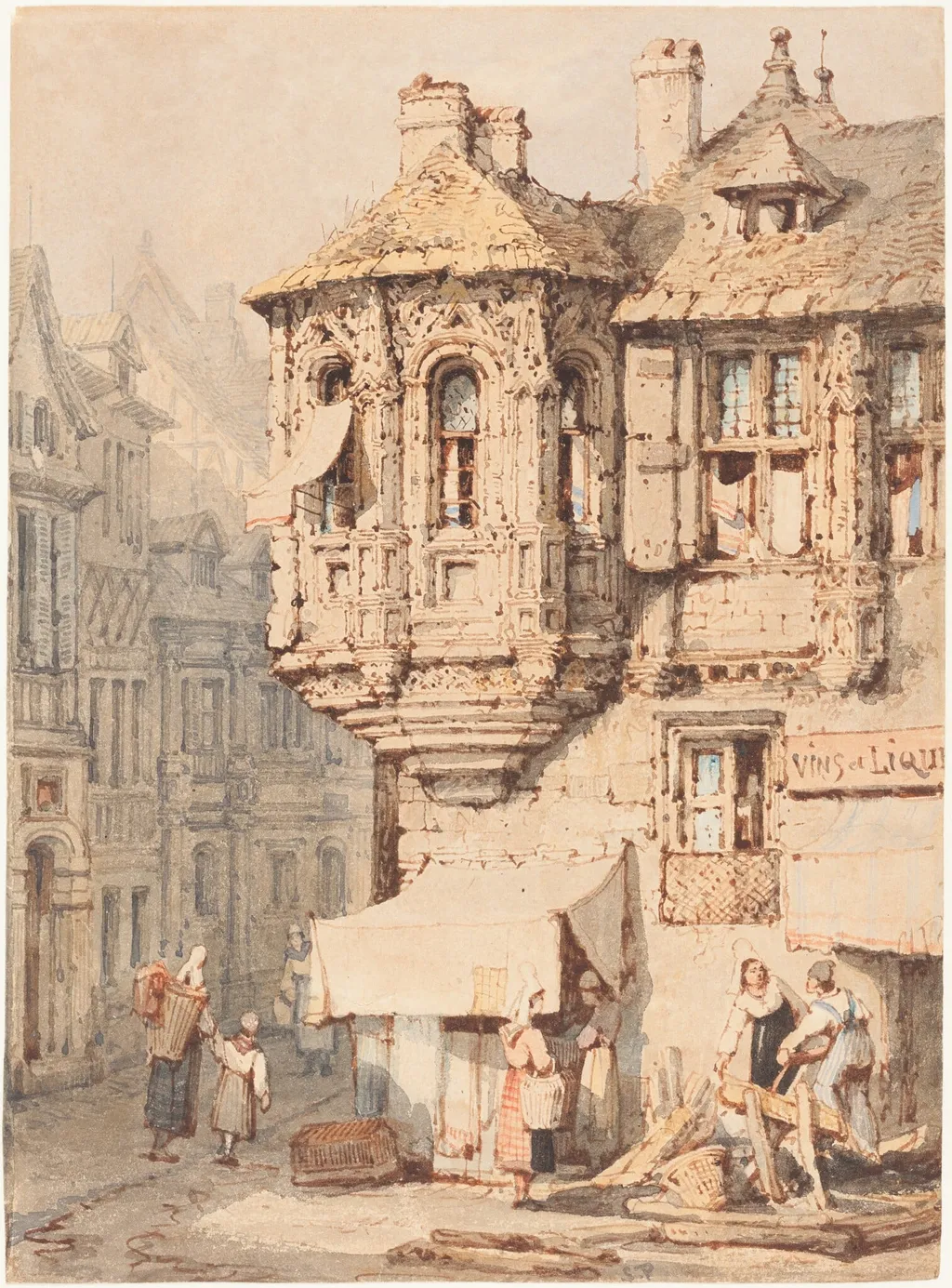
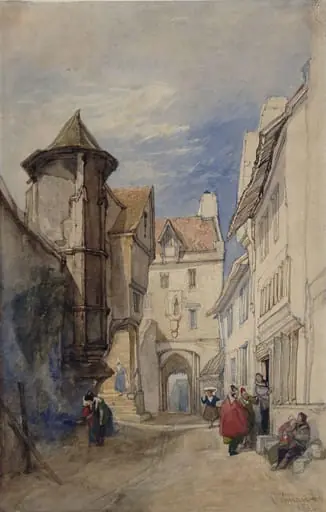
French Street Scene with a Medieval Turret is a watercolor drawing by the Romanticist artist Samuel Prout. It dates from 1818 and is held in the collection of the National Gallery of Art. Created in 1818, this watercolor on wove paper captures a quiet urban moment in a French town.
About this work
Overview
The artist, Samuel Prout, rendered the scene with delicate washes, emphasizing texture and light rather than sharp detail.
Created in 1818, this watercolor on wove paper captures a quiet urban moment in a French town. The artist, Samuel Prout, rendered the scene with delicate washes, emphasizing texture and light rather than sharp detail. The work exemplifies his dedication to documenting European architecture through intimate, observational sketches, a practice that helped define British watercolor traditions in the early 19th century.
Subject & Meaning
The composition centers on a weathered medieval turret rising above narrow, uneven streets lined with modest stone buildings. Below, figures move through daily routines—carrying goods, pausing to converse—grounding the ancient structure in contemporary life. The juxtaposition of enduring masonry and transient human activity suggests a quiet meditation on time, continuity, and the persistence of ordinary life amid historical remnants.
Technique & Style
Prout employed thin, layered watercolor washes to suggest the roughness of aged stone and the soft glow of sunlight on whitewashed walls. Fine pen lines define architectural details without overwhelming the delicate tonality. The palette is restrained—dominated by grays, ochres, and muted browns—enhancing the sense of atmospheric depth and quiet realism, characteristic of his approach to architectural subjects.
History & Provenance
Painted during Prout’s early travels in France, the work reflects his growing reputation for capturing continental urban landscapes. It was likely created as a study for larger compositions or private collection, consistent with his practice of sketching on location. The paper’s later mounting suggests it was preserved as a finished work, though its early ownership remains undocumented.
Context
In the early 1800s, British artists increasingly turned to continental Europe for subject matter, drawn by its medieval ruins and unidealized streetscapes. Prout’s focus on vernacular architecture aligned with Romanticism’s interest in history and atmosphere over classical perfection. His work stood apart from grand historical painting, offering instead a quiet, human-scaled view of the past embedded in the present.
Legacy
Prout’s attention to architectural detail and atmospheric nuance influenced later generations of watercolorists and topographical artists. His ability to convey the character of aging urban environments helped legitimize architectural sketching as a serious artistic pursuit. Though not widely celebrated today, his approach laid groundwork for the documentary value of watercolor in recording cultural landscapes.
Artist & collection
Artist
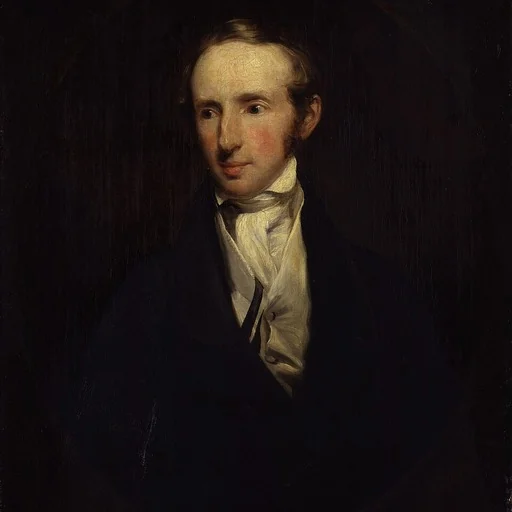
Samuel Prout (; 17 September 1783 – 10 February 1852) was a British watercolourist, and one of the masters of watercolour architectural painting, who largely invented the genre of the grand steet scene in British…