Artwork
L'Abbaye St. Amand, Rouen
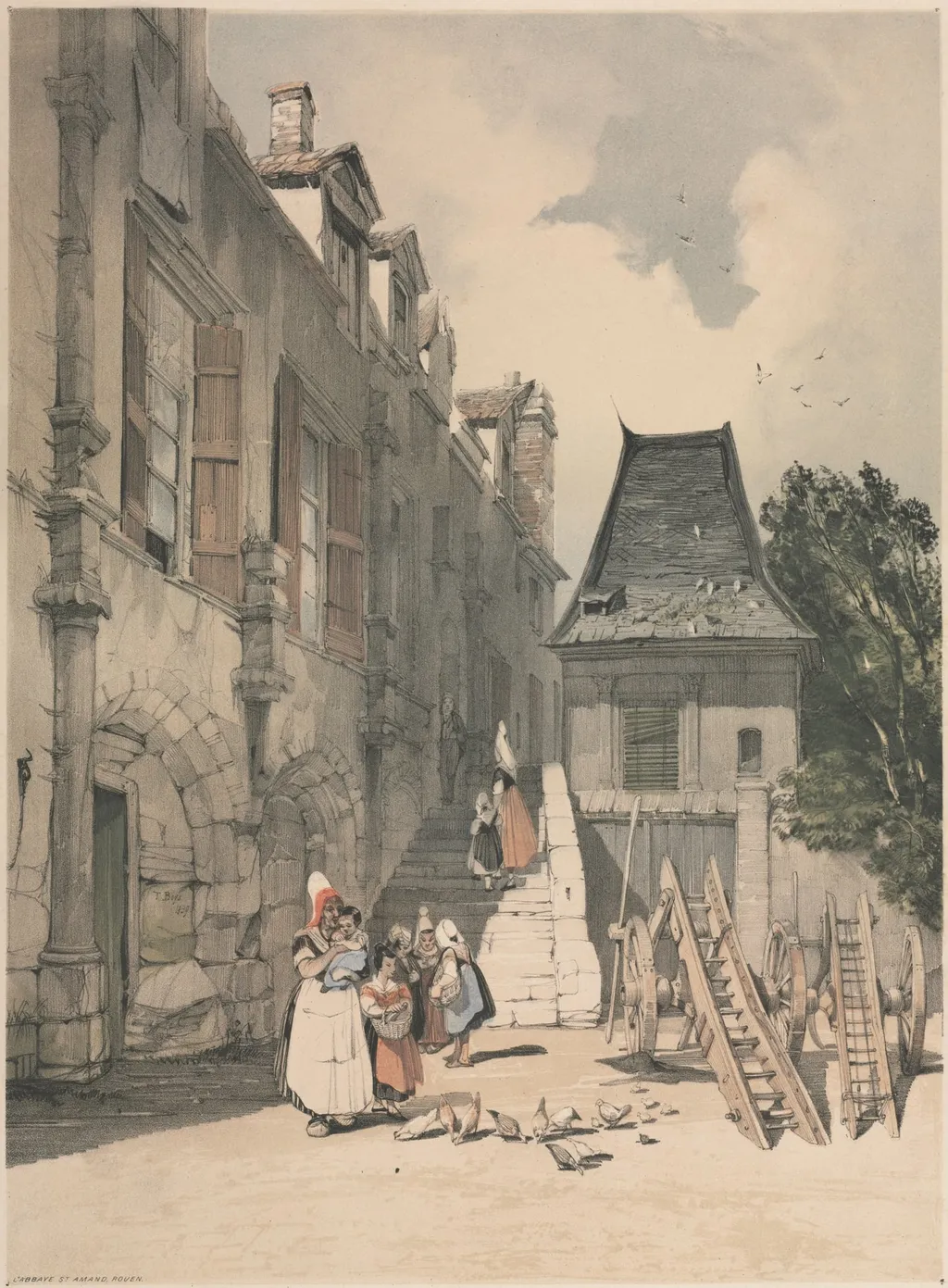
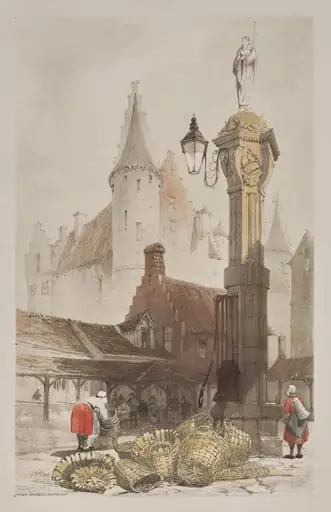
L'Abbaye St. Amand, Rouen is a print by the Romanticist artist Thomas Shotter Boys. It dates from 1839 and is held in the collection of the Cleveland Museum of Art.
About this work
Overview
Rendered in delicate washes, it reflects Boys’s interest in documenting European townscapes with precision and atmospheric sensitivity.
Thomas Shotter Boys, an English artist known for architectural subjects, produced this watercolor print in 1839 depicting the ruins of Saint-Amand Abbey in Rouen. The work captures a quiet urban moment, emphasizing the interplay between decay and daily life. Rendered in delicate washes, it reflects Boys’s interest in documenting European townscapes with precision and atmospheric sensitivity. The piece is part of the Cleveland Museum of Art’s collection.
Subject & Meaning
The scene portrays a narrow street beside the remnants of a medieval abbey, where everyday activities unfold amid architectural ruin. Women in traditional dress gather near a crumbling wall, while laborers work on a nearby structure. Pigeons scatter beneath them, and distant figures ascend stairs, suggesting continuity of life despite decay. The image conveys no grand narrative, but rather a contemplative observation of time’s quiet passage through ordinary routines.
Technique & Style
Boys employed watercolor with restrained tonality to render the stone facades, wooden beams, and soft sky. Fine linework defines architectural details, while translucent layers suggest weathered surfaces and shifting light. The composition avoids dramatic contrast, favoring subtle gradations that enhance the scene’s stillness. His method aligns with topographical precision, yet the gentle handling of atmosphere lends it a lyrical, observational quality.
History & Provenance
Created during Boys’s travels in France, the print emerged from his broader project of recording European architecture. The abbey, partially dismantled after the French Revolution, served as a subject of historical interest to 19th-century artists. The work entered the Cleveland Museum of Art’s collection through documented acquisition, preserving its place in the archive of British topographical art from the period.
Context
In the 1830s, European artists increasingly turned to ruins and vernacular architecture as subjects, reflecting Romantic-era interest in history and transience. Boys’s work aligns with this trend, though his approach remains restrained compared to more emotive contemporaries. His focus on unidealized urban scenes offered an alternative to grand historical painting, emphasizing the dignity of the everyday and the quiet endurance of built environments.
Legacy
Boys’s prints, including this one, contributed to the documentation of European architecture during a period of rapid change. While not widely celebrated in his lifetime, his precise, unembellished style influenced later topographical artists and urban recorders. Today, works like *L'Abbaye St. Amand, Rouen* serve as visual archives, preserving the appearance of places altered by time and modernization.
Artist & collection
Artist
Thomas Shotter Boys (1803–1874) was an English watercolour painter and lithographer, mostly producing cityscapes and images of buildings, although he produced some rural landscapes and marine subjects.

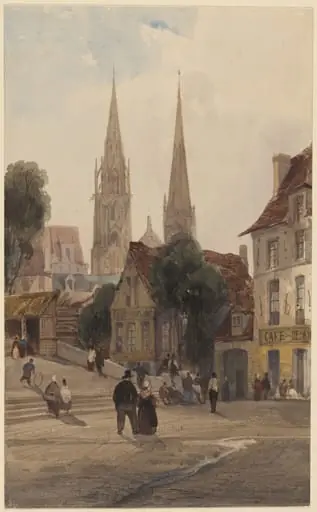
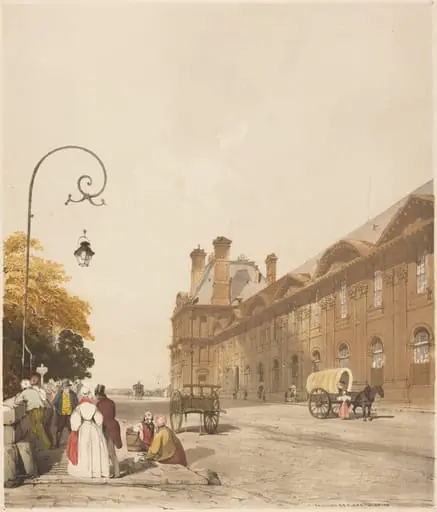
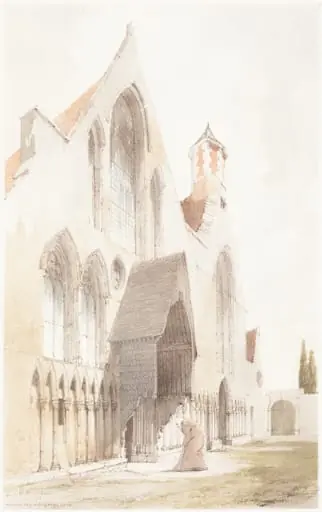
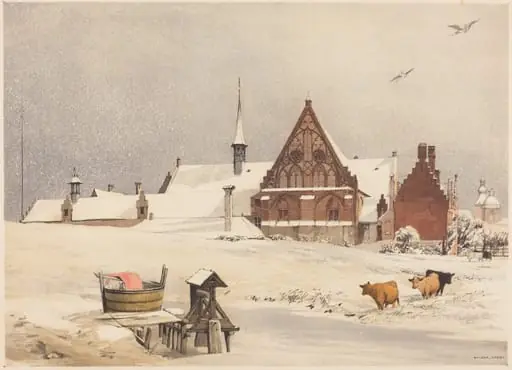
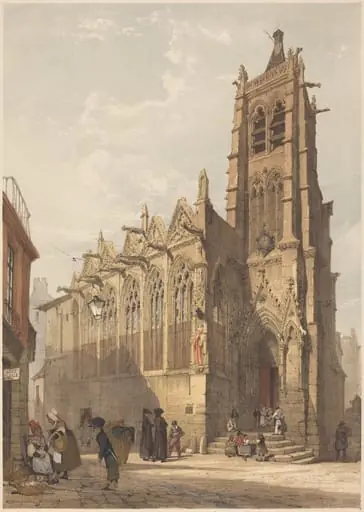
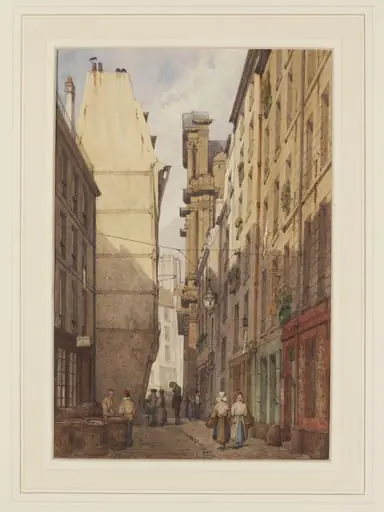 The Church of St Gervais, Paris
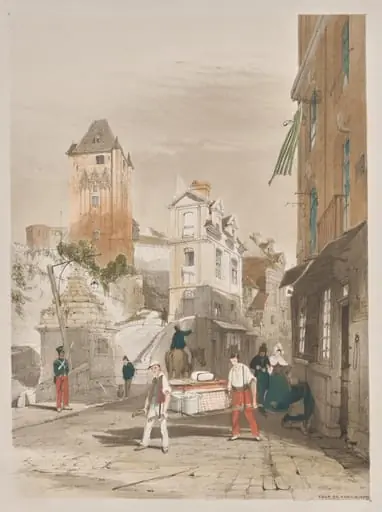 Picturesque Architecture in Paris, Ghent, Antwerp, Rouen: Tour de Remy, Dieppe, France
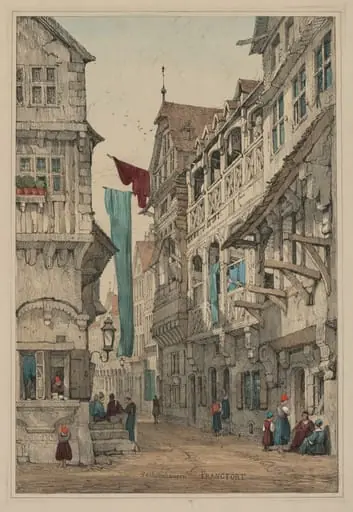 Facisimilies of Sketches made in Flanders and Germany: Sachsenhausen Francfort
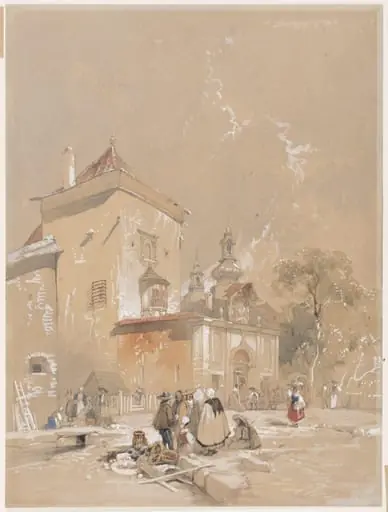 Gateway and buildings in Spain
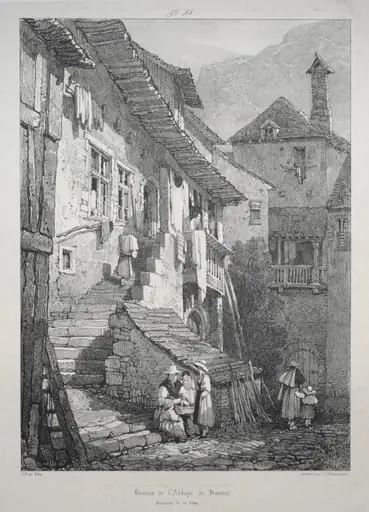 Ruins of the Abbey of Baume. Interior of the Court
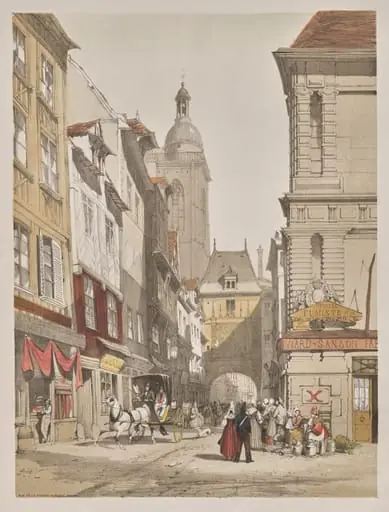 Picturesque Architecture in Paris, Ghent, Antwerp, Rouen: Rue de la Crosse Horlogue, Rouen, France
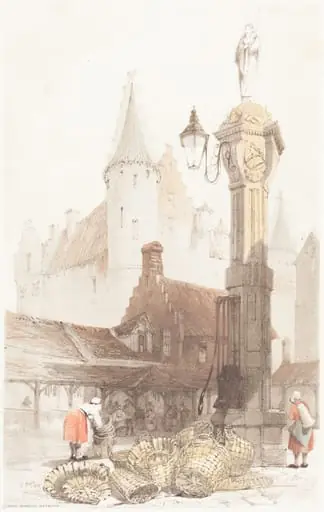 Fish Market, Antwerp
 Picturesque Architecture in Paris, Ghent, Antwerp, Rouen: Fish Market, Antwerp, Belgium