Artwork
The Farmhouse
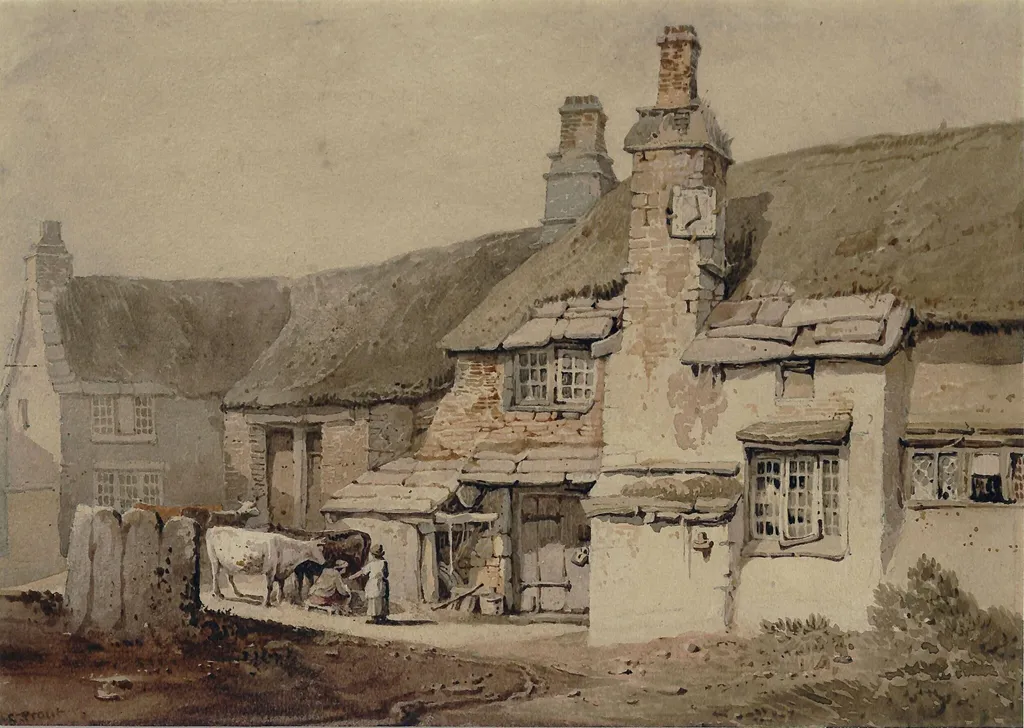
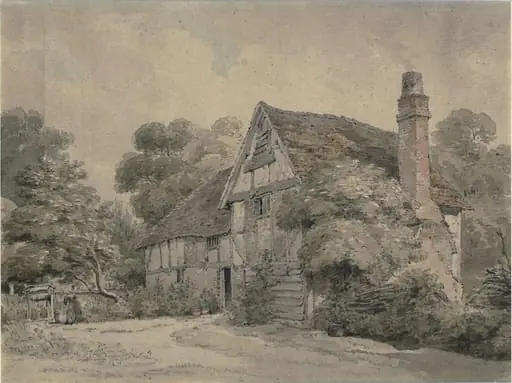
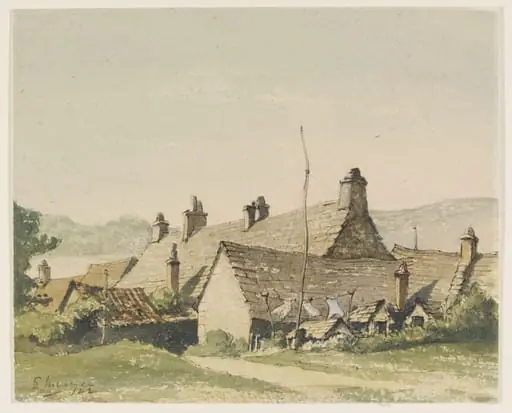
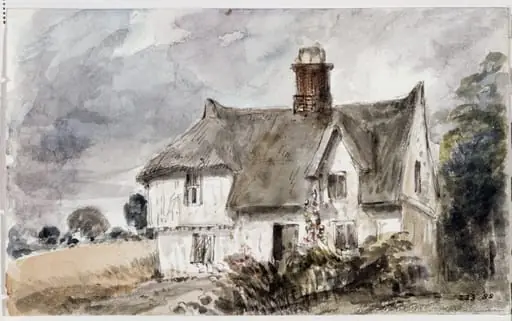
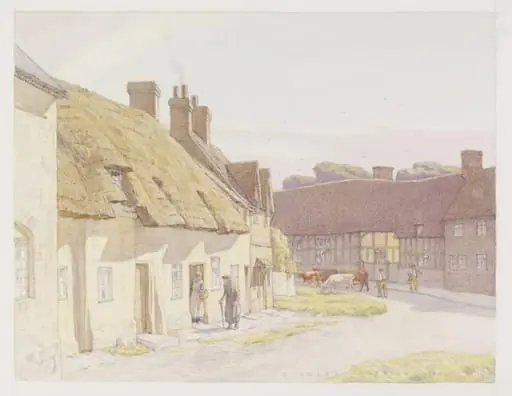
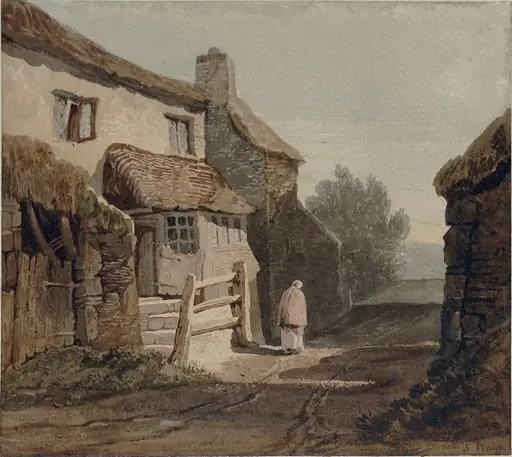
The Farmhouse is a watercolor work on paper by the Romanticist artist Samuel Prout. It dates from 1800 and is held in the collection of the Victoria and Albert Museum.
About this work
Overview
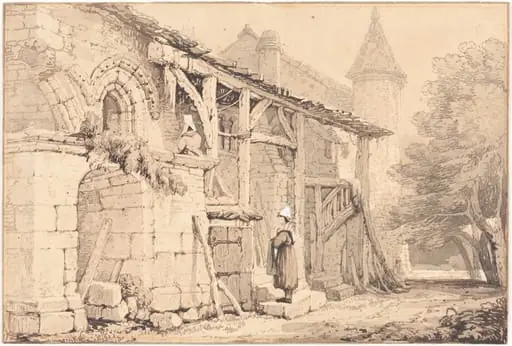
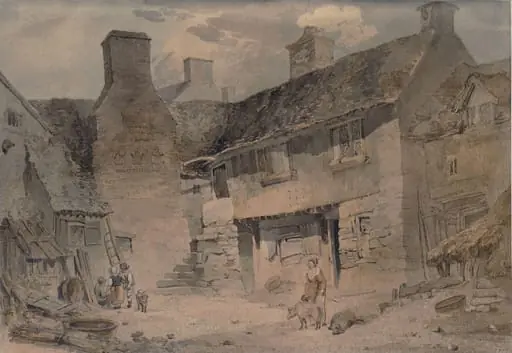
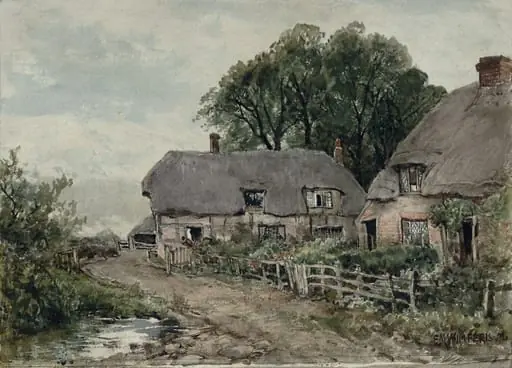
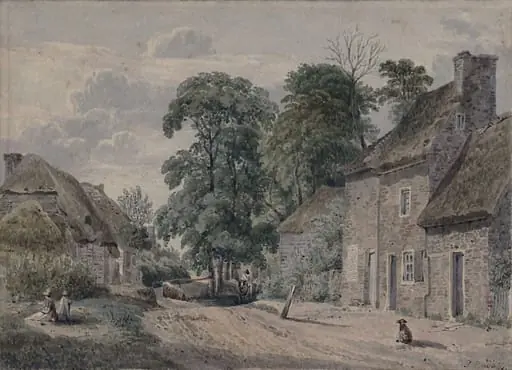
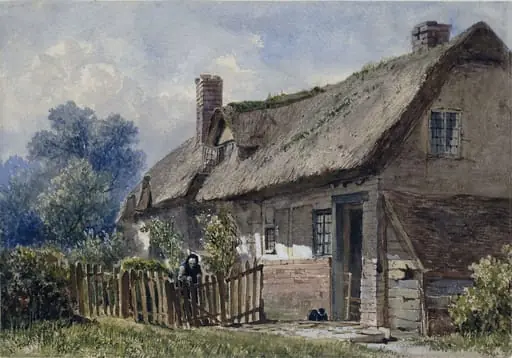
Painted in 1800, this watercolour by Samuel Prout captures a modest rural dwelling nestled among trees and a cultivated garden.
Painted in 1800, this watercolour by Samuel Prout captures a modest rural dwelling nestled among trees and a cultivated garden. The work is signed and dated, affirming its origin in the early phase of Prout’s career. Executed in a medium known for its transparency and unpredictability, the piece reflects a deliberate control over washes and subtle tonal shifts, suggesting a quiet reverence for everyday landscapes.
Subject & Meaning
The subject is an unadorned farmhouse, its simplicity emphasized by the surrounding vegetation and enclosed garden. There is no human presence, and the scene avoids dramatic lighting or narrative tension. The composition invites contemplation rather than spectacle, aligning with early 19th-century interests in the dignity of ordinary rural life and the quiet beauty of domestic architecture.
Technique & Style
Prout employed watercolour with precision, layering thin washes to suggest texture in the thatched roof, stone walls, and foliage. The delicate handling of edges and muted palette—soft greens, earthy browns, and pale greys—demonstrates an understanding of the medium’s limitations and strengths. Fine linework defines architectural details without overpowering the atmospheric light, a hallmark of his emerging style.
History & Provenance
The painting is one of Prout’s early works, created before his later fame for architectural studies in continental Europe. Its survival in relatively intact condition suggests it was likely kept in private hands, possibly by a collector or patron familiar with his emerging reputation. No public exhibition history is documented for this specific piece, but it aligns with his known practice of sketching rural English scenes during this period.
Context
In 1800, watercolour was gaining recognition as a serious medium for landscape study in Britain, moving beyond mere sketching. Prout’s work reflects this shift, participating in a broader cultural interest in topographical accuracy and the picturesque. His focus on vernacular architecture preceded the Romantic movement’s idealization of the countryside, offering a grounded, observational alternative to more dramatic interpretations.
Legacy
Though not among Prout’s most celebrated works, this painting exemplifies the foundation of his artistic development. His early watercolours like this one helped establish his reputation for meticulous rendering of buildings within natural settings. Later, his influence extended to architectural illustration and the revival of watercolour as a respected medium in British art.
Own this work as a print
Artist & collection
Artist
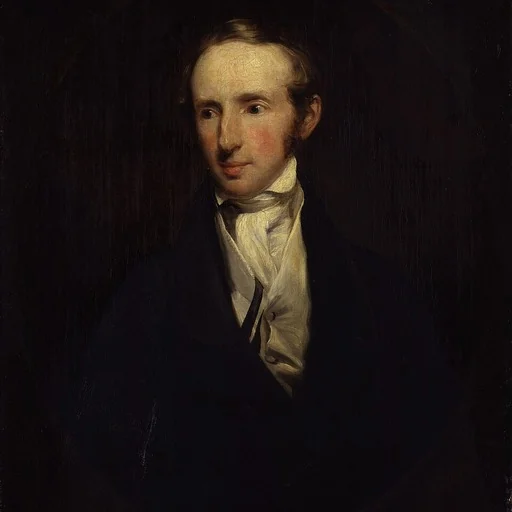
Samuel Prout (; 17 September 1783 – 10 February 1852) was a British watercolourist, and one of the masters of watercolour architectural painting, who largely invented the genre of the grand steet scene in British…