Artwork
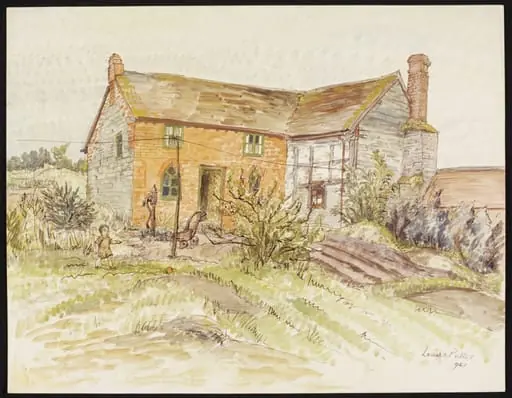
House, Wigmore
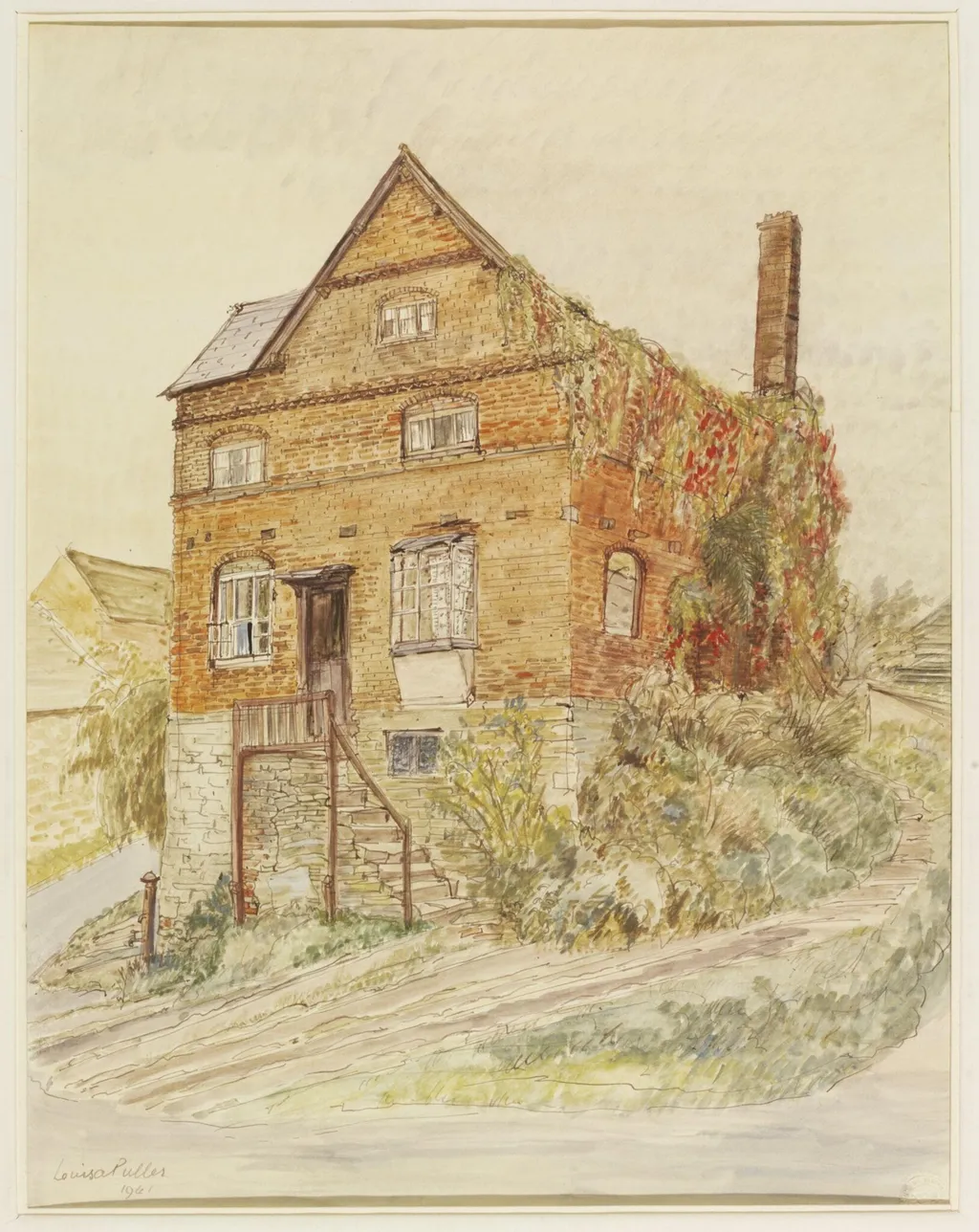
House, Wigmore is a watercolor work on paper by the Social Realist artist Puller. It is held in the collection of the Victoria and Albert Museum.
About this work
Overview
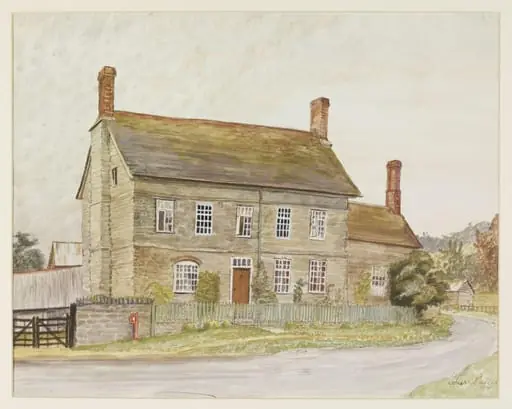
House, Wigmore is a 1941 watercolour painting depicting a three-storey red brick house on a sloping site in the village of Wigmore, characterized by a gable roof, chimney, and ornate exterior details.
Subject & Meaning
The work captures a serene, idyllic scene of a residential building amidst wartime, reflecting the broader goal of the Recording Britain project to preserve images of the British landscape during a period of turmoil and change.
Technique & Style
Executed in watercolour, the painting features a soft, dreamy quality, with a muted palette (notably a pale yellow background) and meticulous rendering of architectural and botanical details.
History & Provenance
Created under the Recording Britain project (1940-1943), directed by Sir Kenneth Clark and funded by the Pilgrim Trust, this piece is one of over 1,500 works aimed at documenting Britain's pre-war landscape.
Context
Painted in 1941, the work responds to wartime anxieties over bomb damage, potential invasion, and societal shifts, serving as a visual record of England's architectural heritage.
Artist & collection

 Hall Farm, Leinthall Earls
 Pigeon House and Post Office, Mansel Lacy
 House and Factory at Burleigh near Brimscombe
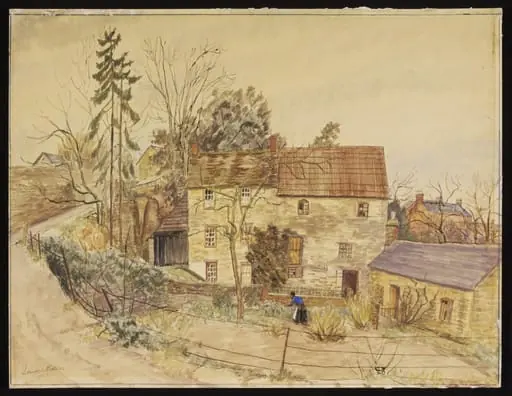 Mill and Millhouse, Malmesbury
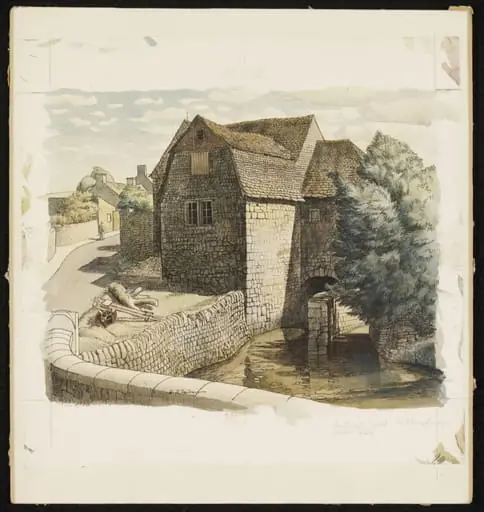 The Mill, Duddington
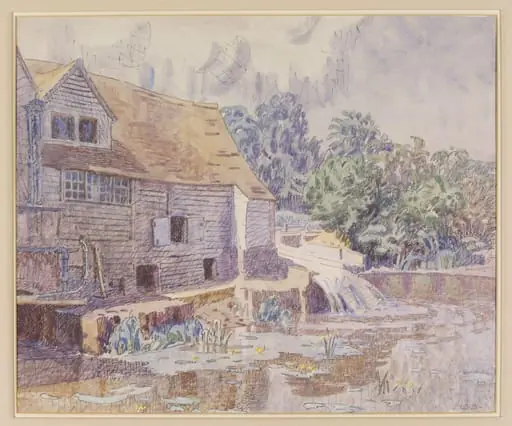 A Mill at Braintree
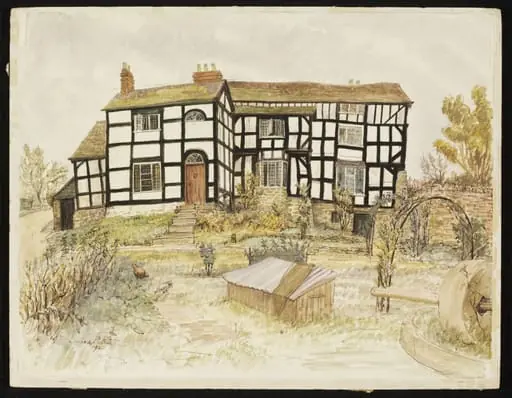 Paytoe Hall, Leintwardine
 Cottages at Norton, No.4
 Church Farm, Sudbourne
 Grange Farm, The Abbot's House, Wigmore Abbey remains