Artwork
A Handkerchief Seller
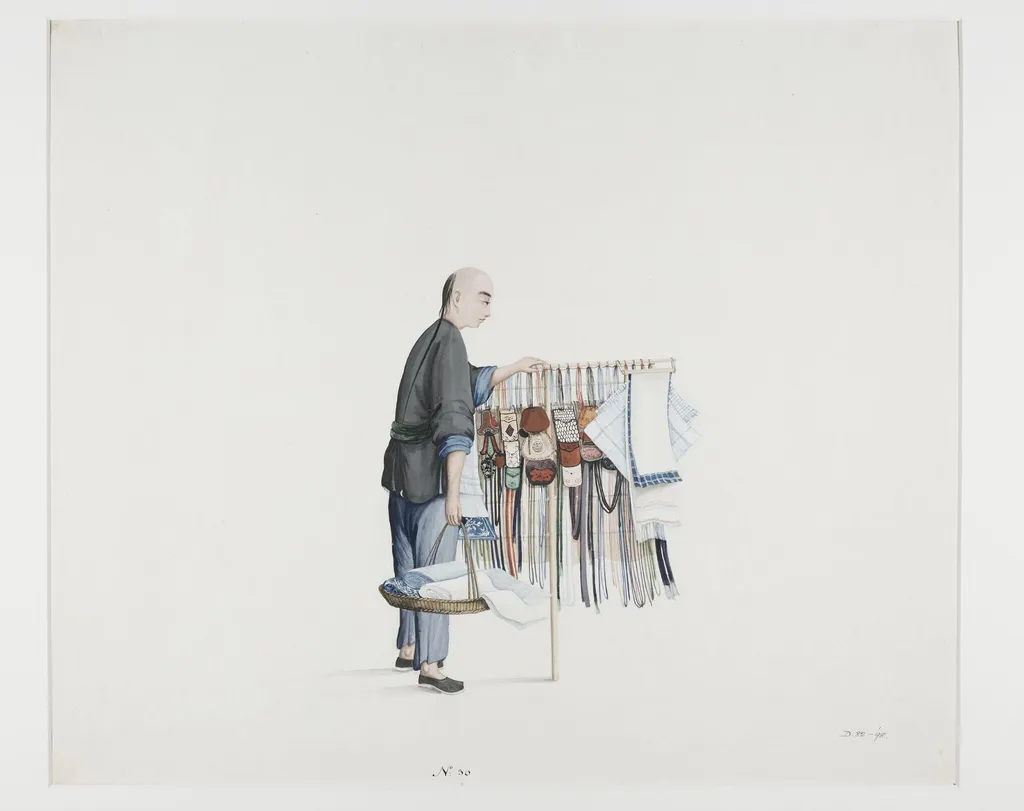
A Handkerchief Seller is a paint painting by the Patna School of Painting artist Puqua. It dates from 1790 and is held in the collection of the Victoria and Albert Museum.
About this work
Overview
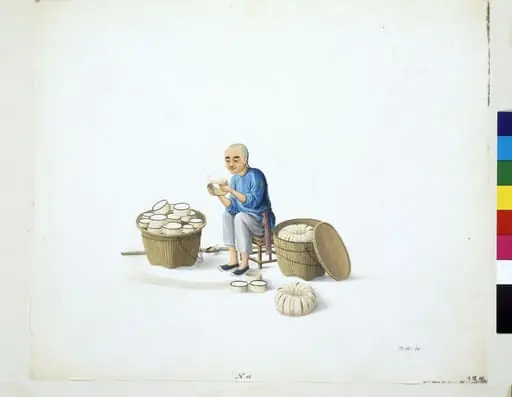
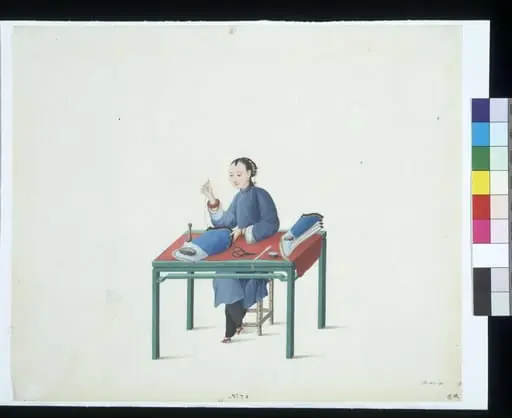
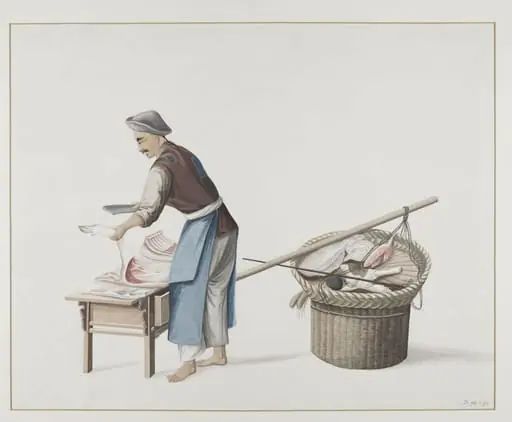
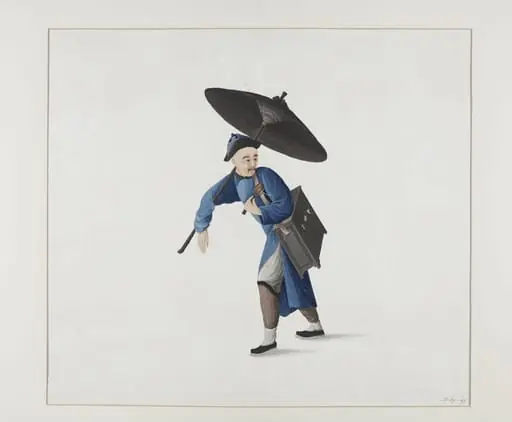
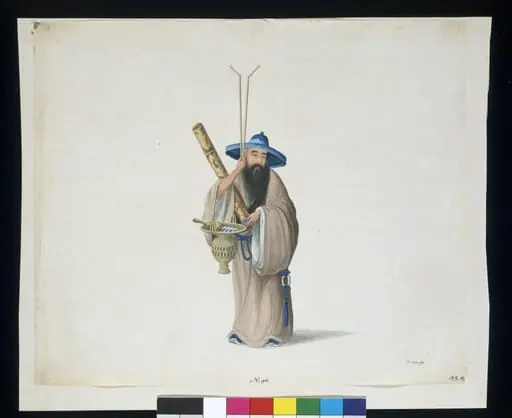
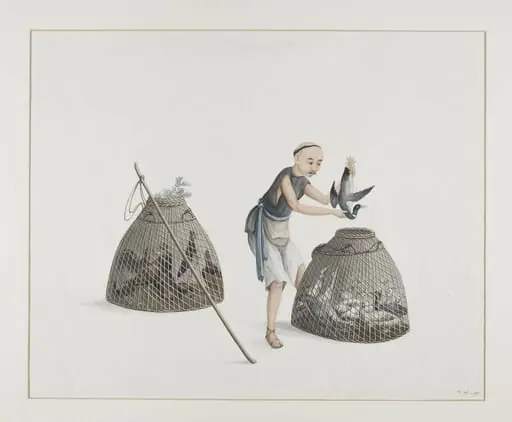
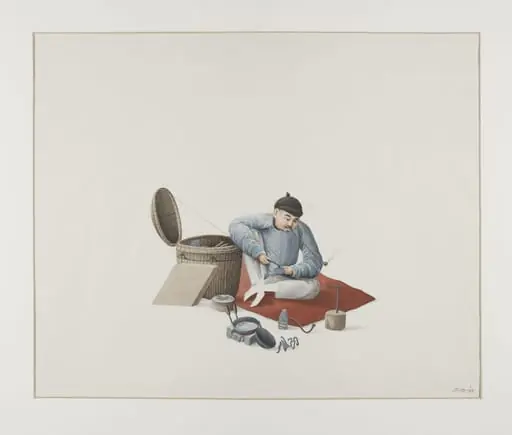
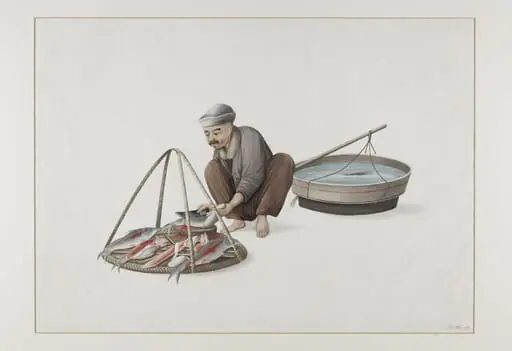
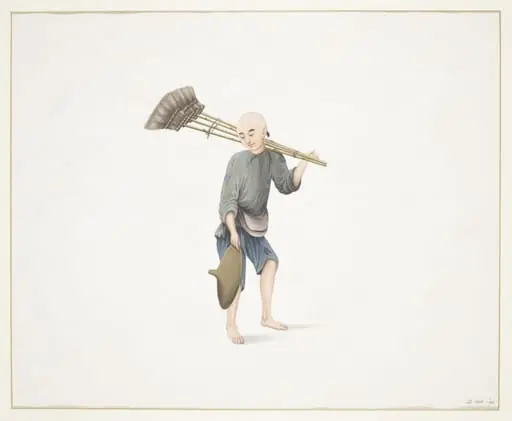
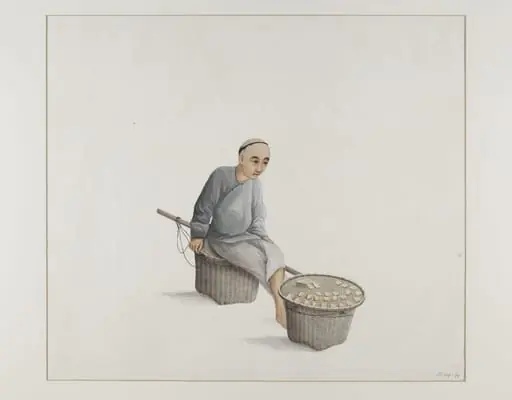
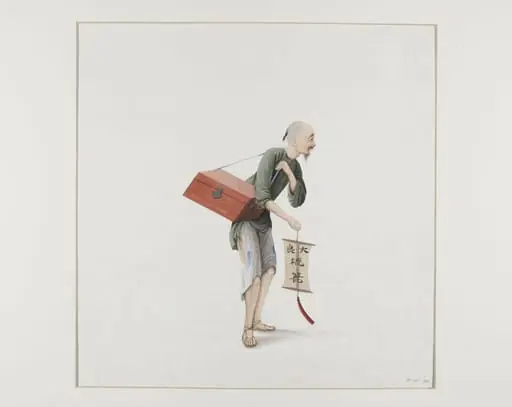
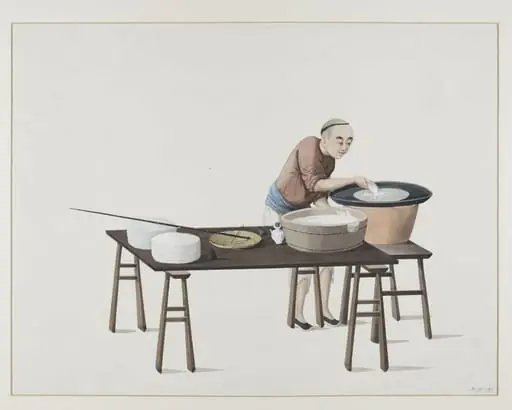
Painted in 1790, *A Handkerchief Seller* is a small-scale work by the Chinese artist Puqua, part of a series of one hundred paintings documenting everyday life.
Painted in 1790, *A Handkerchief Seller* is a small-scale work by the Chinese artist Puqua, part of a series of one hundred paintings documenting everyday life. The composition centers on a vendor holding a rack of handkerchiefs and a basket, rendered with quiet precision against a plain white background. The scene avoids theatricality, focusing instead on the quiet dignity of a common trade. The painting was acquired by the museum in 1898 through Parsons & Sons, with its provenance confirmed during a 2022 research initiative.
Subject & Meaning
The figure is a street vendor, likely from a lower urban class, engaged in the routine act of selling textiles. His calm demeanor and downward gaze suggest专注 and routine rather than emotional display. The handkerchiefs—white, blue, and red—are arranged with care, hinting at the value of small goods in daily commerce. The absence of a crowd or setting emphasizes the individual’s solitude, reflecting a quiet observation of labor rather than a narrative of hardship or romance.
Technique & Style
The painting employs fine brushwork and muted color contrasts to define form and texture. The man’s dark jacket and blue trousers are rendered with subtle tonal shifts, while the handkerchiefs are rendered in flat, unmodulated hues. The background is left entirely unadorned, directing focus to the figure and his wares. The style is detailed but restrained, aligning with observational traditions in late Qing genre painting rather than European Romanticism.
History & Provenance
The painting entered the museum’s collection in 1898, documented in the Asia Department’s accession records. Its prior ownership traces to Parsons & Sons, a known dealer of Chinese artworks in the late 19th century. A 2022 provenance review verified the acquisition chain, confirming no gaps or irregularities in its ownership history. The work’s inclusion in Puqua’s series of one hundred genre scenes suggests it was produced for a private or institutional patron interested in documenting social life.
Context
Created during the Qianlong-Jiaqing transition, the painting reflects a broader trend in Chinese art of the period: the depiction of ordinary people and trades with neutrality and precision. Unlike European Romanticism, which idealized emotion and nature, this work belongs to a Chinese tradition of social documentation, influenced by court-sponsored pictorial records and urban genre painting. Puqua’s series served as a visual archive of daily life in late imperial China.
Legacy
As one of a hundred works in Puqua’s series, *A Handkerchief Seller* contributes to a rare surviving corpus of Qing-era genre scenes focused on common laborers. While not widely exhibited, it remains a valuable reference for scholars studying economic life and visual culture in 18th-century China. Its preservation and documentation underscore the importance of systematic provenance research in understanding the movement of cultural objects across time and borders.
Own this work as a print
Artist & collection