Artwork
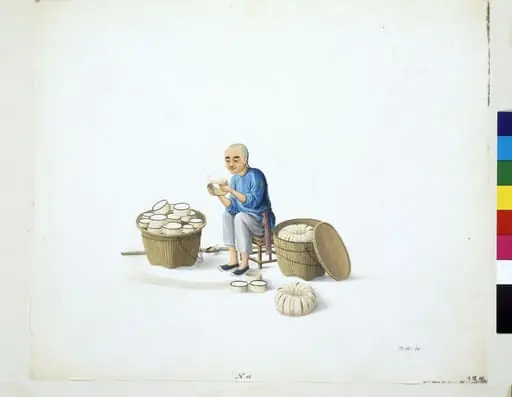
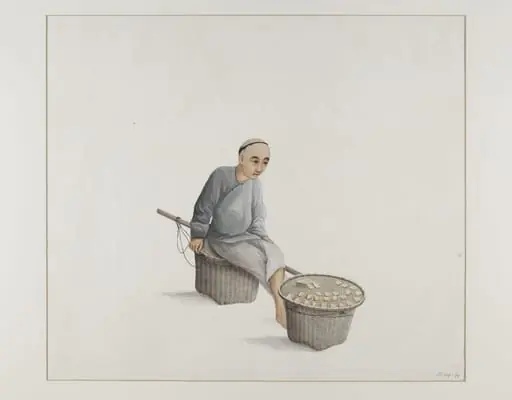
A Pancake Seller
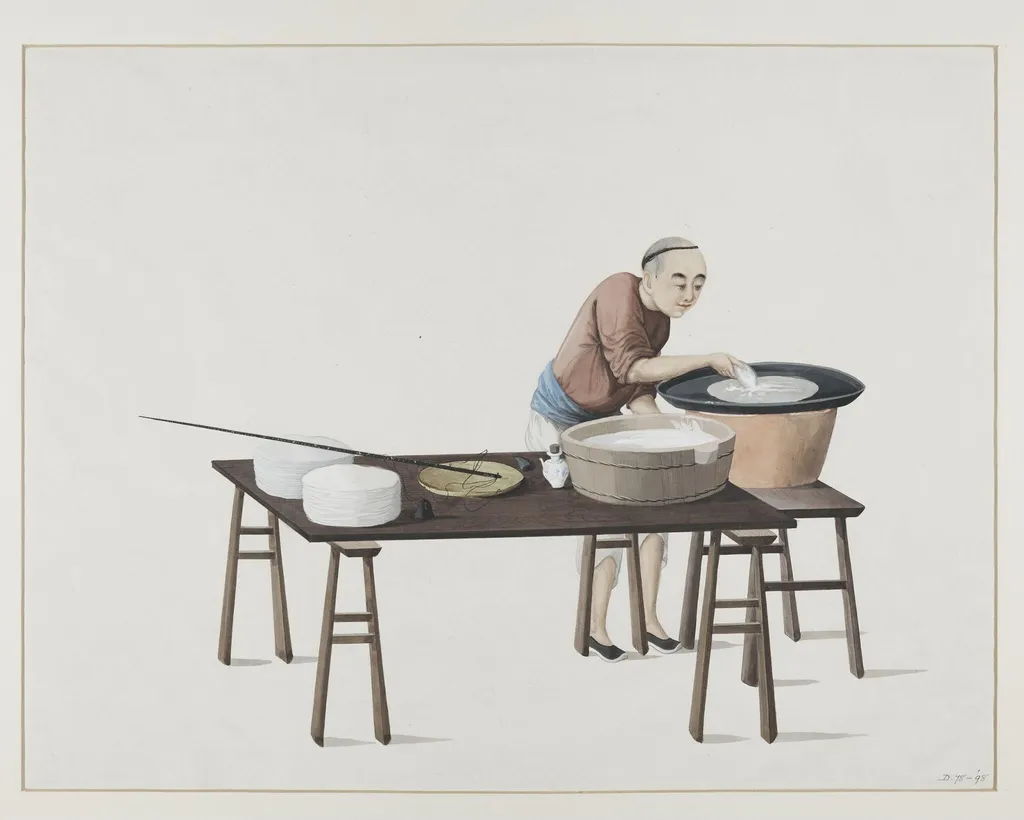
A Pancake Seller is a paint painting by the Patna School of Painting artist Puqua. It dates from 1790 and is held in the collection of the Victoria and Albert Museum.
About this work
Overview
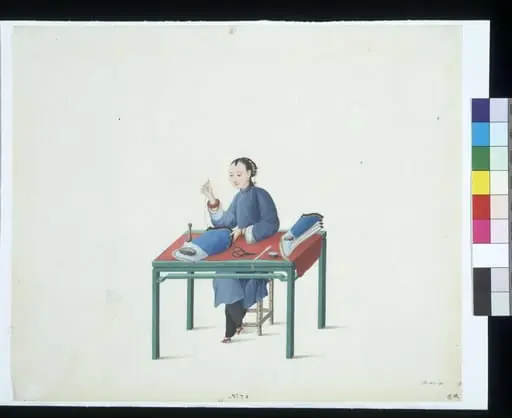
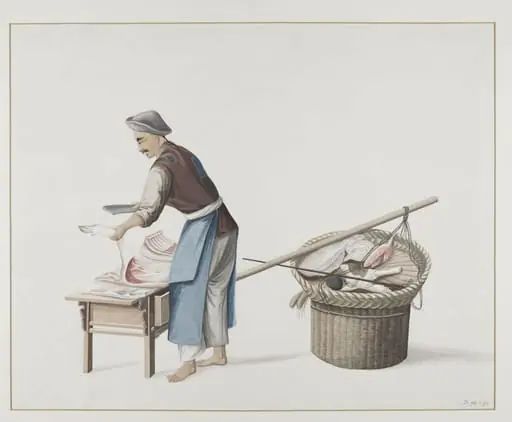
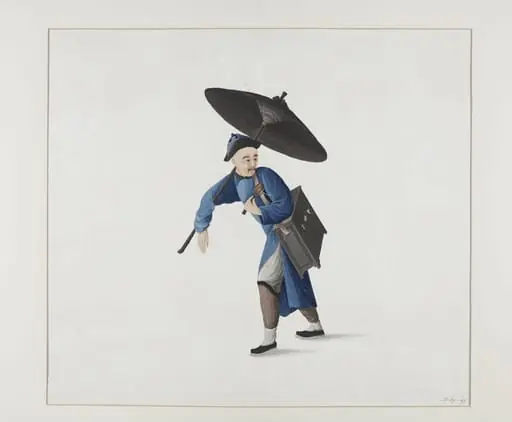
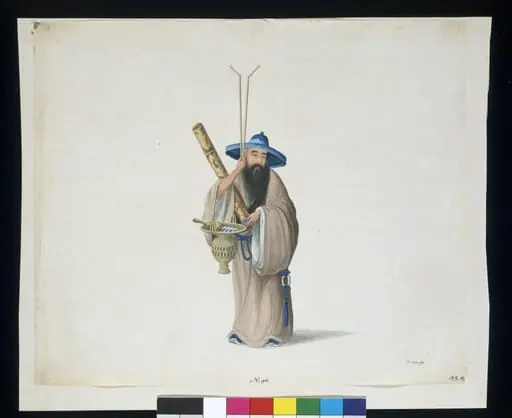
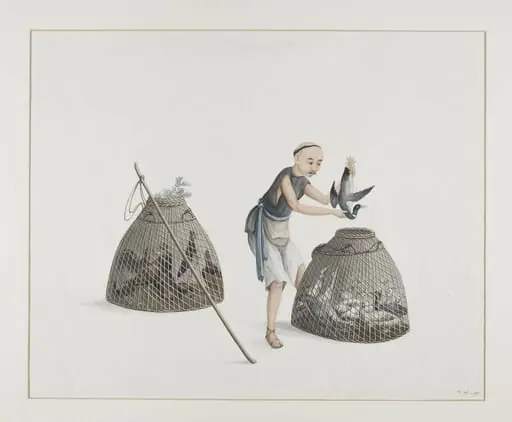
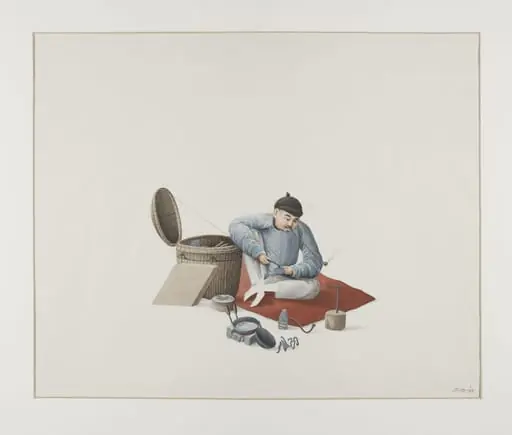
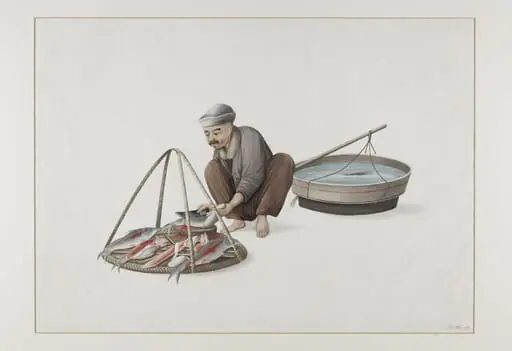
A watercolor painting from 1790, titled *A Pancake Seller*, is one of a hundred works documenting daily trades in Canton.
A watercolor painting from 1790, titled *A Pancake Seller*, is one of a hundred works documenting daily trades in Canton. Created by the artist Puqua, the piece captures a vendor at work, rendered in delicate washes of pigment on paper. Its rectangular format and intimate scale reflect its origin as part of a commercial series intended for export, offering foreign viewers a glimpse into local commerce.
Subject & Meaning
The scene centers on a figure kneeling before a low wooden table, actively mixing batter in a dark bowl while stacks of pale pancakes rest nearby. Baskets and a woven bamboo mat suggest a mobile, market-based trade. The figure’s focused motion and the arrangement of tools imply efficiency and routine, portraying labor not as spectacle but as an ordinary, essential part of urban life in late 18th-century southern China.
Technique & Style
Puqua employs translucent watercolor to model form with subtle gradations of light. The pancakes, rendered in pale washes, appear to glow against the deep tones of the bowl and shadowed wood. Delicate brushwork defines fabric folds and grain in the table, while the absence of fine detail in the background keeps attention on the vendor’s actions. The composition balances simplicity with quiet dynamism, emphasizing movement over narrative.
History & Provenance
The painting entered the museum’s collection in 1898, acquired from Parsons & Sons. Its inclusion in the Asia Department registers was confirmed during a 2022 provenance review, which traced its journey from Canton to Britain. No earlier ownership records are known, but its style and subject align with a known genre of export art produced for European and American markets during the Qing dynasty.
Context
This work belongs to a series commissioned to depict Canton’s occupational diversity, likely for foreign collectors curious about Chinese daily life. Such images were produced in response to growing trade and cultural exchange, blending local artistic conventions with Western expectations of realism. While not formal portraiture, these scenes functioned as visual ethnography, preserving details of labor often overlooked in official records.
Legacy
As one of the few surviving examples from Puqua’s series, the painting contributes to the understanding of 18th-century Chinese export art. It offers insight into how local artisans adapted their practice to external demand, preserving cultural specificity while meeting commercial expectations. Today, it remains a quiet testament to the visibility of everyday work in a globalizing world.
Artist & collection