Artwork
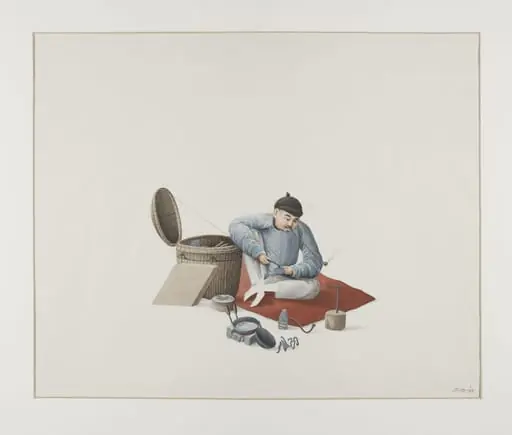
A Shoe Mender
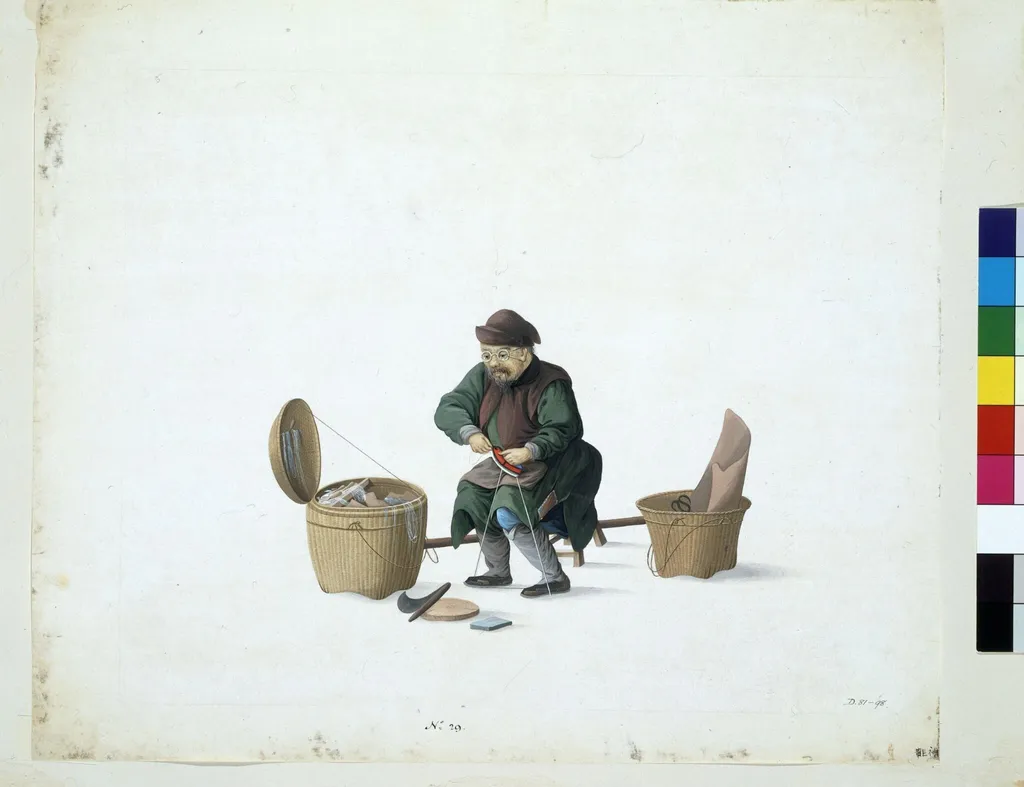
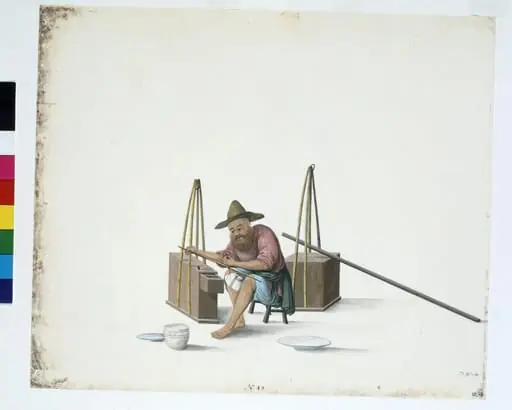
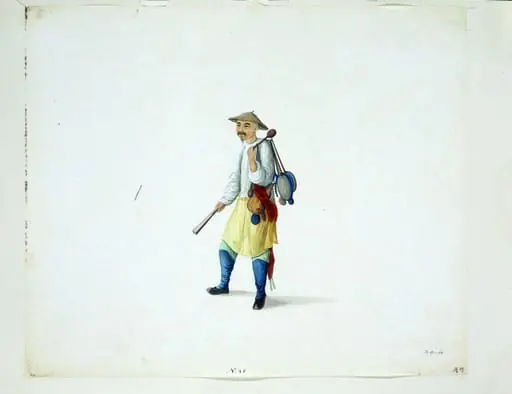
A Shoe Mender is a paint painting by the Patna School of Painting artist Puqua. It dates from 1790 and is held in the collection of the Victoria and Albert Museum.
About this work
Overview
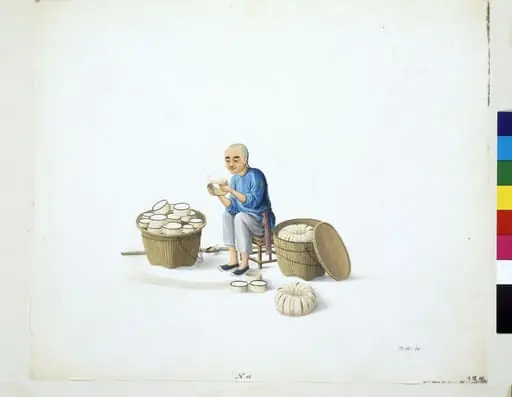
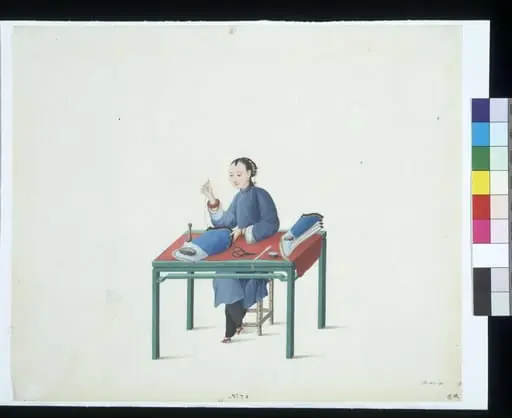
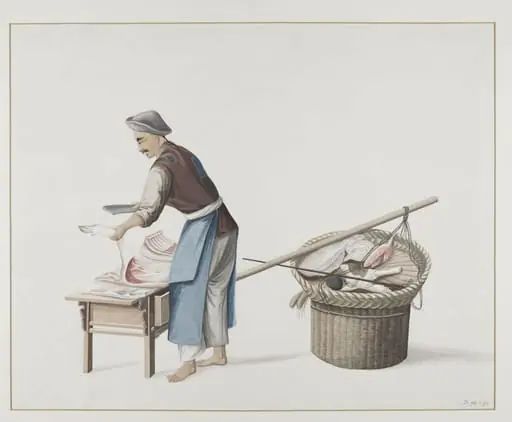
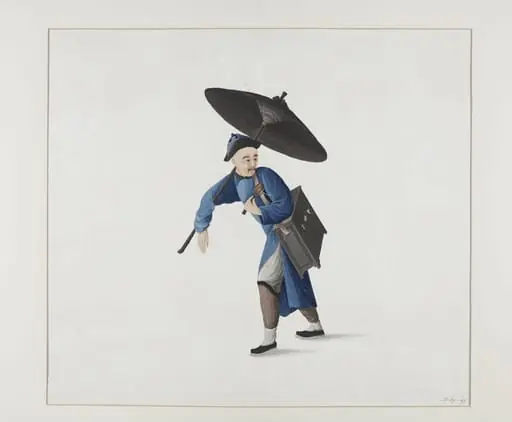
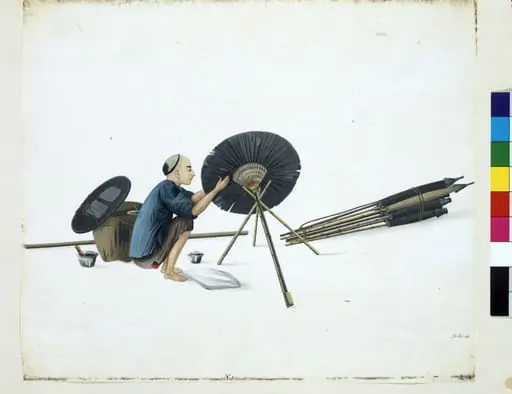
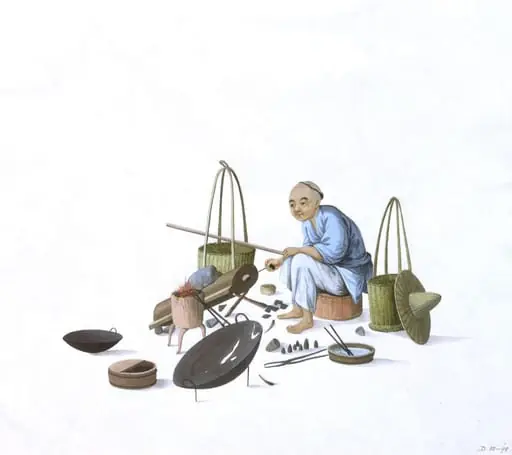
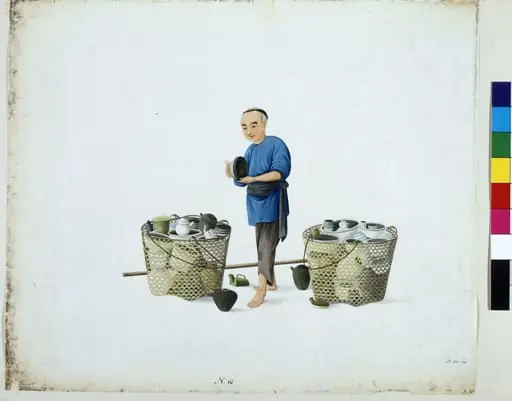
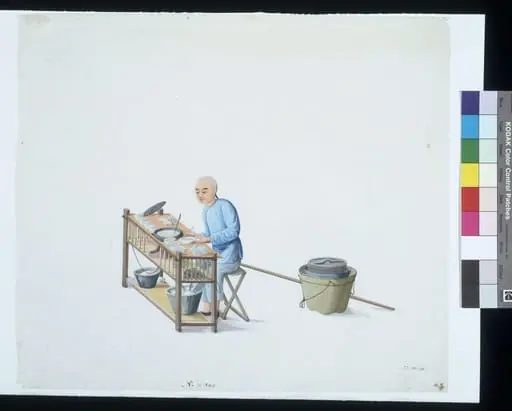
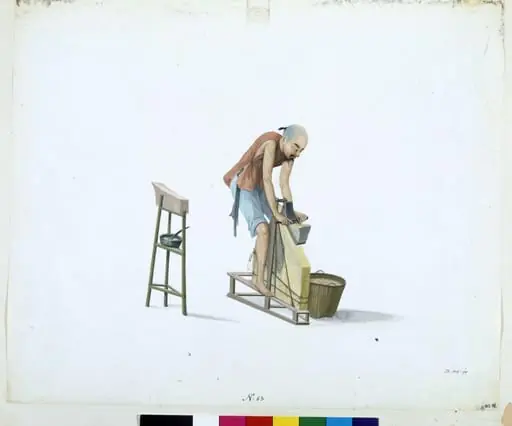
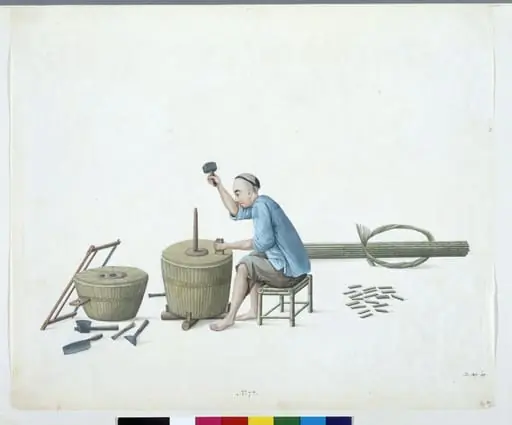
This painting is one of approximately one hundred works produced in Canton during the 18th century, each illustrating a distinct trade or craft.
This painting is one of approximately one hundred works produced in Canton during the 18th century, each illustrating a distinct trade or craft. Created for European patrons curious about Chinese daily life, the series served as visual ethnography. The artist Puqua documented the work of a shoemaker with quiet precision, capturing a moment of labor that would have been familiar to local observers but exotic to foreign buyers.
Subject & Meaning
The scene depicts a cobbler squatting outdoors, engaged in the quiet, repetitive task of repairing footwear. His loose robes and small hat reflect common attire among working-class men in southern China. The wooden tool box and hanging lantern suggest a mobile, modest trade, likely practiced on the margins of urban life. The image conveys dignity in labor without idealization, offering a glimpse into the economic routines of Qing-era Canton.
Technique & Style
Executed in watercolor on paper, the painting employs fine brushwork and restrained color to render textures—fabric folds, worn leather, the grain of wood. The composition is intimate and uncluttered, focusing attention on the figure and his tools. Background elements are minimized, emphasizing the subject’s solitude and the immediacy of his task. The style aligns with export art traditions that balanced local aesthetics with European expectations of clarity and detail.
History & Provenance
Few of the original hundred trade paintings by Puqua and his contemporaries have survived. This work is among the rare extant examples, likely exported to Europe in the late 1700s through trading ports like Canton. Its preservation suggests it was valued as a curiosity or collectible, possibly displayed in private cabinets of curiosities. The artist’s name, preserved on the piece, is unusual—most works from this series were unsigned.
Context
These paintings emerged during a period of restricted foreign trade in China, when European merchants were confined to Guangzhou. To satisfy demand for authentic depictions of Chinese life, local artists produced series of occupational scenes. Similar visual documentation occurred elsewhere, such as Dutch interior paintings, which also framed domestic labor as subjects of quiet observation, though within very different cultural frameworks.
Legacy
Puqua’s work contributes to a broader archive of 18th-century Sino-Western visual exchange. While not part of the Chinese artistic canon, these export paintings remain important records of everyday life and cross-cultural perception. They offer modern viewers a non-idealized view of labor in Qing China, preserved not through written records but through the careful hand of an anonymous artisan working for an overseas market.
Artist & collection