Artwork
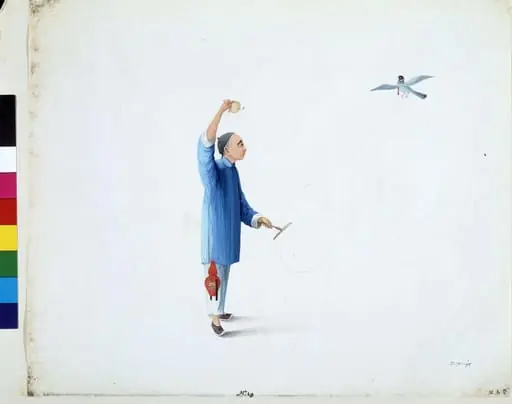
A Street Conjurer
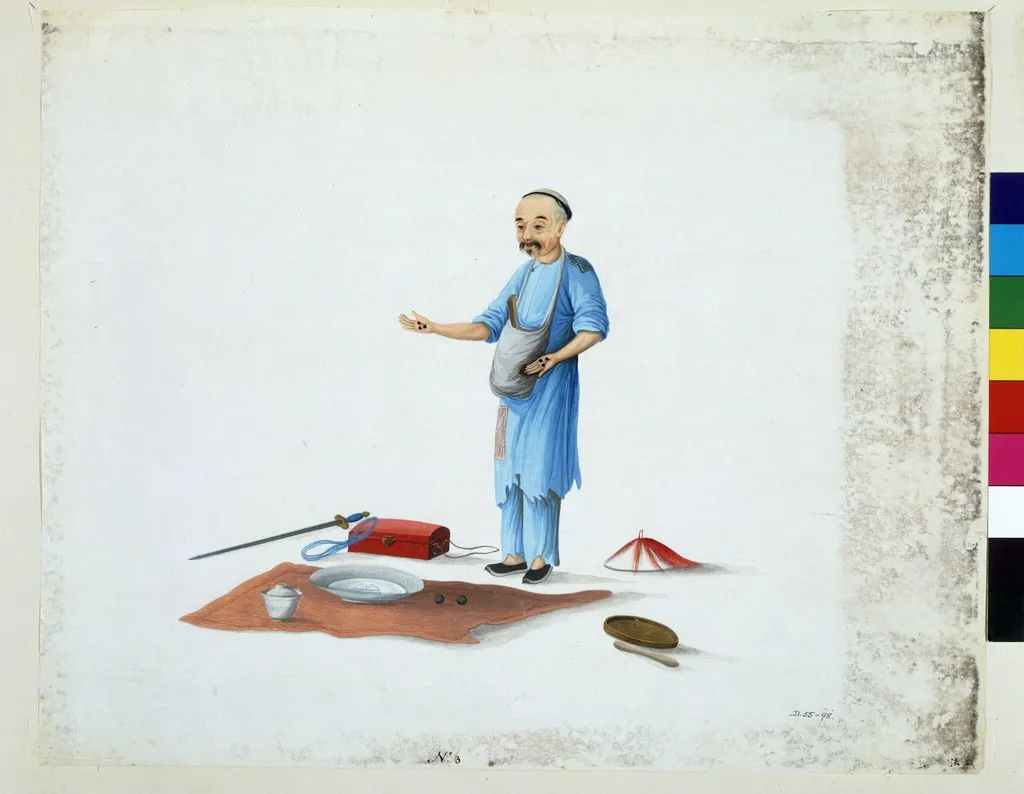
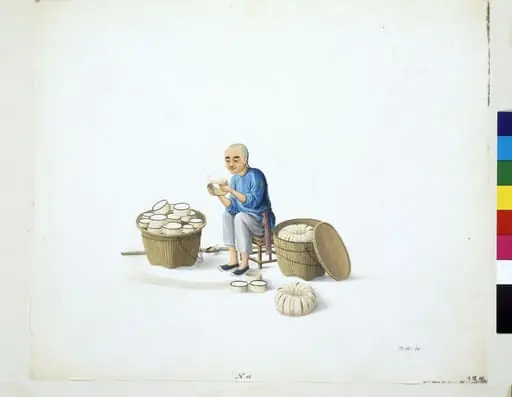
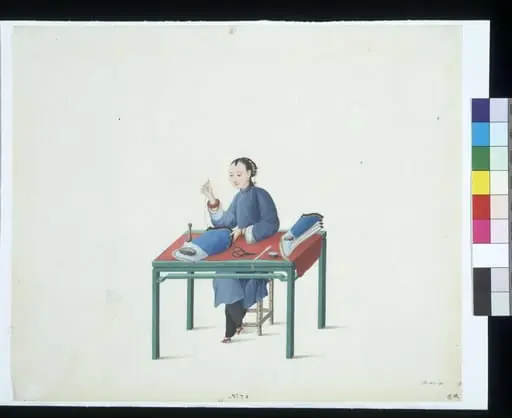
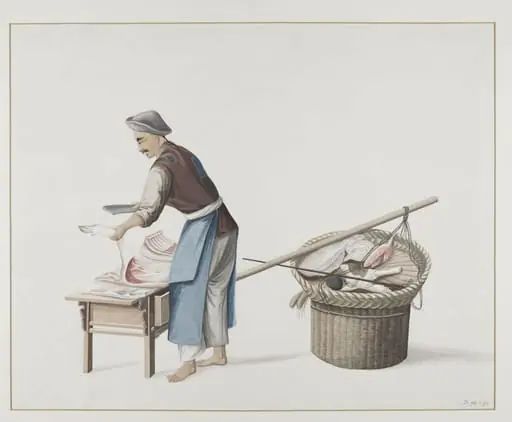
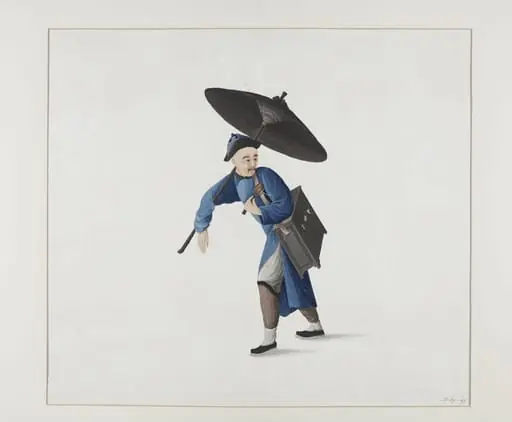
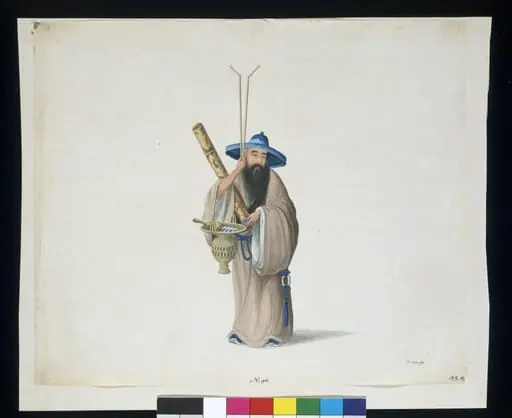
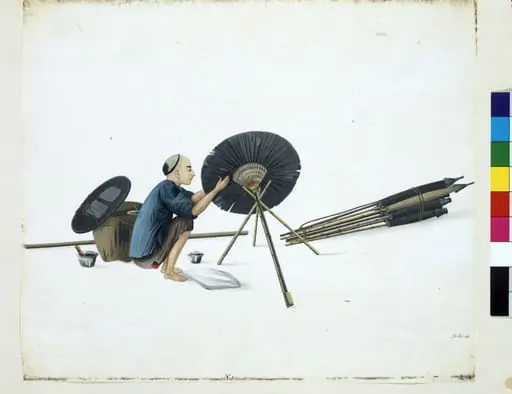
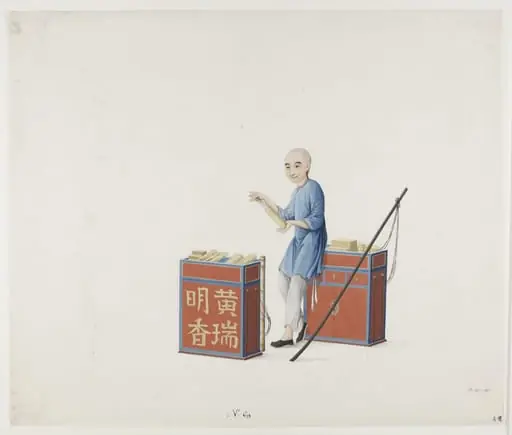
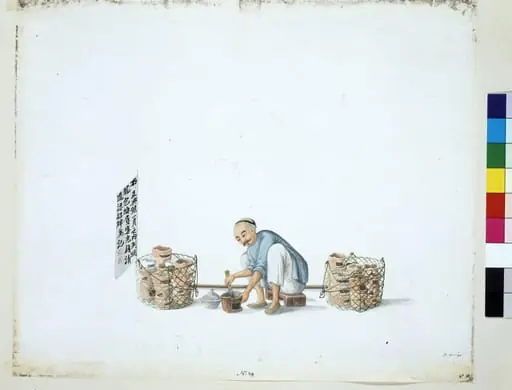
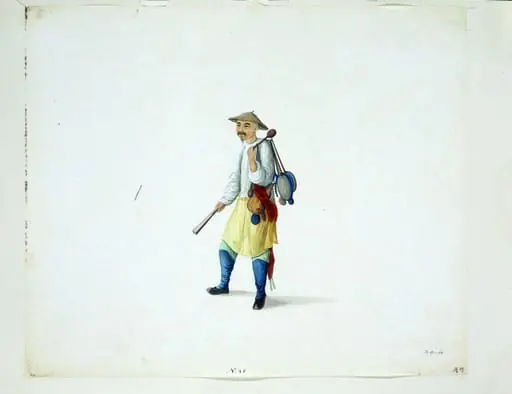
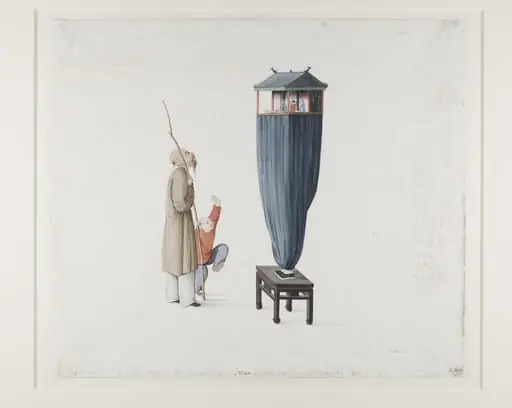
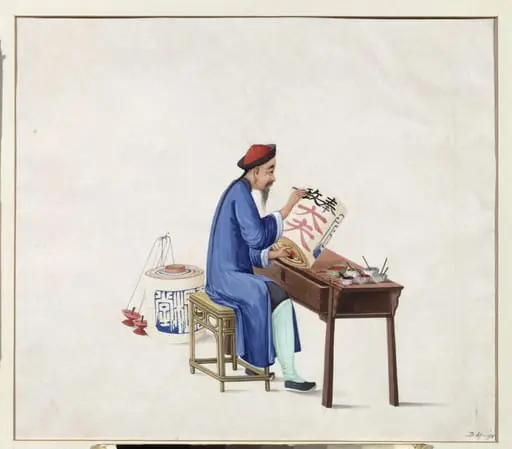
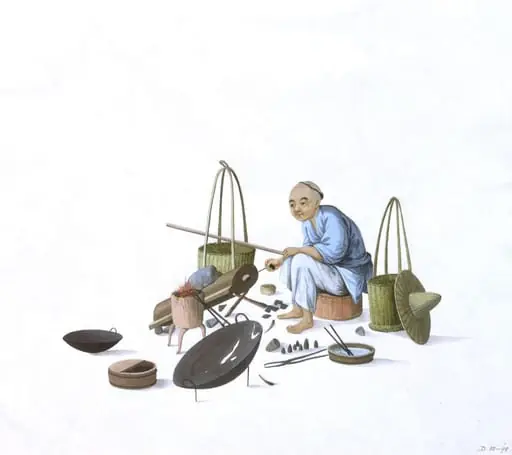
A Street Conjurer is a paint painting by the Patna School of Painting artist Puqua. It dates from 1790 and is held in the collection of the Victoria and Albert Museum. This painting belongs to a series of one hundred works documenting daily trades in Canton during the late 18th century.
About this work
This painting shows a street magician in China around 1790. He waves his hands over a smoking bowl while coins and cups float in the air. The crowd watches, some covering their mouths in surprise.
These images were made for Europeans curious about life in Canton. They used bright colors to show everyday scenes, not just fancy portraits.
Look up Puqua if you want to see more works from this set.
Overview
Created for European patrons with growing interest in Chinese society, the series captures ordinary life with attention to detail rather than idealized imagery.
This painting belongs to a series of one hundred works documenting daily trades in Canton during the late 18th century. Created for European patrons with growing interest in Chinese society, the series captures ordinary life with attention to detail rather than idealized imagery. The conjuror depicted here represents one of many occupational types recorded, reflecting a commercial art practice tailored to foreign demand.
Subject & Meaning
The scene portrays a street performer manipulating illusions—coins and vessels suspended midair above a smoky bowl—as onlookers react with quiet astonishment. Some cover their mouths, suggesting awe or disbelief. The image does not depict myth or ritual but a common urban spectacle, emphasizing the performer’s skill within a public setting. It conveys curiosity about Chinese folk traditions rather than supernatural belief.
Technique & Style
Executed in watercolor and ink on paper, the painting employs vivid, non-naturalistic hues to highlight movement and texture. Figures are rendered with clear outlines and flattened perspective, typical of export art from Guangdong. The conjuror’s gestures and the floating objects are stylized to enhance the illusion, while the crowd’s varied expressions add narrative depth without theatrical exaggeration.
History & Provenance
The painting was produced around 1790 by Chinese artists working in Canton for the foreign trade market. These works were often commissioned by European merchants and travelers seeking souvenirs of Chinese life. The series is associated with the artist Puqua, one of several painters who specialized in this genre, though attribution remains partially uncertain due to workshop practices of the time.
Context
During the Qing dynasty, Canton was the sole port open to Western trade, fostering a unique cultural exchange. Local artists adapted traditional techniques to satisfy foreign tastes, producing scenes of labor, leisure, and ritual. Unlike court portraiture, these works focused on the mundane, offering Europeans a glimpse into the rhythms of urban Chinese life beyond official narratives.
Legacy
The series remains a valuable record of late imperial Chinese society as seen through the lens of commercial art. These images influenced early European perceptions of China, shaping ethnographic curiosity before the rise of photography. Though often dismissed as decorative, they now serve as historical documents, preserving details of costume, gesture, and public performance otherwise lost to time.
Artist & collection