Artwork
Woman and Performing Monkey
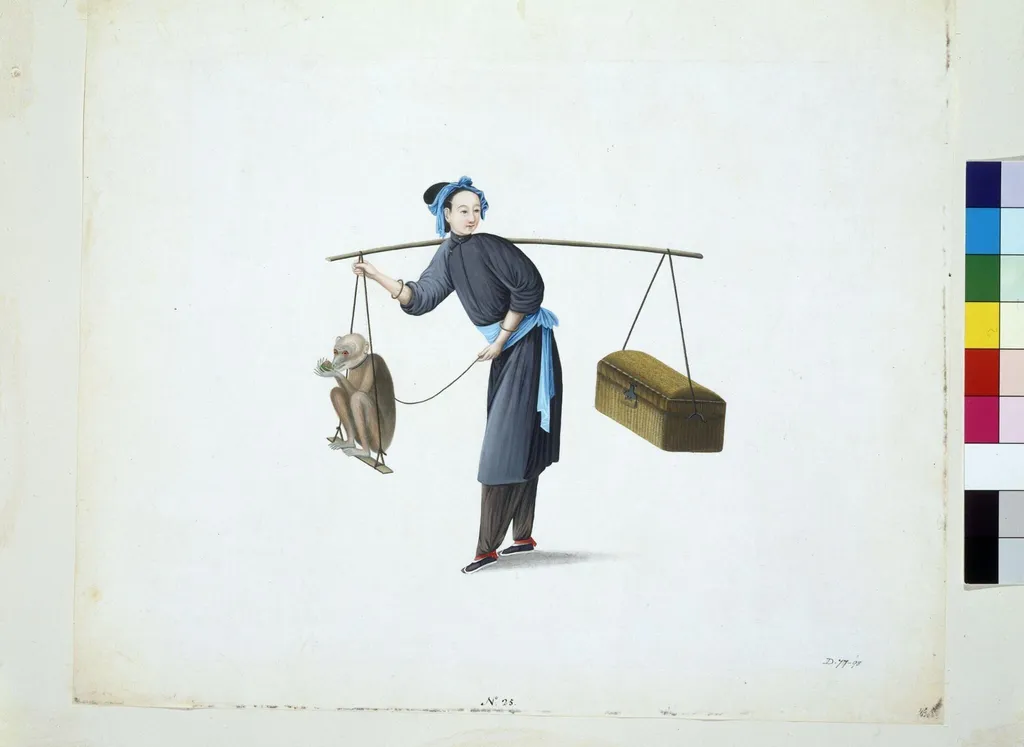
Woman and Performing Monkey is a paint painting by the Patna School of Painting artist Puqua. It dates from 1790 and is held in the collection of the Victoria and Albert Museum.
About this work
Overview
The scene depicts a woman and a monkey engaged in a street performance, capturing a moment of public entertainment familiar to local audiences.
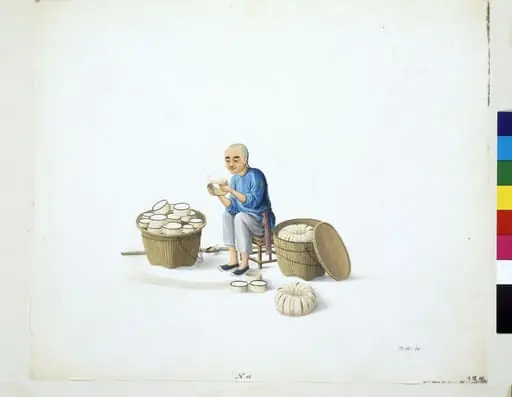
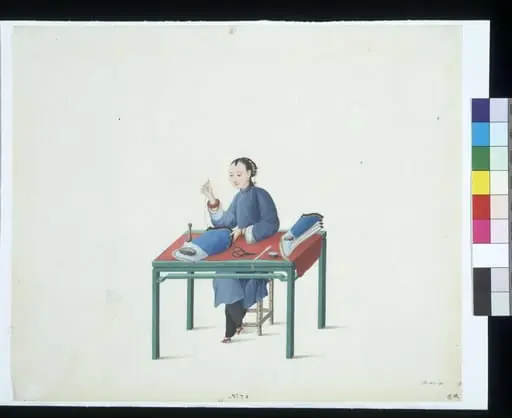
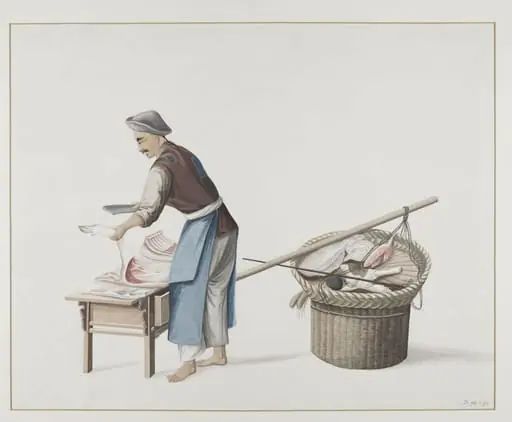
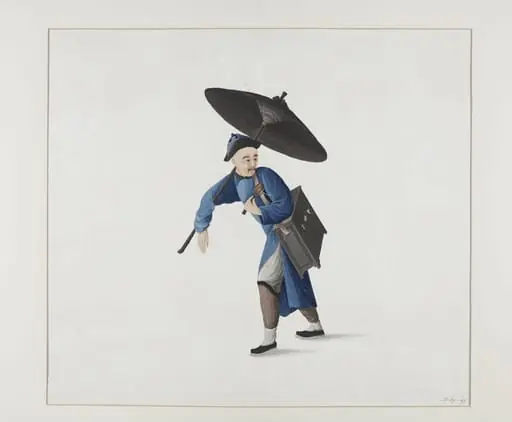
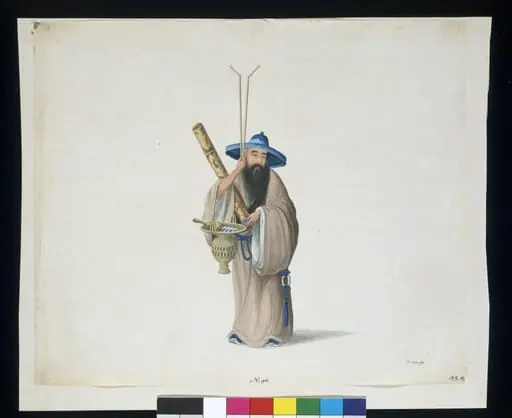
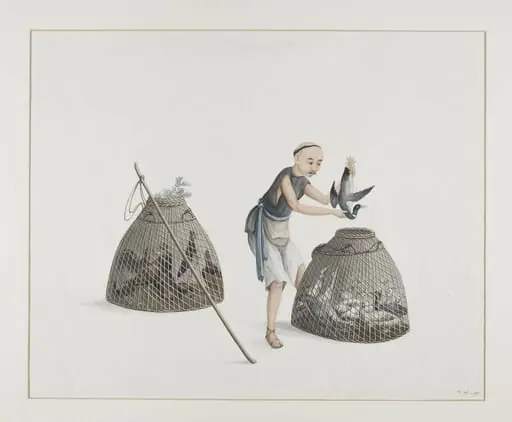
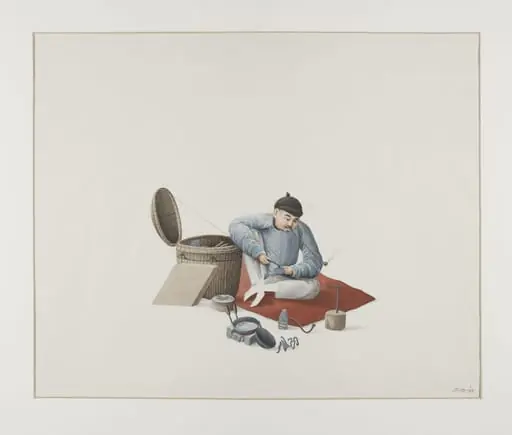
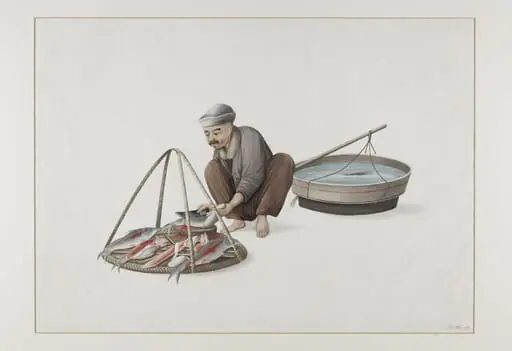
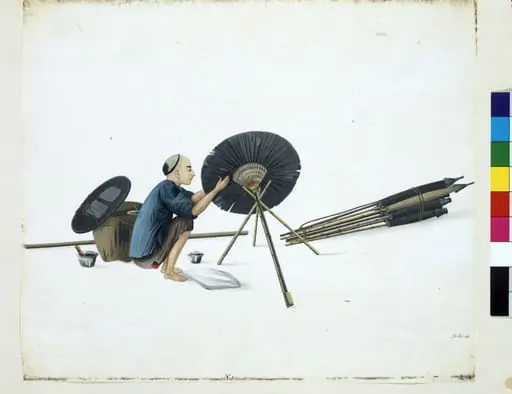
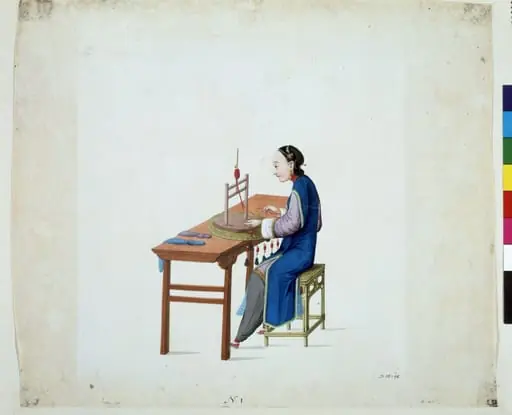
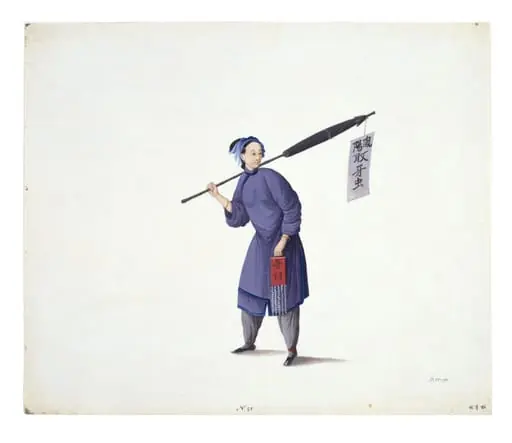
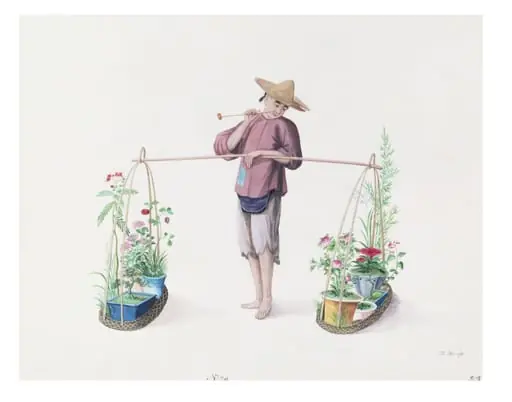
This painting belongs to a series of one hundred works produced in Canton during the late 18th or early 19th century, each illustrating a distinct trade or occupation. Created for export to European markets, the series aimed to document everyday life in southern China. The scene depicts a woman and a monkey engaged in a street performance, capturing a moment of public entertainment familiar to local audiences.
Subject & Meaning
The woman, holding a stick, directs a monkey standing on its hind legs, suggesting a trained animal act common in urban markets. Such performances were part of popular street culture in southern Chinese cities. The image reflects not exotic fantasy but a real social practice, offering European viewers a glimpse into the routines of Chinese common life rather than idealized or mythologized scenes.
Technique & Style
Executed in watercolor on paper, the painting employs delicate brushwork and muted tones typical of Canton export art. Figures are rendered with clear outlines and minimal shading, emphasizing clarity over depth. The composition is straightforward, focusing attention on the interaction between woman and monkey, with little background detail to distract from the central action.
History & Provenance
The series was produced by Chinese artists in Guangzhou for foreign merchants and travelers, particularly those connected to the British East India Company. These works were collected as souvenirs or ethnographic curiosities. While individual pieces often changed hands through private dealers, the group as a whole remains a documented product of Sino-European commercial exchange during the Qing dynasty’s Canton System.
Context
These paintings emerged during a period of restricted foreign access to China, when Guangzhou was the sole legal port for Western trade. European demand for visual records of Chinese society fueled the production of such works. Unlike Romanticism’s emotional landscapes, these images prioritize observation over sentiment, serving as visual catalogs rather than artistic expressions of national character.
Legacy
The series remains a valuable resource for understanding 18th–19th century Chinese urban life through the lens of its own artisans. Though initially created for foreign consumption, the works now offer scholars insight into how Chinese artists represented their society to outsiders. They stand as early examples of cultural documentation shaped by cross-cultural commerce, not colonial fantasy.
Artist & collection