Artwork
Man Collecting Dung
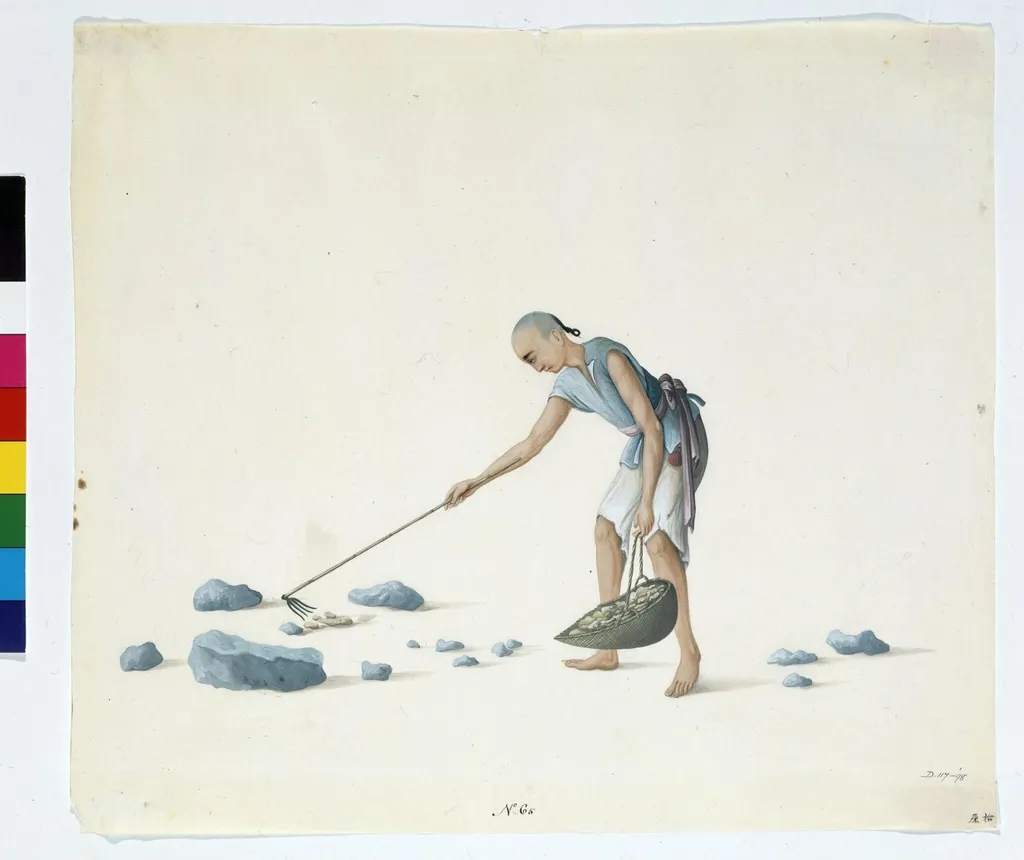
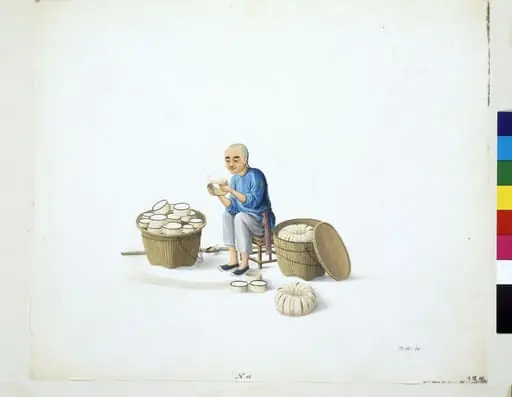
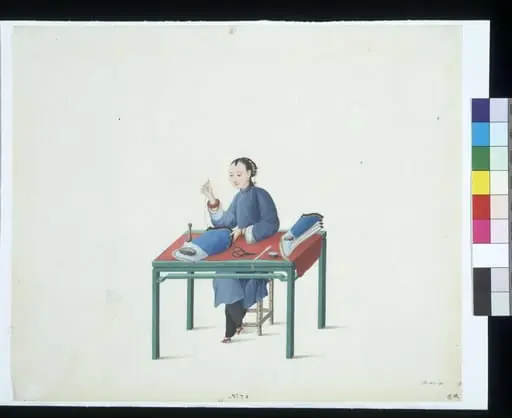
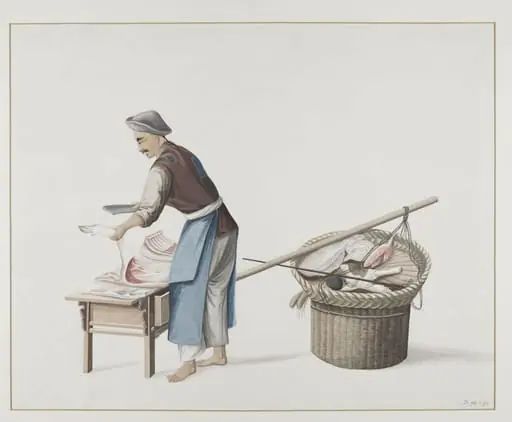
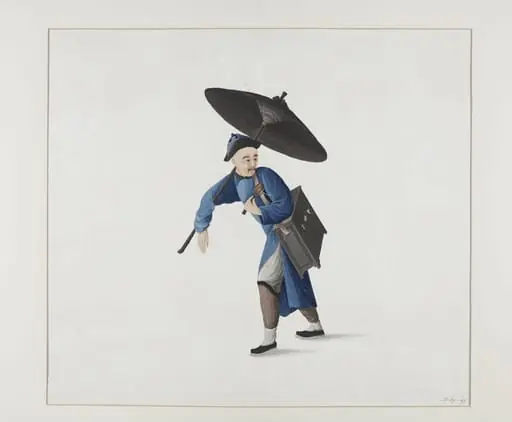
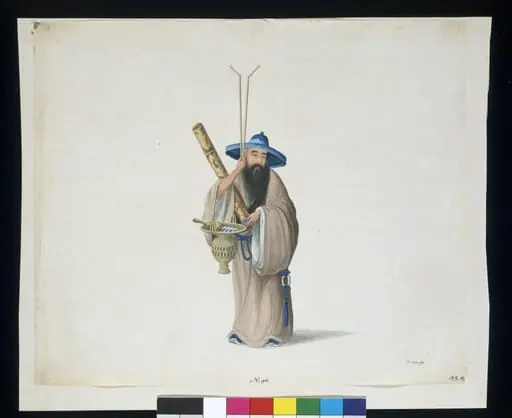
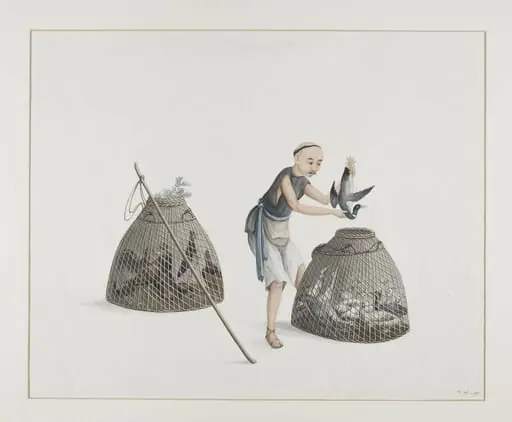
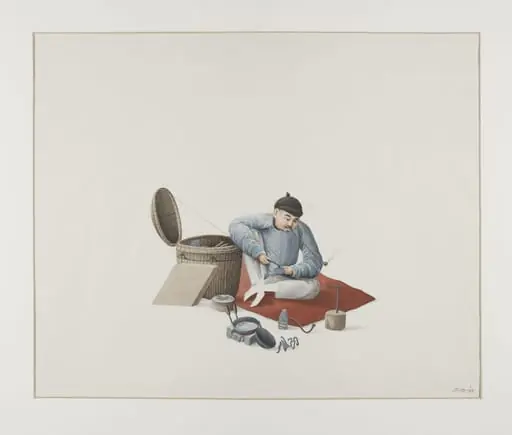
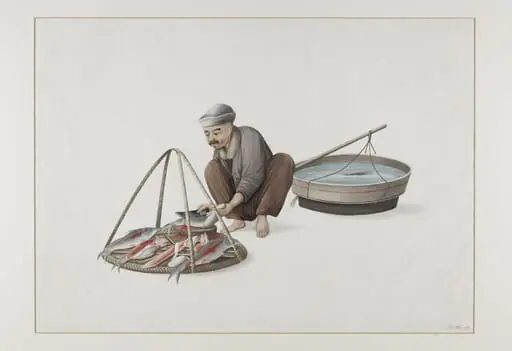
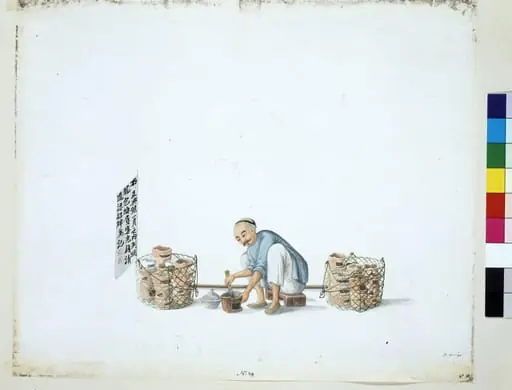
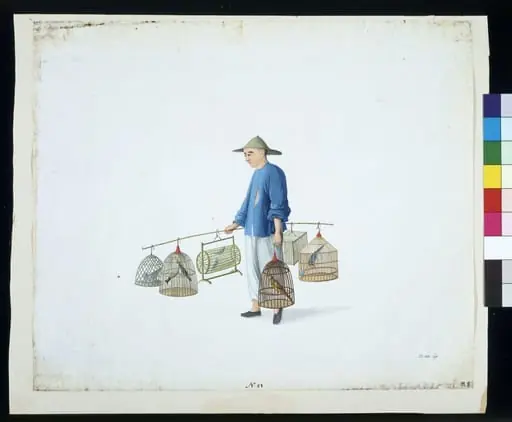
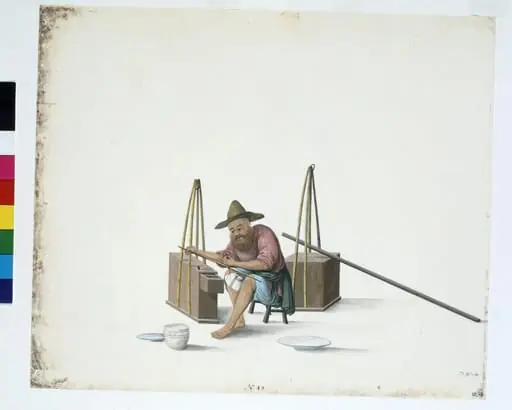
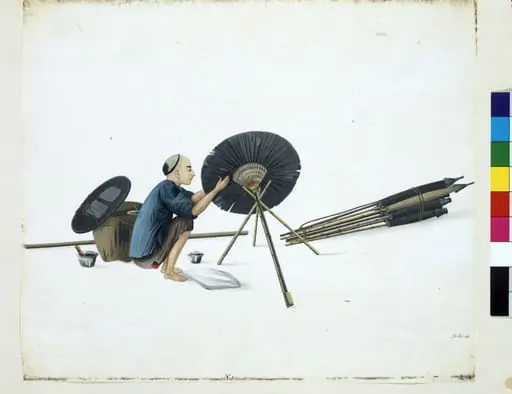
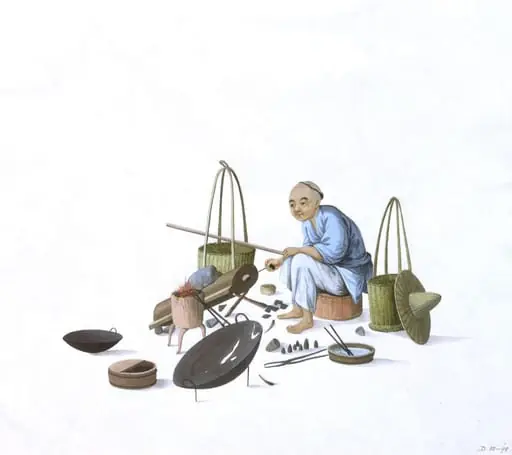
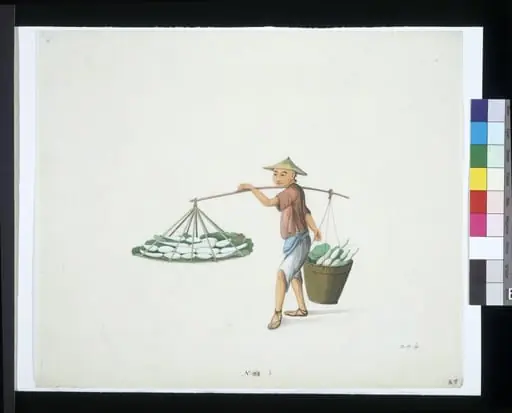
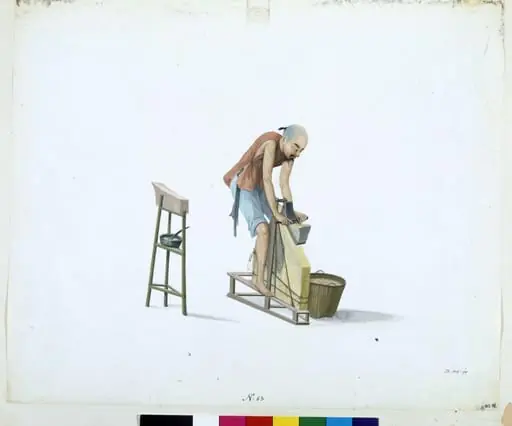
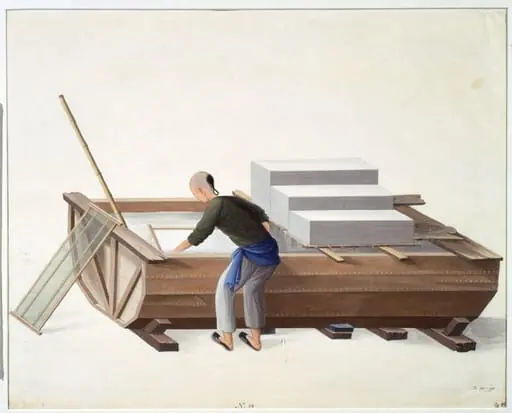
Man Collecting Dung is a paint painting by the Patna School of Painting artist Puqua. It dates from 1790 and is held in the collection of the Victoria and Albert Museum. This painting belongs to a series of one hundred works produced in Canton around 1790, each illustrating a distinct trade or occupation.
About this work
This painting shows a man in loose robes, squatting to gather dung into a woven basket.
It’s part of a set of 100 images made in Canton around 1790. Europeans bought these to see how Chinese people worked and lived.
People used dung like this for fertilizer to grow more food.
Look up the Victoria and Albert Museum to see more of these trade scenes.
Overview
This painting belongs to a series of one hundred works produced in Canton around 1790, each illustrating a distinct trade or occupation.
This painting belongs to a series of one hundred works produced in Canton around 1790, each illustrating a distinct trade or occupation. Created for export to European markets, the set offered visual documentation of daily labor in southern China. The scene depicts a man engaged in the practical task of collecting animal waste, a common agricultural practice at the time. These images were not artistic experiments but commercial products designed to satisfy foreign curiosity about Chinese society.
Subject & Meaning
The figure, dressed in loose garments, squats to gather dung into a woven basket, a task essential for sustaining crop yields in pre-industrial agriculture. The image conveys no moral judgment, instead presenting labor as an ordinary, necessary activity. For European viewers, it offered insight into the resourcefulness of Chinese rural life, where organic waste was repurposed as fertilizer. The subject reflects an economy grounded in close observation of natural cycles and efficient use of available materials.
Technique & Style
Executed in watercolor on paper, the painting employs clear outlines and muted, earth-toned pigments to render form and texture with precision. Figures are rendered with restrained detail, emphasizing posture and action over individual expression. Background elements are minimal, directing focus to the laborer and his task. The style aligns with Cantonese export art of the period—functional, observational, and tailored to Western tastes for ethnographic clarity rather than decorative flourish.
History & Provenance
The painting was produced in Canton during the late 18th century, a time when foreign trade with China was concentrated in that port. Artists working for export markets created these series for European merchants and collectors seeking ethnographic records of Chinese life. Many such works entered European collections through trade networks, with several now held in institutions like the Victoria and Albert Museum. Their survival reflects their role as cultural artifacts rather than fine art.
Context
In late Qing China, agricultural productivity relied heavily on organic fertilizers, making dung collection a widespread rural occupation. Meanwhile, European demand for images of Chinese life surged as trade expanded and interest in global cultures grew. These paintings bridged commercial and ethnographic interests, offering Europeans a glimpse into a society they could not easily access. The series functioned as both souvenir and educational tool, shaped by mutual curiosity and economic exchange.
Legacy
The series remains a valuable record of 18th-century Chinese labor practices, preserved primarily in Western museums. While not celebrated as high art, these works provide insight into the material conditions of everyday life and the dynamics of cross-cultural representation. Their continued study helps correct romanticized views of pre-modern China, grounding historical understanding in the realities of labor, economy, and adaptation.
Artist & collection