Artwork
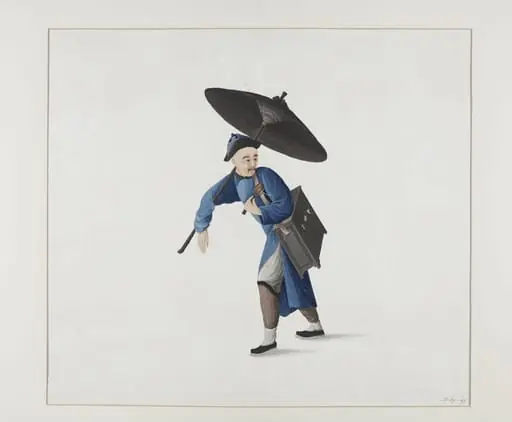
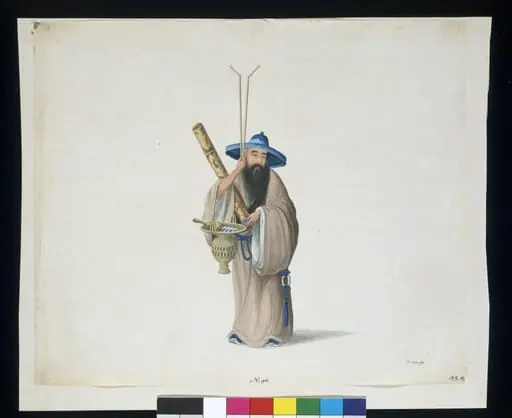
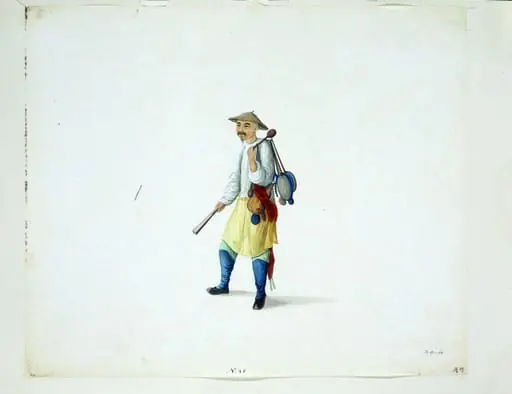
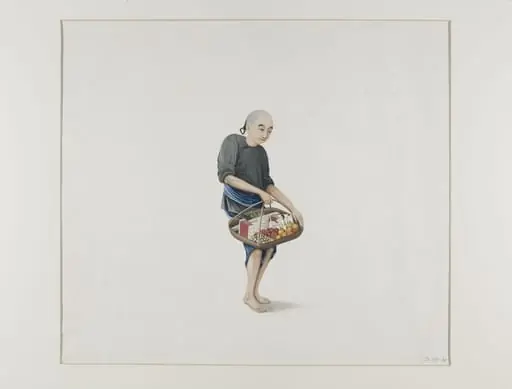
Man Selling Rat Poison
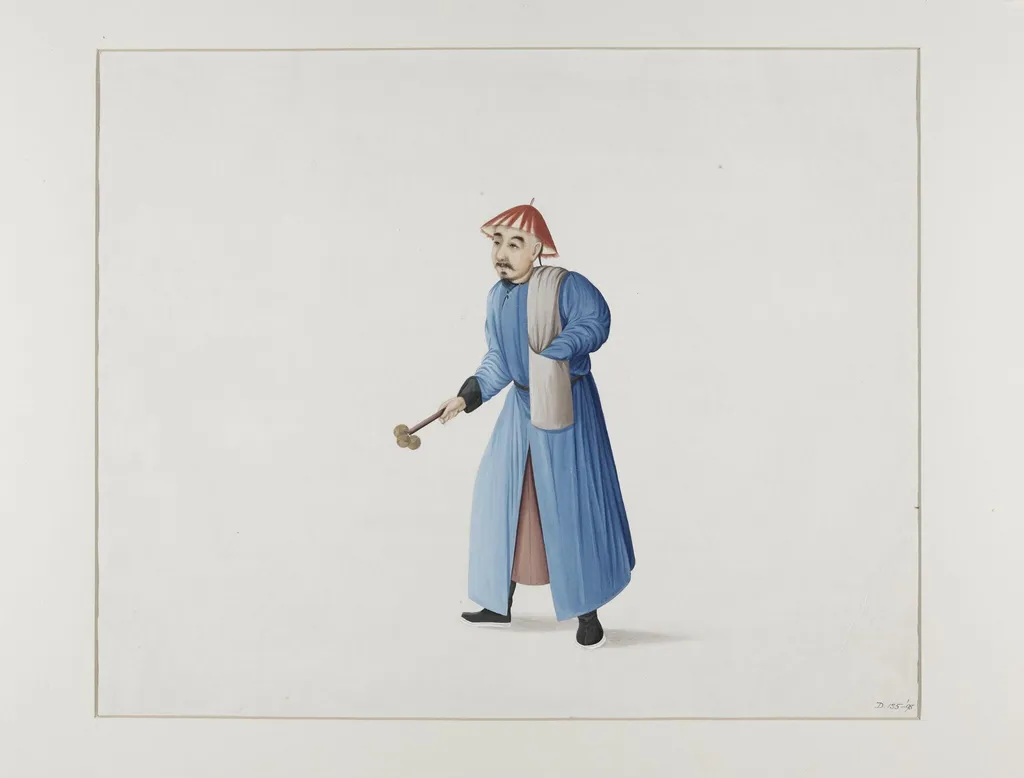
Man Selling Rat Poison is a paint painting by the Patna School of Painting artist Puqua. It dates from 1790 and is held in the collection of the Victoria and Albert Museum.
About this work
Overview
The work entered a museum collection in 1898 after acquisition from Parsons & Sons, preserving a rare visual record of late 18th-century street commerce.
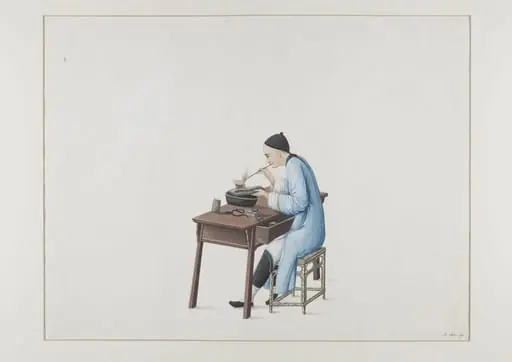
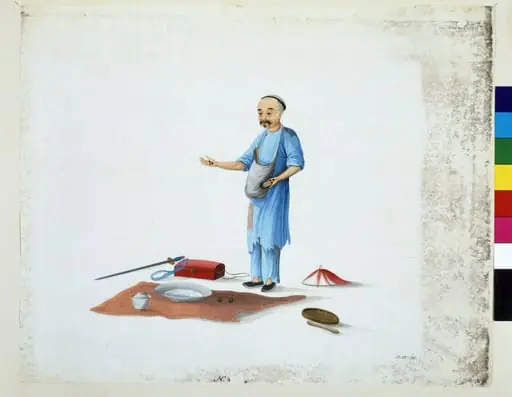
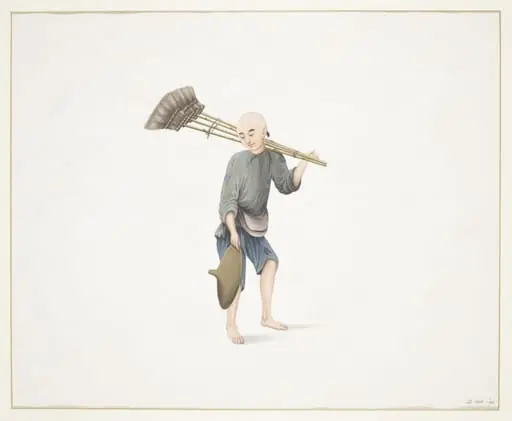
This watercolor painting, dated 1790, is one of a hundred works by Puqua documenting occupational life in Canton. It portrays a vendor engaged in the sale of rat poison, rendered in a straightforward, unadorned style. Executed on paper with minimal background detail, the composition focuses entirely on the figure and his goods. The work entered a museum collection in 1898 after acquisition from Parsons & Sons, preserving a rare visual record of late 18th-century street commerce.
Subject & Meaning
The figure is a itinerant seller, identifiable by his tools and merchandise: a wooden club and a small pouch, likely containing rat poison. His attire—a long blue robe, red-lined hat, and black shoes—suggests modest means, typical of urban laborers. The subject reflects the informal economy of Canton, where specialized vendors served domestic needs. The absence of context or narrative implies an intent to catalog, not dramatize, daily work.
Technique & Style
Puqua employed flat, unmodulated washes of color—predominantly blue, red, and black—with sharp, clean outlines to define form. The figure stands against a blank white ground, eliminating spatial depth and directing attention to the subject’s posture and attire. Subtle tonal hints beneath the feet suggest minimal grounding, reinforcing the stylized, graphic quality. This approach prioritizes clarity and typological accuracy over naturalism.
History & Provenance
Created in 1790 as part of a commissioned series documenting Cantonese trades, the painting remained in private hands until acquired by Parsons & Sons. It was later purchased by a museum in 1898, where it was formally accessioned. The series’ original purpose may have been for export or local documentation, but its survival as a complete set is uncommon. Its provenance reflects 19th-century Western interest in Chinese material culture.
Context
The painting belongs to a broader tradition of Chinese occupational albums produced for domestic and foreign audiences during the Qing dynasty. These works served both ethnographic and commercial ends, often commissioned by merchants or officials. In Canton, a major port city, such imagery catered to foreign traders seeking insight into local life. Puqua’s series is among the most extensive surviving examples of this genre.
Legacy
Though little is known of Puqua’s broader career, this series remains a key resource for understanding late imperial Chinese labor. The work’s simplicity and precision have made it a reference for scholars studying visual representations of everyday life. Its preservation in institutional collections ensures continued study, offering insight into a vanishing world of itinerant trades and artisanal economies.
Artist & collection