Artwork
Man Singing Dragon Boat Songs
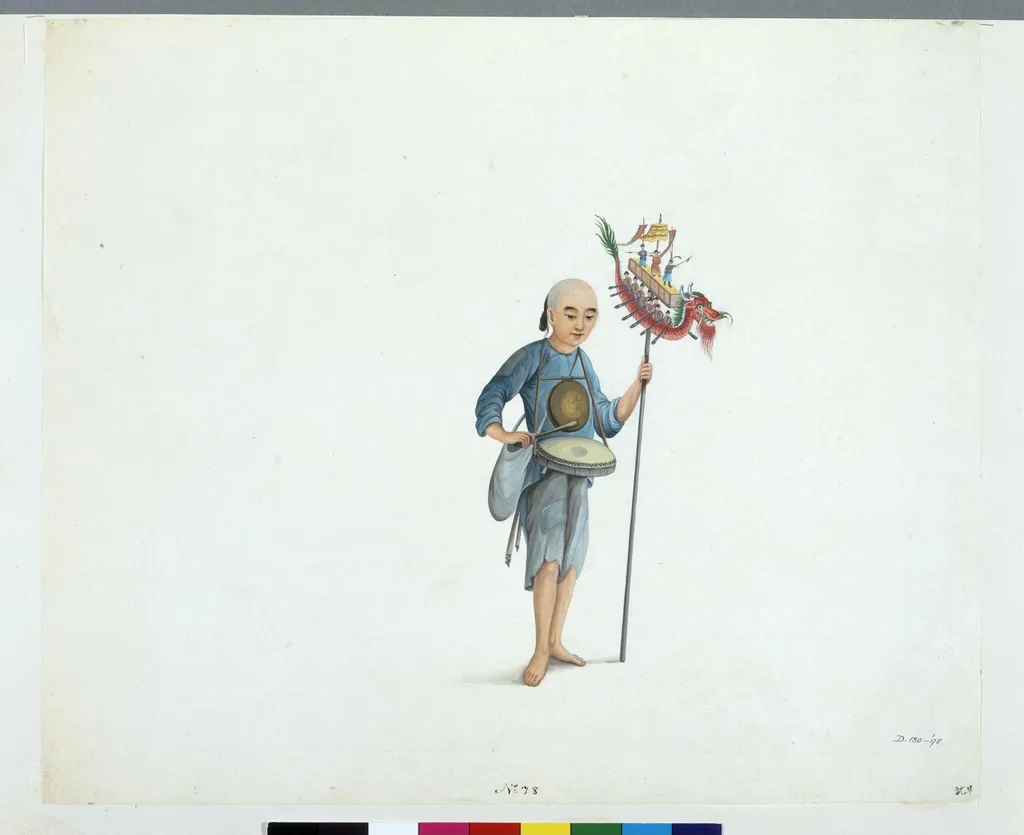
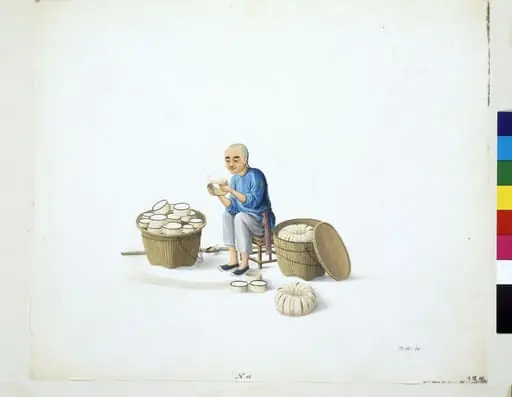
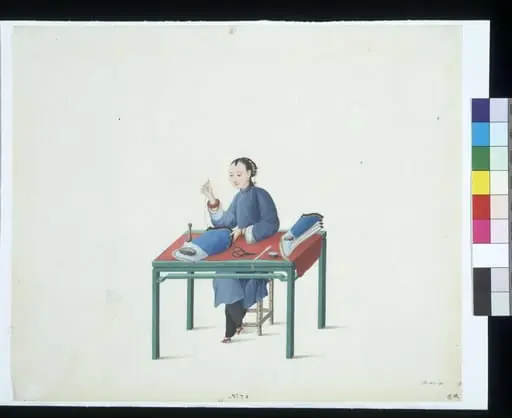
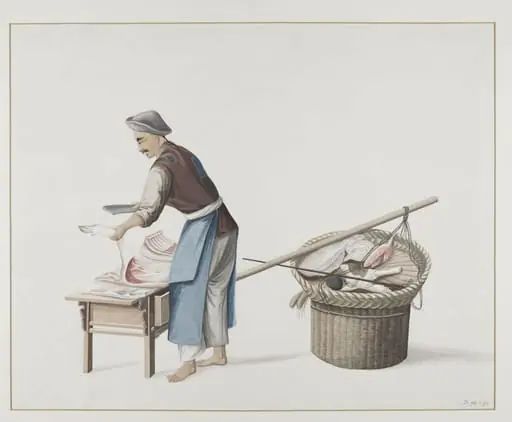
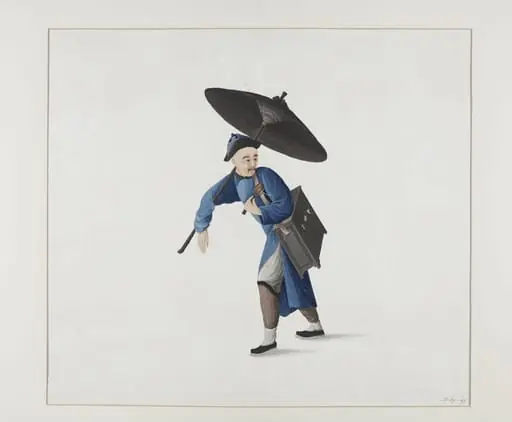
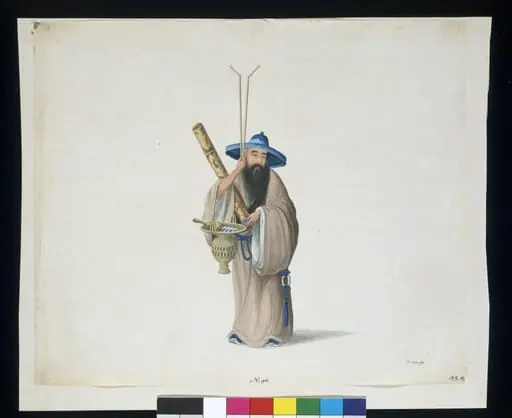
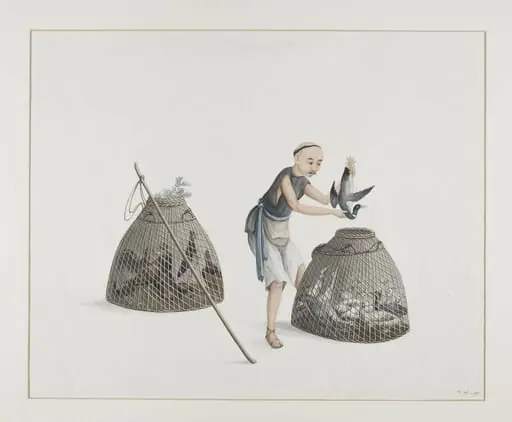
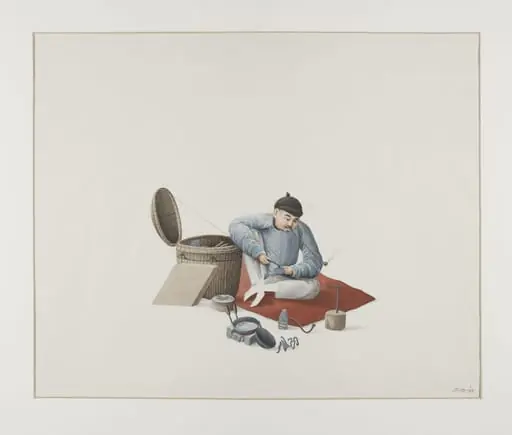
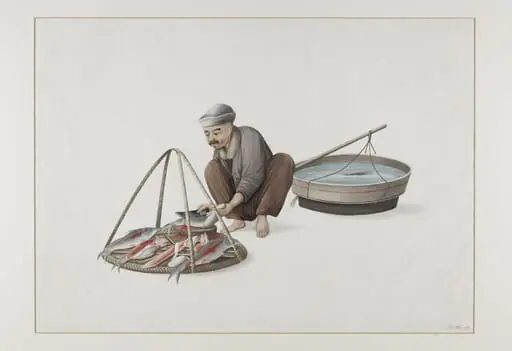
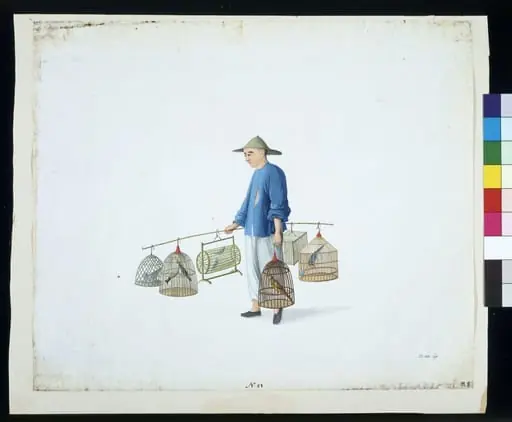
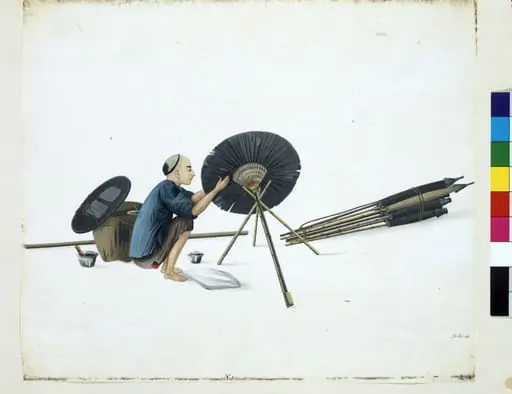
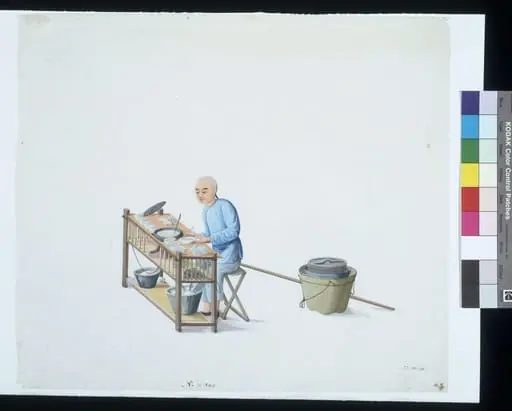
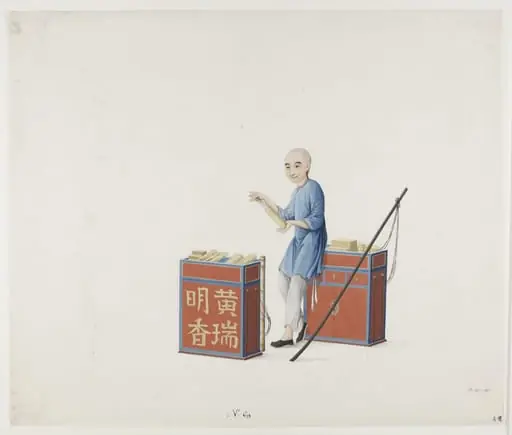
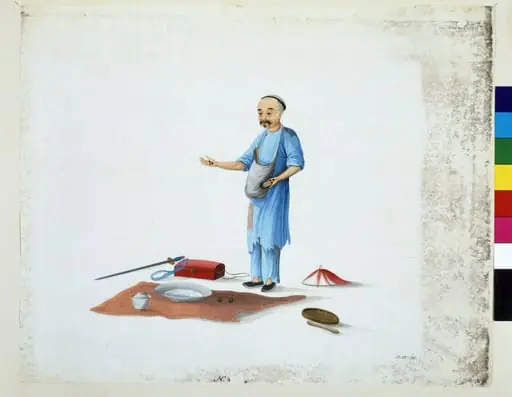
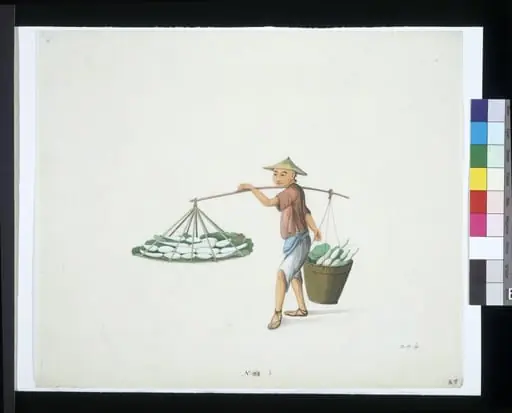
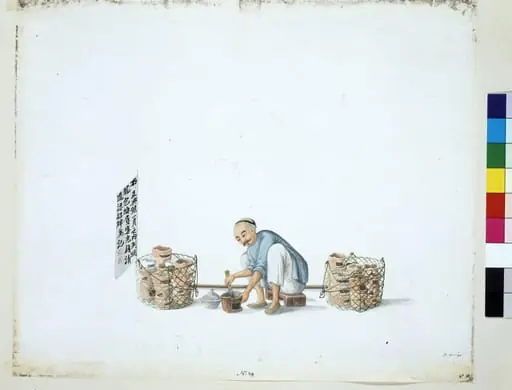
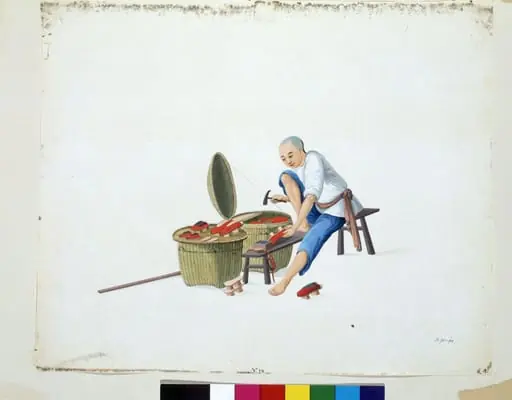
Man Singing Dragon Boat Songs is a paint painting by the Patna School of Painting artist Puqua. It dates from 1790 and is held in the collection of the Victoria and Albert Museum. This painting is one of a series of one hundred small works produced in Canton, each illustrating a distinct trade or occupation.
About this work
Overview
This painting is one of a series of one hundred small works produced in Canton, each illustrating a distinct trade or occupation. Created for European audiences, the set aimed to document everyday labor in southern China during the 19th century. The artist captures a single figure in motion, isolated against a muted green background, emphasizing the subject’s activity over environmental detail.
Subject & Meaning
The figure is a man engaged in singing traditional dragon boat songs, his mouth open and hands raised in gesture. These songs were performed to synchronize rowing and maintain rhythm during races, often tied to seasonal festivals. The depiction honors the vocal labor of the singer, presenting him not as a performer for spectacle but as a worker embedded in communal practice.
Technique & Style
Executed in watercolor or ink on paper, the painting uses minimal detail and flat planes of color. The figure is rendered with loose, expressive lines, while the plain pale green background eliminates distraction. The open mouth and raised arms convey movement and sound without relying on realism, reflecting a stylistic preference for clarity and symbolic representation over naturalism.
History & Provenance
The series was likely produced by Cantonese artists for export to Europe, where interest in Chinese culture was growing through trade. These works were collected as ethnographic curiosities, offering Europeans a glimpse into local customs. The painting now resides in the Victoria and Albert Museum, part of a larger collection acquired during the 19th century as cultural artifacts.
Context
Canton (Guangzhou) was a major port for foreign trade, and its artisans adapted their output to European tastes.
Canton (Guangzhou) was a major port for foreign trade, and its artisans adapted their output to European tastes. While Western collectors sought exoticism, the paintings often preserved authentic details of local life. Dragon boat festivals, rooted in ancient tradition, were public events where song and labor intertwined—making this scene both culturally specific and broadly representative of communal work.
Legacy
The series remains a valuable record of 19th-century Chinese occupational life, offering insight into how local practices were observed and recorded for foreign audiences. Unlike grand historical or religious art, these small works highlight the dignity of ordinary labor. Today, they serve as historical documents, preserving visual evidence of customs that continue in modified forms.
Artist & collection