Artwork
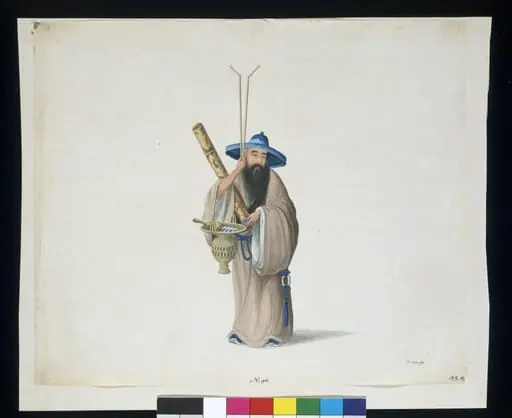
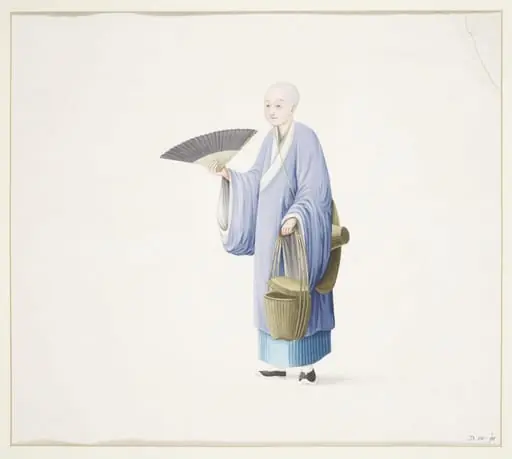
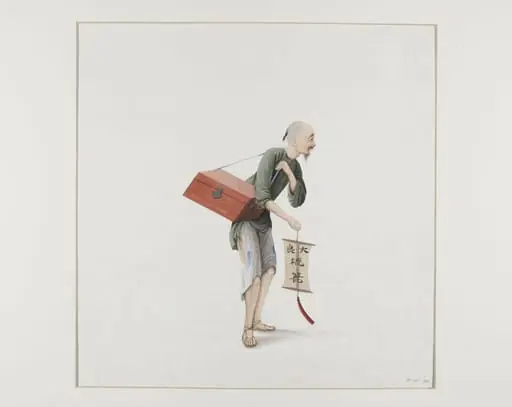
Monk Begging on Behalf of His Monastery
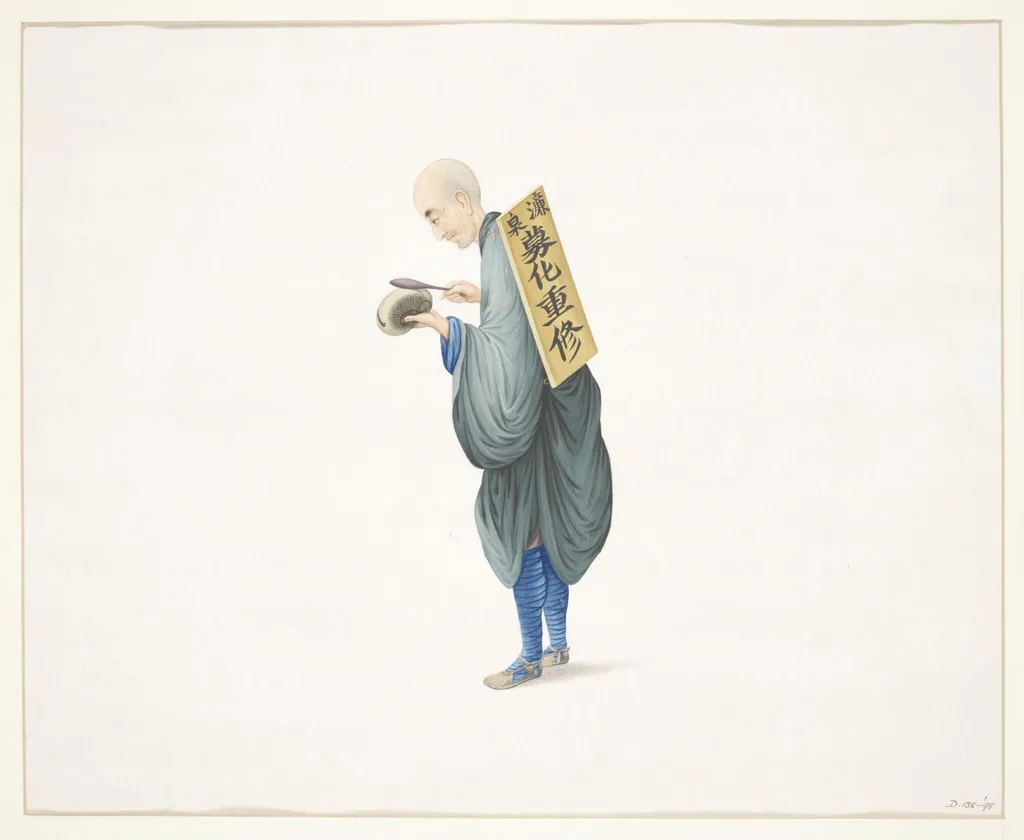
Monk Begging on Behalf of His Monastery is a paint painting by the Patna School of Painting artist Puqua. It dates from 1790 and is held in the collection of the Victoria and Albert Museum.
About this work
Overview
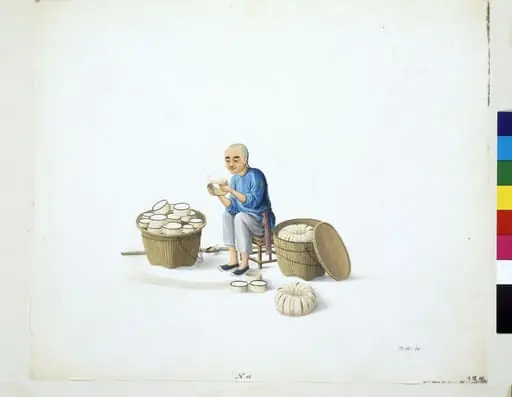
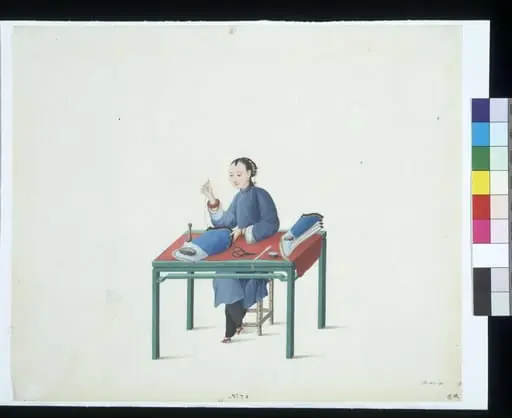
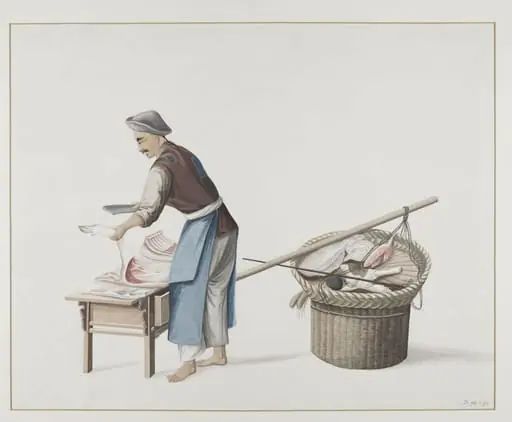
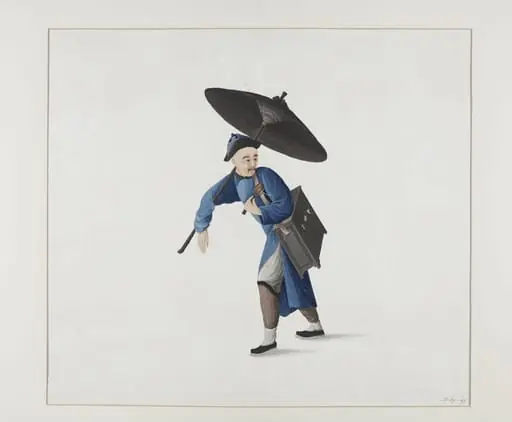
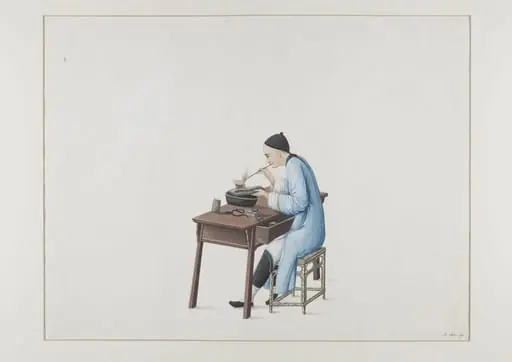
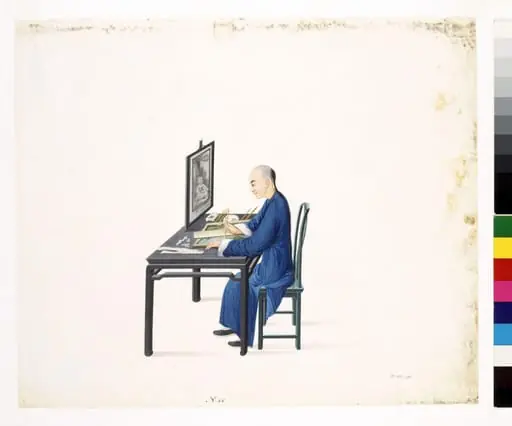
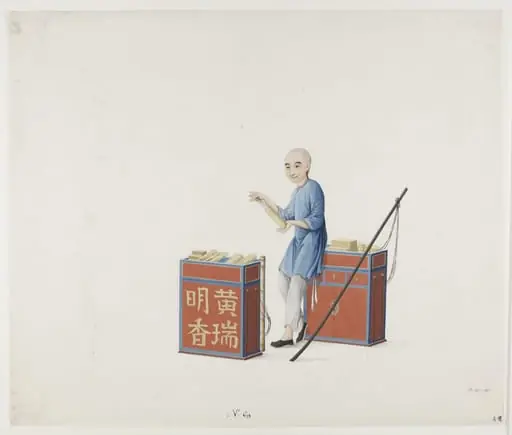
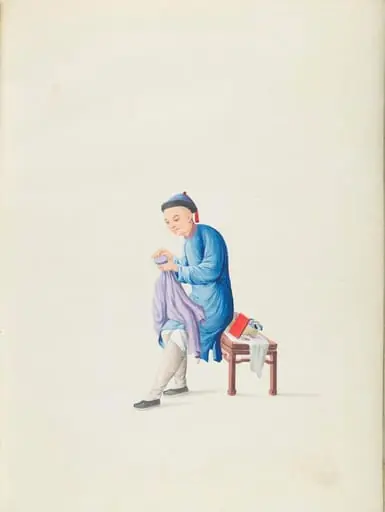
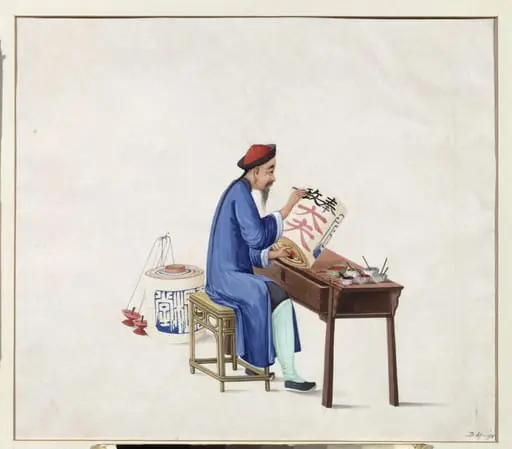
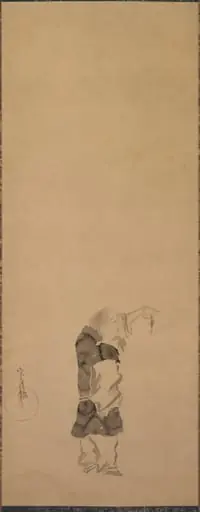
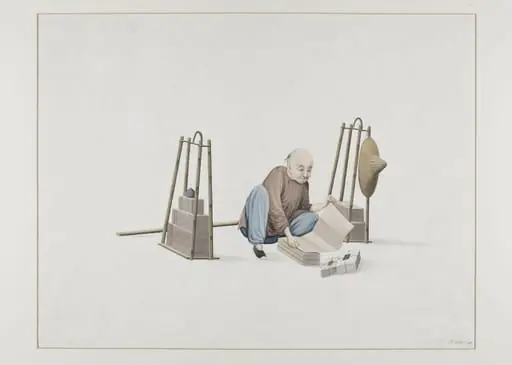
The work is a rectangular watercolor created in 1790 by the artist Puqua. It portrays a solitary figure in muted grey, turned toward the left, with a small bag strapped to his back. The piece forms part of a larger series of one hundred images that document various occupations and trades in the Canton region.
Subject & Meaning
The central figure is a monk engaged in the act of begging on behalf of his monastery. He is shown kneeling on the ground, eyes lifted upward, his expression conveying a quiet hopefulness. The simplicity of his attire and the modest posture emphasize the humility of the religious vocation and its reliance on communal support.
Technique & Style
Executed in watercolor, the painting employs delicate washes that render the monk’s features with a realistic softness. Subtle gradations of tone suggest a faint sfumato effect, softening edges and lending the scene a gentle atmospheric quality. The restrained palette and careful handling of light contribute to an intimate, almost documentary tone.
History & Provenance
The piece entered the museum’s collection in 1898 after being purchased from the dealers Parsons & Sons. Its accession is recorded in the Asia Department registers, a detail confirmed by provenance research conducted in 2022. The painting has remained in the museum’s holdings since its late‑19th‑century acquisition.
Context
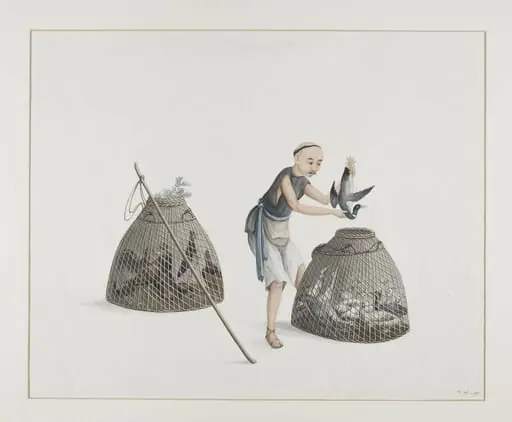
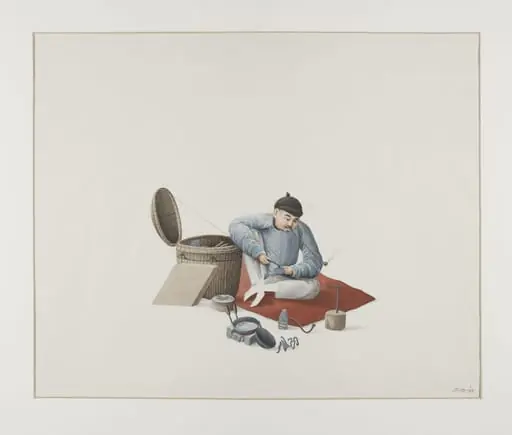
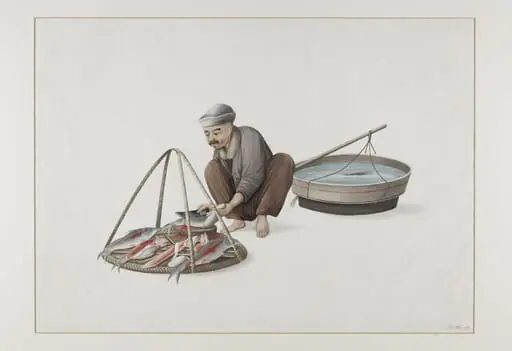
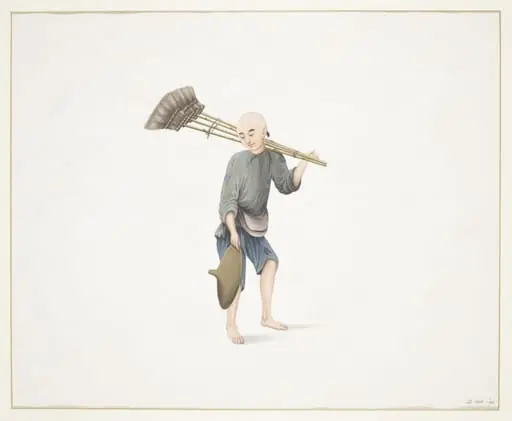
As one of a hundred illustrations of Cantonese trades, the work reflects a broader 18th‑century interest in cataloguing everyday professions across cultural boundaries. By focusing on a monastic figure, the series expands beyond commercial occupations to include religious and charitable roles, offering a nuanced view of societal structures of the period.
Artist & collection