Artwork
A Buddhist Nun Delivering Soup
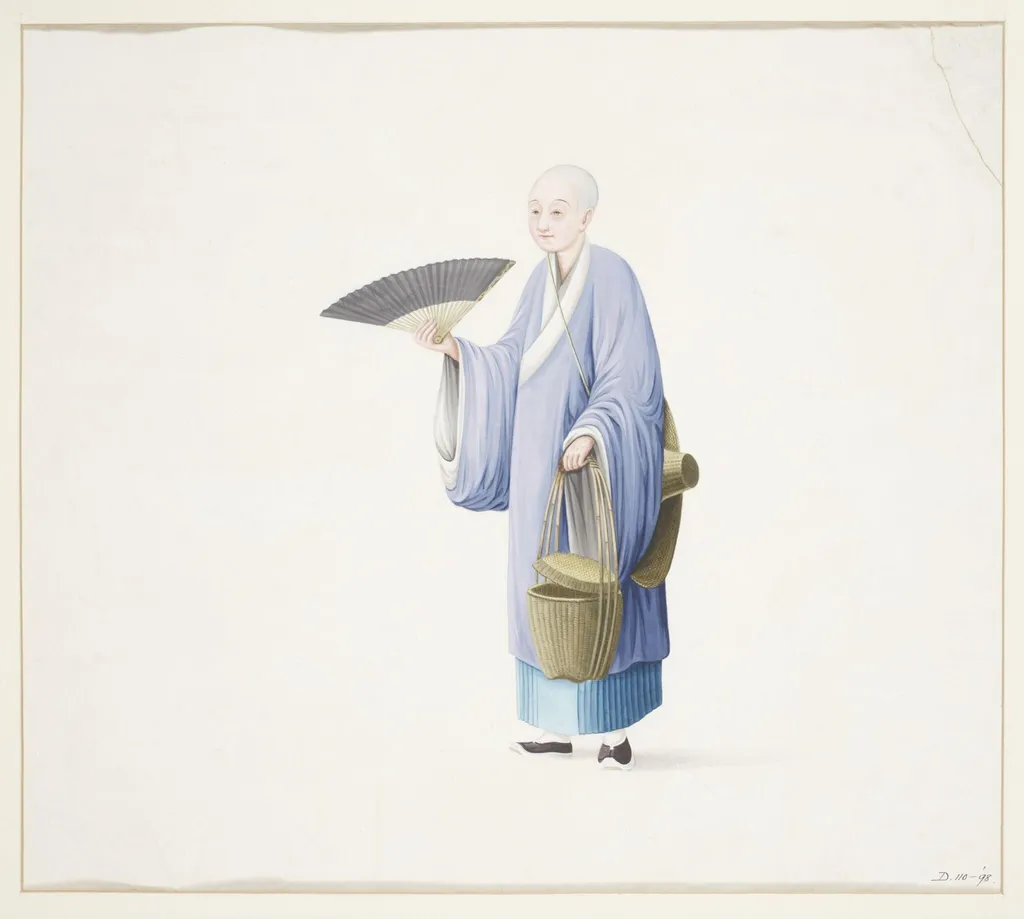
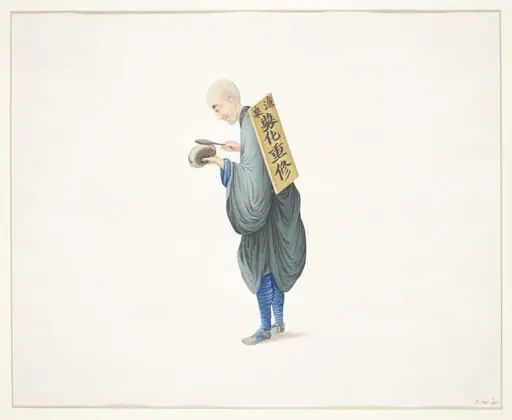
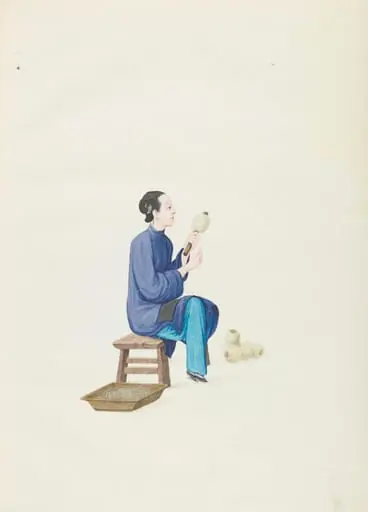
A Buddhist Nun Delivering Soup is a paint painting by the Romanticist artist Unknown. It dates from 1790 and is held in the collection of the Victoria and Albert Museum. This painting depicts a Buddhist nun engaged in the quiet act of delivering soup, capturing a moment of daily devotion.
About this work
Overview
Dressed in a long blue robe and light blue trousers, she carries a woven bamboo basket on her shoulder and holds a folded black fan.
This painting depicts a Buddhist nun engaged in the quiet act of delivering soup, capturing a moment of daily devotion. Dressed in a long blue robe and light blue trousers, she carries a woven bamboo basket on her shoulder and holds a folded black fan. Her calm expression and modest attire reflect humility and mindfulness. The composition emphasizes stillness, with soft brushwork and muted tones reinforcing a contemplative mood.
Subject & Meaning
The nun’s act of delivering soup symbolizes compassion and service, central tenets in Buddhist practice. Her simple garments and utilitarian tools—the basket for food, the fan for cooling or modesty—signal her renunciation of worldly luxury. The absence of ornate detail or dramatic gesture underscores the spiritual value placed on ordinary, selfless acts. This image honors the quiet labor of monastic women who sustain communities through daily care.
Technique & Style
Rendered in delicate ink and watercolor, the painting employs soft, flowing lines and subtle gradations of blue and gray. The figure’s form is outlined with restraint, avoiding sharp contours, while the basket and fan are rendered with light, rhythmic strokes that suggest woven texture. The background remains unadorned, focusing attention on the nun’s serene presence and the simplicity of her task.
History & Provenance
The painting entered a private collection in 1898 through Parsons & Sons, a known dealer of East Asian art during the late 19th century. Its earlier history remains undocumented, though its style suggests it may originate from a monastic or folk tradition in East Asia, possibly China or Japan. It has remained in institutional care since acquisition, with no public exhibition record prior to the 20th century.
Context
In East Asian religious art, depictions of nuns performing humble tasks were rare compared to images of male monks or deities. This work reflects a regional tradition that honored the quiet contributions of female monastics, particularly in rural or lay-supported communities. Such images often circulated in temples or private homes as reminders of ethical living, not as objects of worship.
Legacy
Though not widely exhibited, the painting contributes to a lesser-known corpus of Buddhist art that elevates everyday acts of service. Its preservation offers insight into the visual culture of female monastic life, often overlooked in dominant narratives. Similar works can be found in collections such as the Victoria and Albert Museum, where quiet, domestic scenes from religious life are similarly preserved.
Artist & collection

 Domestic Scene
 Giacomo and Cardinal Marco, investing Andrea, Abbot of San Zeno, with his Benefice
 The Nymph of Fontainebleau
 Portrait of a Woman
 Madonna and Child with Saints in the Enclosed Garden
 Venus and Minerva
 Family Group of Four on Sofa
 Wall painting from Room H of the Villa of P. Fannius Synistor at Boscoreale