Artwork
A Florist
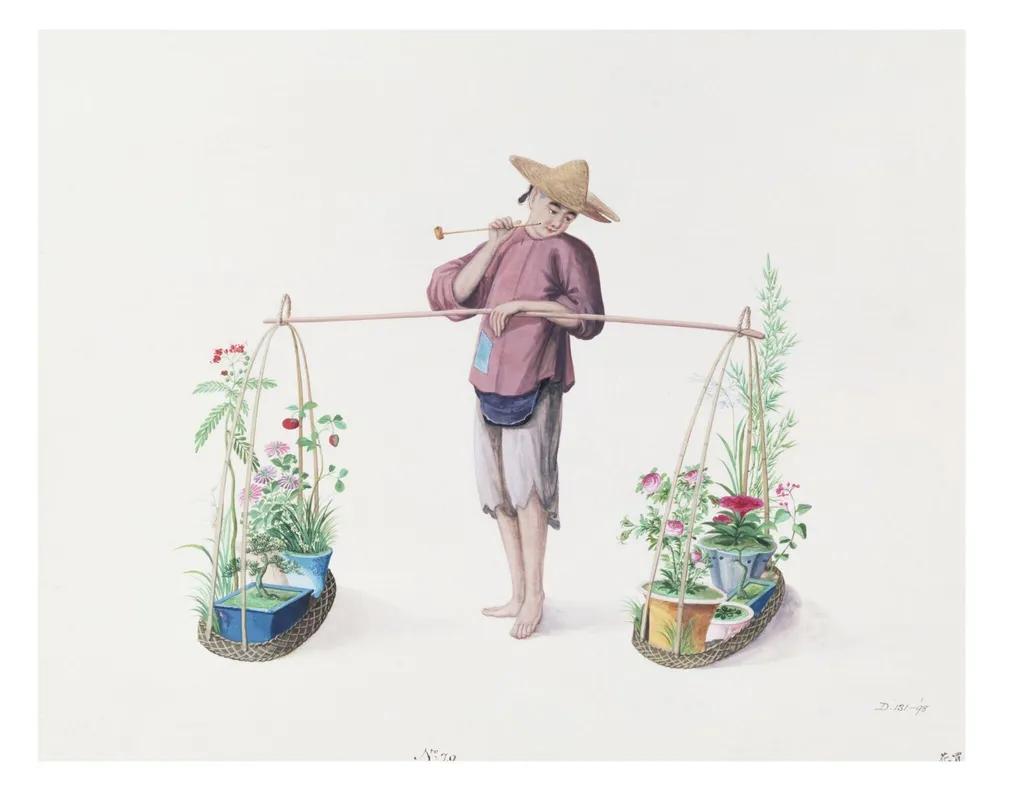
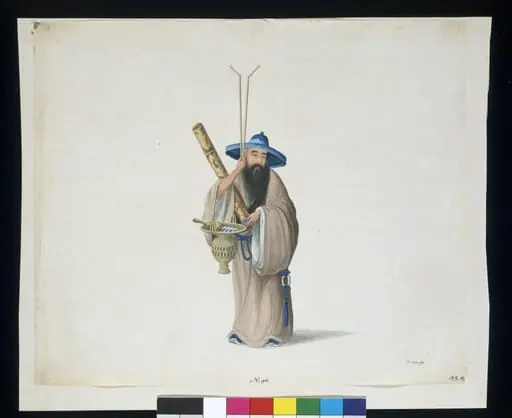
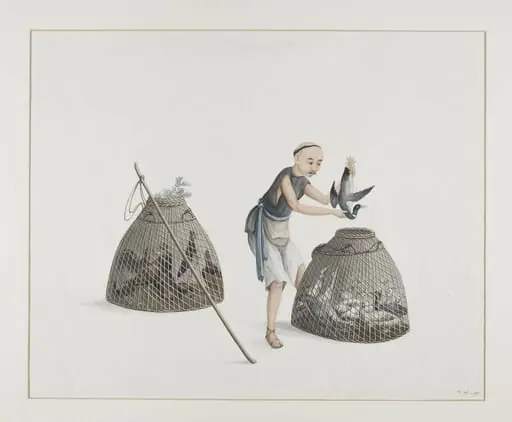
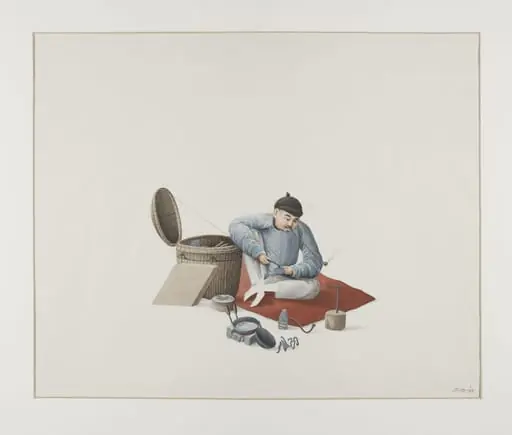
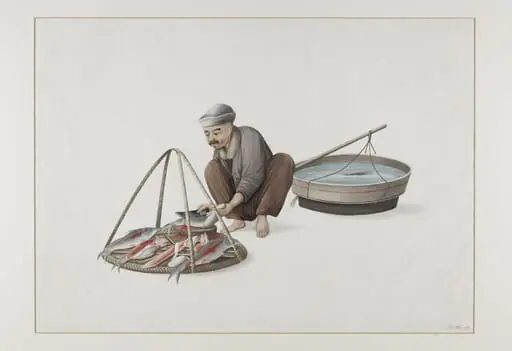
A Florist is a paint painting by the Patna School of Painting artist Puqua. It dates from 1790 and is held in the collection of the Victoria and Albert Museum.
About this work
Overview
The florist scene captures a quiet moment of commerce, rendered with attention to detail and atmospheric lighting that distinguishes it within the broader set.
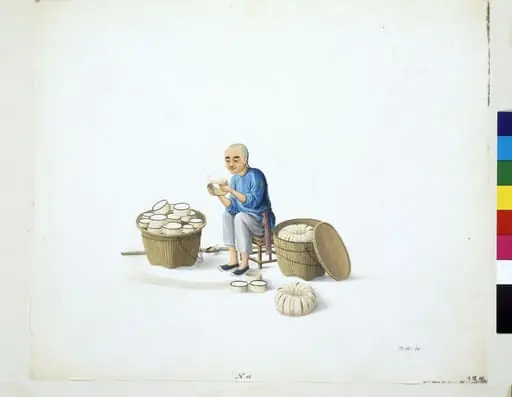
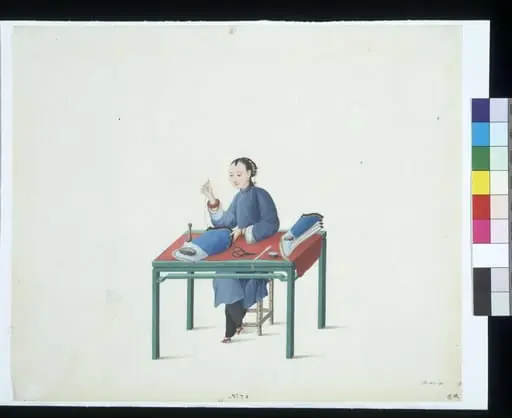
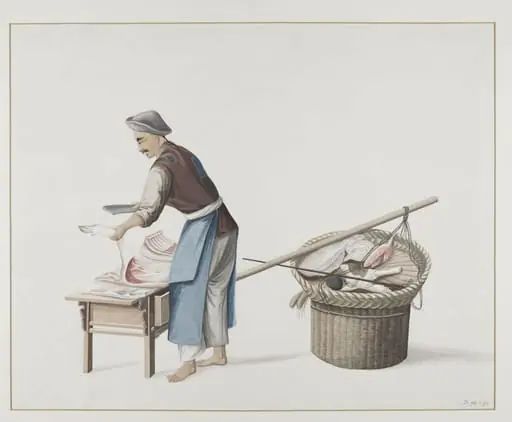
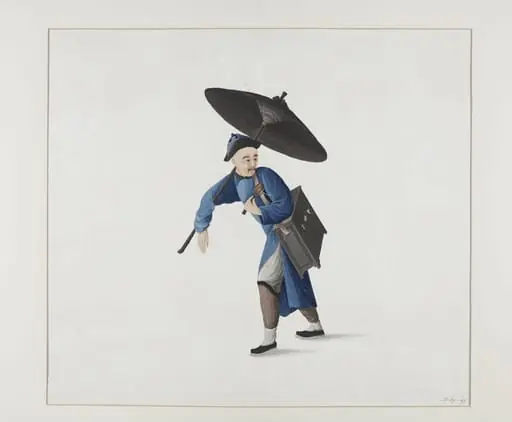
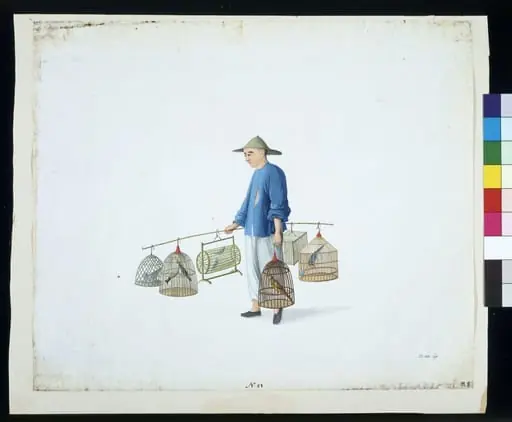
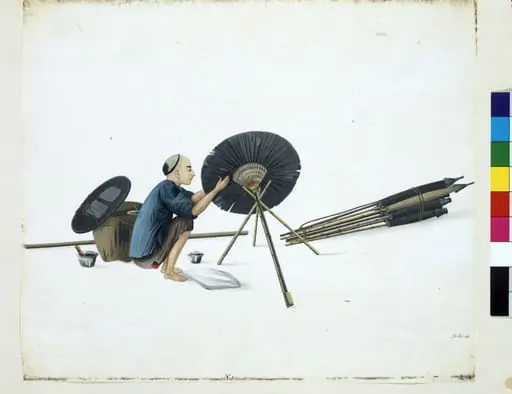
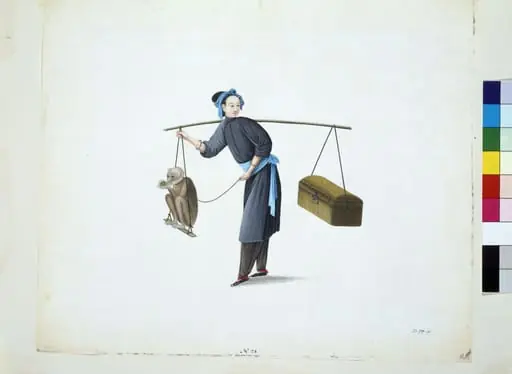
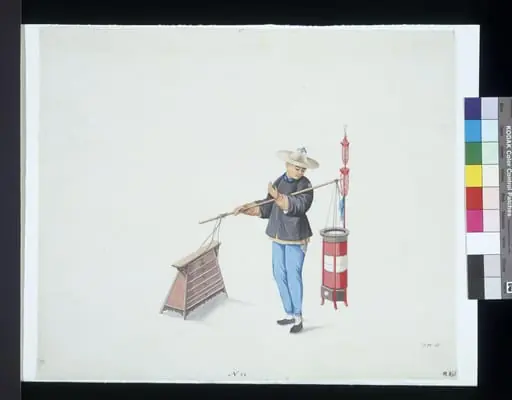
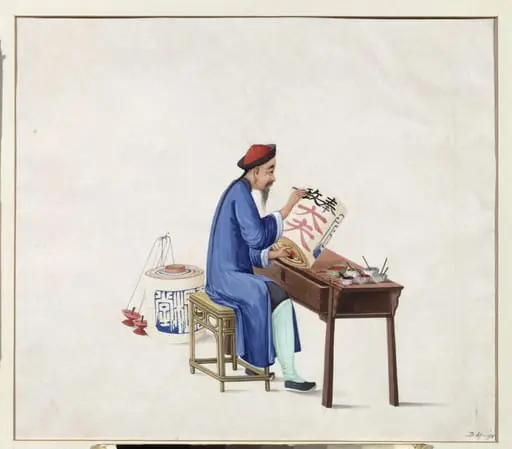
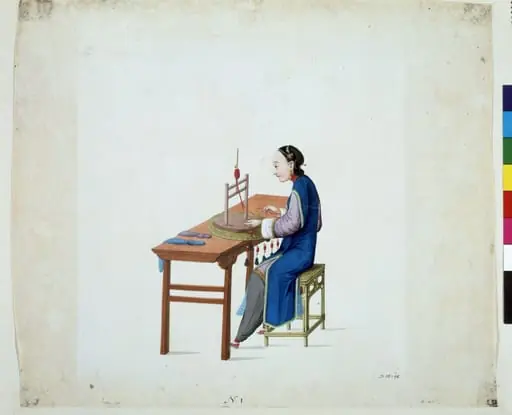
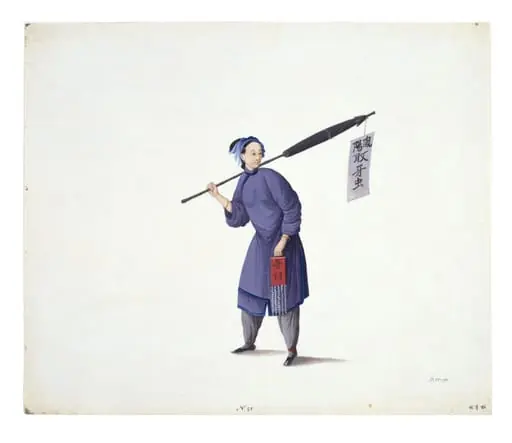
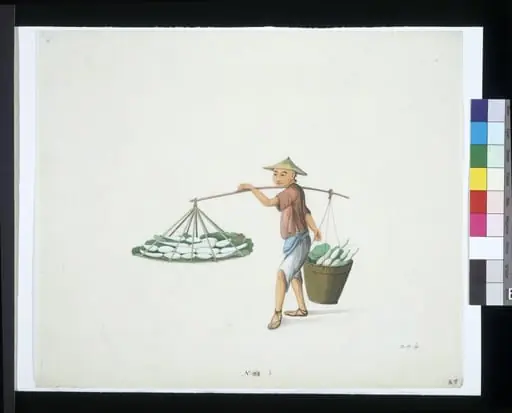
This painting is one of a hundred works created by the Chinese artist Puqua, each portraying a distinct trade in Canton during the early 19th century. Produced for export to European markets, the series offered visual narratives of everyday labor in southern China. The florist scene captures a quiet moment of commerce, rendered with attention to detail and atmospheric lighting that distinguishes it within the broader set.
Subject & Meaning
The painting depicts a florist in his shop, engaged with a customer who gestures toward flowers displayed behind the counter. The interaction suggests a transaction rooted in daily life, not spectacle. The abundance of blooms and the florist’s focused demeanor convey the quiet dignity of artisanal work. Rather than idealizing the subject, the image presents an unembellished view of commercial exchange in a Chinese urban setting.
Technique & Style
Puqua employed vivid pigments and careful modulation of light to enhance the tactile quality of the flowers and textiles. Side lighting casts subtle shadows, lending volume to petals and fabric folds, while the background remains softly blurred to direct focus to the figures. The brushwork is precise yet unshowy, prioritizing clarity and realism over ornamental flourish, aligning with the documentary intent of the series.
History & Provenance
Created in the 1820s–1840s, the set of one hundred trade paintings was produced for foreign merchants and travelers in Canton, then the primary port of Western trade with China. These works were sold as souvenirs or educational curiosities. Puqua’s output was part of a broader genre of export art, with many pieces entering private collections in Europe and North America, where they remained largely undocumented until later scholarly interest.
Context
During the Canton System era, foreign access to China was tightly restricted, making visual records of local life highly valued abroad. Artists like Puqua responded to this demand by documenting occupations rarely seen by outsiders. The florist painting reflects both Chinese artistic conventions and adaptations to Western tastes—balanced observation without overt exoticism, offering a grounded glimpse into a closed society.
Legacy
Puqua’s trade series remains a rare visual archive of early 19th-century Chinese labor, preserved in museums and private collections. While little is known of the artist’s life, his work provides insight into cross-cultural exchange and the agency of Chinese artisans in shaping foreign perceptions. The paintings are now studied for their ethnographic value, not merely as decorative objects.
Artist & collection