Artwork
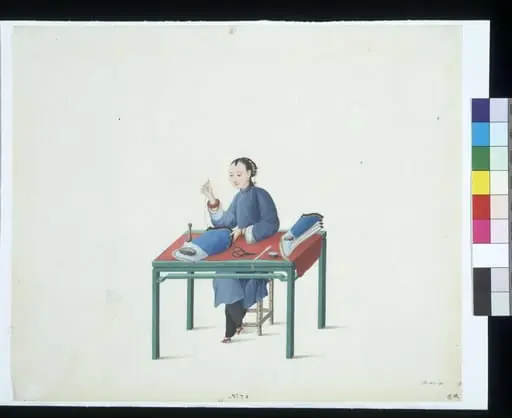
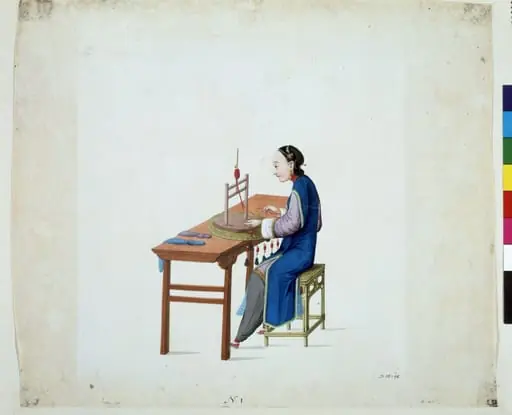
Woman Embroidering
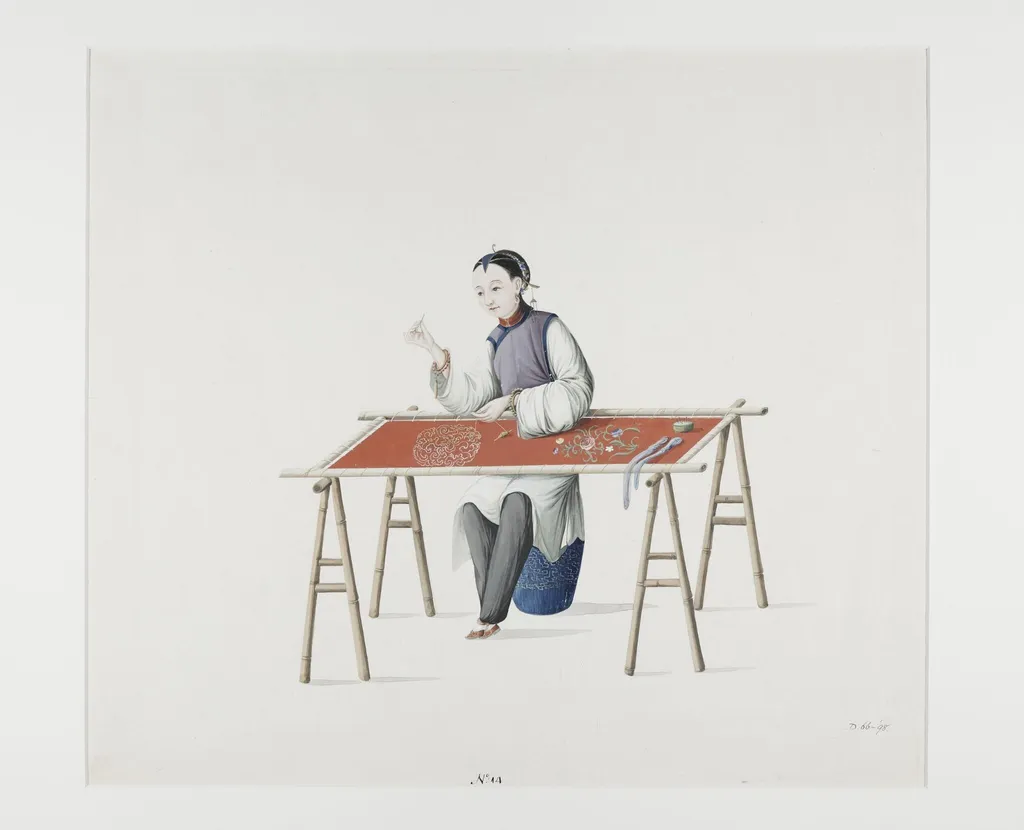
Woman Embroidering is a paint painting by the Patna School of Painting artist Puqua. It dates from 1790 and is held in the collection of the Victoria and Albert Museum.
About this work
The table holds a few tools—brushes or needles—and the cloth has delicate gold designs on it.
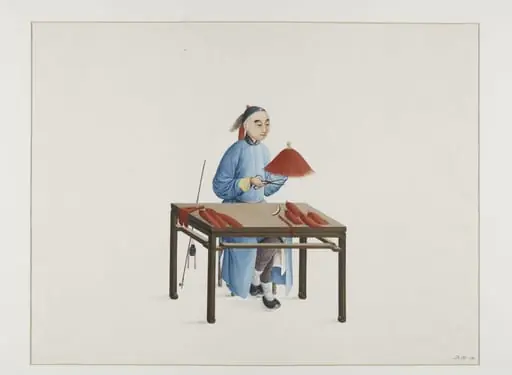
A woman sits at a low wooden table, carefully working on a red cloth spread across it. She’s dressed in a light robe with blue trim, and her hair is pulled back neatly. The table holds a few tools—brushes or needles—and the cloth has delicate gold designs on it.
The scene looks calm and focused, like a quiet moment of skillful work. The artist, Puqua, painted this around 1790 in Guangzhou, showing everyday life with care.
Next, check out the Victoria and Albert Museum to see more works like this.
Overview
This painting is one of a series of one hundred works produced in Guangzhou around 1790, documenting everyday trades and domestic activities. Created by the Chinese artist Puqua, it captures a quiet moment of labor within a domestic setting. The piece was made for export, reflecting a growing European appetite for visual records of Chinese life during the late Qing dynasty. It entered a Western collection in 1898 through Parsons & Sons.
Subject & Meaning
The subject is a woman engaged in embroidery, her posture attentive and movements deliberate. The red cloth beneath her hands, adorned with fine gold thread, suggests the production of luxury textiles, possibly for export or elite use. Her modest attire and serene expression emphasize dignity in labor. The scene avoids theatricality, presenting work as an ordinary, respected part of daily life rather than a spectacle.
Technique & Style
Puqua employed fine brushwork to render textures: the sheen of silk robes, the weave of the cloth, and the delicate metallic embroidery. The palette is restrained, with soft tones accented by the red tablecloth and gold thread. Composition is balanced and intimate, with minimal background detail to focus attention on the figure and her task. The style blends traditional Chinese painting conventions with subtle Western influences in spatial clarity.
History & Provenance
The painting was created in Guangzhou during a period of active trade between China and Europe, when export art flourished. It was acquired by a British collector in 1898 from Parsons & Sons, a known dealer in Asian artifacts. Its inclusion in a larger series suggests it was part of a commercial project, likely commissioned by foreign merchants seeking visual documentation of Chinese craftsmanship for Western audiences.
Context
In late 18th-century Guangzhou, foreign traders were restricted to a limited port zone, fostering a niche market for artworks depicting local life. Artists like Puqua catered to this demand, producing scenes of labor, rituals, and urban routines. These works served as cultural souvenirs, shaping European perceptions of China as orderly, industrious, and exotic—yet they also preserved authentic details of domestic practice often overlooked in official records.
Legacy
The series to which this painting belongs remains a valuable historical record of Qing-era labor and material culture. Though created for foreign consumption, the works offer insight into the skills and routines of ordinary Chinese women. Today, they are studied not only as export art but as documents of social history, preserving the quiet dignity of craft in a rapidly changing global economy.
Own this work as a print
Artist & collection