Artwork
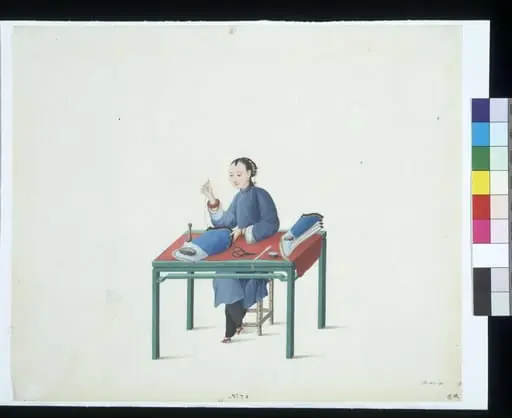
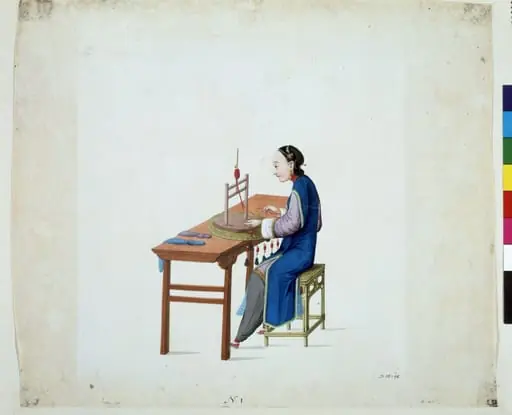
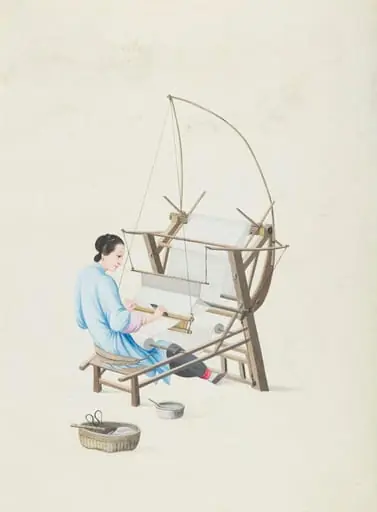
Woman Weaving Cotton
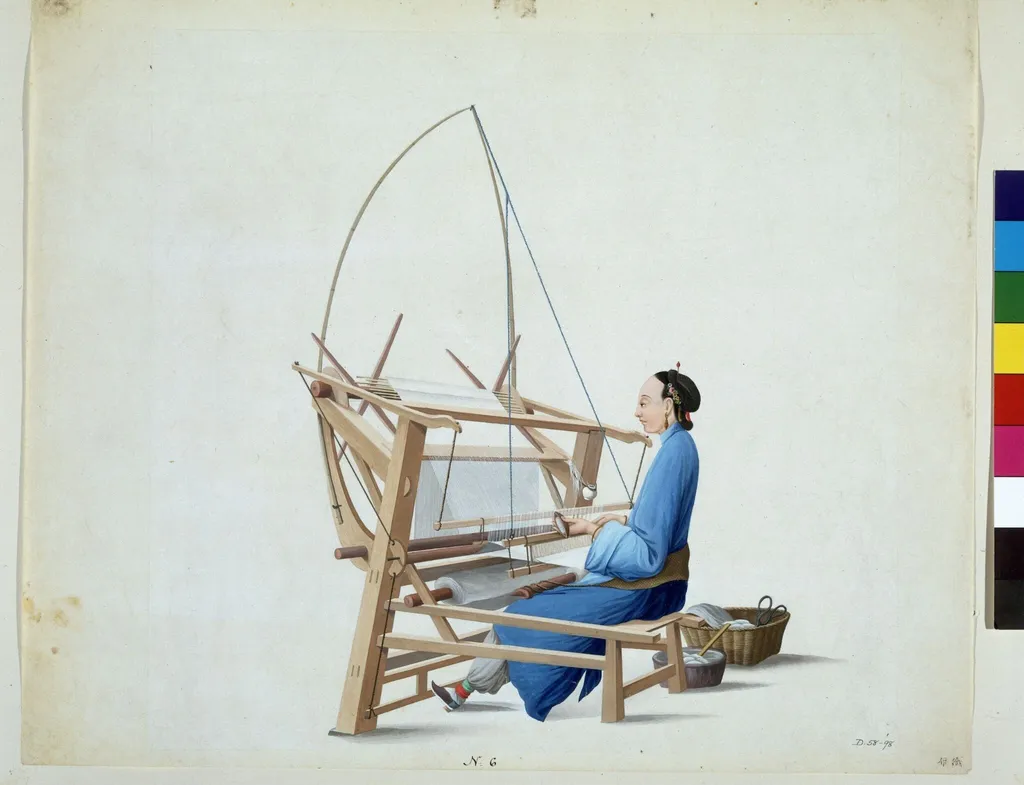
Woman Weaving Cotton is a paint painting by the Patna School of Painting artist Puqua. It dates from 1790 and is held in the collection of the Victoria and Albert Museum. This painting belongs to a series of one hundred works produced in Canton, each illustrating a distinct trade or occupation.
About this work
Overview
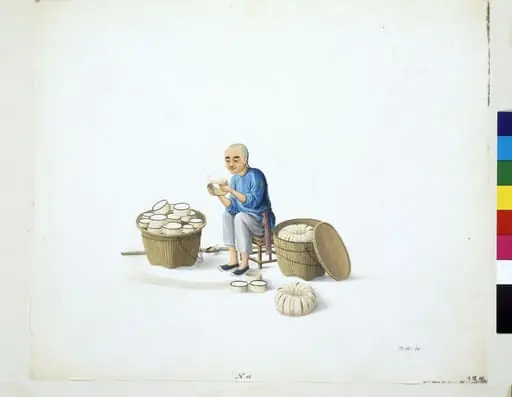
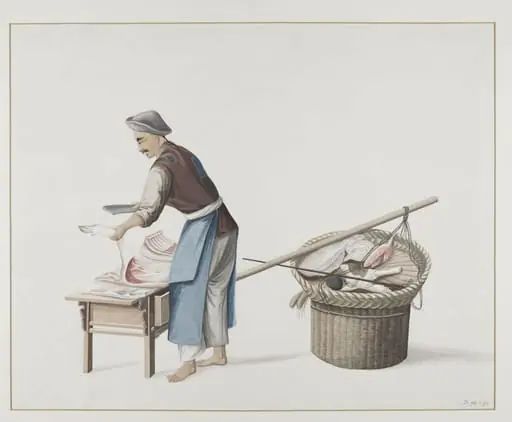
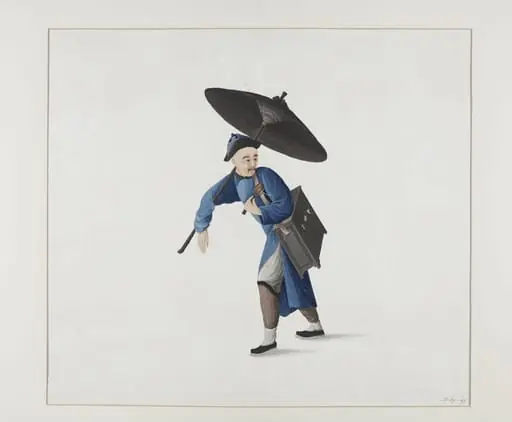
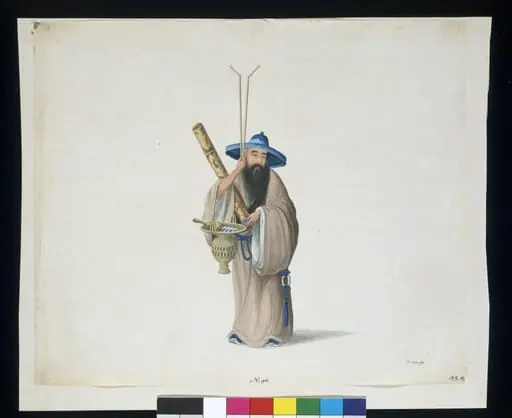
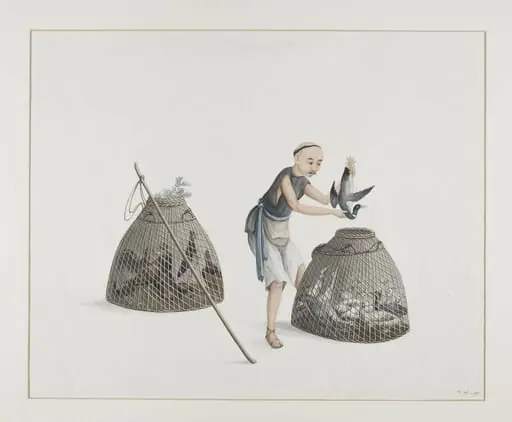
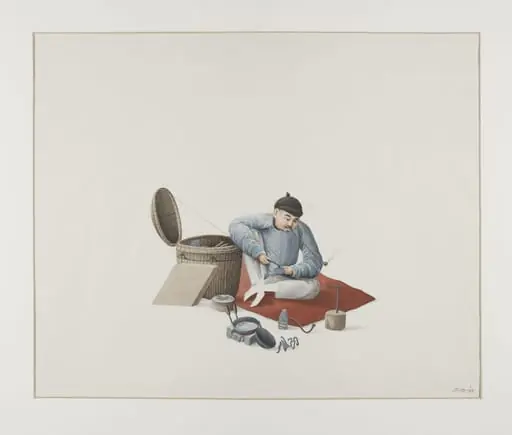
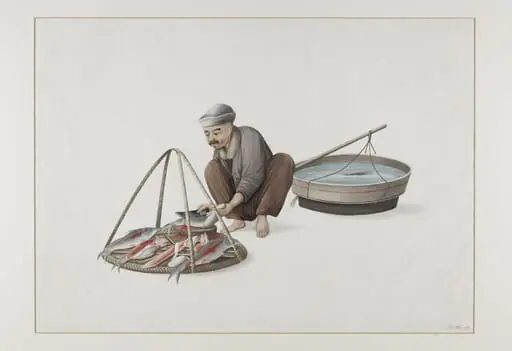
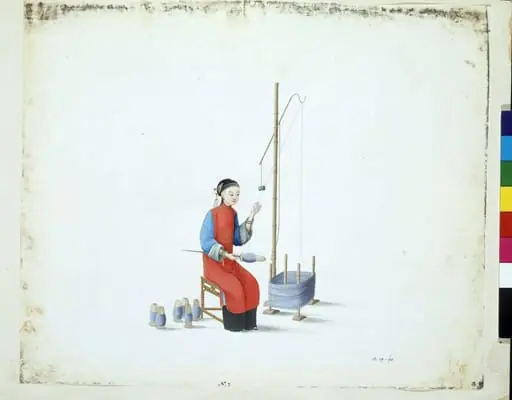
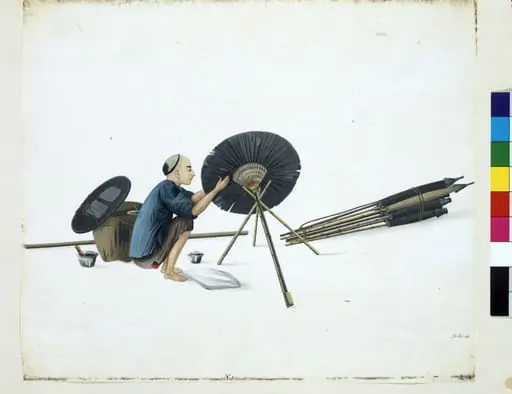
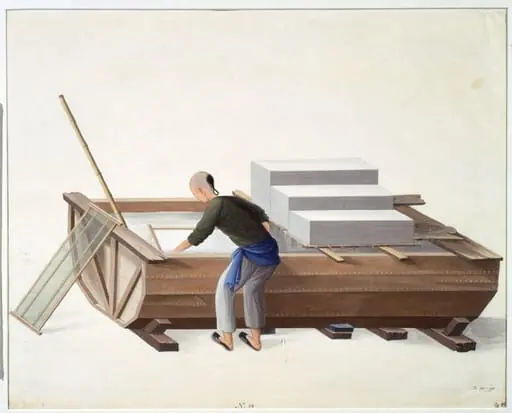
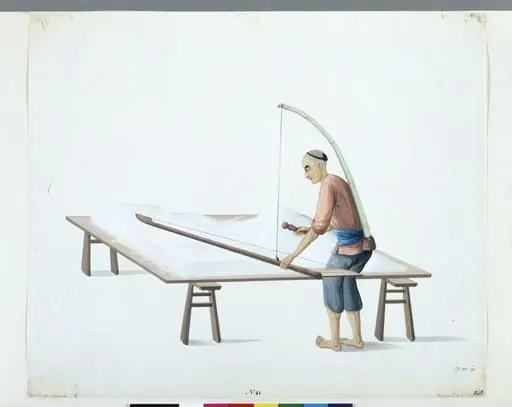
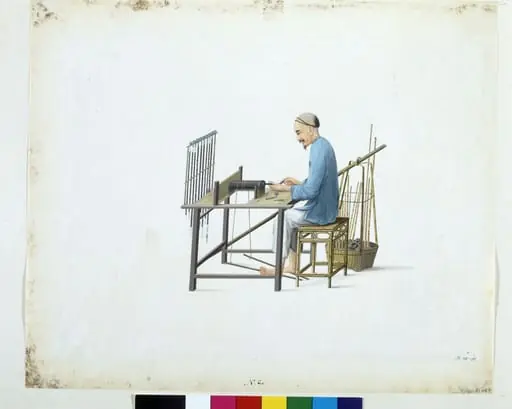
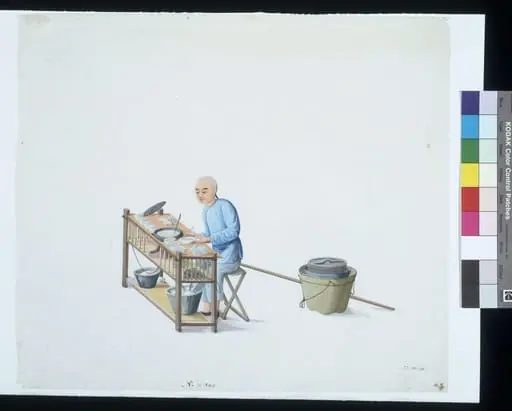
This painting belongs to a series of one hundred works produced in Canton, each illustrating a distinct trade or occupation.
This painting belongs to a series of one hundred works produced in Canton, each illustrating a distinct trade or occupation. Created for European audiences during the 18th or early 19th century, the set served as a visual catalog of Chinese labor. The woman depicted is engaged in cotton weaving, rendered with attention to her environment and tools, offering a quiet record of domestic industry rather than ceremonial or elite life.
Subject & Meaning
The subject is a female artisan focused on the meticulous process of cotton weaving. Her posture and the surrounding threads suggest concentration and routine, emphasizing the dignity of manual labor. Unlike idealized portraits, this image presents work as an unadorned part of daily existence. The painting’s purpose was not to glorify but to inform—offering Europeans a tangible glimpse into the economic fabric of southern Chinese society.
Technique & Style
The painting employs a straightforward, observational style with clear outlines and muted colors, typical of export art from Canton. Details like the loom, spindles, and woven cloth are rendered with precision but without dramatic lighting or deep perspective. While influenced by European tastes, it avoids Western academic conventions such as sfumato, favoring clarity and documentary accuracy over atmospheric effect.
History & Provenance
The series was likely produced by local Chinese artists for foreign merchants and travelers, particularly during the height of the Canton Trade system. These works were sold as souvenirs or ethnographic curiosities in Europe. Though individual attributions are rare, the consistency in format and subject across the set suggests workshop production, possibly under the direction of a master painter managing multiple assistants.
Context
In the late Qing period, Canton was one of the few Chinese ports open to foreign trade, making it a cultural crossroads. The demand for images of Chinese life arose from European fascination with the exotic and the commercial. This series reflects a mutual exchange: Chinese artists adapted their output to foreign interests, while Europeans received a curated view of a society largely inaccessible to them.
Legacy
The series remains a valuable historical resource for understanding 18th- and 19th-century Chinese labor practices and cross-cultural visual exchange. Though not part of the fine art canon in China, these works have contributed to Western ethnographic collections and continue to inform studies on global trade, gendered labor, and the representation of everyday life in pre-modern China.
Artist & collection