Artwork
江戸高名会亭尽 牛嶋 武蔵屋|Ushijima (Musashi-ya)
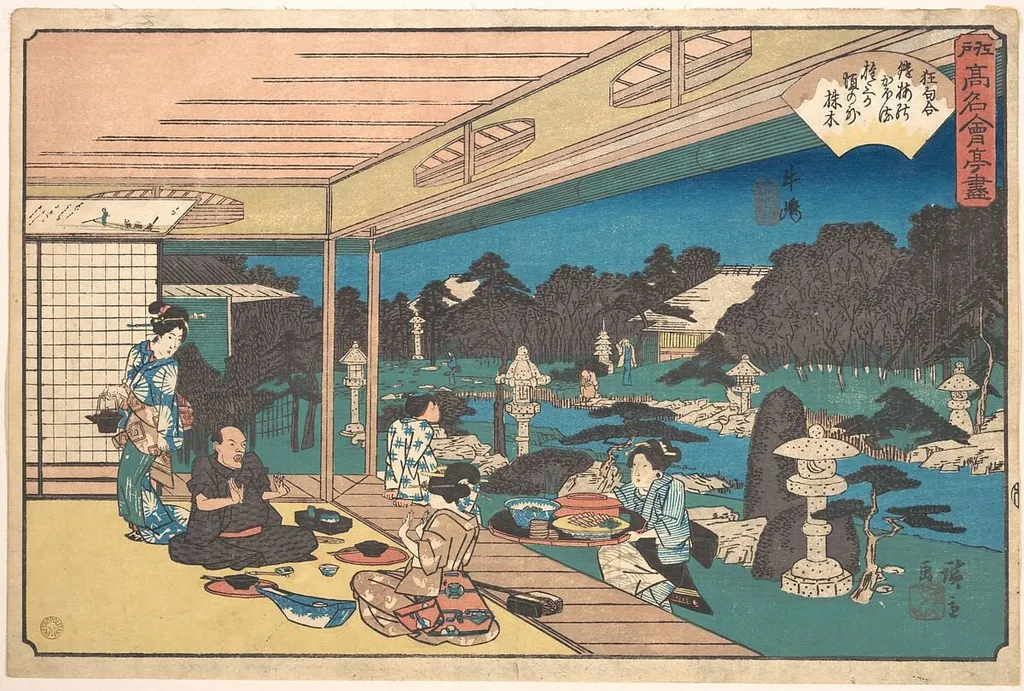
江戸高名会亭尽 牛嶋 武蔵屋|Ushijima (Musashi-ya) is an ink print by the Romanticist artist Utagawa Hiroshige. It dates from 1840 and is held in the collection of the Metropolitan Museum of Art.
About this work
Overview
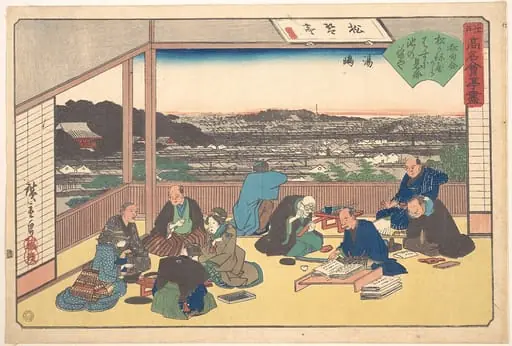
Created around 1840 by Utagawa Hiroshige, this woodblock print is part of the series “Famous Restaurants of Edo.” It depicts a dining pavilion in a garden setting, reflecting the urban leisure culture of Edo-period Japan. Unlike many ukiyo-e works centered on actors or courtesans, Hiroshige focused on everyday scenes of city life, elevating ordinary spaces into subjects of quiet observation.
Subject & Meaning
The presence of stone lanterns, distant walkers, and a crescent moon implies evening, blending domestic comfort with the stillness of nature.
The scene unfolds in a garden pavilion beside a pond, where patrons gather for a meal. One man laughs while women serve food on trays, suggesting a relaxed, social occasion. The presence of stone lanterns, distant walkers, and a crescent moon implies evening, blending domestic comfort with the stillness of nature. The image celebrates Edo’s culinary culture not as spectacle, but as a woven part of daily rhythm.
Technique & Style
Hiroshige employs bold outlines and flat areas of color to define forms, a hallmark of ukiyo-e printing. Depth is suggested through layered spatial planes — foreground figures, midground trees, and distant figures — rather than perspective. The sky, painted in pale blue with a single crescent moon, adds temporal nuance. Trees are stylized yet grounded in observed detail, balancing artistic convention with naturalism.
History & Provenance
The print was produced as part of a commercial series documenting Edo’s renowned eateries, likely commissioned by publishers seeking to capitalize on urban pride. As a print from Hiroshige’s mature period, it reflects his shift from actor and beauty prints to landscapes and cityscapes. Original impressions were widely circulated among the merchant class, making such images accessible beyond elite circles.
Context
During the 1840s, Edo’s growing merchant class embraced dining out as a form of social expression. Restaurants like Musashi-ya became cultural landmarks, often set in garden settings to offer respite from urban density. Hiroshige’s focus on these spaces aligned with broader trends in ukiyo-e that documented the city’s evolving public life, moving beyond traditional theatrical subjects.
Legacy
This print exemplifies Hiroshige’s influence in redefining ukiyo-e’s thematic boundaries. By centering quiet, everyday moments — meals, gardens, twilight — he expanded the genre’s emotional range. His approach to landscape and atmosphere later resonated with Western artists, contributing to the global appreciation of Japanese printmaking as a form of poetic realism.
Artist & collection
Artist
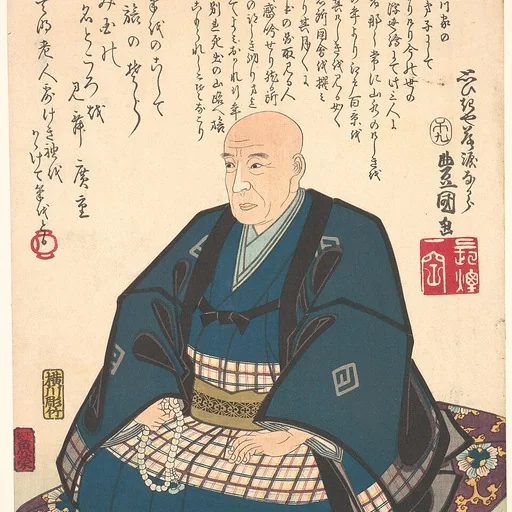
Utagawa Hiroshige (歌川 広重) or Andō Hiroshige (安藤 広重), born Andō Tokutarō (安藤 徳太郎; 1797 – 12 October 1858), was a Japanese ukiyo-e artist, considered the last great master of that tradition.

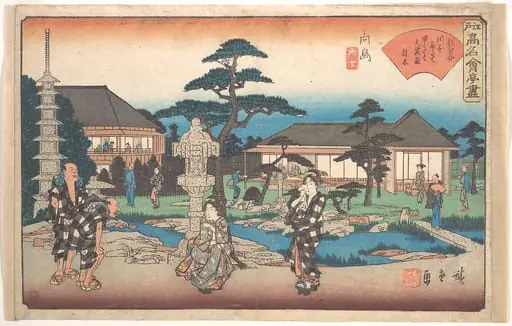 Mukōjima (Daikokuya)|江戸高名会亭尽 向島 大七|The Daikokuya at Mukojima
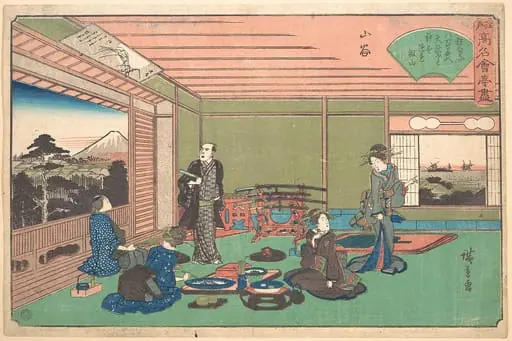 江戸高名会亭尽 山谷 八百善|San-ya (Yaozen)
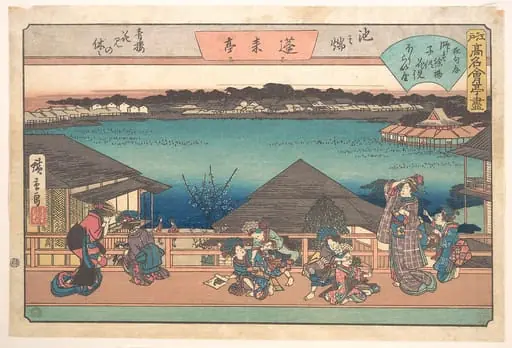 江戸高名会亭尽 池之端 蓬莱亭 青楼花見の休み|Ikeno Mata (Horai-ya)
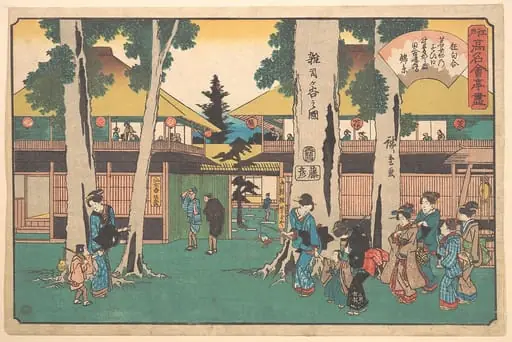 江戸高名会亭尽 雑司ヶ谷の図 茗荷屋|Zoshigaya no Zu (Myoga-ya)
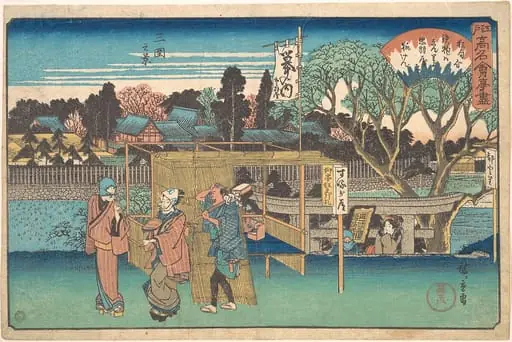 江戸高名会亭尽 三囲之景 出羽屋|Mimeguri no Kei (Toyoha-ya)
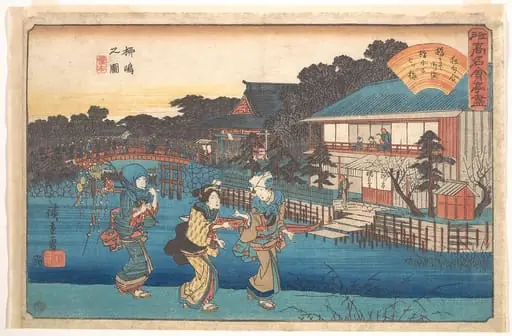 江戸高名会亭尽 柳島の図 橋本|Yanagishima no Zu
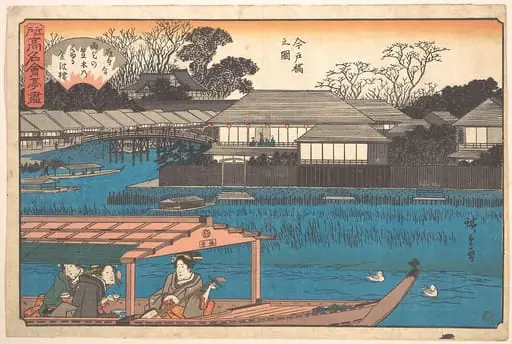 江戸高名会亭尽 今戸橋之図 金波楼|Imadobashi no Zu (Tama-Sho)
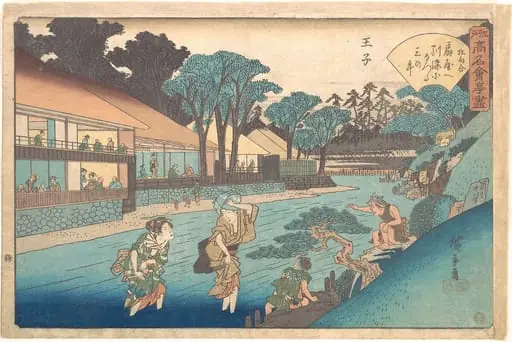 江戸高名会亭尽 王子 扇屋|The Ōgiya at Ōji
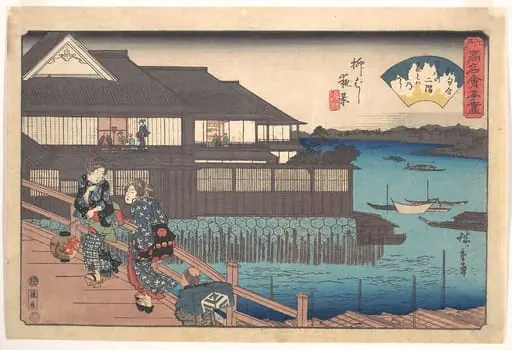 江戸高名会亭尽 柳ばし夜景 万八|The Manpachi at Evening in Yanagibashi
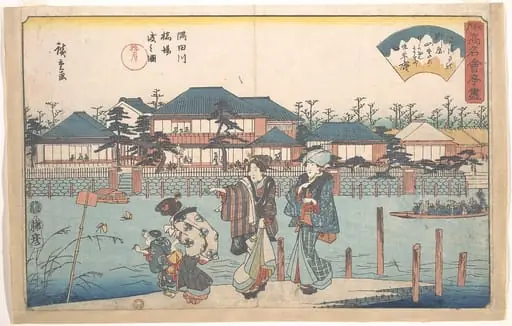 江戸高名会亭尽 隅田川橋場渡之図 柳屋|Sumidagawa Hashiba Watashi Zu (Yanagiya)
 江戸高名会亭尽 湯島 松琴亭|Yushima (Matsu Kane-ya)