Artwork
Untitled
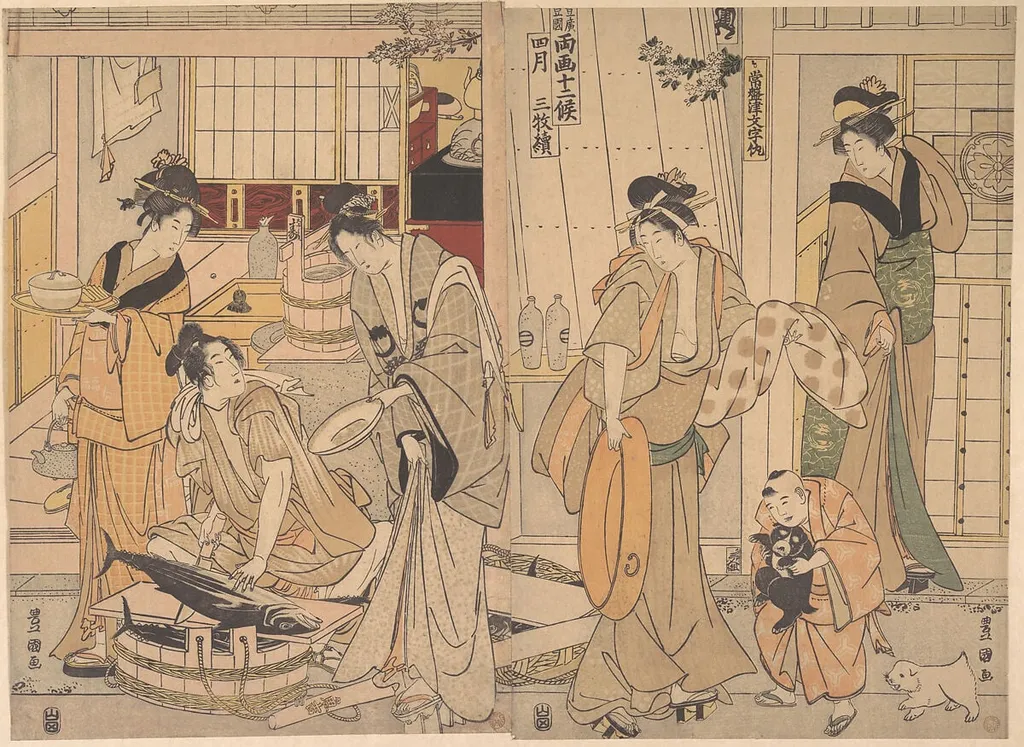
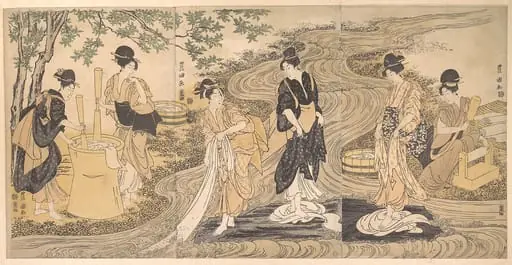
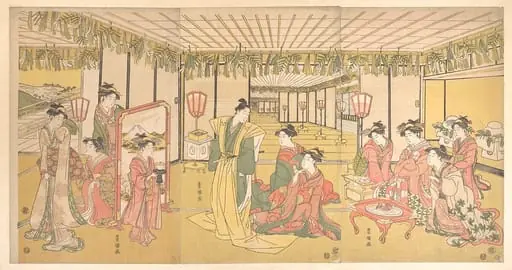
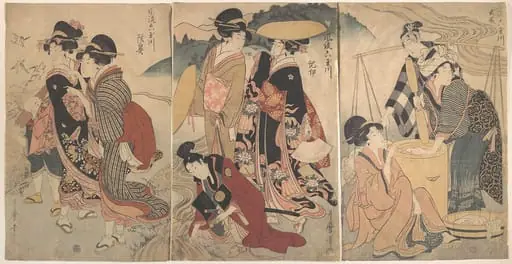
Untitled is an ink print by the Romanticist artist Utagawa Toyokuni I. It dates from 1801 and is held in the collection of the Metropolitan Museum of Art.
About this work
Overview
The Metropolitan Museum of Art holds the surviving fragments, which together form part of a larger narrative scene.
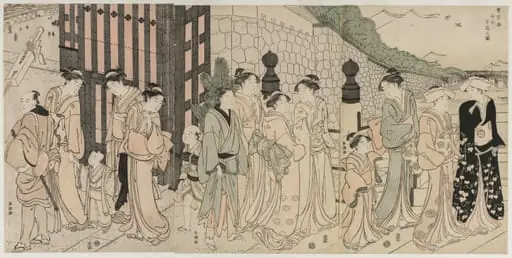
This work consists of two panels from a triptych of woodblock prints by Utagawa Toyokuni I, dated around 1801. Executed in ink and color on paper, it belongs to the ukiyo-e tradition of Japanese printmaking. The Metropolitan Museum of Art holds the surviving fragments, which together form part of a larger narrative scene. The composition captures moments of domestic life with quiet precision, typical of Toyokuni’s genre-focused output.
Subject & Meaning
The left panel depicts three women in an interior setting: one plays a stringed instrument, another holds a fan, and a third observes. The right panel shows two women and a child moving through a space lined with shelves and vessels, a cat lingering nearby. These scenes reflect ordinary routines in Edo-period households, emphasizing quiet companionship and the rhythms of daily life rather than dramatic events.
Technique & Style
Toyokuni employed flat, unmodulated colors and crisp, flowing outlines to define forms. Robes and gestures are rendered with rhythmic linearity, suggesting motion without heavy shading. Cross-hatching is used sparingly to suggest texture and depth, particularly in flooring and furnishings. The absence of perspective and the emphasis on pattern align with conventions of ukiyo-e, prioritizing elegance and clarity over realism.
History & Provenance
The print was produced during Toyokuni’s peak years as a leading ukiyo-e artist in Edo. As part of a triptych, it was likely published for commercial sale to a middle-class audience. Only two panels survive today, suggesting the third may have been lost or separated over time. The Metropolitan Museum of Art acquired the fragments as part of its broader collection of Japanese prints.
Context
Created in the early 19th century, this work emerged during a period when ukiyo-e prints increasingly depicted scenes of urban life, theater, and domesticity. Toyokuni specialized in portraying women and actors with refined detail, catering to popular tastes. These prints were affordable and widely distributed, serving as both art and ephemeral decoration in homes across Edo.
Legacy
Though only fragments remain, this work exemplifies Toyokuni’s influence on genre printmaking. His ability to convey subtle human interaction through stylized form helped define the aesthetic of Edo-period domestic imagery. Later artists built upon his compositional clarity and attention to everyday detail, embedding his approach into the broader evolution of Japanese print culture.
Artist & collection

Artist
Toyokuni was a born showman who made sure the energy of Edo’s kabuki stage never faded on paper.

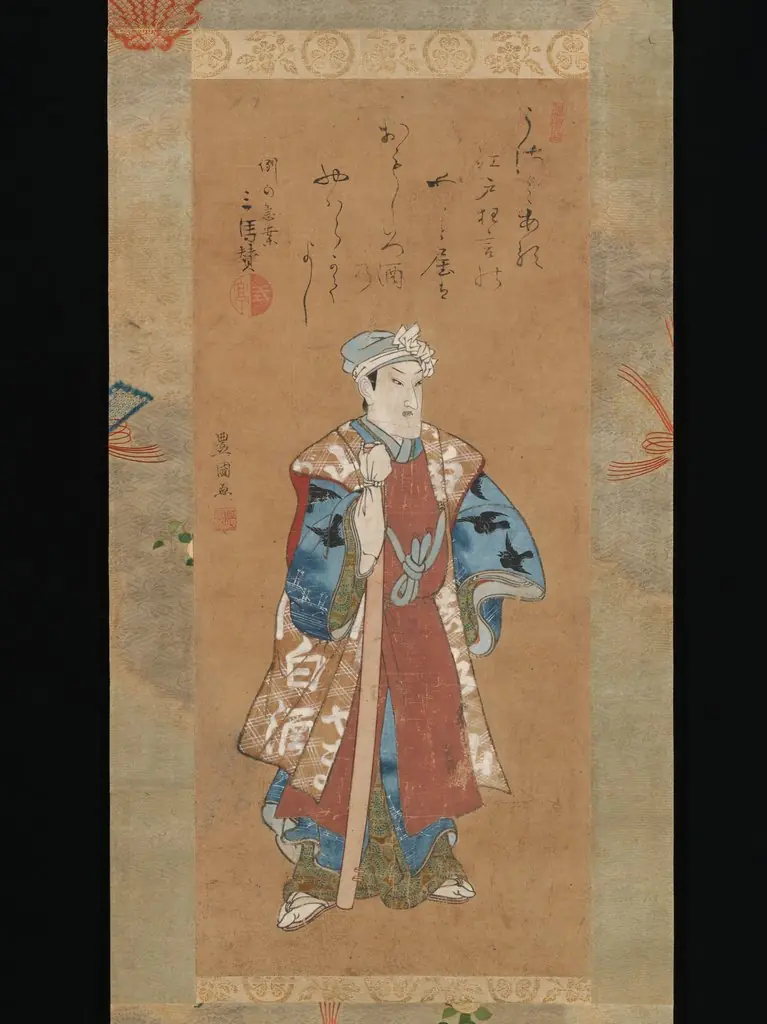 Bandō Mitsugorō II as Shinbei in the Kabuki Play "Sukeroku"
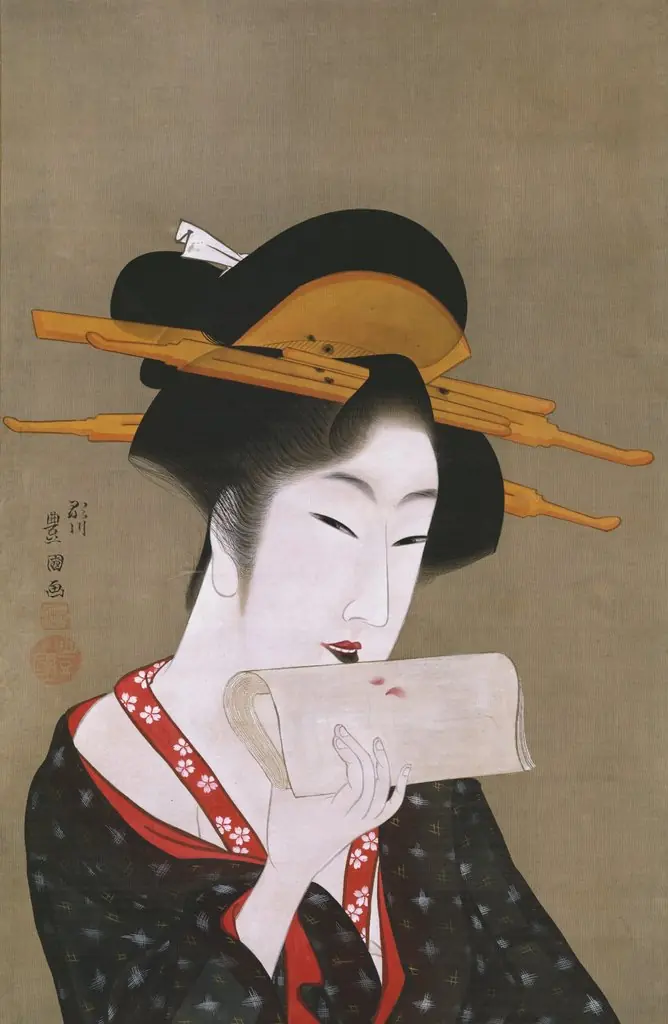 Beauty Blotting Her Lip Rouge
 Portrait of Kinokuniya Bunzaemon
 Untitled
 Tokaido Yotsuya Kaidan|Onoe Matsusuke as the Ghost of the Murdered Wife Oiwa, in "A Tale of Horror from the Yotsuya Station on the Tokaido Road"
 Untitled
 娘道成寺図の錦絵|Print of a Kabuki Dancer from the Maiden of the Dōjōji Temple (Musume Dōjōji)
 Untitled
 Picture of the First Visit to the Pleasure Quarters
 喜多川歌麿画 琴棋書画|The Four Accomplishments (Kinkishoga)
 A Thousand Autumns, Ten Thousand Years on Tokiwa Bridge
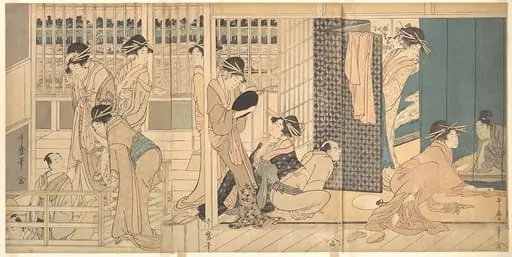 仮宅の後朝|Scene in the Yoshiwara
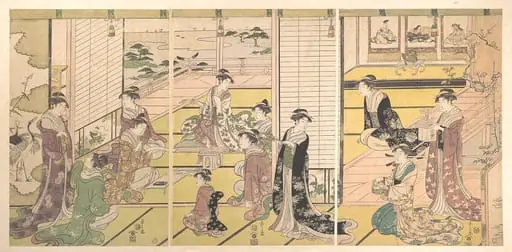 鳥文斎栄之画 和歌三神図|Honoring the Three Gods of Poetry: Women Composing Poems
![南四季 夏景|The Four Seasons in Southern Edo: A Summer Scene (Minami shiki; Natsu [no] kei), by Utagawa Toyokuni I](https://artifactworldgallery.com/img/utagawa-toyokuni-i--the-four-seasons-in-southern-edo-a-summer-scene-minami-shiki--de8110e8ab2ddcb5-w320.webp) 南四季 夏景|The Four Seasons in Southern Edo: A Summer Scene (Minami shiki; Natsu [no] kei)
南四季 夏景|The Four Seasons in Southern Edo: A Summer Scene (Minami shiki; Natsu [no] kei)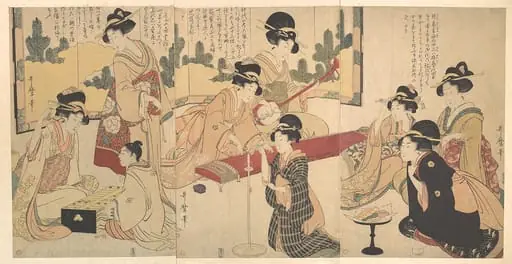 Untitled
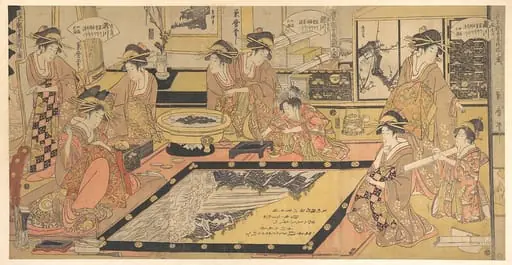 『浅草観音奉掛額之 図』 「扇屋内滝川 富川、粂川、玉川、津川、歌川、清川 め浪、お浪」|A Votive Picture to Be Donated to the Kannon of Asakusa (Asakusa Kannon hō kakegaku no zu), by Takigawa of the Ōgiya, Kamuro Menami and Onami, with Tomikawa, Kumegawa, Tamagawa, Tsugawa, Utagawa, and Kiyokawa
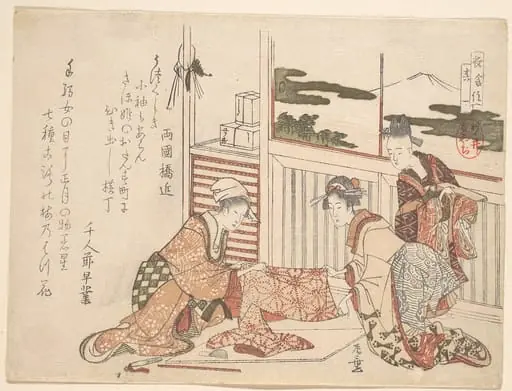 衣食住|Attire
 風流六玉川 武蔵 紀伊 陸奥|Women and a Man in the Country; Some pageant(?)
 Untitled