Artwork
Ordination
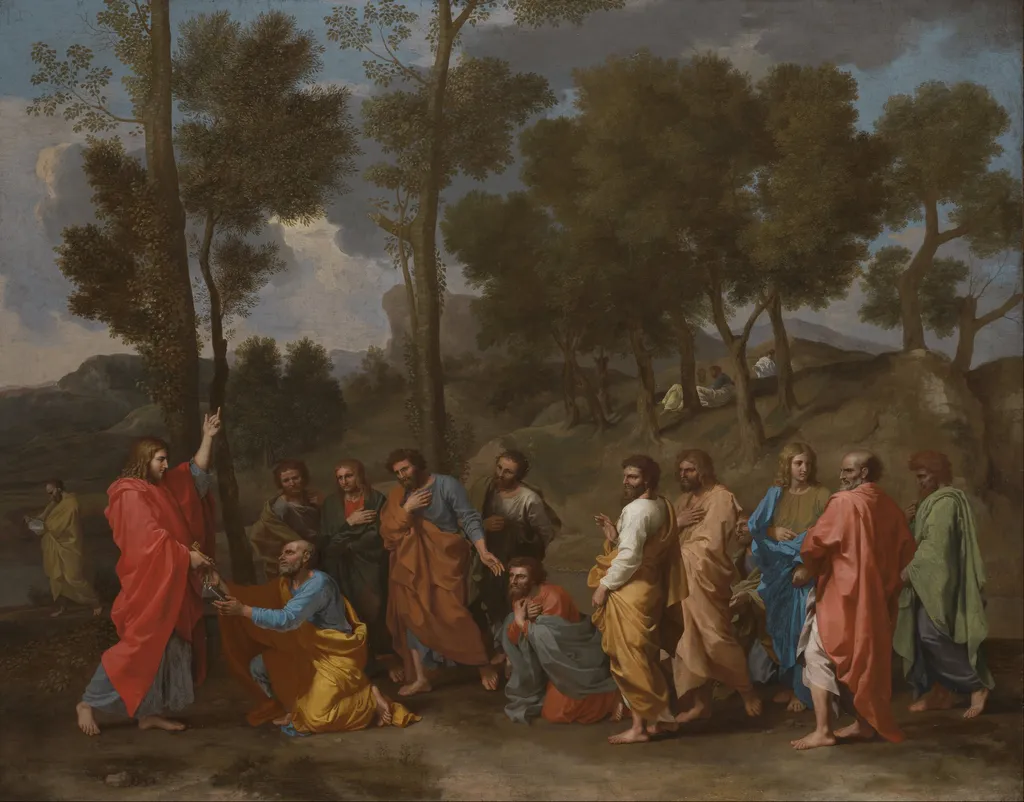
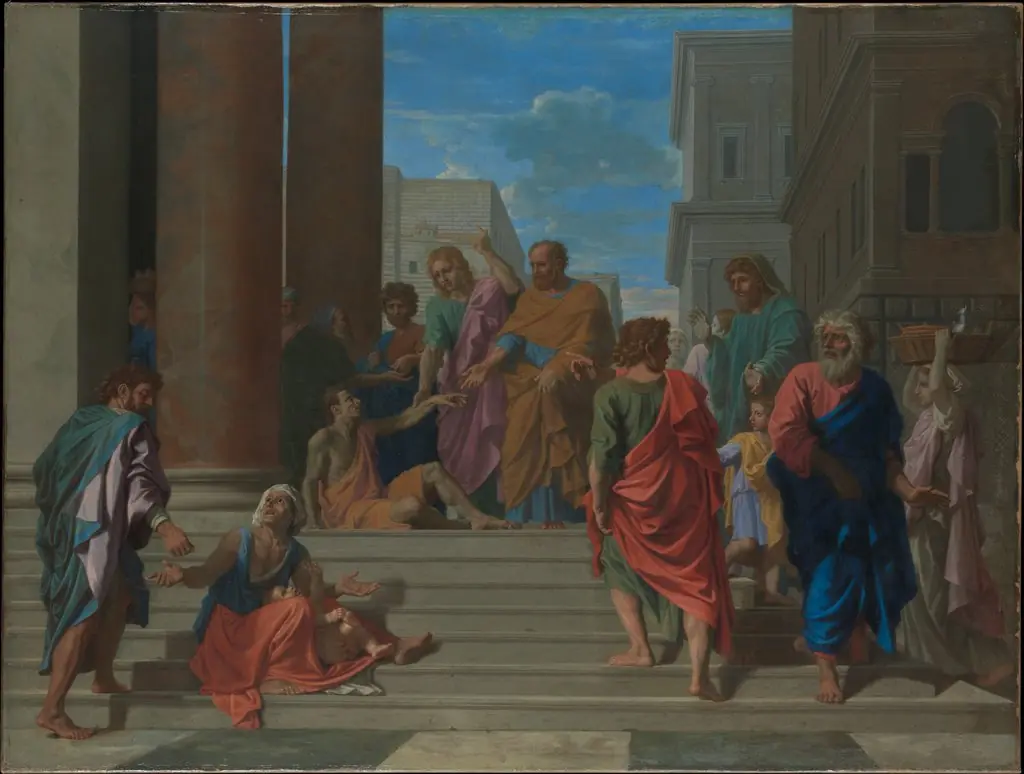
Ordination is an oil painting by the Dutch Golden Age artist Nicolas Poussin. It dates from 1638 and is held in the collection of the National Gallery.
About this work
Overview
It portrays a moment of spiritual authority being transferred within the early Christian community.
Ordination is an oil painting completed by Nicolas Poussin in 1638. It portrays a moment of spiritual authority being transferred within the early Christian community. The work is part of the permanent collection at the Kimbell Art Museum in Fort Worth, Texas. Its restrained palette and balanced composition reflect Poussin’s classical approach to religious narrative, emphasizing clarity and solemnity over dramatic spectacle.
Subject & Meaning
The scene illustrates Christ bestowing the keys of the Kingdom upon Saint Peter, a moment drawn from the Gospel of Matthew. Surrounding figures, dressed in varied robes, represent the apostles and early clergy witnessing the act. The key, held prominently by Peter, symbolizes spiritual leadership and the foundation of ecclesiastical authority. The composition isolates this gesture, reinforcing its theological weight without embellishment.
Technique & Style
Poussin employed glazing and controlled chiaroscuro to model forms with quiet precision. Figures are arranged in a stable, architectural grouping, with depth suggested by receding trees and a hazy sky. Robes are rendered in muted, harmonious tones, guiding the eye toward the central key. The brushwork is deliberate, avoiding theatricality in favor of calm dignity, characteristic of Poussin’s mature style during his Roman period.
History & Provenance
Commissioned during Poussin’s time in Rome, the painting was likely intended for a private devotional setting. It passed through several European collections before entering the Kimbell Art Museum in the 20th century. Its attribution has remained consistent, supported by stylistic analysis and historical records linking it to Poussin’s early 1630s output, a period marked by his deep engagement with biblical themes.
Context
Created amid the Counter-Reformation, the painting responds to Catholic efforts to clarify ecclesiastical hierarchy. Poussin, though not a devout Catholic, absorbed theological currents in Rome, where artists were encouraged to depict sacred subjects with intellectual rigor. Ordination aligns with contemporary interest in apostolic succession, offering a visual argument for institutional continuity rooted in scripture.
Legacy
The painting exemplifies Poussin’s influence on later academic traditions, particularly in France. Its emphasis on order, symbolic clarity, and restrained emotion became a model for historical painting. While not widely reproduced in its time, it has been studied for its formal discipline and theological subtlety, securing its place in the canon of 17th-century religious art.
Own this work as a print
Artist & collection
Artist
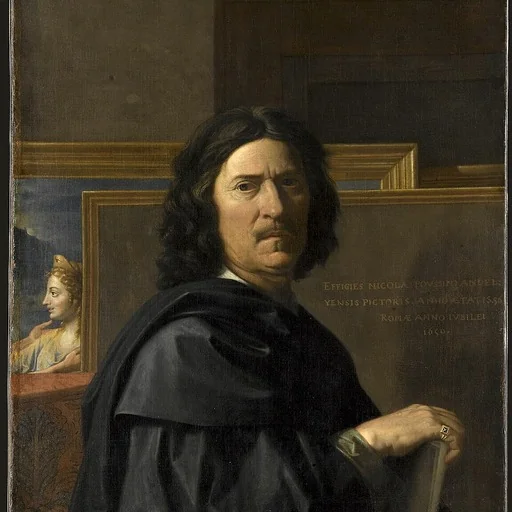
Nicolas Poussin (UK: , US: , French: ; June 1594 – 19 November 1665) was a leading painter of the classical French Baroque style, although he spent most of his working life in Rome.

 Jesucristo entregando las llaves a San Pedro
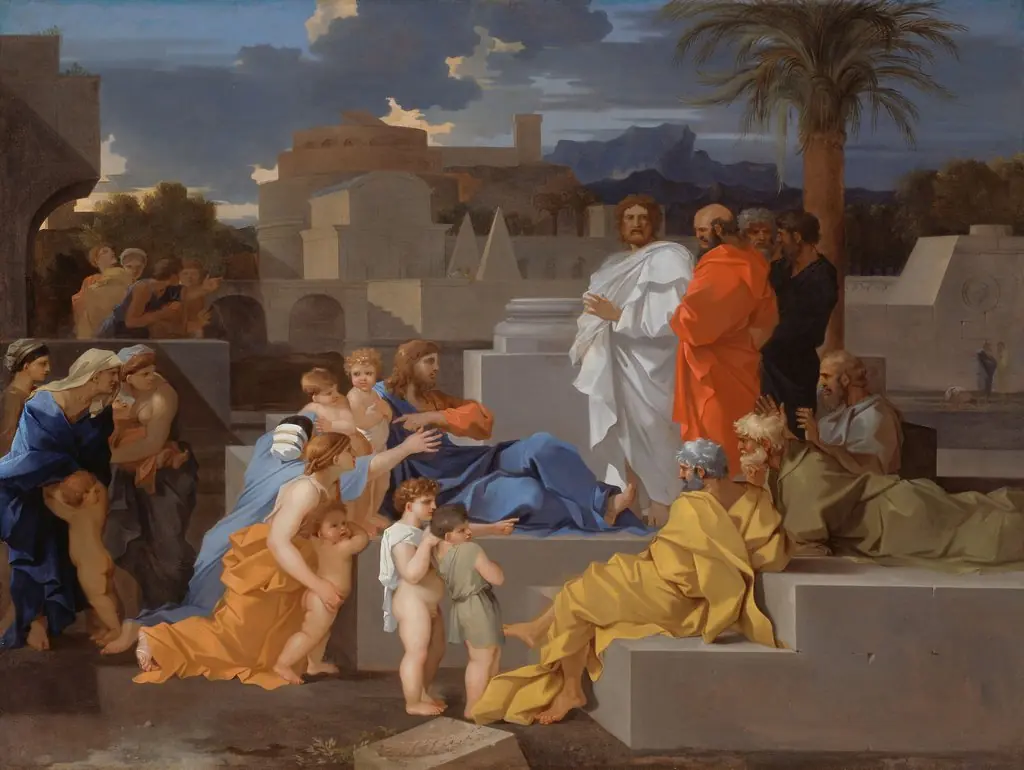 Christ Receiving the Children
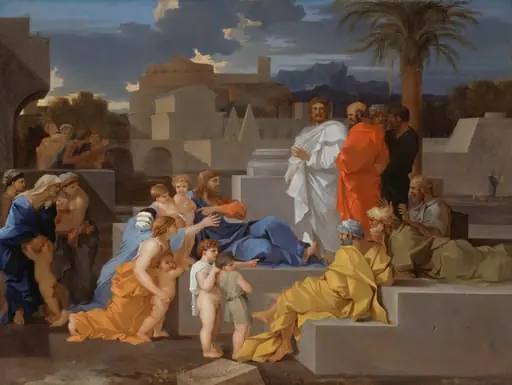 Christ Receiving the Children
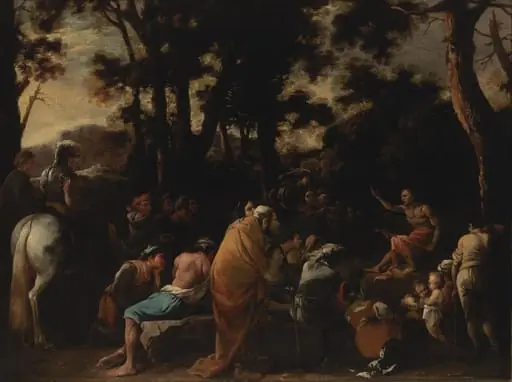 Johannes Kastaja saarnaa
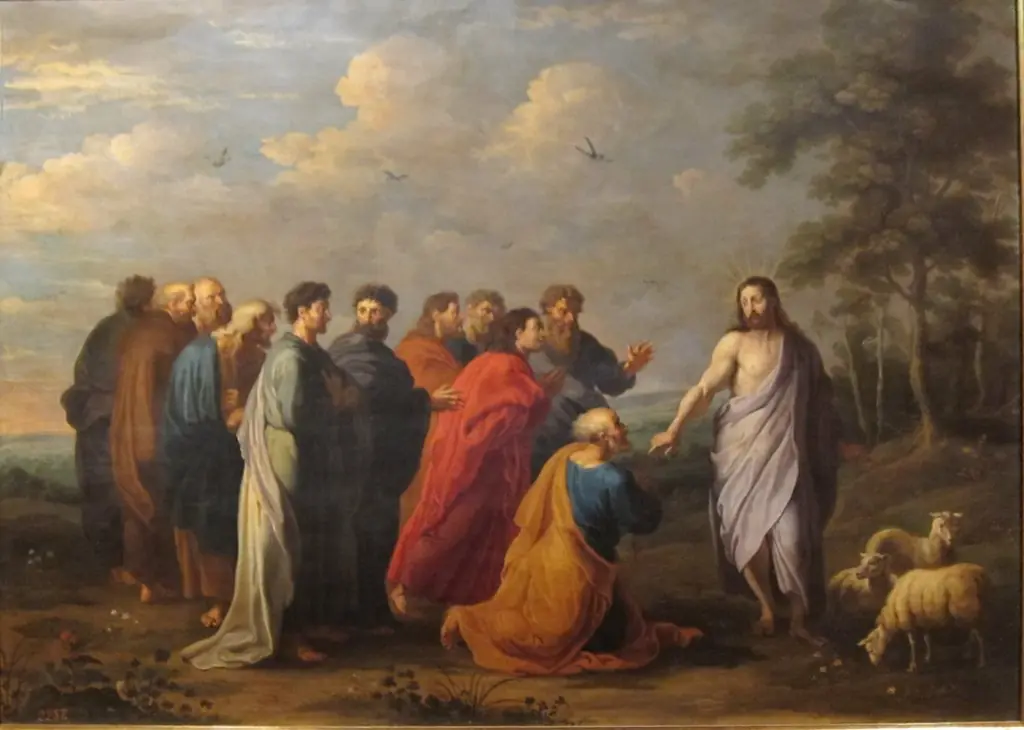
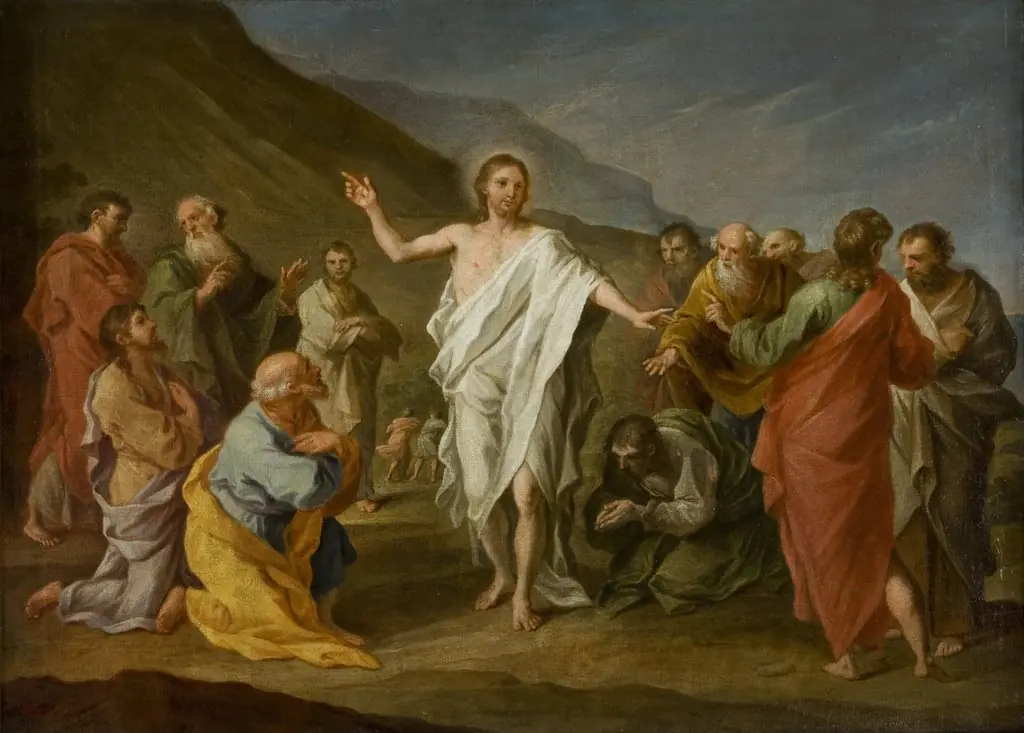 Christ Appearing to the Apostles after the Resurrection
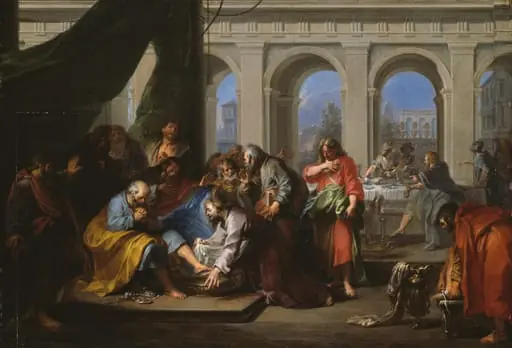 Christ Washing the Feet of His Disciples
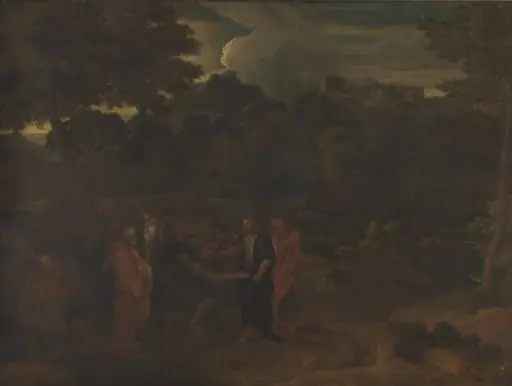 The Healing of the Two Blind Men at Jericho
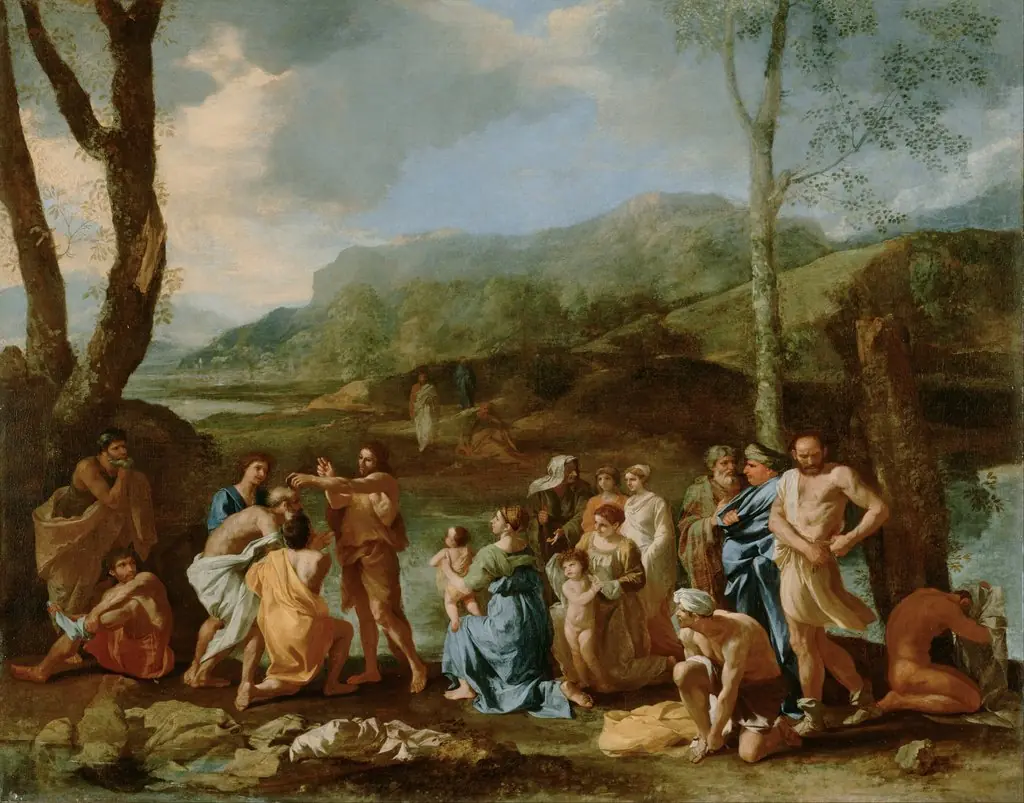 Saint John Baptizing in the River Jordan
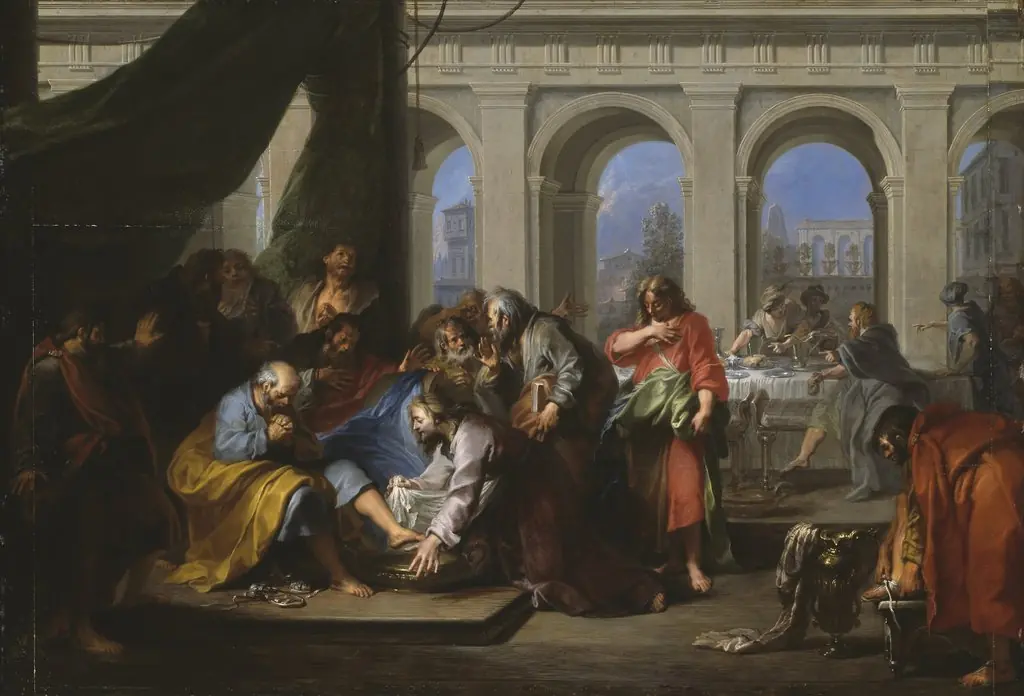 Christ Washing the Feet of His Disciples
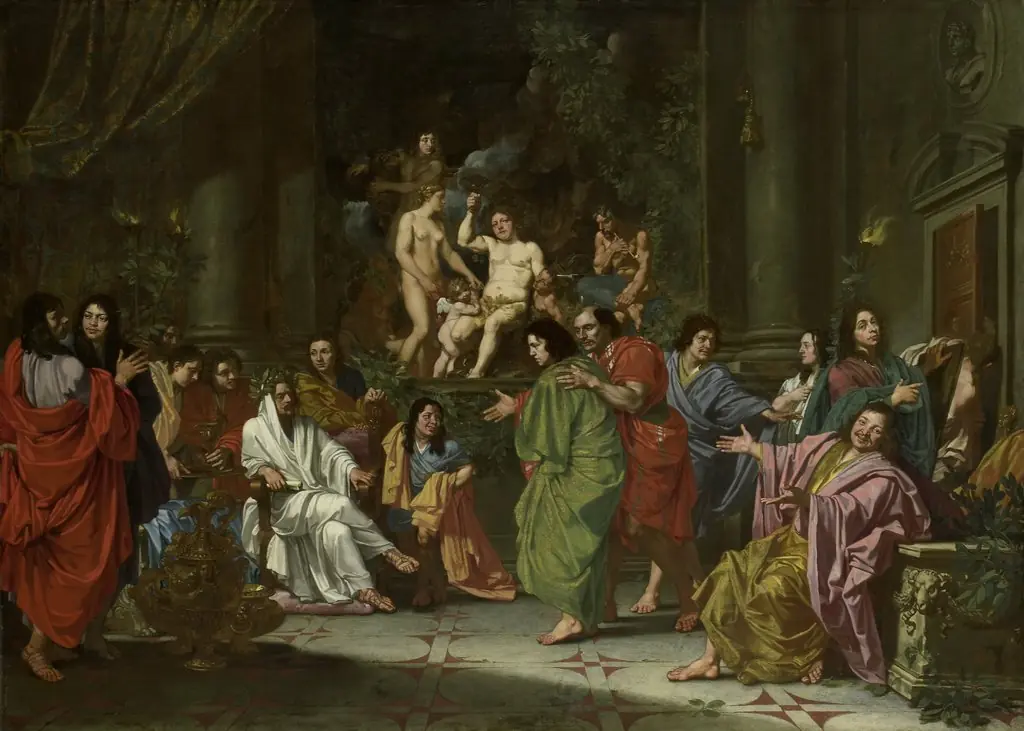 Initiation of a new Member of the Bentvueghels in Rome (Schildersbent)
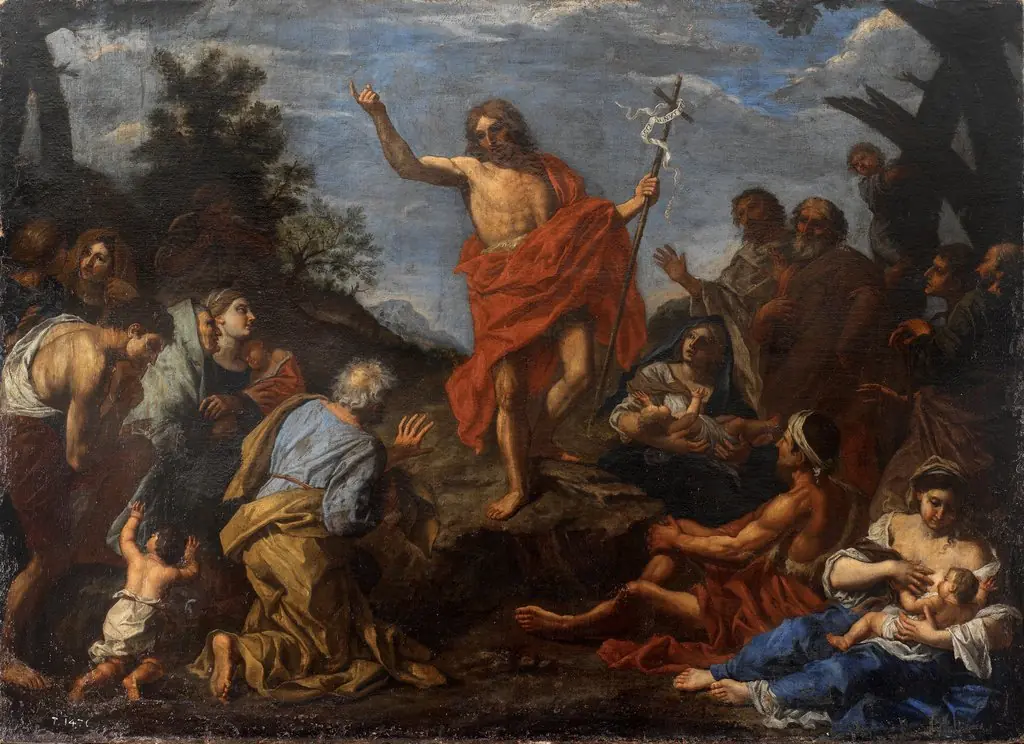 John the Baptist preeching
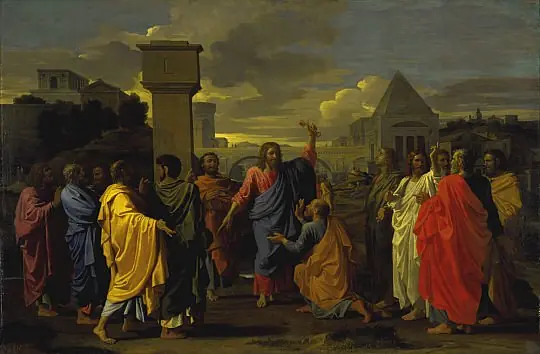 The Sacrament of Ordination