Artwork
The Birth of Venus
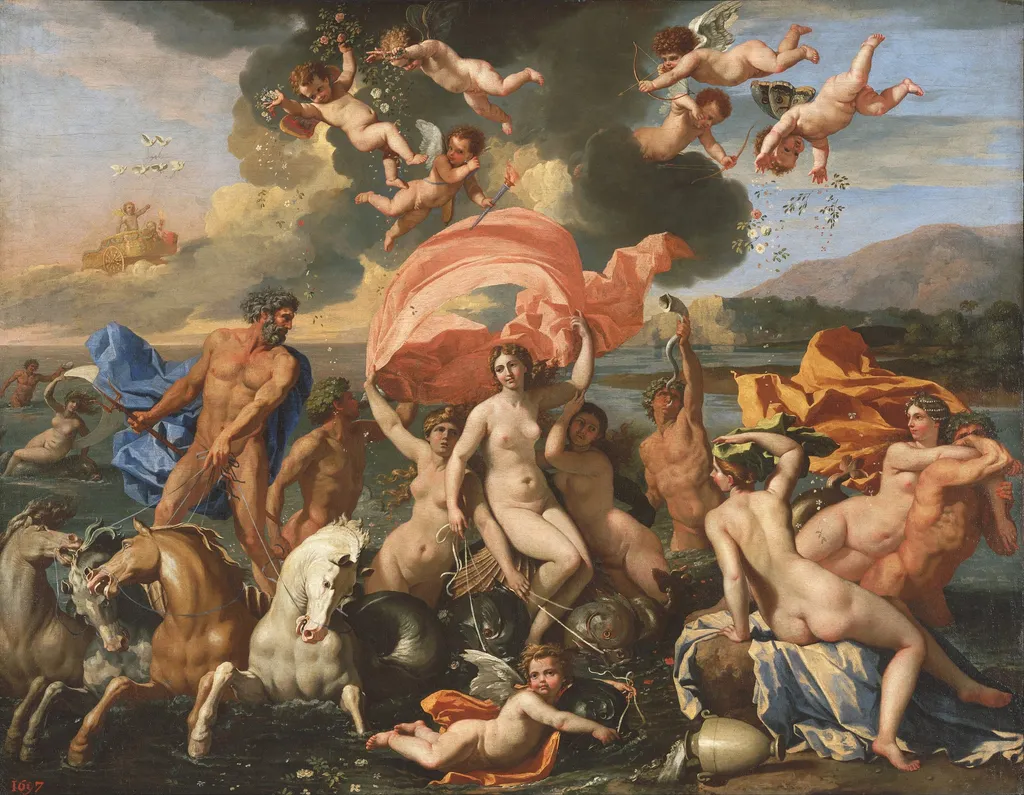
The Birth of Venus is an oil painting by the Early Baroque Italian artist Nicolas Poussin. It dates from 1635 and is held in the collection of the Philadelphia Museum of Art.
About this work
Overview
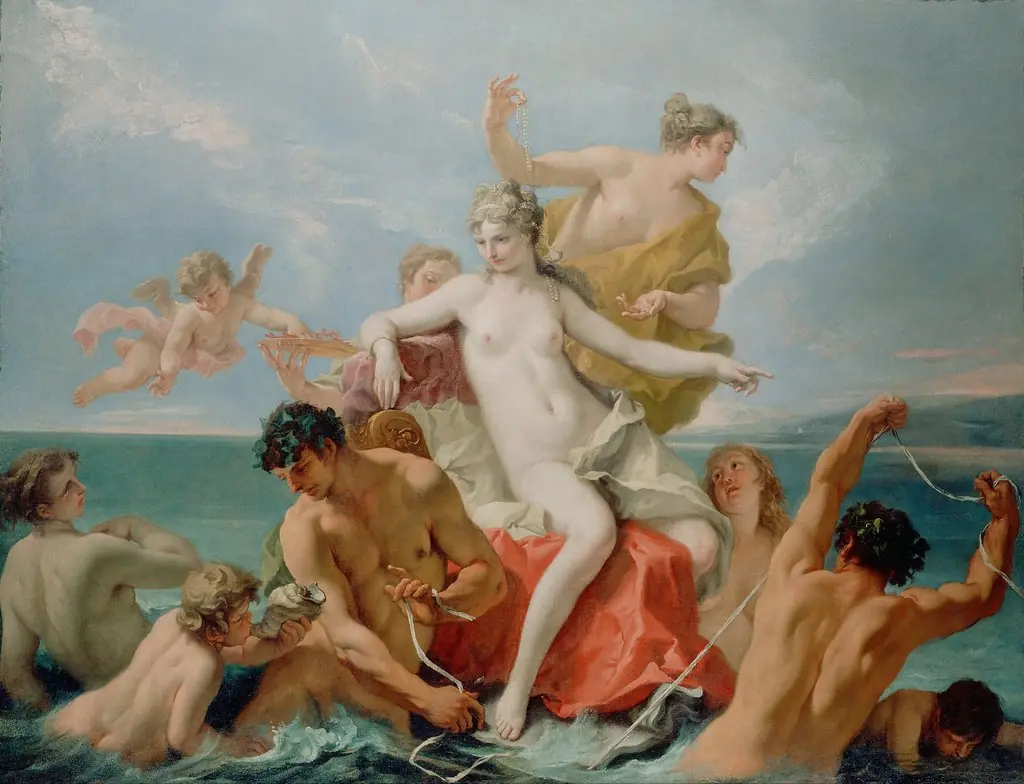
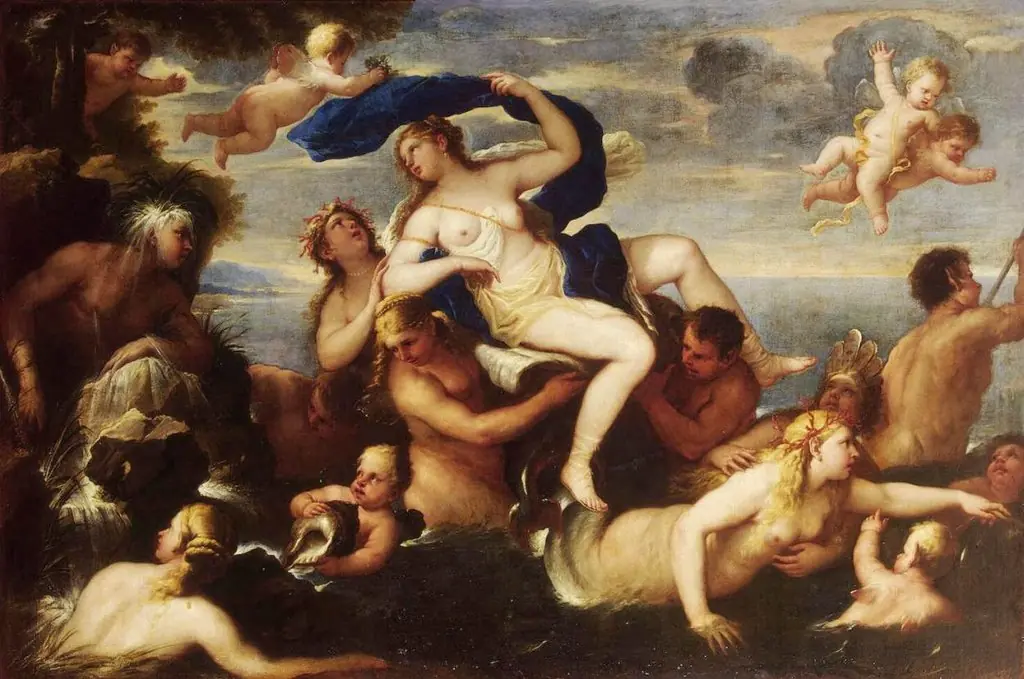
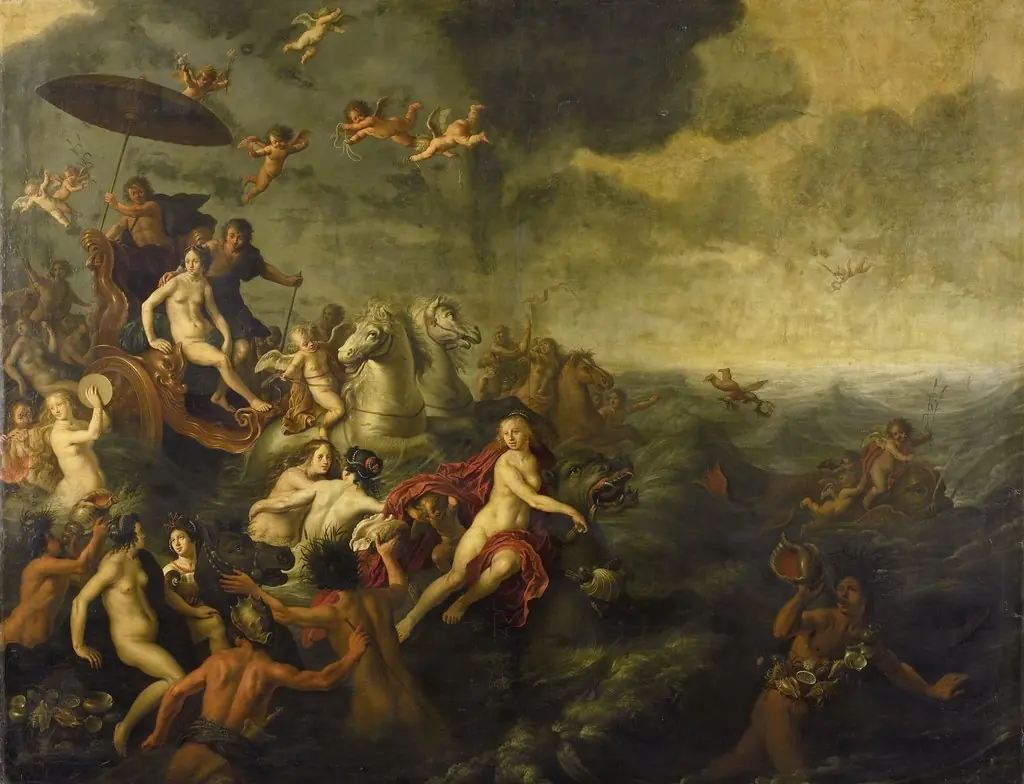
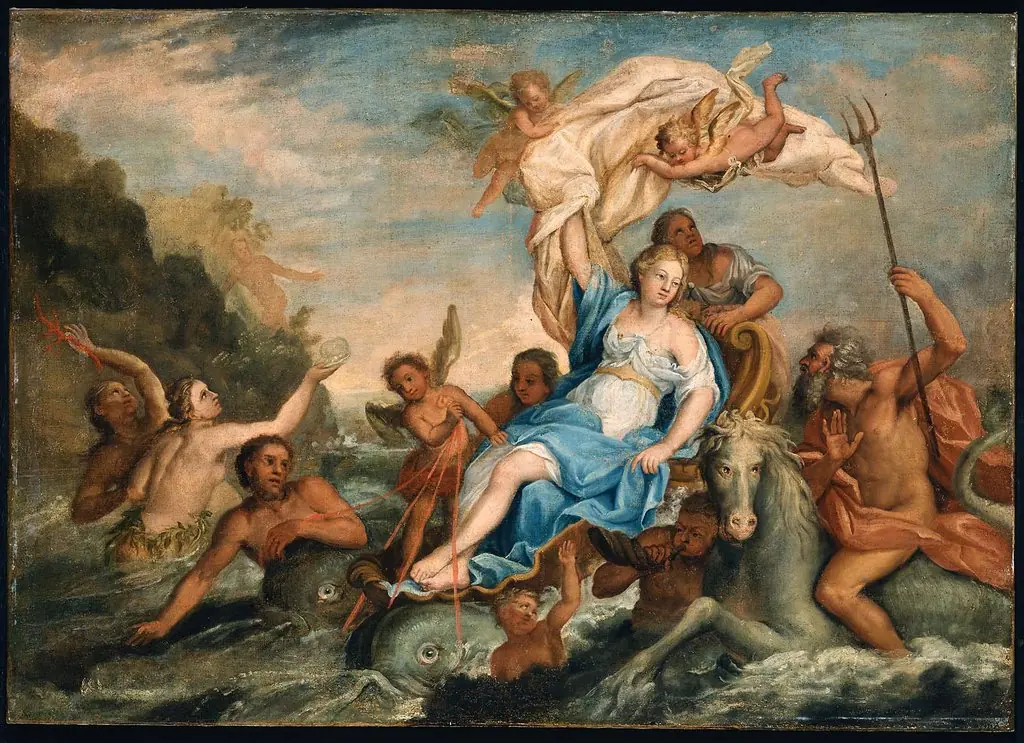
Nicolas Poussin’s large oil canvas, created in 1635‑36, measures roughly 114 by 147 centimetres and is part of the Philadelphia Museum of Art’s collection. The composition presents a bustling seascape where a group of mythological figures gathers near a shoreline, under a sky filled with clouds and a scattering of winged putti.
Subject & Meaning
At the left, a bearded, muscular Neptune (the Roman counterpart of Poseidon) commands four sea‑horses and brandishes a trident. Central to the scene is a woman seated on a shell‑shaped boat, surrounded by nude attendants; scholars have debated whether she represents Venus, Amphitrite, or the sea‑nymph Galatea, reflecting the painting’s ambiguous title history.
Technique & Style
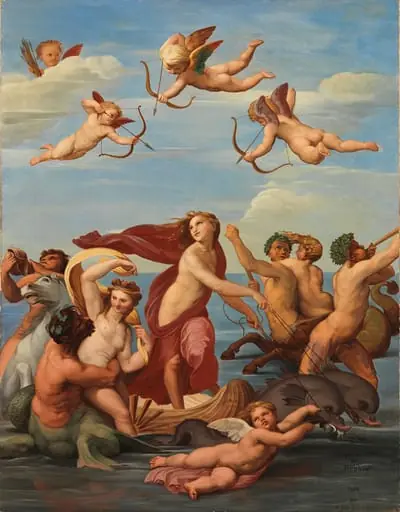
Poussin employs a restrained palette of blues, browns and muted tones, emphasizing form over colour. The arrangement of figures and the inclusion of a cloud‑borne chariot echo classical compositional devices, while the putto beneath the central female is a direct visual quotation from Raphael’s Triumph of Galatea, indicating Poussin’s reliance on printed reproductions of earlier works.
History & Provenance
The earliest recorded title, il trionfo di Nettunno, appears in Giovanni Pietro Bellori’s writings. In the 1960s, art historians such as Anthony Blunt argued that Poussin explored several mythological themes simultaneously, resulting in a work that bears traces of multiple narratives despite its primary identification with Neptune and Amphitrite.
Context
The painting draws on the visual language of earlier Renaissance depictions of Venus’s birth, notably Botticelli’s famous work, while also referencing Raphael’s Villa Farnesina frescoes. Poussin’s familiarity with these sources—through prints and possibly direct observation—situates the canvas within a tradition of re‑interpreting classical myths for a 17th‑century French audience.
Legacy
Although the work’s exact subject remains contested, it exemplifies Poussin’s synthesis of classical iconography and Baroque dynamism. Its presence in a major American museum continues to invite scholarly discussion about the fluidity of mythological representation in European painting.
Own this work as a print
Artist & collection
Artist
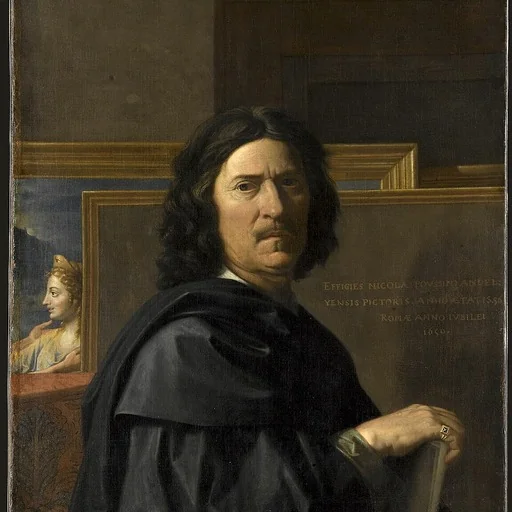
Nicolas Poussin (UK: , US: , French: ; June 1594 – 19 November 1665) was a leading painter of the classical French Baroque style, although he spent most of his working life in Rome.