Artwork
The Conquest of Jerusalem by Emperor Titus
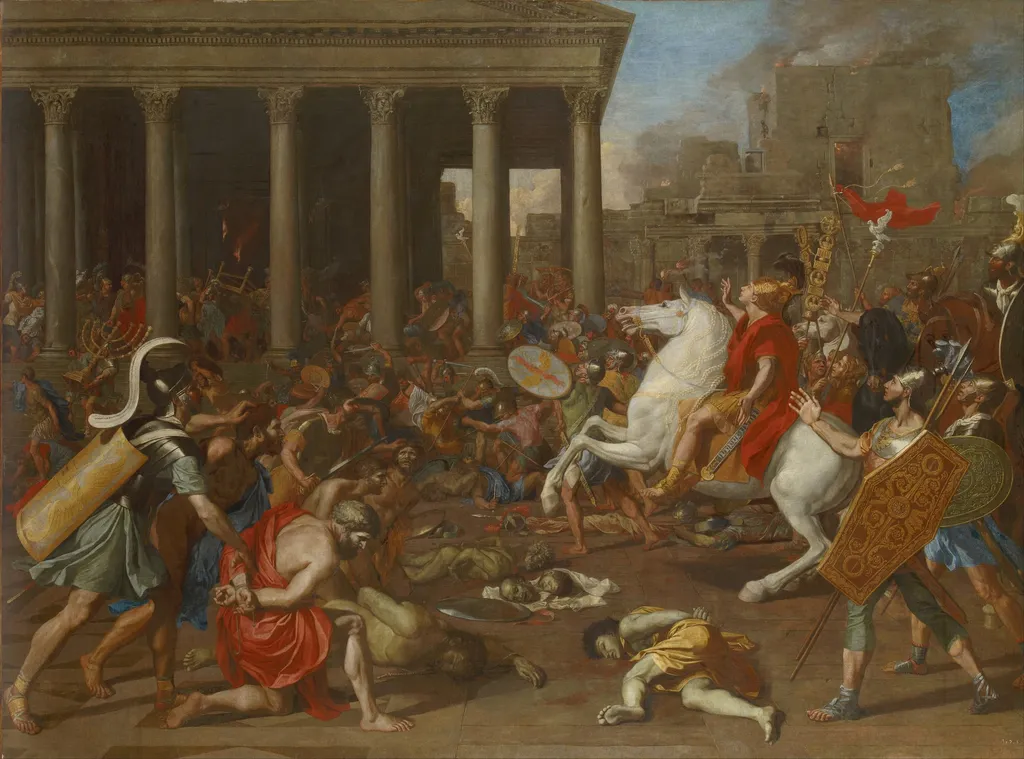
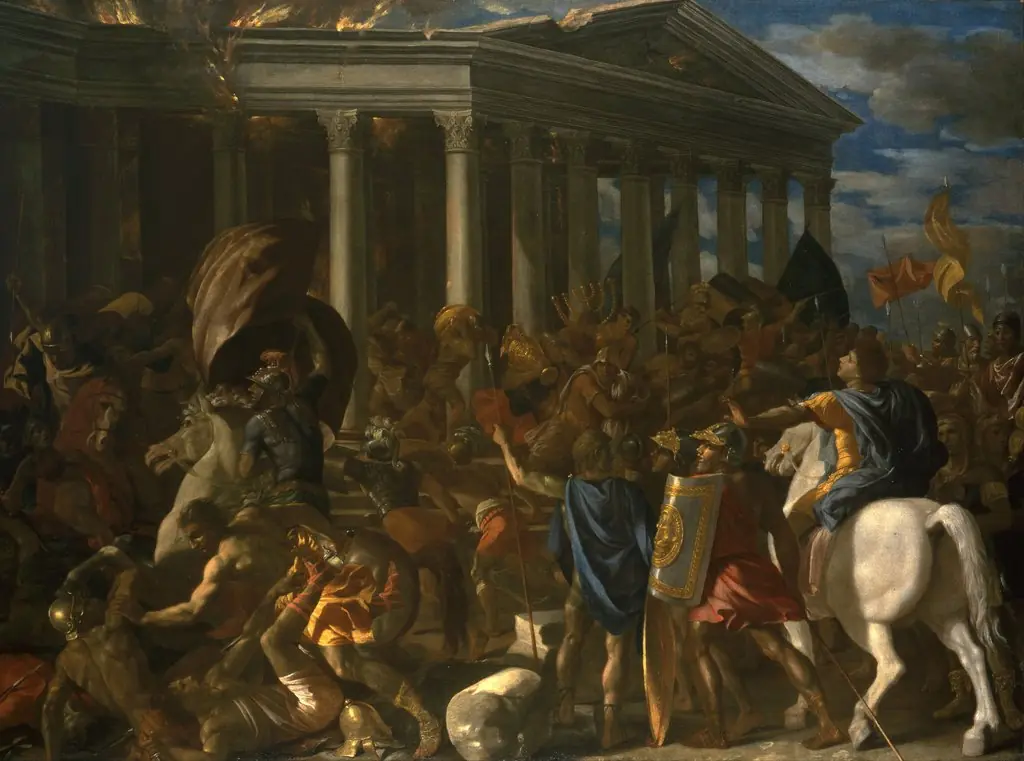
The Conquest of Jerusalem by Emperor Titus is an oil painting by the Early Baroque Italian artist Nicolas Poussin. It dates from 1635 and is held in the collection of the Kunsthistorisches Museum.
About this work
Overview
The scene conveys violence and disorder without overt glorification, reflecting Poussin’s interest in classical narratives rendered with structural clarity.
Painted in 1635 by Nicolas Poussin, this oil work depicts the Roman capture of Jerusalem in 70 CE. Commissioned as part of a series on ancient history, it is now housed in the Kunsthistorisches Museum in Vienna. The composition centers on a rearing white horse and its rider, surrounded by figures in motion amid the ruins of a besieged city. The scene conveys violence and disorder without overt glorification, reflecting Poussin’s interest in classical narratives rendered with structural clarity.
Subject & Meaning
The painting illustrates the Roman siege of Jerusalem under Emperor Titus, a pivotal moment in Jewish-Roman history. Rather than celebrating triumph, Poussin emphasizes chaos and suffering: fallen figures, crumbling architecture, and disoriented soldiers suggest the cost of conquest. The central rider, likely Titus, is rendered with restrained authority, his red robe contrasting with the muted tones of destruction. The scene avoids mythic heroism, instead presenting history as a moment of irreversible upheaval.
Technique & Style
Poussin employs chiaroscuro to heighten emotional tension, directing light toward key figures like the mounted commander and the fallen man in red. The brushwork is precise, with careful modeling of drapery and armor to convey texture and weight. Figures are arranged in a balanced yet dynamic composition, echoing classical relief sculpture. The architectural backdrop, though stylized, references Roman monumental forms, grounding the scene in historical plausibility rather than fantasy.
History & Provenance
Commissioned by Cardinal Francesco Barberini, the painting was part of a larger cycle on ancient Roman history. It entered the Habsburg collection in the 17th century and has remained in Vienna since. Its survival through wars and political shifts reflects its status as a valued example of French classical painting in imperial collections. Documentation from Poussin’s correspondence confirms his engagement with historical sources, including Josephus’s accounts of the siege.
Context
Created during a period when European elites sought to align themselves with Roman ideals, Poussin’s work responded to a broader interest in antiquity as a moral framework. Unlike Baroque contemporaries who favored theatricality, Poussin emphasized restraint and intellectual order. His depiction of Jerusalem’s fall aligns with contemporary scholarly debates about empire, justice, and divine retribution, reflecting both humanist scholarship and the political anxieties of his time.
Legacy
The painting influenced later historical painters through its disciplined composition and emotional restraint. It became a touchstone for 19th-century academic artists studying classical narrative structure. While less celebrated than Poussin’s mythological works, this piece exemplifies his commitment to history as a subject worthy of sober, reasoned treatment. Its presence in Vienna’s imperial collection ensured its continued study and preservation across centuries.
Own this work as a print
Artist & collection
Artist
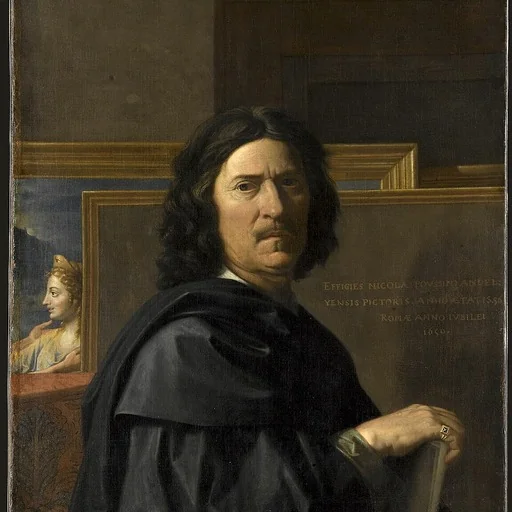
Nicolas Poussin (UK: , US: , French: ; June 1594 – 19 November 1665) was a leading painter of the classical French Baroque style, although he spent most of his working life in Rome.

 The Destruction and Sack of the Temple of Jerusalem
 Batalla
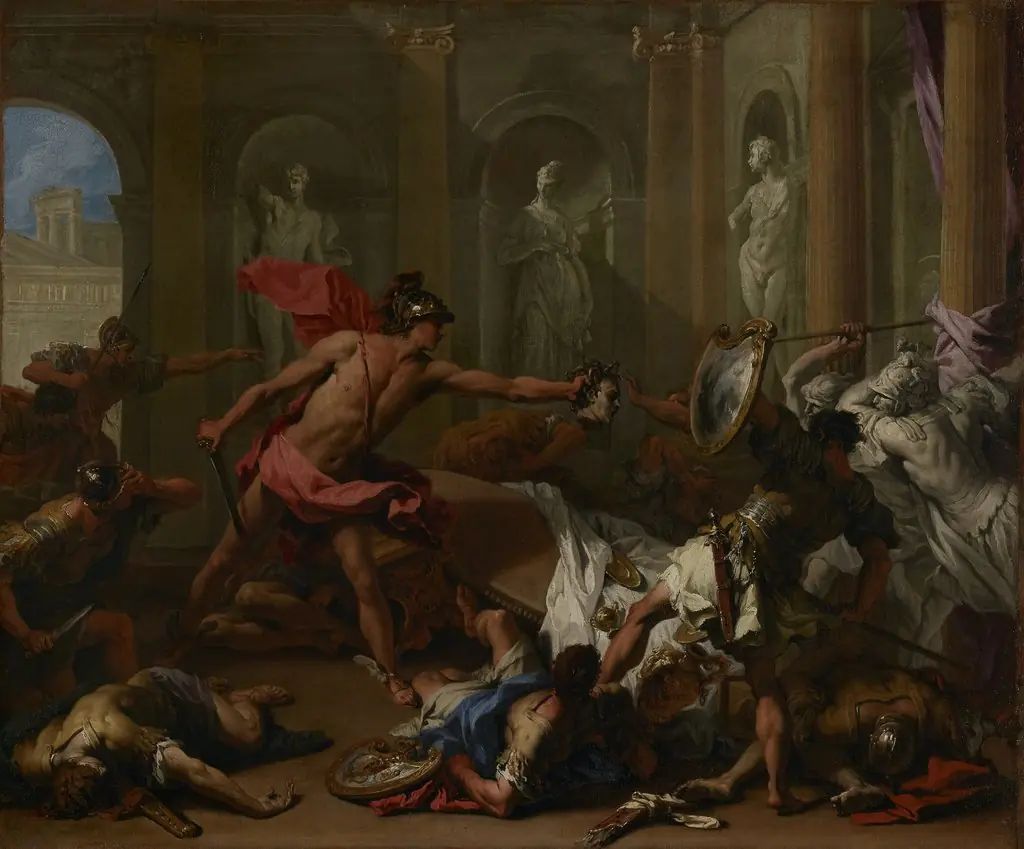 Perseus Confronting Phineus with the Head of Medusa
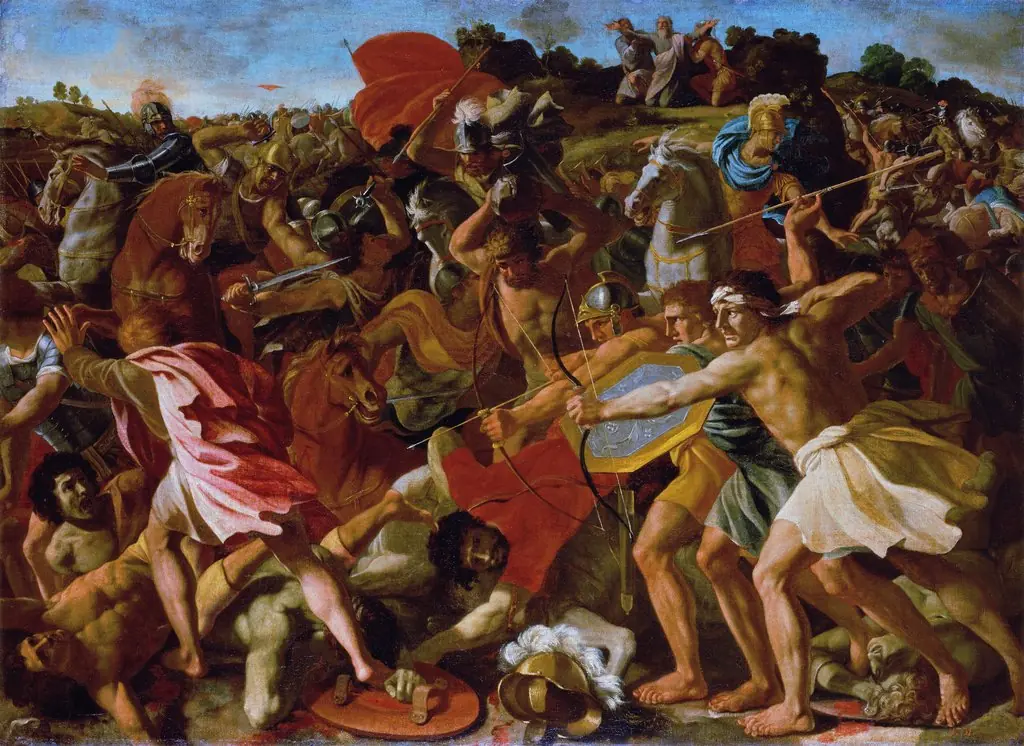 Victory of Joshua over the Amalekites
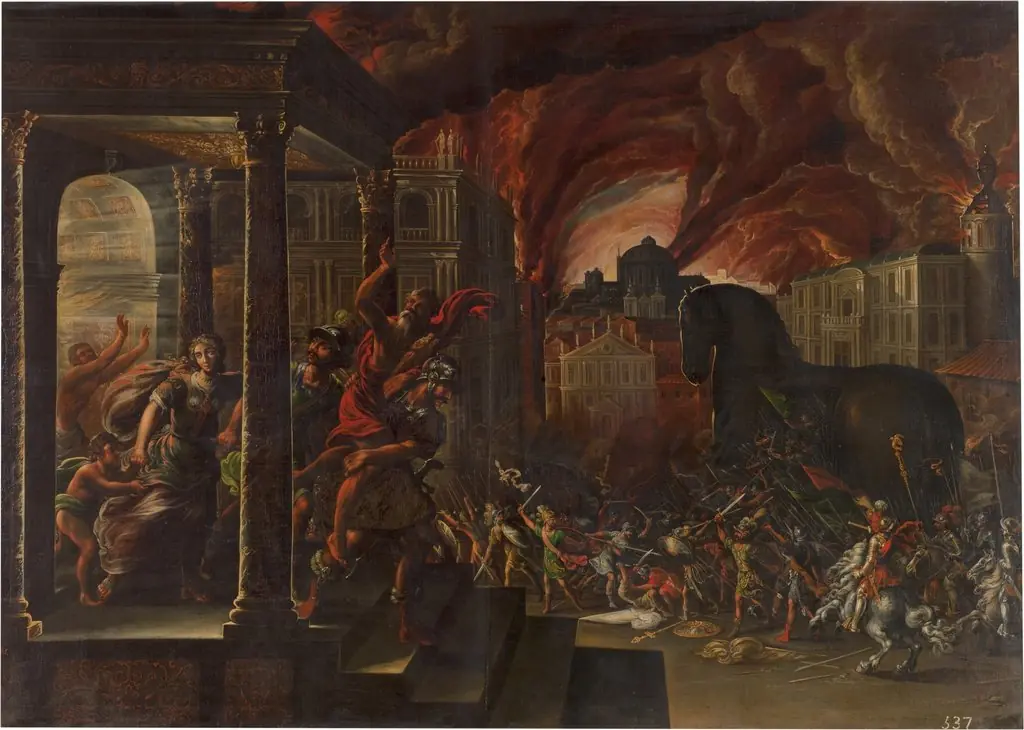 Aeneas and his family fleeing the burning city of Troy, with the Trojan horse in the background
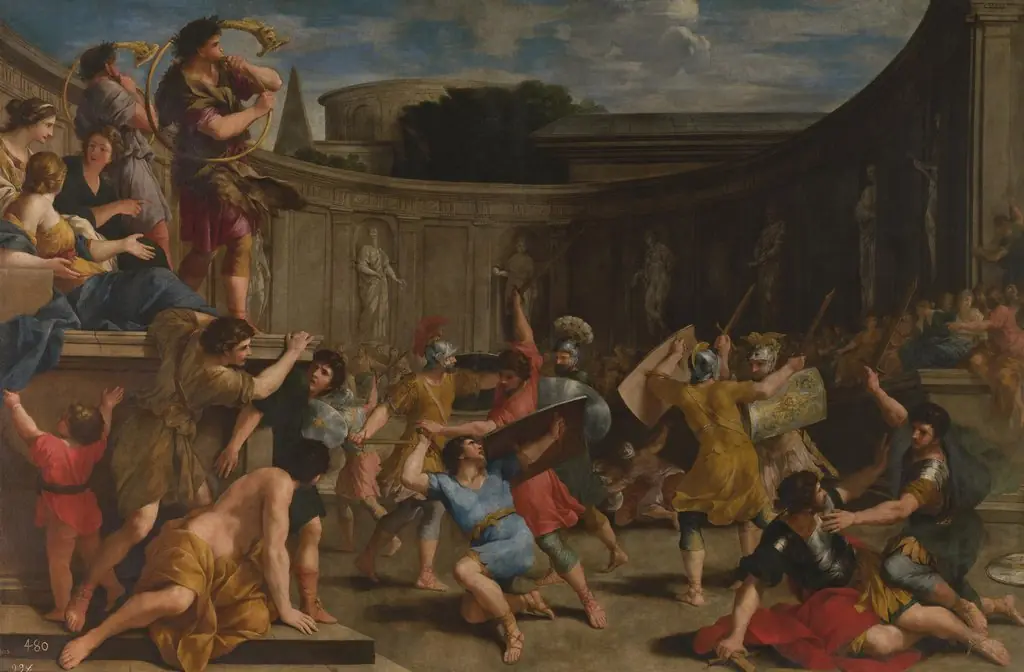 Roman Gladiators with Wooden Swords
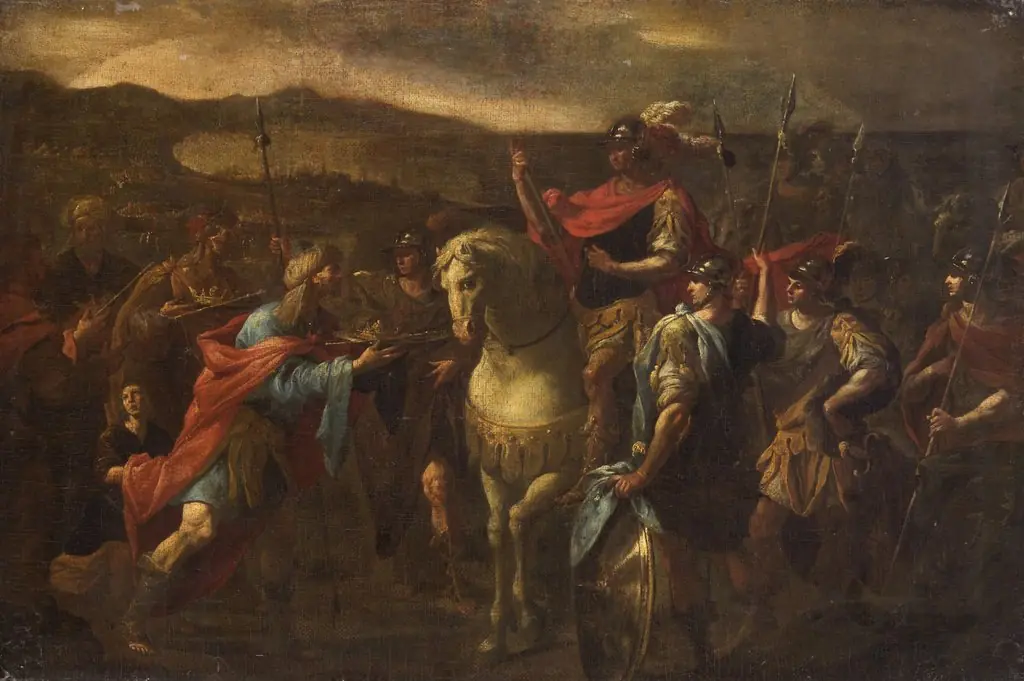 Indische Könige huldigen Alexander dem Großen
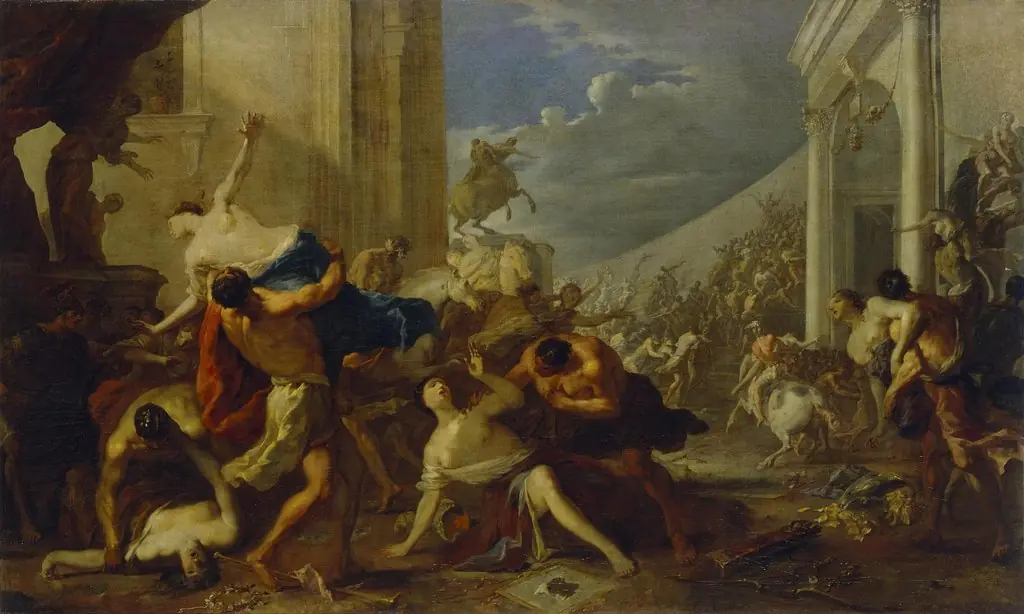 Rape of the Sabine Women
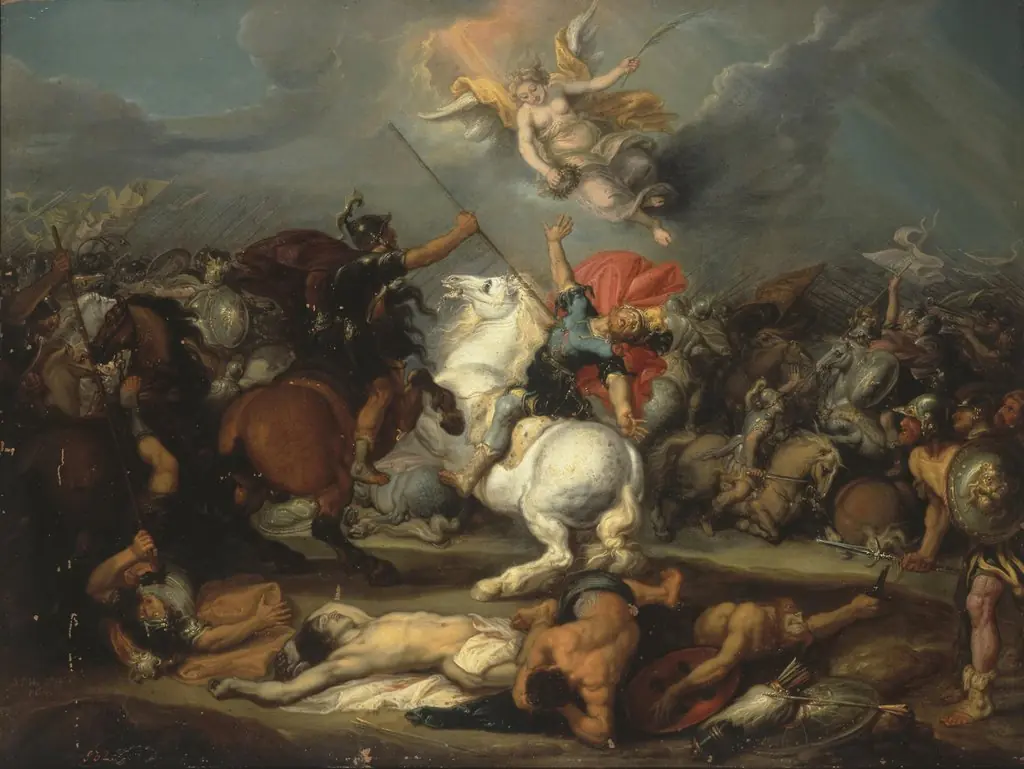 Death of Decius Mus
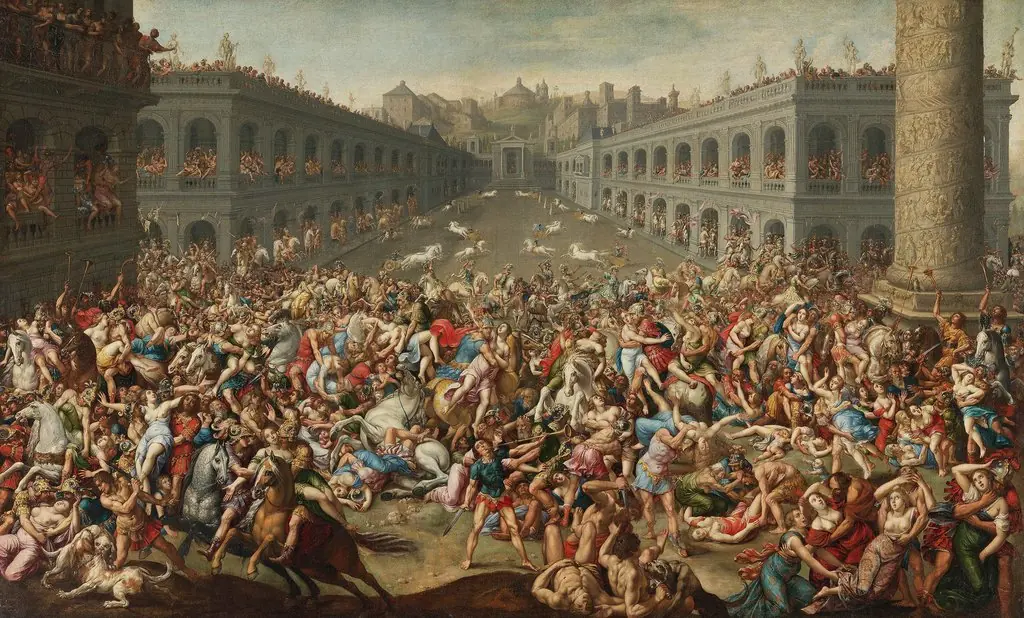 The Rape of the Sabine Women
 Armida Fighting the Christians
 The Sack of Jerusalem by the Romans