Artwork
Venus and Adonis
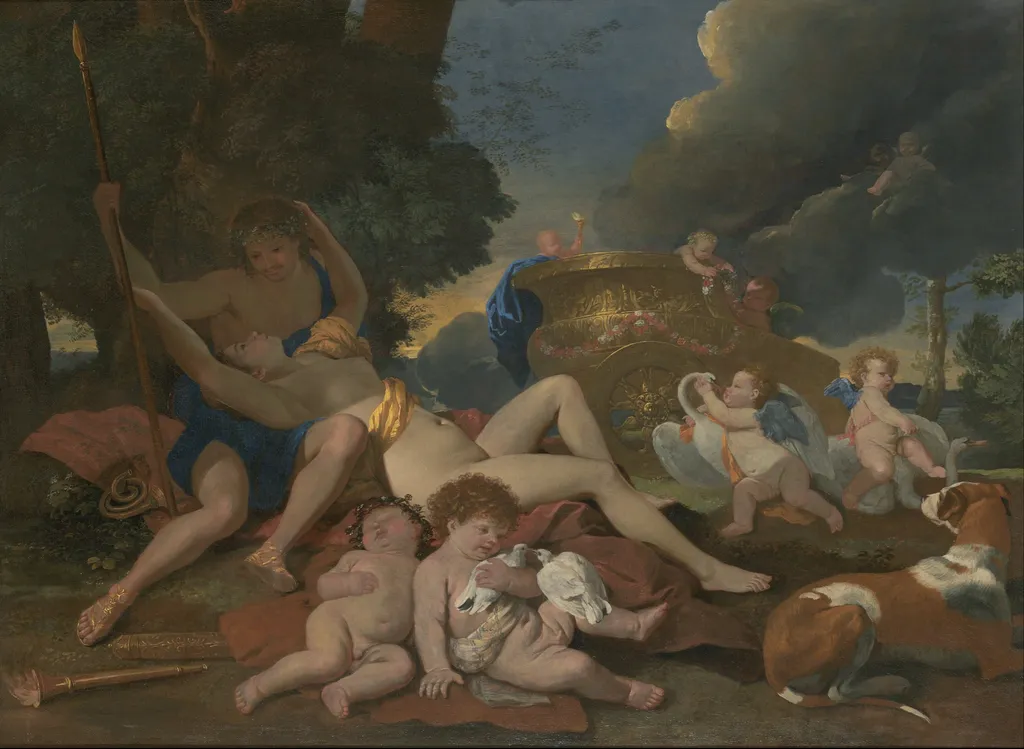
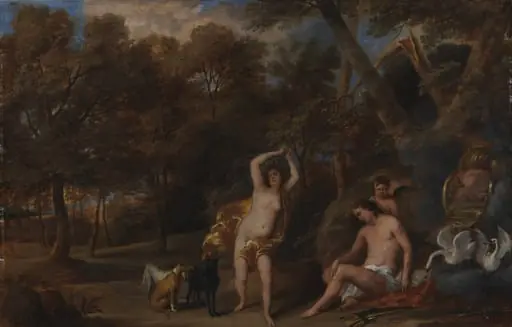
Venus and Adonis is an oil painting by Nicolas Poussin. It dates from 1628 and is held in the collection of the Manchester Art Gallery.
About this work
Overview
Nicolas Poussin’s oil on canvas, Venus and Adonis, was executed in 1628 and now belongs to the collection of the Kimbell Art Museum. The composition presents a quiet, pastoral tableau in which the goddess Venus reclines beside the youthful hunter Adonis, while a pair of cherubic figures engage with a swan in the foreground.
Subject & Meaning
The work draws on the classical myth of Venus and Adonis, portraying the moment of affectionate repose before the hunter’s fated death. Venus is shown in a relaxed pose, her long hair spilling over the grass, while Adonis, holding a spear, sits attentively beside her, suggesting both intimacy and the impending tragedy that the narrative foretells.
Technique & Style
The delicate handling of light creates a sense of depth, while the careful rendering of foliage and clouds contributes to the overall harmony of the scene.
Poussin employs a restrained palette of warm earth tones, softened by gentle illumination that models the figures through subtle chiaroscuro. The delicate handling of light creates a sense of depth, while the careful rendering of foliage and clouds contributes to the overall harmony of the scene. The cherubs and swan are rendered with fine, almost decorative detail, enhancing the painting’s tranquil atmosphere.
History & Provenance
Since its creation in the early seventeenth century, the canvas has passed through several private collections before being acquired by the Kimbell Art Museum, where it is displayed as part of the institution’s European Baroque holdings. Its documented history confirms its attribution to Poussin and its continuous appreciation as a representative example of his mythological oeuvre.
Own this work as a print
Artist & collection
Artist
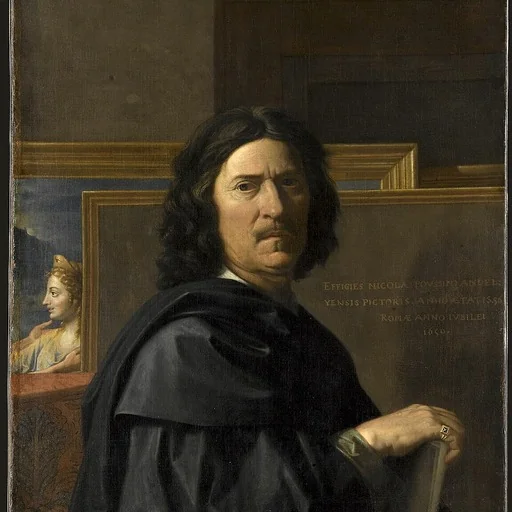
Nicolas Poussin (UK: , US: , French: ; June 1594 – 19 November 1665) was a leading painter of the classical French Baroque style, although he spent most of his working life in Rome.

 Venus Bewailing the Slain Adonis
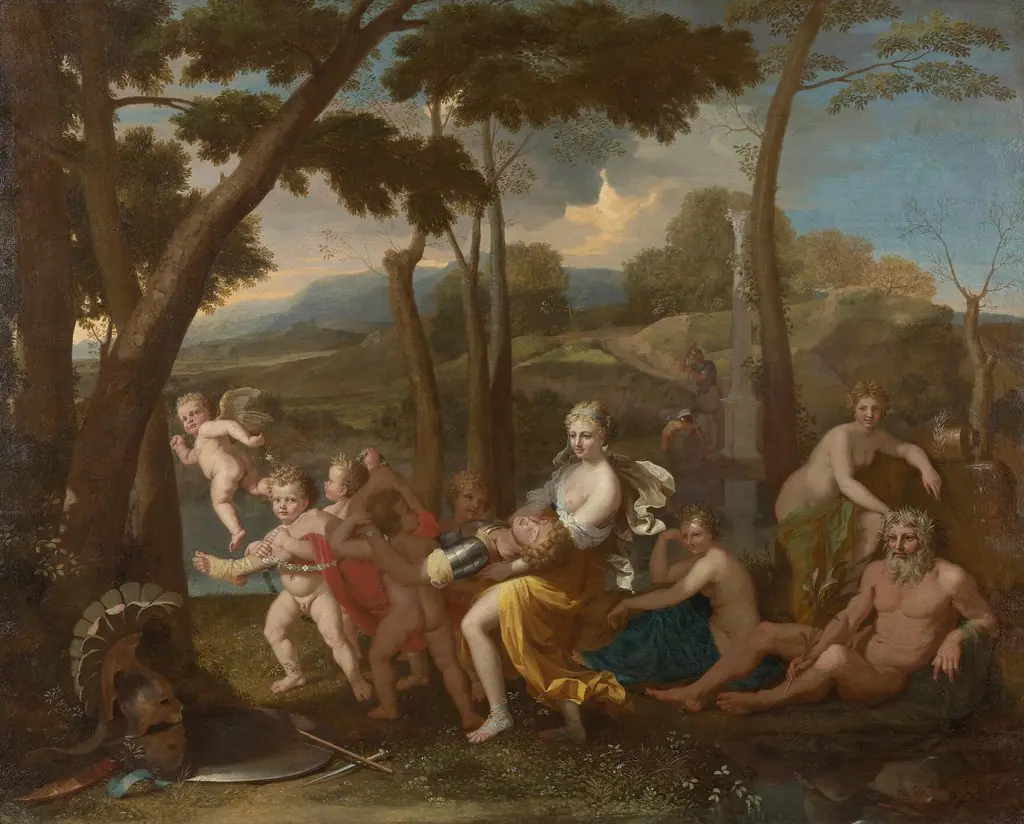 The Abduction of the Euthanized Rinaldo
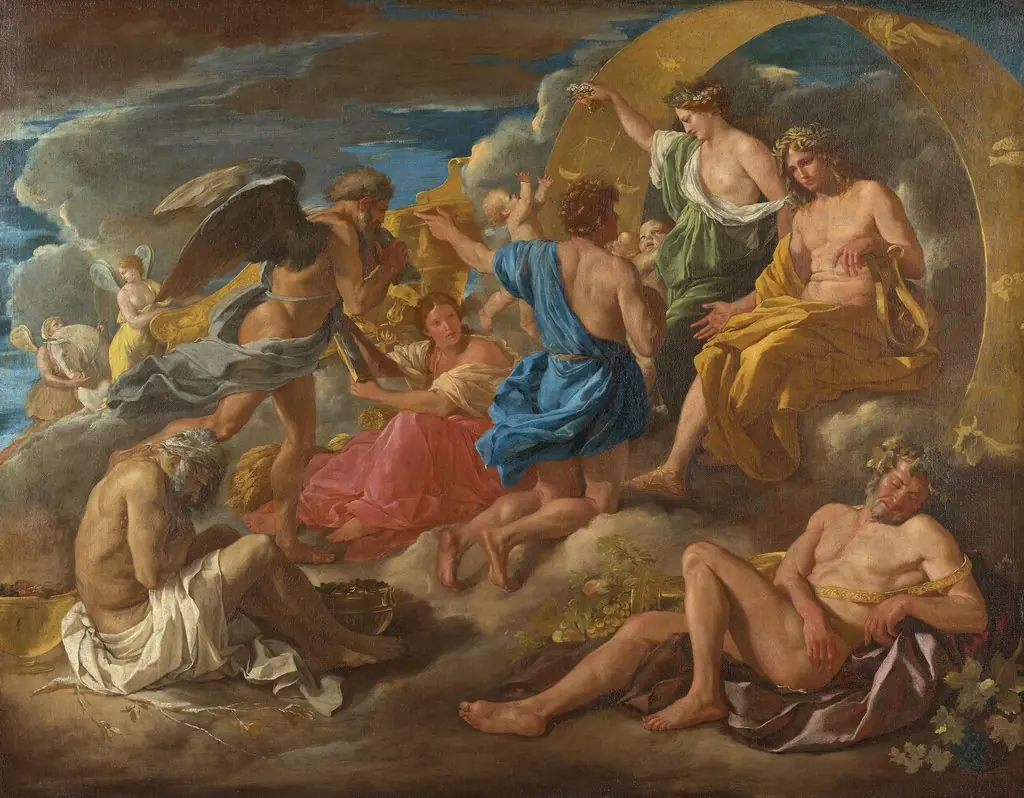 Helios and Phaeton with Saturn and the Four Seasons
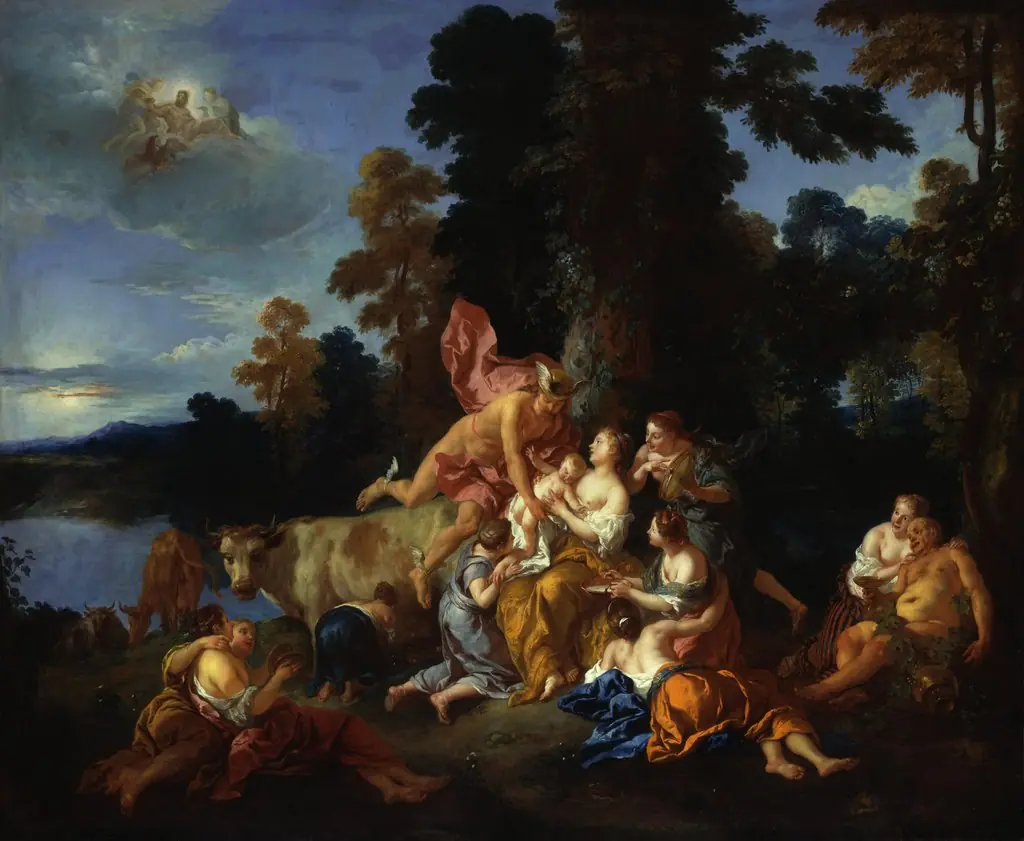 The Rearing of Bacchus
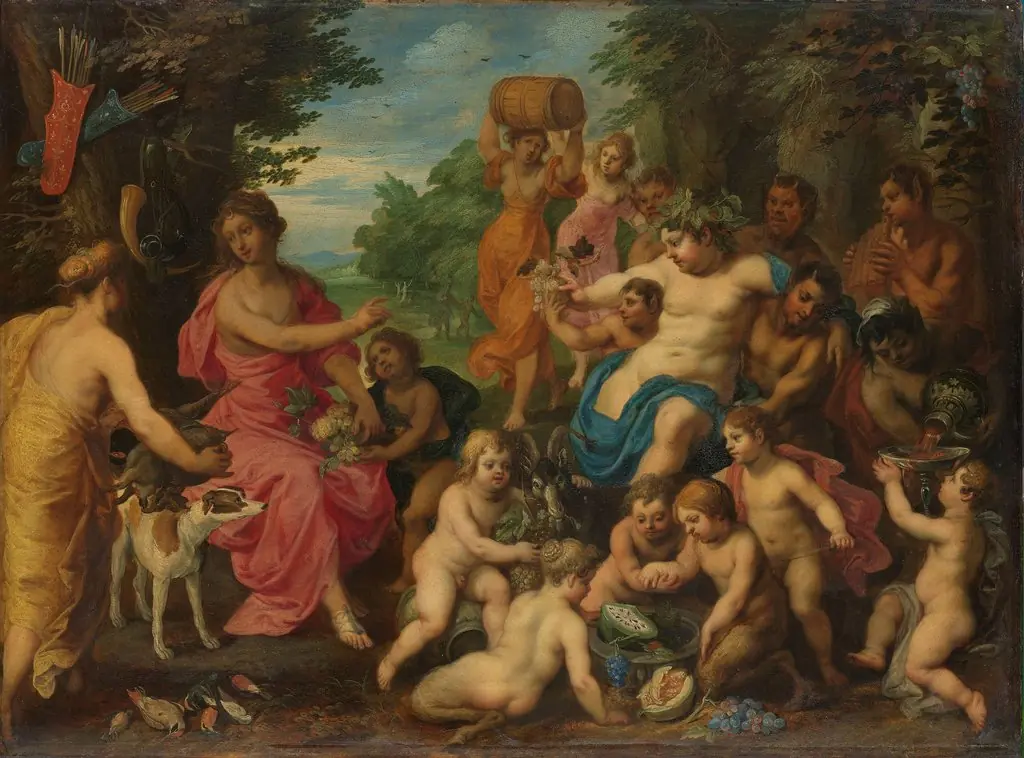 Diana Offered Wine and Fruit by the Young Bacchus and his Retinue
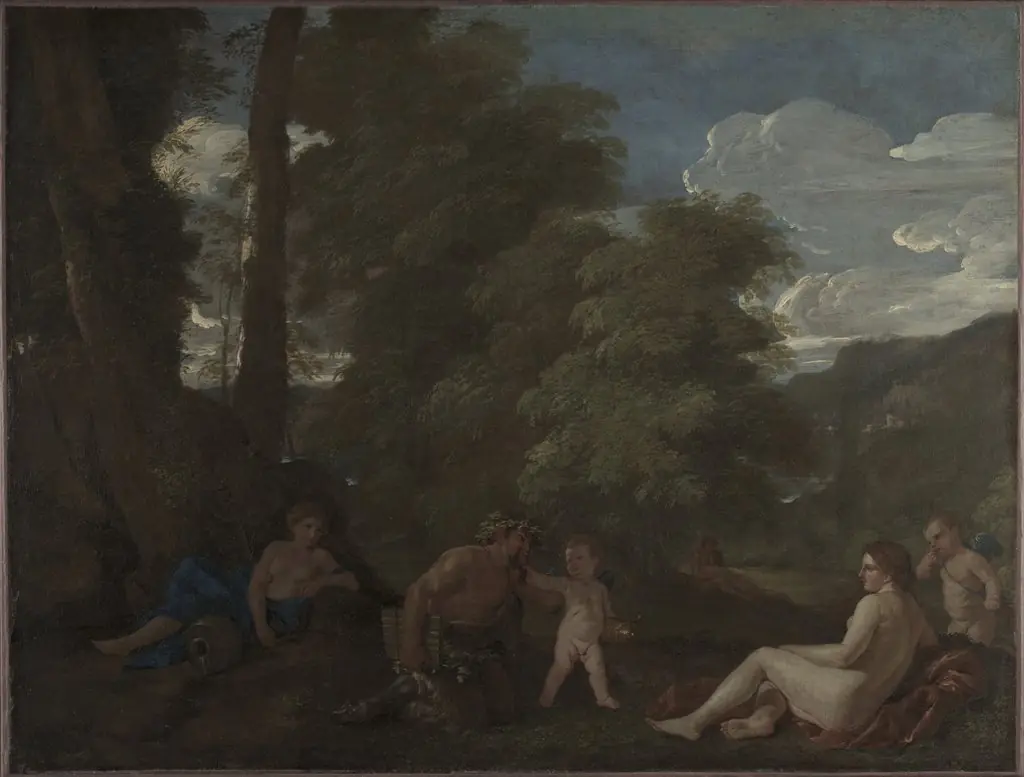
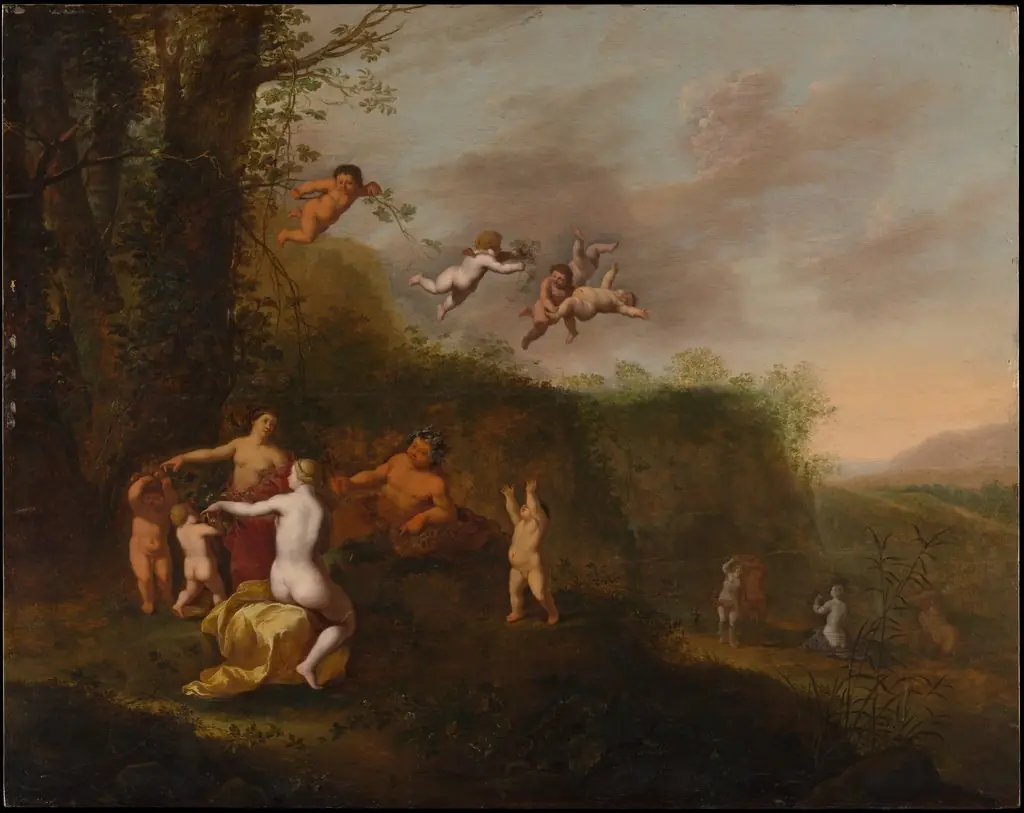 Bacchus and Nymphs in a Landscape
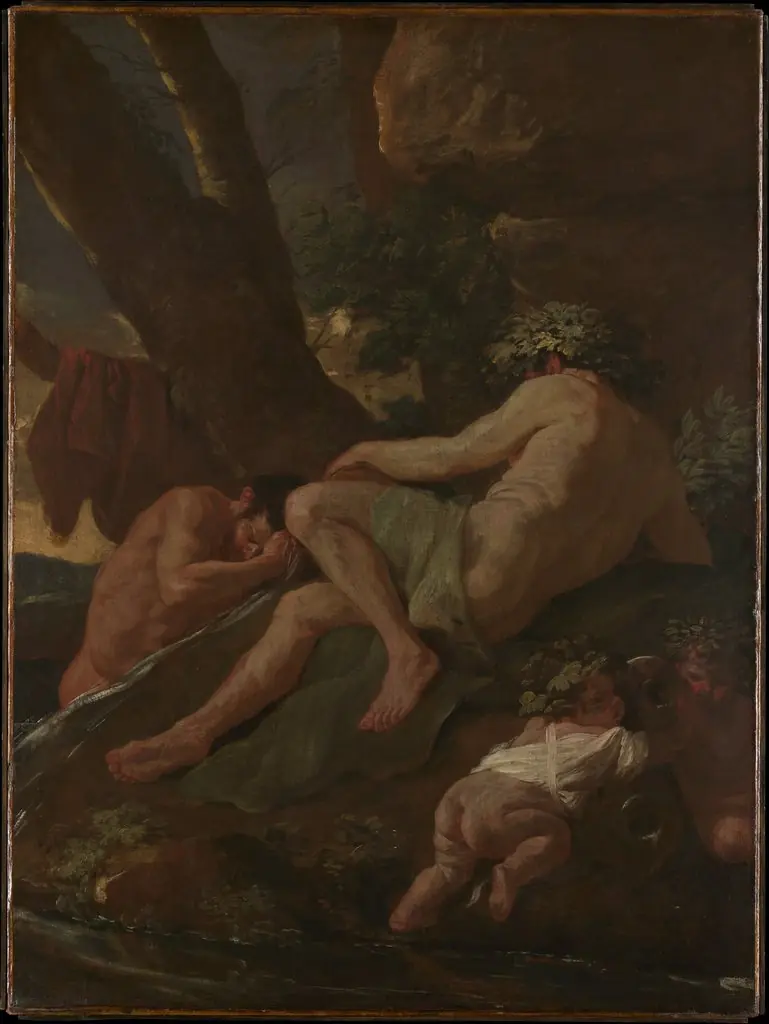
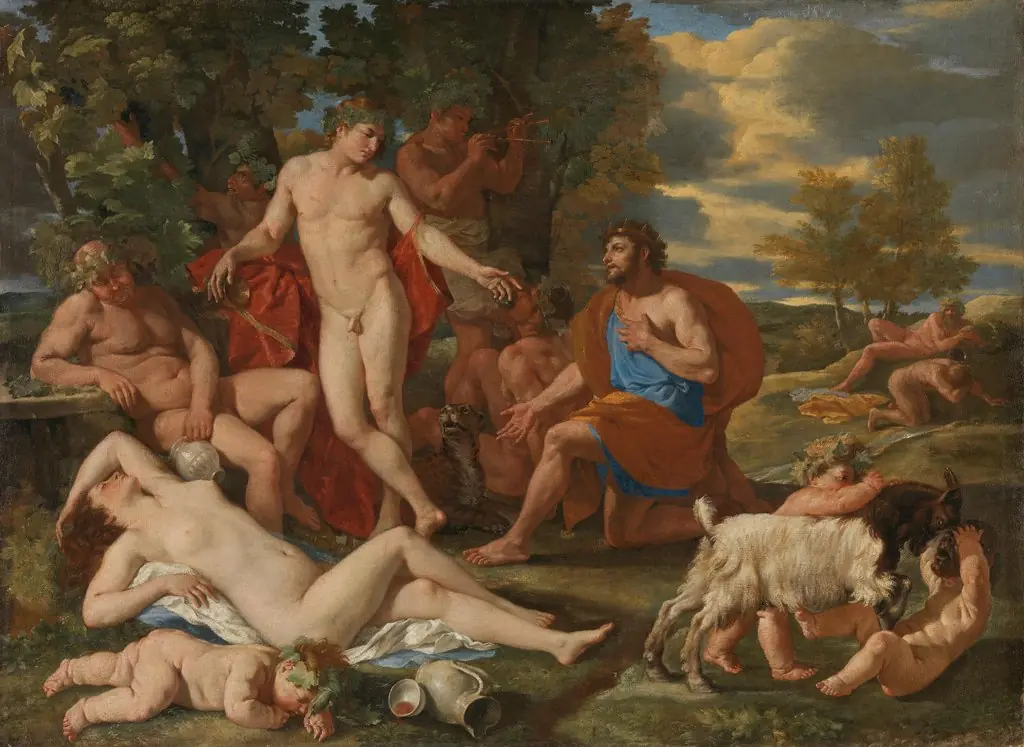 Midas and Bacchus
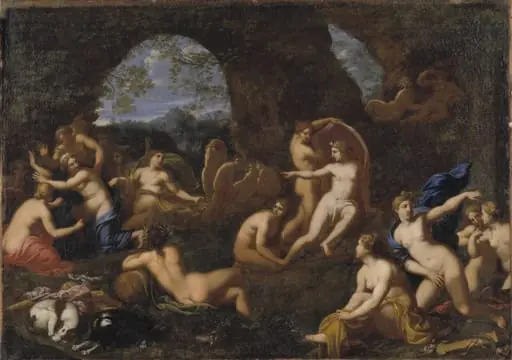 Diana and Callisto
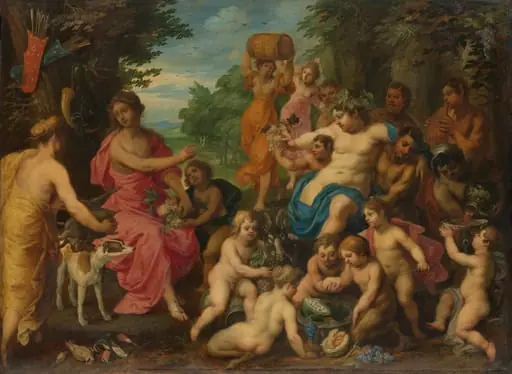 Diana Offered Wine and Fruit by Bacchus and his Retinue