Artwork
Zhao Mengfu Writing the Heart (Hridaya) Sutra in Exchange for Tea

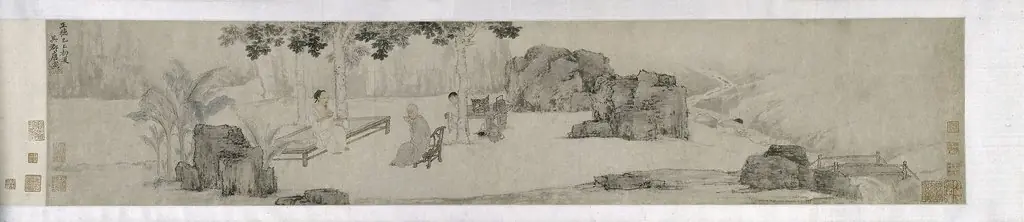
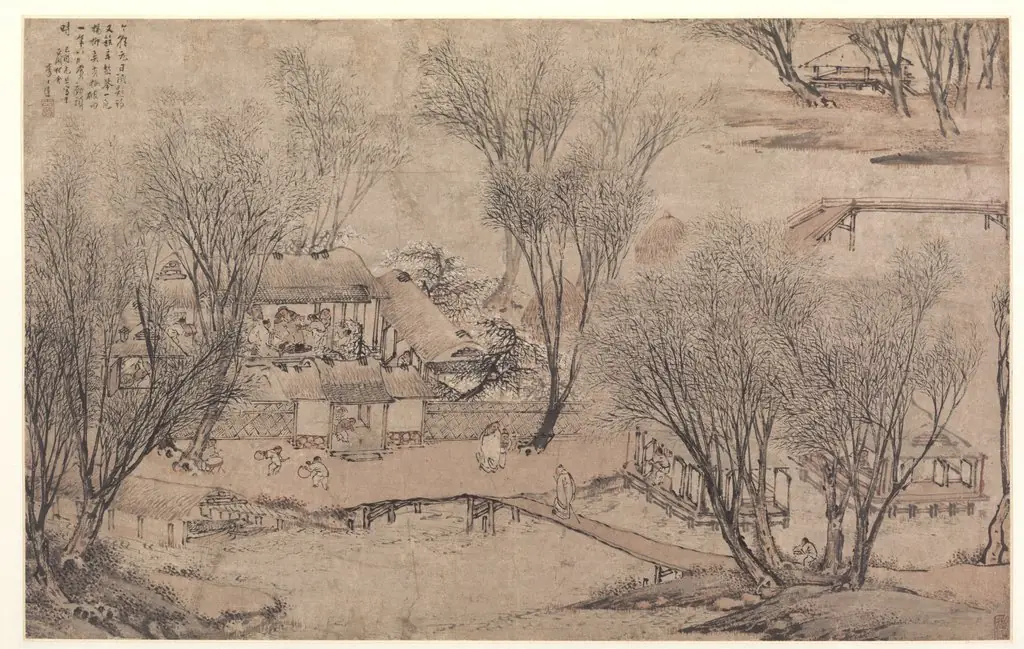
Zhao Mengfu Writing the Heart (Hridaya) Sutra in Exchange for Tea is an unspecified painting by the Chinese Orthodox School artist Qiu Ying. It dates from 1542 and is held in the collection of the Cleveland Museum of Art. The work depicts the Yuan‑era calligrapher Zhao Mengfu seated at a low table, poised to write the Buddhist Heart Sutra.
About this work
This painting shows a story from 200 years earlier: a famous calligrapher traded his work for tea.
A man sits at a low table, brush poised over paper. An ink stone, ink stick, and water dropper wait beside him. He’s writing a Buddhist text in neat black characters.
This painting shows a story from 200 years earlier: a famous calligrapher traded his work for tea. The artist, Qiu Ying, painted it for a wealthy patron who loved old tales. The scene feels quiet, like a moment frozen in time.
If you like this, look up *Ming dynasty (1368–1644)* to see more paintings from the same era.
Overview
The work depicts the Yuan‑era calligrapher Zhao Mengfu seated at a low table, poised to write the Buddhist Heart Sutra. Beside him lie the tools of traditional Chinese brushwork—a stone ink slab, an ink stick, and a small water dropper—ready for the preparation of ink. The scene captures a quiet moment of scholarly exchange, rendered by the Ming painter Qiu Ying for a private patron.
Subject & Meaning
The narrative illustrates a historic anecdote in which Zhao Mengfu offered his calligraphic transcription of the Heart Sutra to a priest named Li in return for tea. By portraying this exchange, the painting underscores the cultural value placed on both literary skill and the simple hospitality of tea, linking spiritual practice with everyday generosity.
Technique & Style
Qiu Ying employs the meticulous brushwork characteristic of the Suzhou school, rendering the figures and objects with fine, controlled lines. The composition is balanced, with the central figure framed by the orderly arrangement of the ink implements. Subtle shading suggests a calm interior space, while the monochrome palette emphasizes the scholarly atmosphere.
History & Provenance
Created in the Ming dynasty, the painting was commissioned by a wealthy patron who favored historical anecdotes. It later entered a private collection before being acquired by a museum in the early twentieth century, where it has been documented as an example of Qiu Ying’s narrative genre paintings.
Context
The piece reflects a broader Ming interest in reviving Yuan‑period cultural figures and stories. By visualizing a moment from two centuries earlier, the work serves both as a tribute to Zhao Mengfu’s calligraphic reputation and as a testament to the Ming elite’s appreciation for literary heritage and the ritual of tea.
Artist & collection


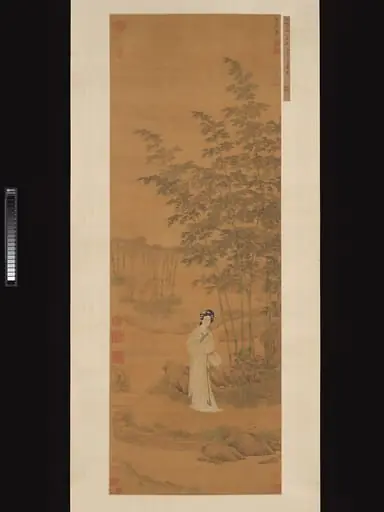 明 傳仇英 文玉圖 軸圖 軸|Lady in a Bamboo Grove
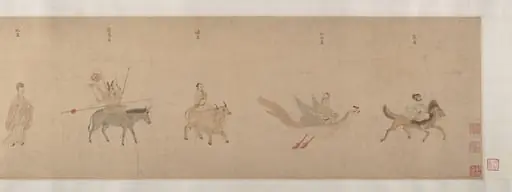 明 傳仇英 五星二十八宿神形圖 卷|Divinities of the Planets and Constellations
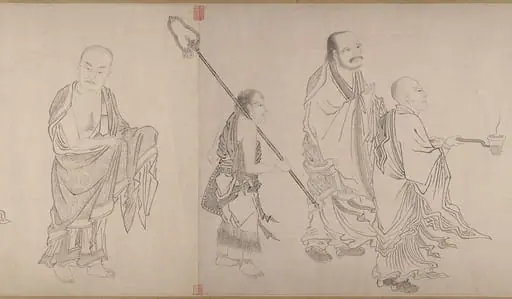 明 傳仇英 十六羅漢圖 卷|The Sixteen Luohans
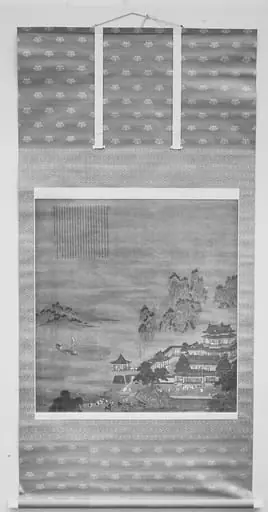 明 佚名 傳仇英 唐宫圖 軸|A Tang Palace
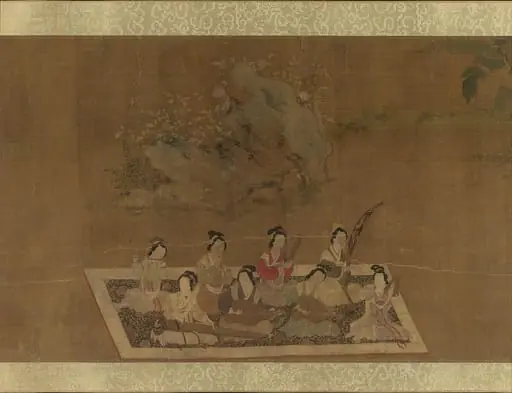 明 佚名 蘇蕙璇璣圖 卷|Lady Su Hui and Her Verse Puzzle
 Zhao Mengfu Writing the Heart (Hridaya) Sutra in Exchange for Tea
 Garden for Solitary Enjoyment
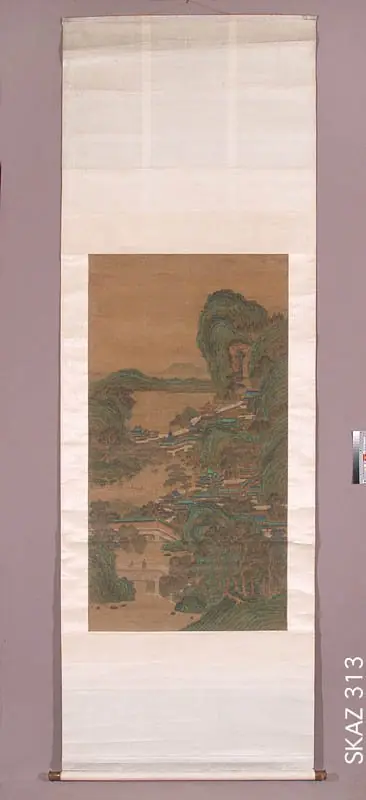 Pałac nad brzegiem jeziora - pejzaż