Artwork
Nouvelles du bien-aimè
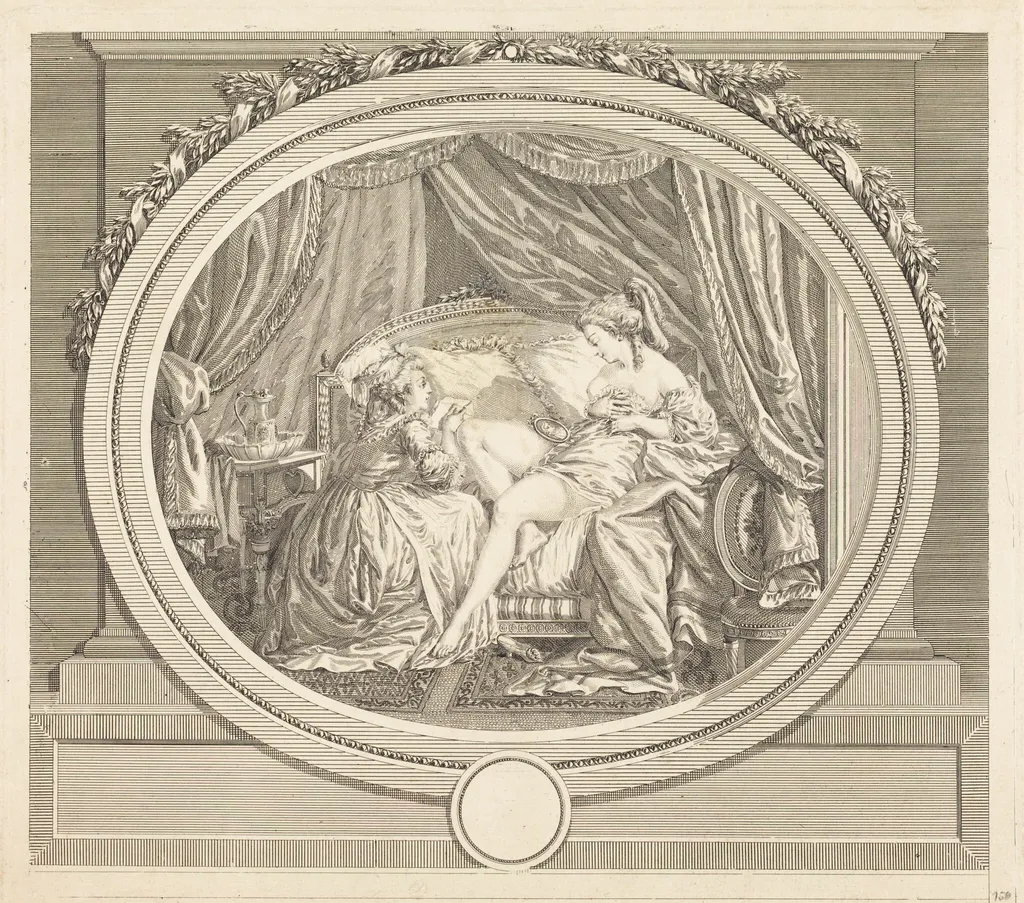
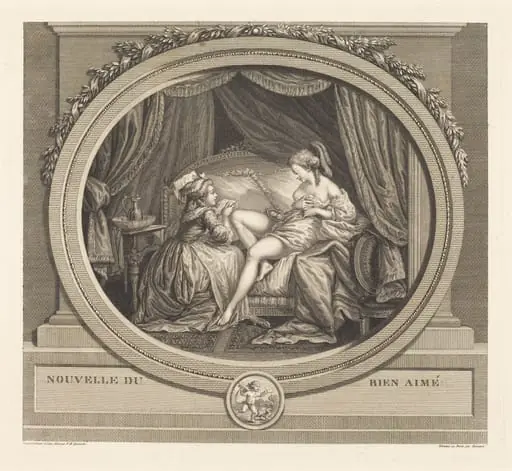
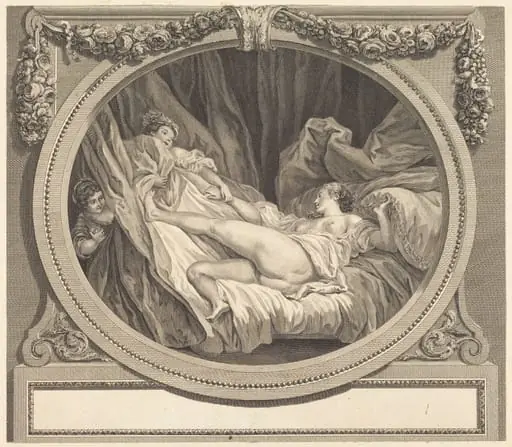
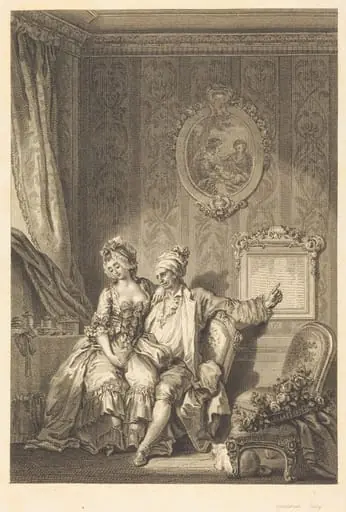
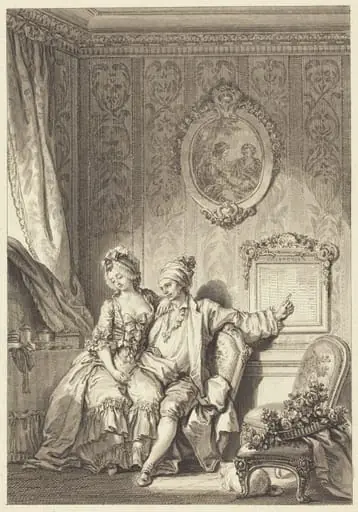
Nouvelles du bien-aimè is an ink print by the Baroque artist François Marie Isidore Queverdo. It dates from 1772 and is held in the collection of the National Gallery of Art.
About this work
Overview
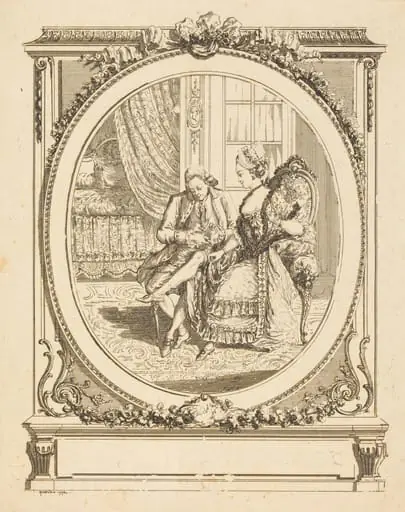
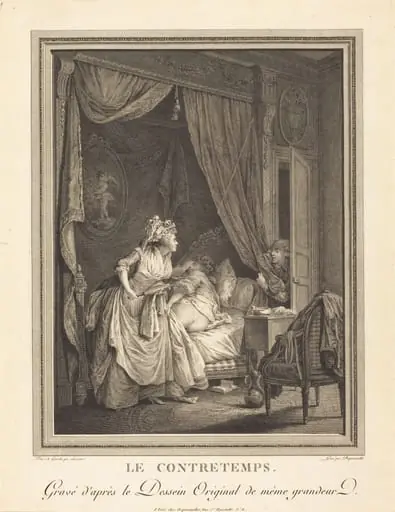
Nouvelles du bien-aimè is an etching produced in 1772 by François Marie Isidore Queverdo. It captures a quiet, private moment between two figures in a domestic interior. Executed with fine, controlled lines, the work belongs to the tradition of intimate printmaking popular in late 18th-century France, where personal emotion and subtle gesture were prioritized over grand narrative.
Subject & Meaning
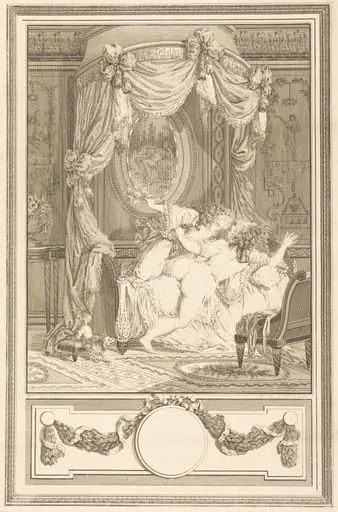
The scene depicts a man kneeling beside a seated woman as he kisses her gently, her head tilted back in quiet receptiveness. The intimacy of the gesture, unadorned and untheatrical, suggests affection rather than passion. The absence of overt symbolism or narrative context invites contemplation of private connection, reflecting a shift toward domestic sentiment in visual culture of the period.
Technique & Style
Delicate hatching models the figures’ forms, while the dim interior is suggested through graded shadows and minimal background detail.
Queverdo employed fine-line etching to render soft textures and nuanced light. Delicate hatching models the figures’ forms, while the dim interior is suggested through graded shadows and minimal background detail. The drapery and small table with a vase are rendered with restraint, focusing attention on the tender interaction. The technique emphasizes tactility and quiet atmosphere over dramatic contrast.
History & Provenance
Created in 1772, the etching was likely made for private circulation rather than public exhibition. Queverdo, active in Paris, produced works often centered on domestic and romantic themes, appealing to collectors interested in refined, emotionally resonant imagery. Its survival in institutional collections suggests it was valued early for its technical subtlety and emotional nuance.
Context
In the decades before the French Revolution, there was growing interest in scenes of private life among the educated bourgeoisie. Etchings like this one catered to a market seeking art that reflected personal feeling and domestic harmony. While influenced by earlier Baroque sensibilities, Queverdo’s approach leans toward understated realism, aligning with emerging Rococo and early Neoclassical tastes.
Legacy
Nouvelles du bien-aimè remains a quiet example of 18th-century French printmaking that prioritized emotional restraint over theatricality. Though not widely reproduced or celebrated in major art historical narratives, it contributes to understanding how intimacy was visually encoded in private collections. Its preservation underscores the significance of small-scale works in documenting shifting social mores.
Artist & collection