Artwork
Christ Salvator Mundi and Mary at Prayer
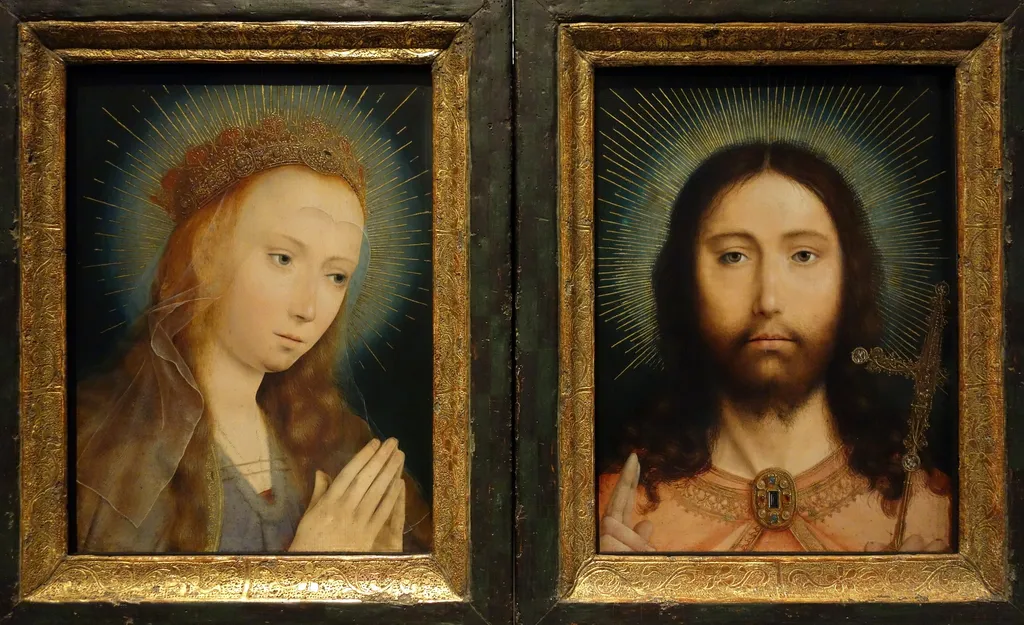
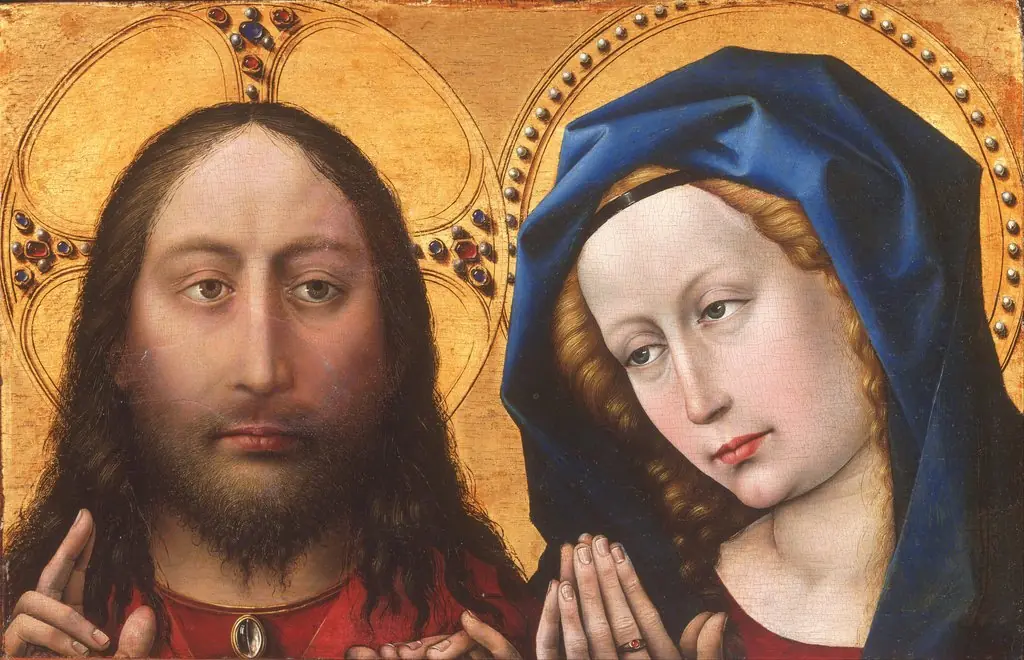
Christ Salvator Mundi and Mary at Prayer is an oil painting by the Northern Renaissance artist Quinten Metsys. It dates from 1505 and is held in the collection of the Royal Museum of Fine Arts Antwerp.
About this work
Overview
Painted in 1505 by Quentin Matsys, this oil-on-panel diptych pairs two devotional figures: the Virgin Mary in prayer and Christ as Salvator Mundi.
Painted in 1505 by Quentin Matsys, this oil-on-panel diptych pairs two devotional figures: the Virgin Mary in prayer and Christ as Salvator Mundi. Executed in the Northern Renaissance style, the work reflects the devotional intensity characteristic of early 16th-century Flemish art. Matsys, originally trained as a blacksmith, transitioned to painting and became a central figure in Antwerp’s growing artistic community. The painting remains in the collection of the Royal Museum of Fine Arts Antwerp.
Subject & Meaning
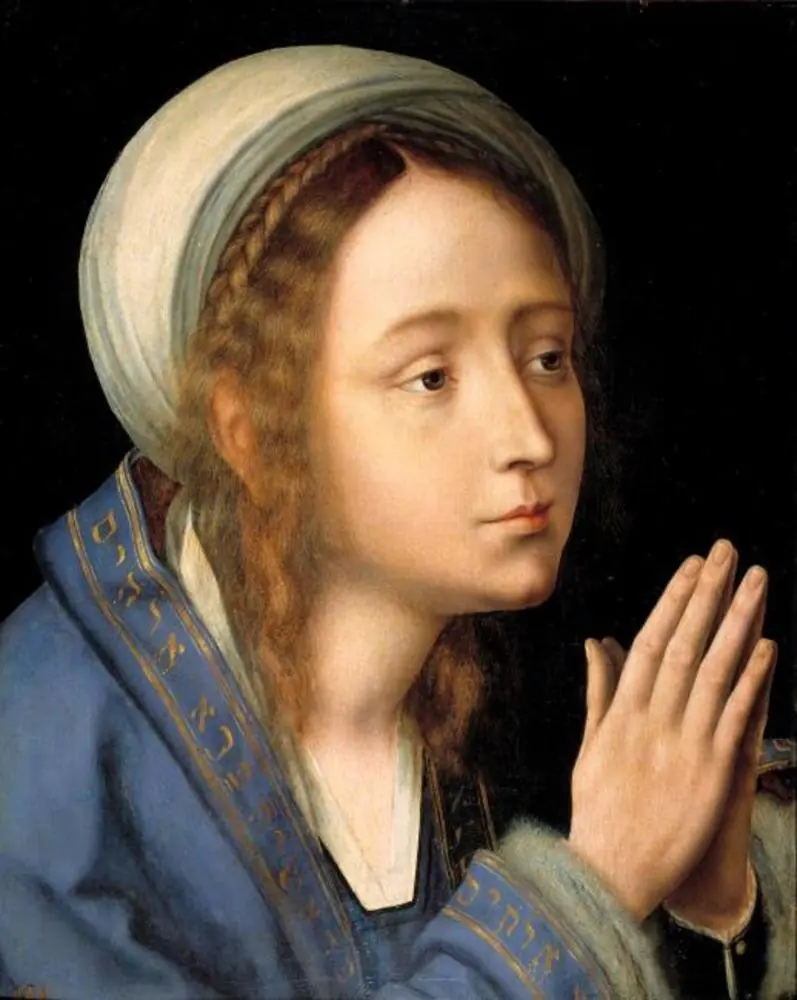
The left panel portrays the Virgin Mary, crowned and robed in blue, with long red hair, her hands clasped in contemplative prayer. The right panel depicts Christ, bearded and haloed, holding a staff and wearing an orange robe, symbolizing his role as Savior of the World. Together, the panels form a devotional pair meant to inspire private meditation, merging human piety with divine authority through their serene, frontal presentation.
Technique & Style
Matsys employed fine oil glazes to achieve luminous skin tones and rich fabric textures, typical of Early Netherlandish practice. The dark, unmodeled backgrounds isolate the figures, enhancing their spiritual presence. Halos with radiating lines emphasize divinity without ornate detail. The composition is symmetrical and restrained, prioritizing quiet reverence over dramatic movement, reflecting the introspective character of Northern Renaissance piety.
History & Provenance
Commissioned likely for private devotion, the diptych entered the collection of the Royal Museum of Fine Arts Antwerp in the 19th century. Its attribution to Matsys has been consistently supported by stylistic analysis and documentary evidence from Antwerp’s guild records. No significant alterations or later additions are recorded, preserving its original form and intent since its creation in 1505.
Context
In early 16th-century Antwerp, religious imagery served both spiritual and social functions, often commissioned by wealthy burghers for home altars. Matsys, emerging from a craft background, bridged artisanal precision with emerging humanist ideals. This diptych aligns with contemporaneous works that emphasized personal devotion, reflecting a broader trend in the Low Countries toward intimate, emotionally grounded religious art.
Legacy
The diptych exemplifies Matsys’s skill in merging technical mastery with spiritual clarity. While less widely known than his larger altarpieces, this work illustrates his contribution to the evolution of Flemish devotional painting. Its preservation in Antwerp underscores its enduring significance within the regional artistic tradition, offering insight into the quiet devotional practices of the Northern Renaissance.
Artist & collection
Artist
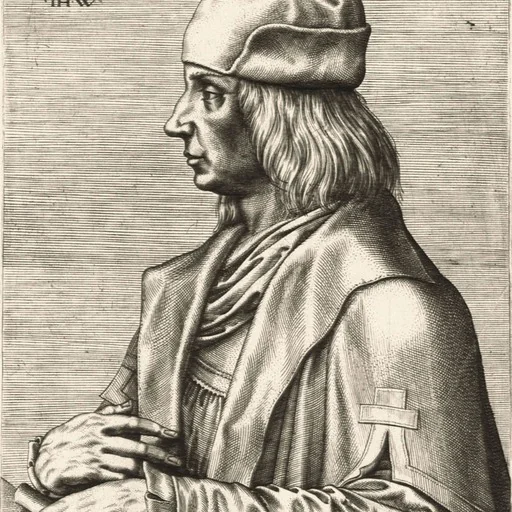
Quentin Matsys (UK: MAT-sysse, US: MAHT-sysse; also Massys or Metsys; Flemish: Quinten Matsijs ; 1466–1530) was a Flemish painter in the Early Netherlandish tradition.

 Christ and the Virgin
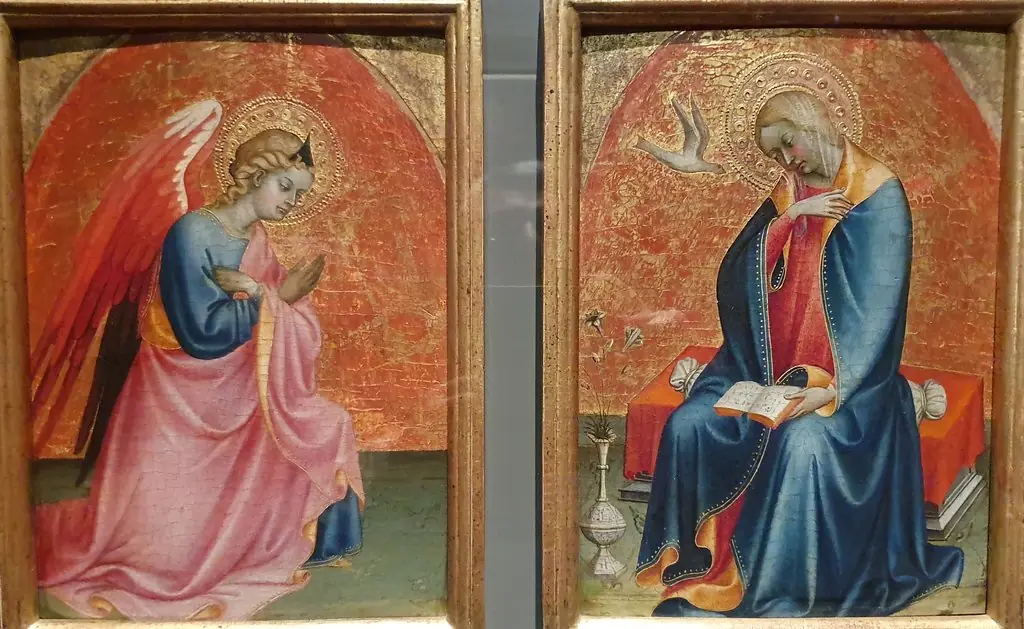 Díptico da Anunciação
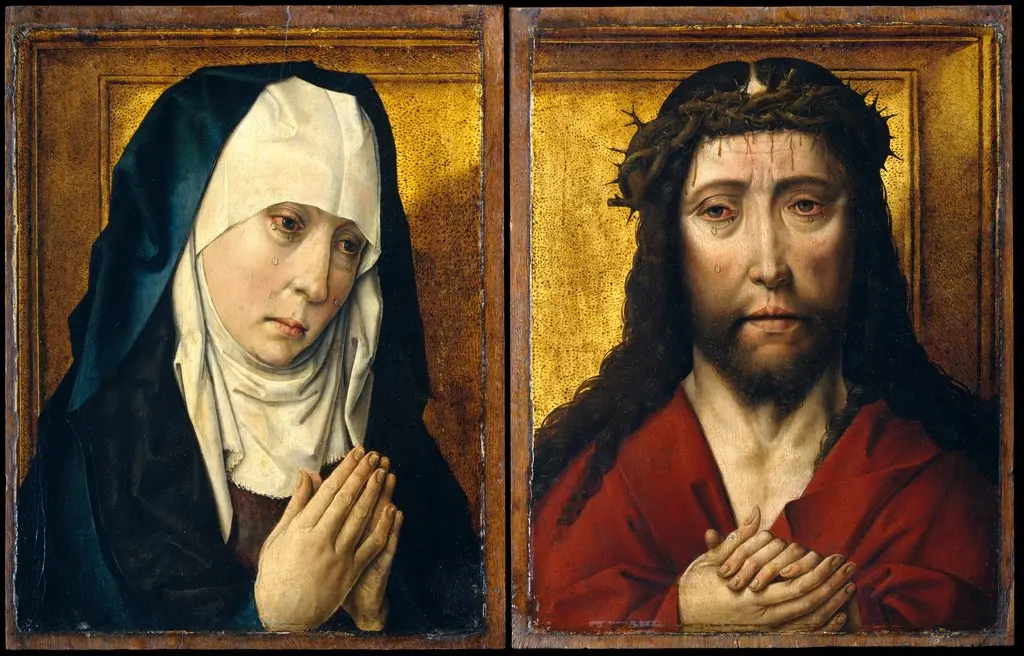 The Mourning Virgin; The Man of Sorrows
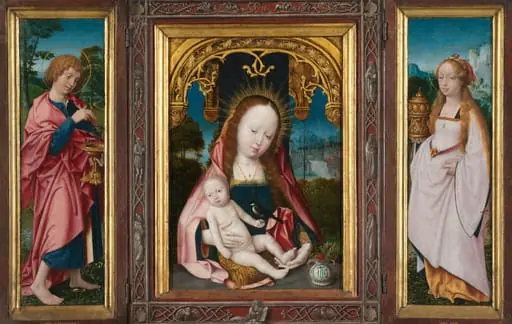 Triptych with Virgin and Child, Saint John the Evangelist (left wing) and Mary Magdalene (right wing)
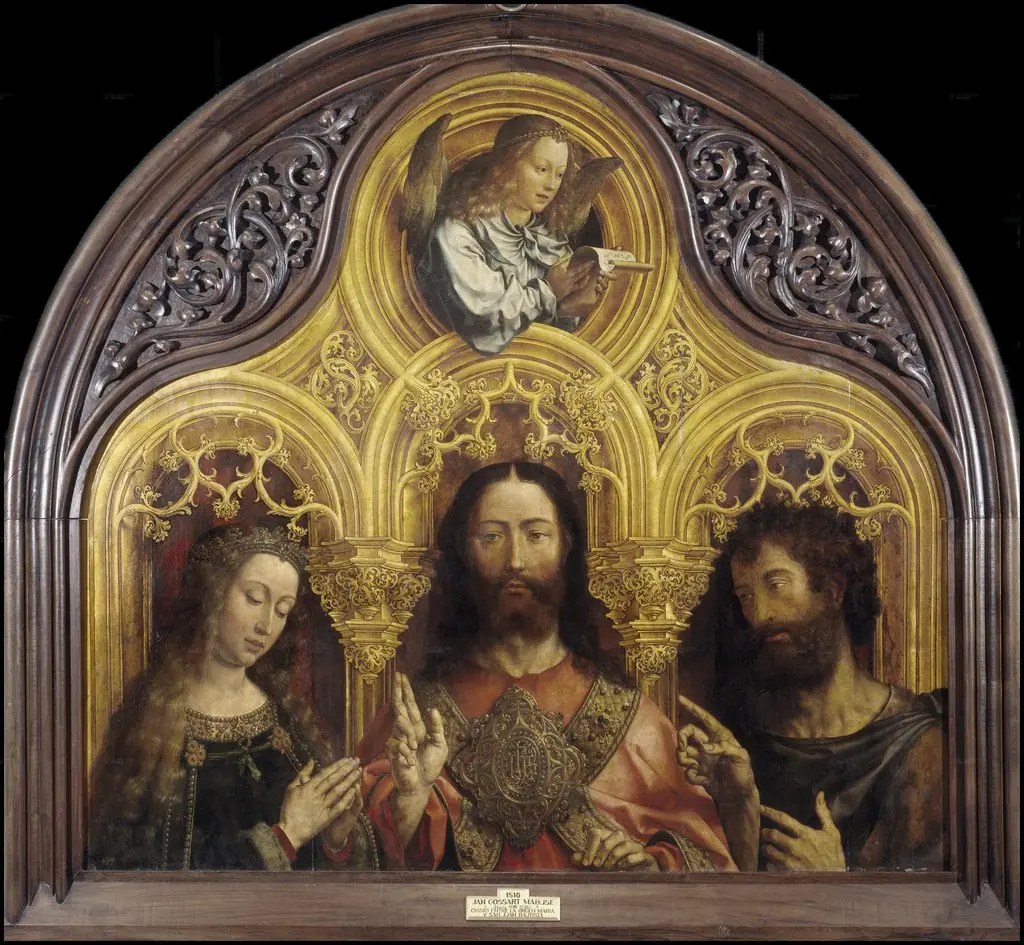 Christ between the Virgin Mary and Saint John the Baptist
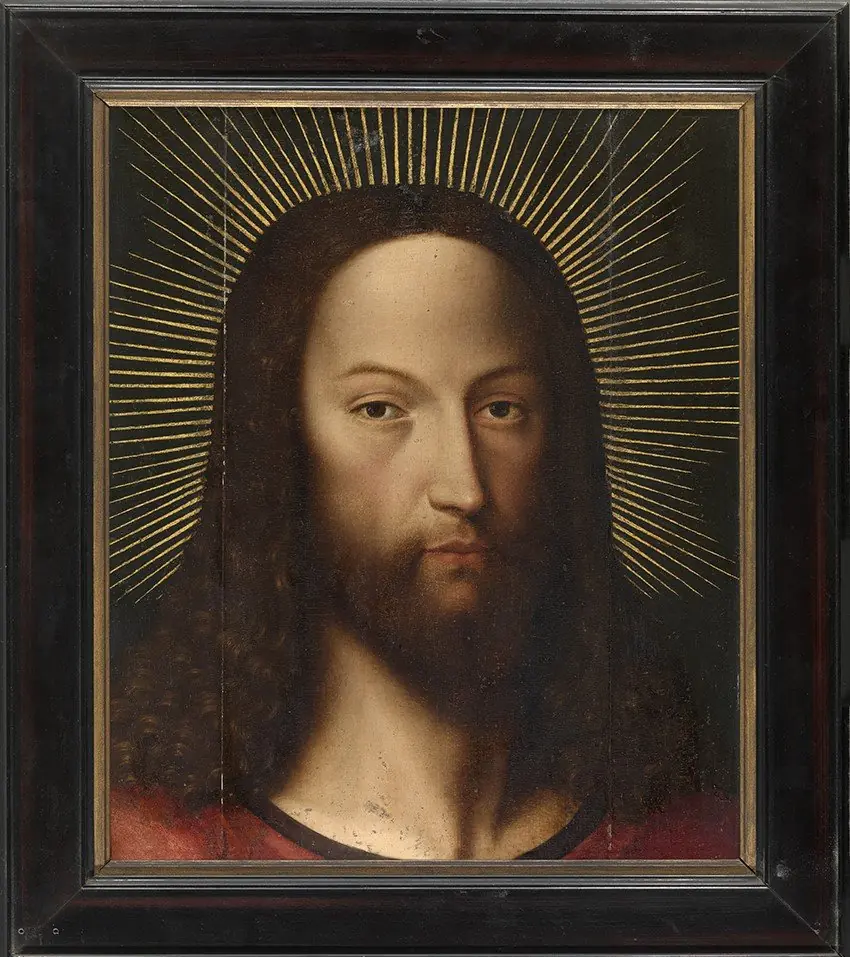 Glorified Christ
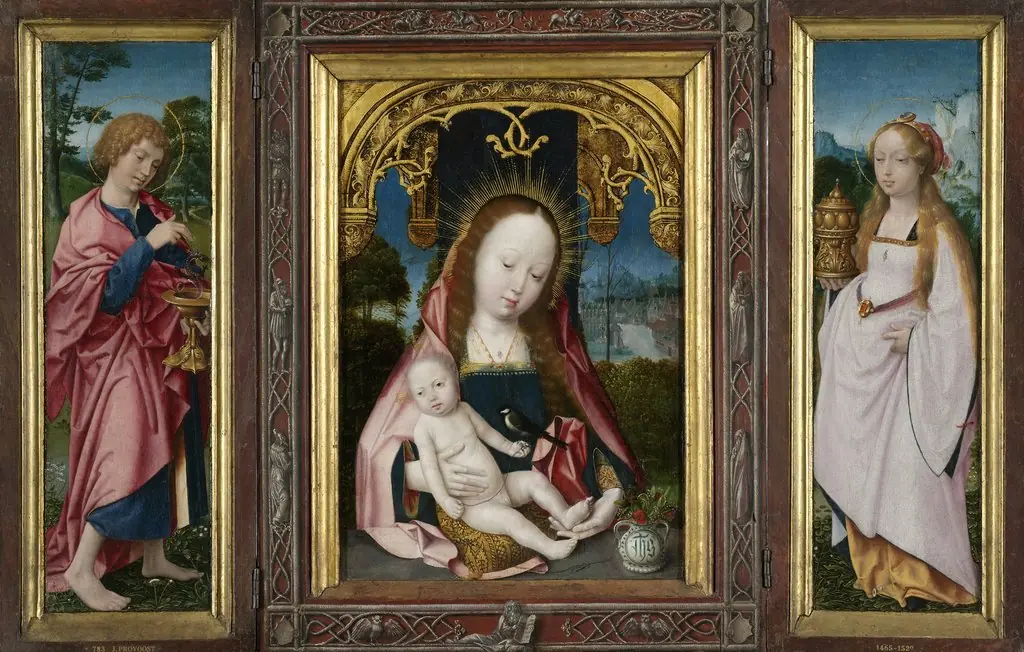 Triptych with the Virgin and Child (centre panel), St John the Evangelist (inner left wing) and Mary Magdalen (inner right wing)
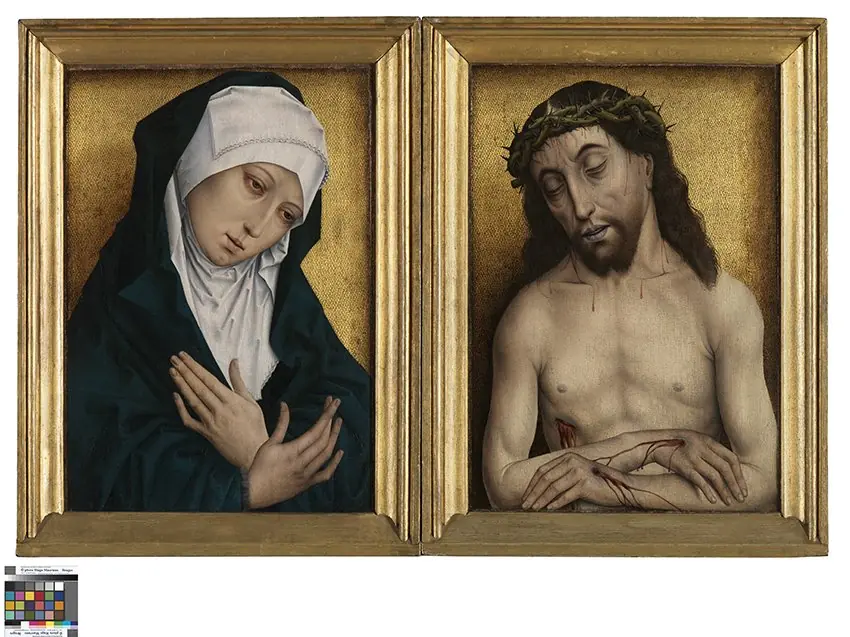 Mater Dolorosa and Man of Sorrows
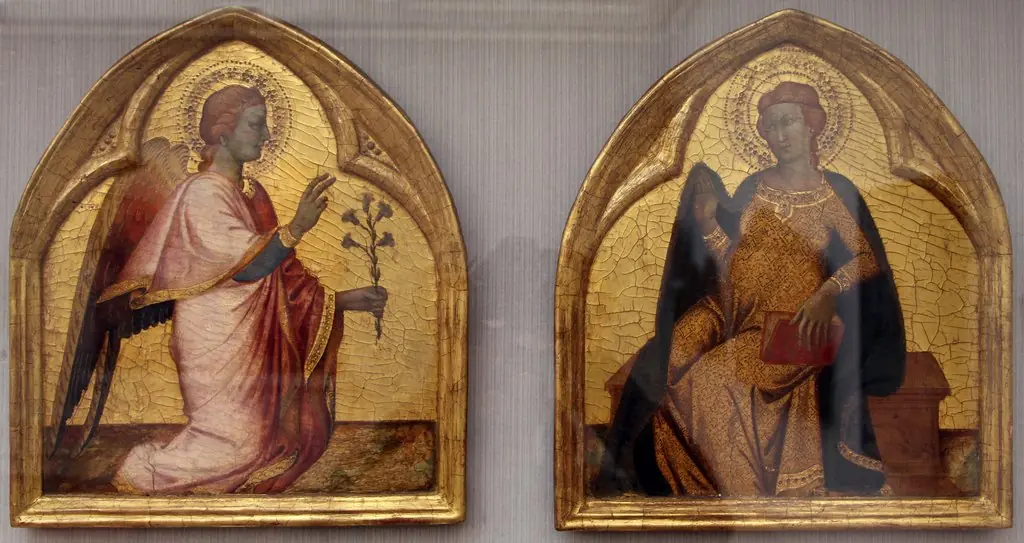 Angel of the Annunciation