Artwork
Christ and the Virgin
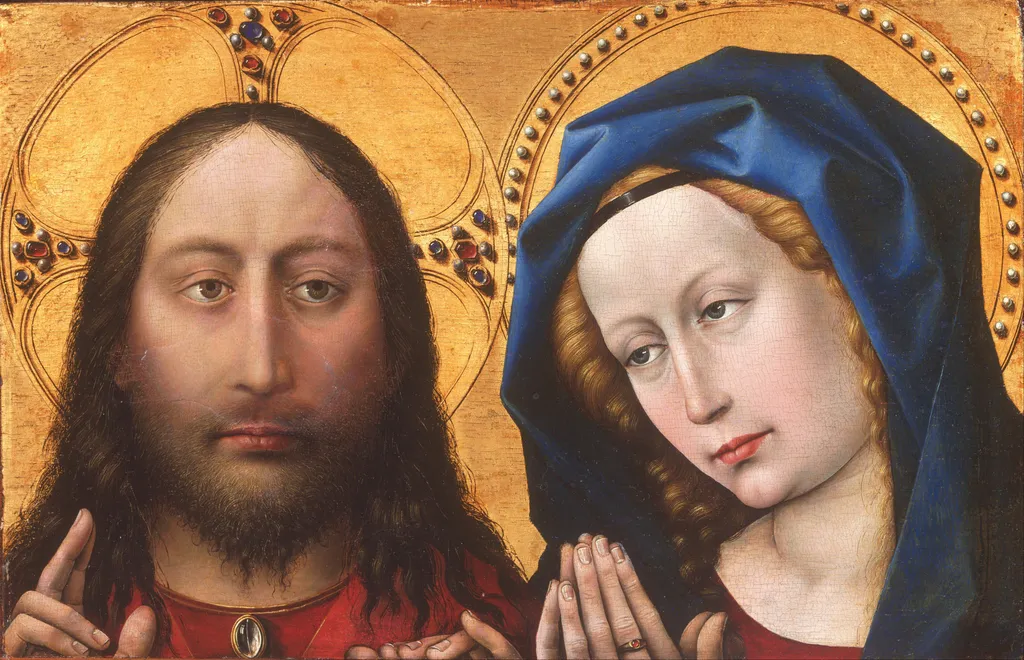
Christ and the Virgin is an oil painting by the Northern Renaissance artist Robert Campin. It dates from 1424 and is held in the collection of the Philadelphia Museum of Art.
About this work
Overview
Christ and the Virgin, a devotional painting from 1424, exemplifies early Netherlandish art's transition to naturalistic religious imagery, crafted by Robert Campin in oil paint.
Subject & Meaning
The painting depicts a close-up of two religious figures: a bearded man in a red robe with a gold pendant (likely Christ) gesturing with his hands, and a woman with golden hair in a blue headscarf over a red dress (the Virgin), set against a rich, gold background adorned with circular designs and gemstones.
Technique & Style
Campin utilized oil paint to achieve intricate textures and vivid colors. The employment of chiaroscuro creates a sense of depth and dimensionality, highlighting the artist's mastery of light and shadow.
History & Provenance
Created in Tournai in 1424, the work is now part of the Philadelphia Museum of Art's collection, reflecting Campin's contribution to the Northern Renaissance alongside contemporaries like Jan van Eyck.
Context
As part of the devotional art genre, Christ and the Virgin represents the period's religious themes, characterized by detailed, naturalistic depictions of sacred subjects.
Own this work as a print
Artist & collection
Artist
Robert Campin (Valenciennes (France) c. 1375 - Tournai (Belgium) 26 April 1444) now usually identified with the Master of Flémalle (earlier the Master of the Merode Triptych, before the discovery of three other similar…

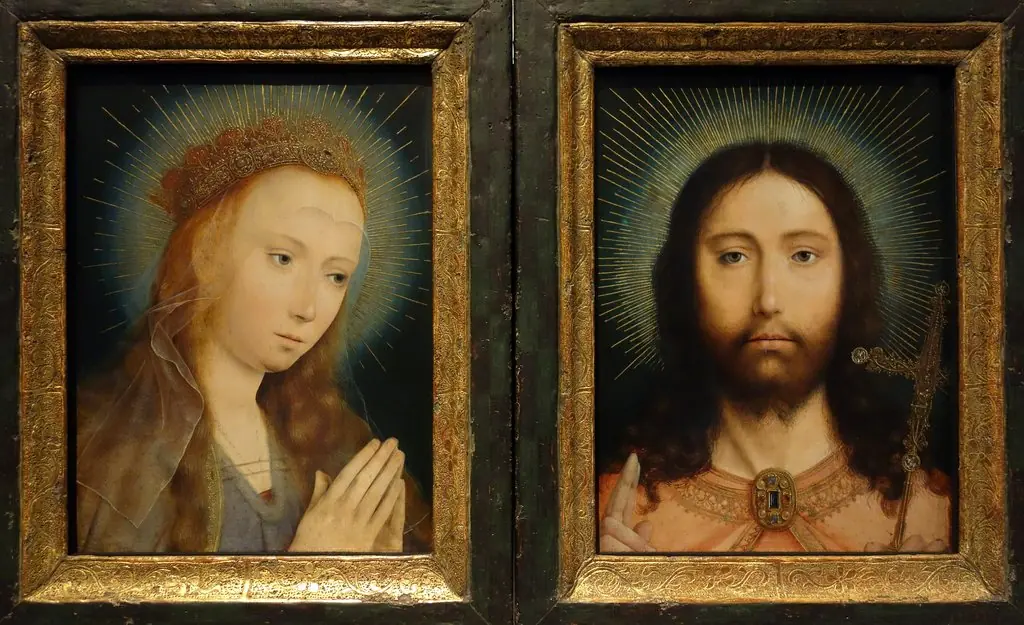 Christ Salvator Mundi and Mary at Prayer
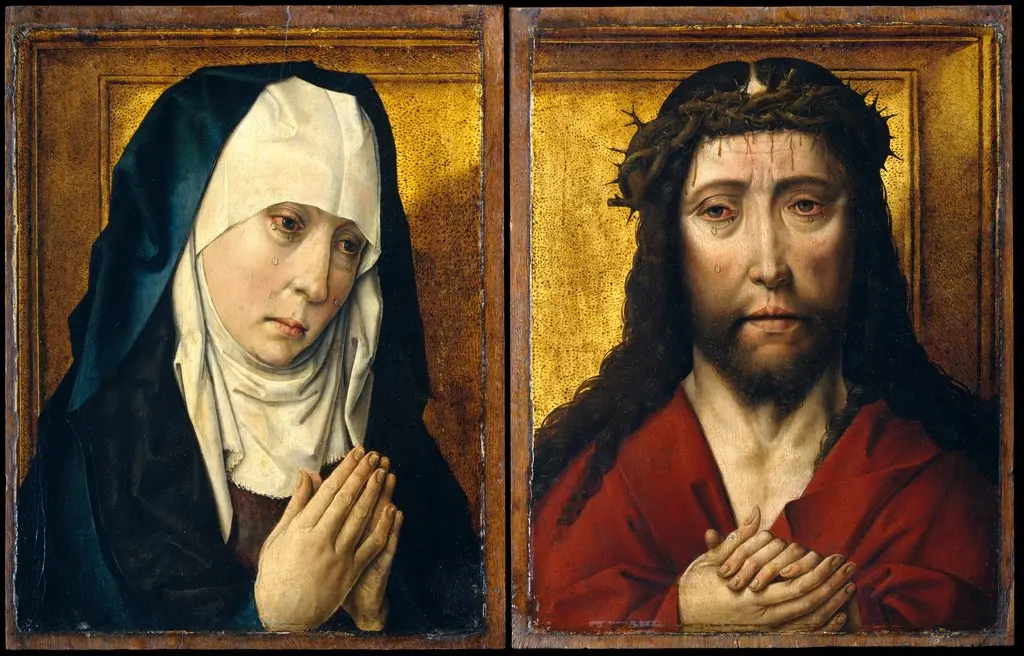 The Mourning Virgin; The Man of Sorrows
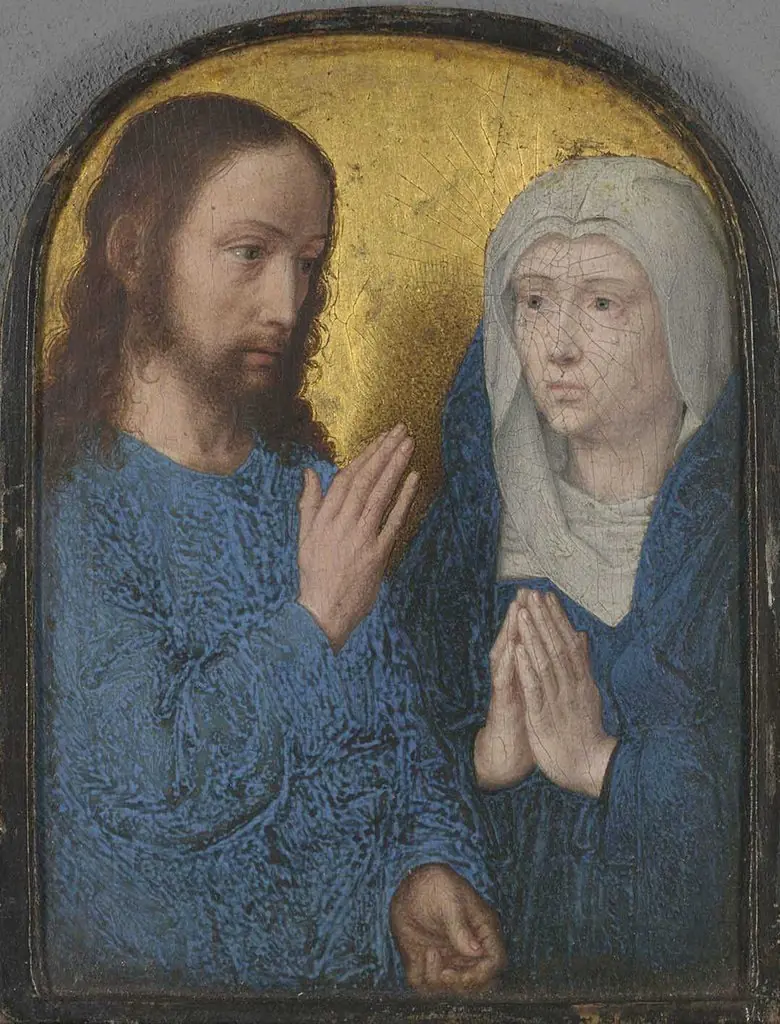 Teil eines Diptychons: Abschied Christi von Maria
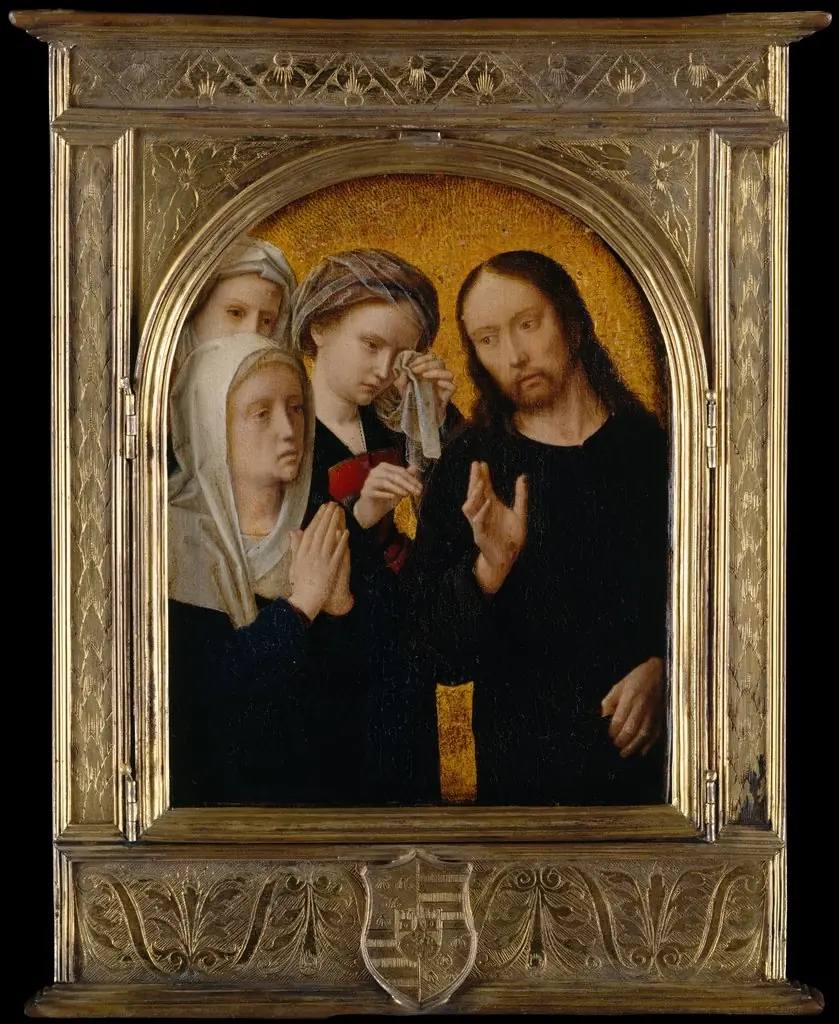 Christ Taking Leave of His Mother
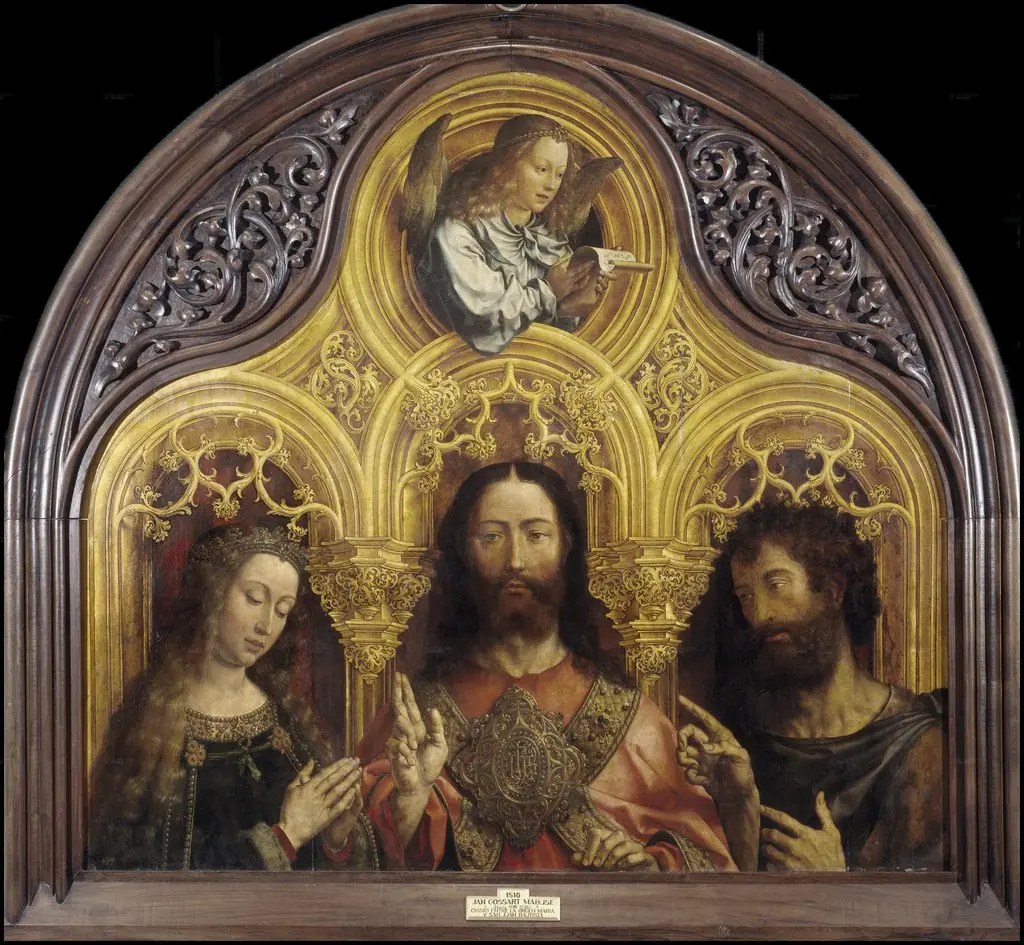 Christ between the Virgin Mary and Saint John the Baptist
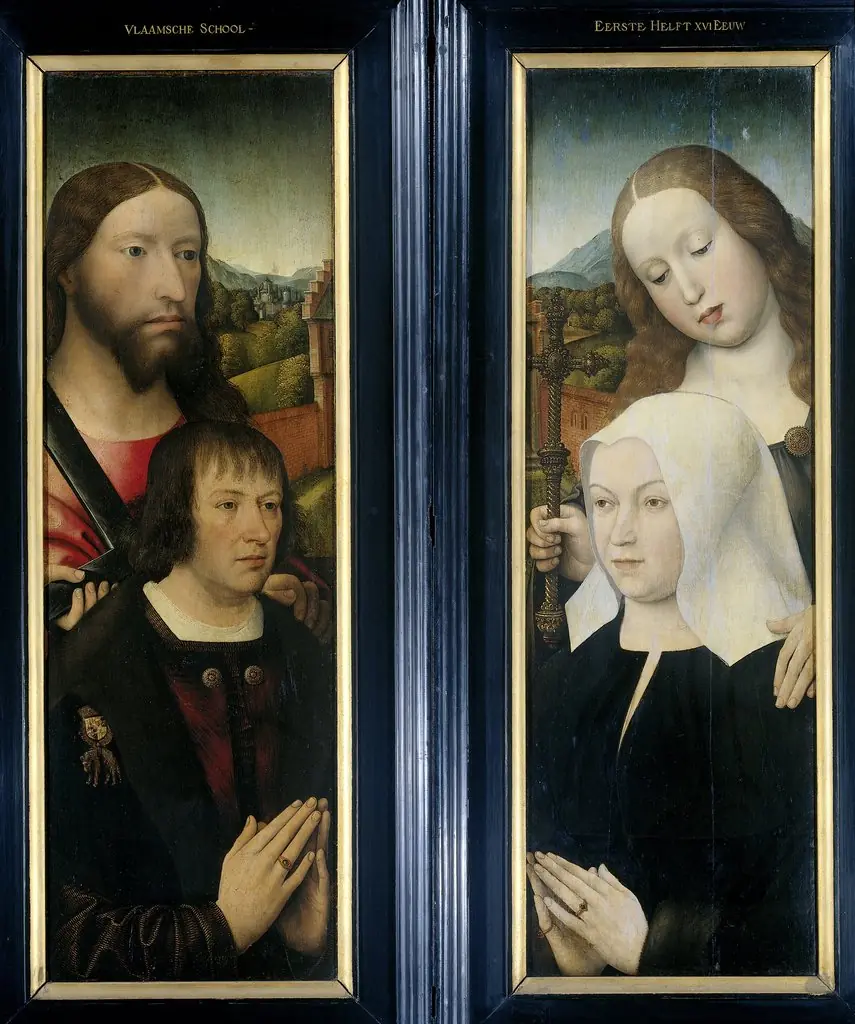 Two Wings of a Triptych with the Donor, Thomas Isaacq, accompanied by Saint Thomas (left, outer wing), and the Donor's Wife accompanied by Saint Margaret (right, outer wing)
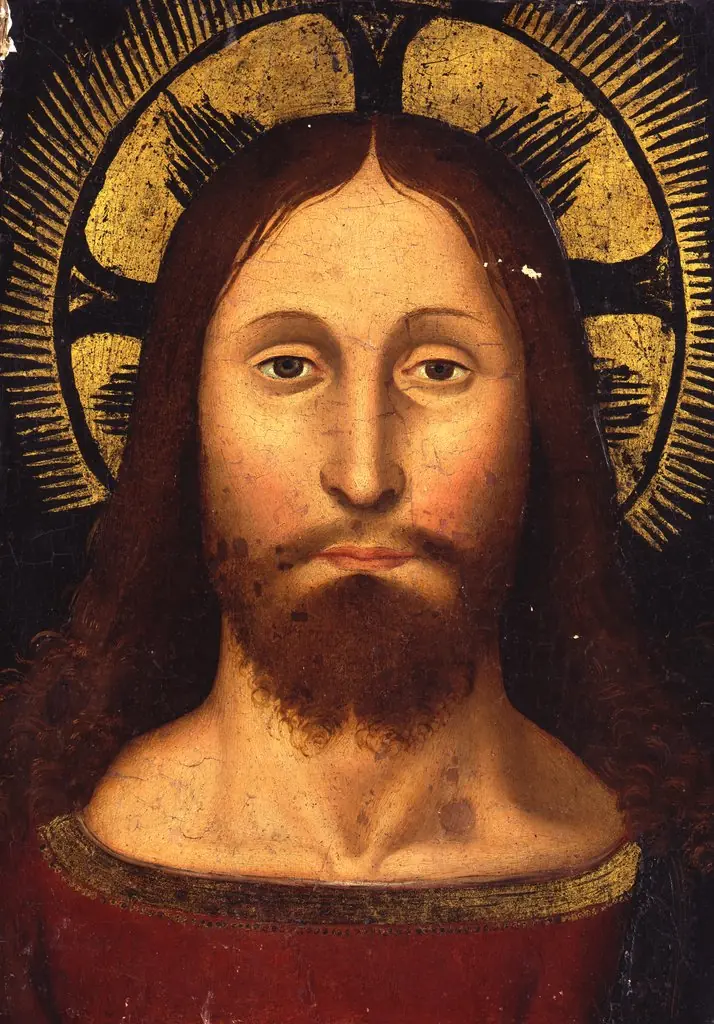 The Sacred Face of Christ (Vera Icon)
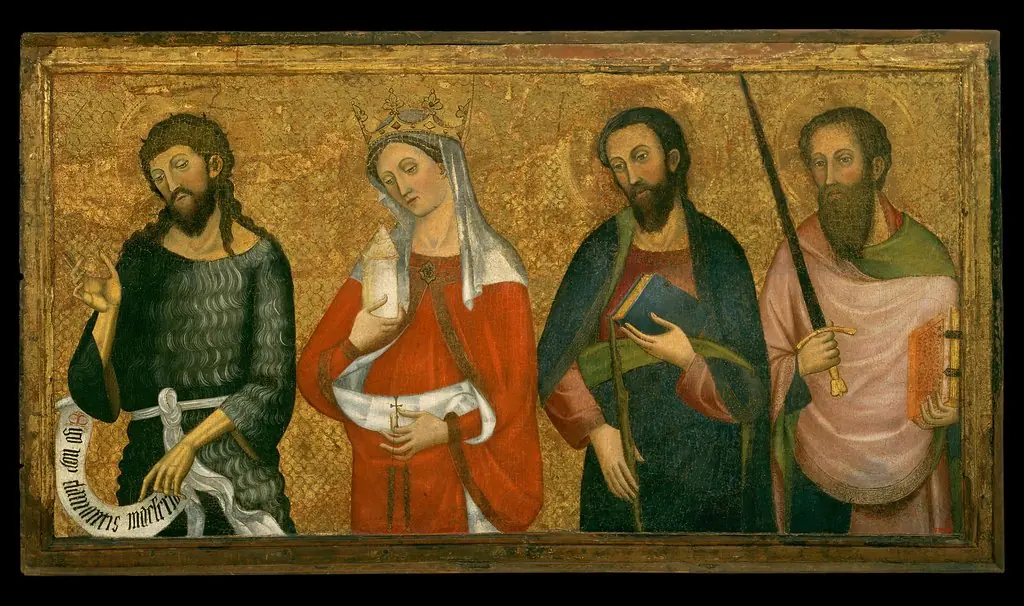 Saint John the Baptist, Saint Mary Magdalene, Saint James the Minor, Saint Paul
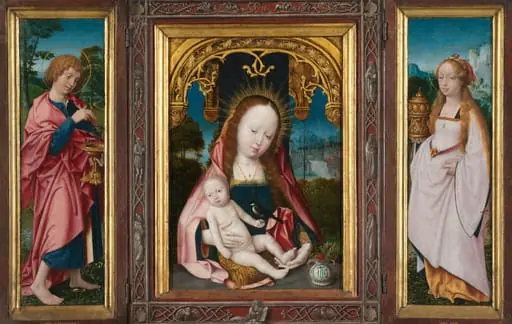 Triptych with Virgin and Child, Saint John the Evangelist (left wing) and Mary Magdalene (right wing)
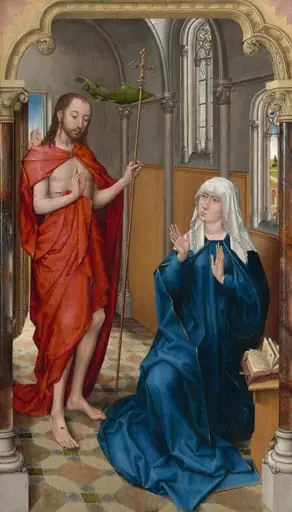 Christ Appearing to the Virgin
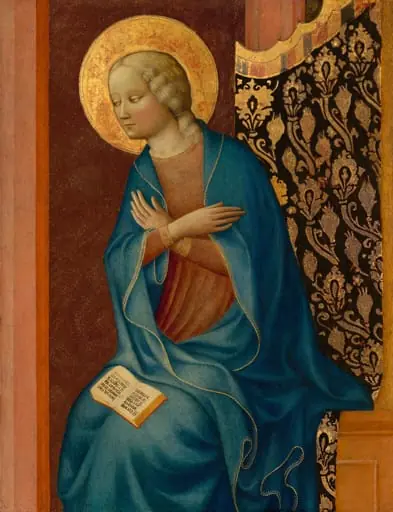 The Virgin Annunciate
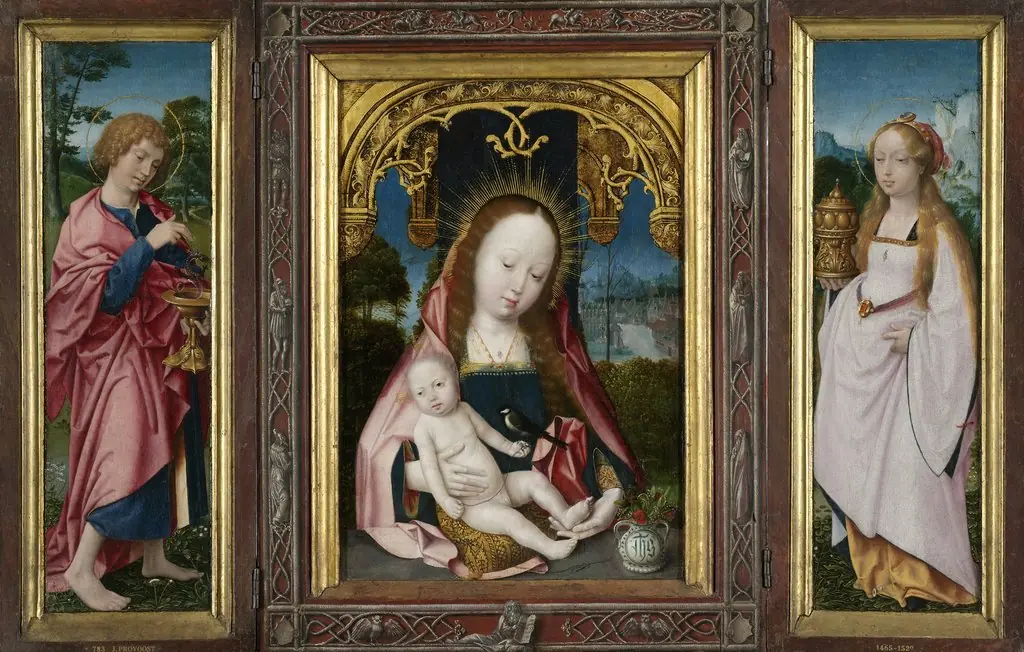 Triptych with the Virgin and Child (centre panel), St John the Evangelist (inner left wing) and Mary Magdalen (inner right wing)