Artwork
Untitled
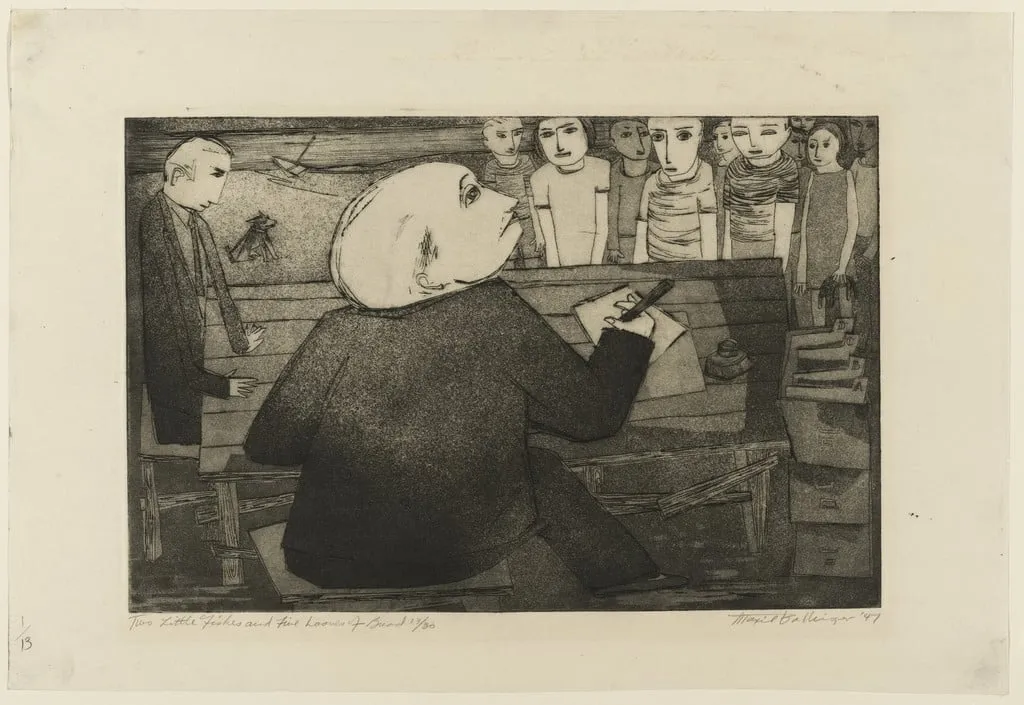
Untitled is an ink print by R. Maxil Ballinger. It dates from 1947 and is held in the collection of the Museum of Modern Art. Created in 1947, this aquatint and etching by R.
About this work
Overview
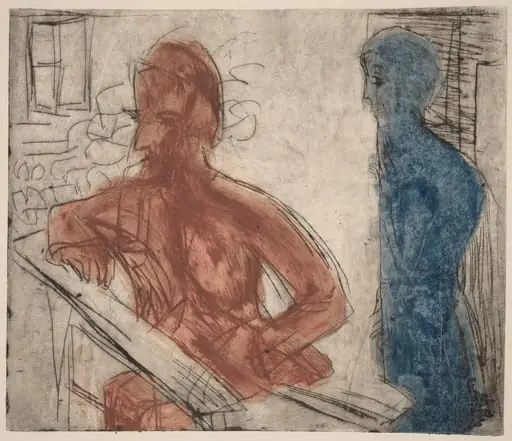
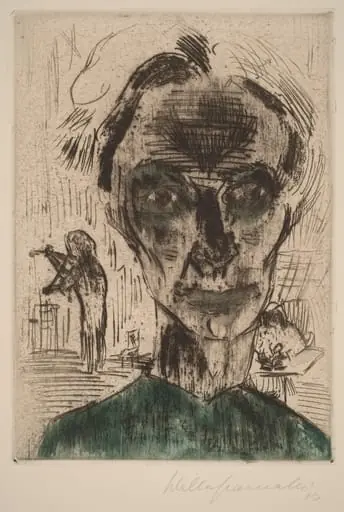
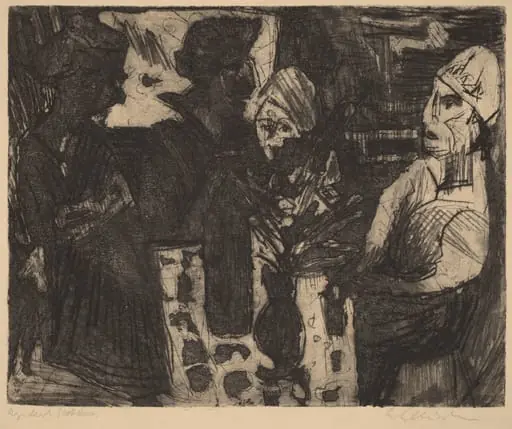
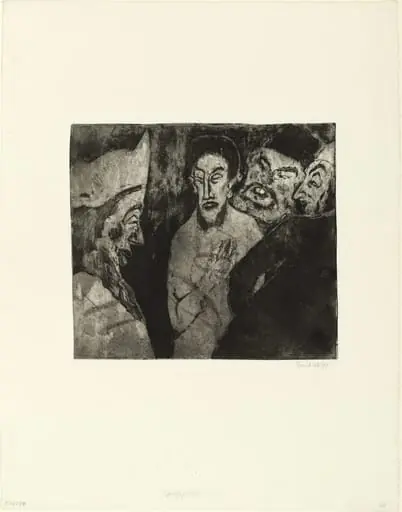
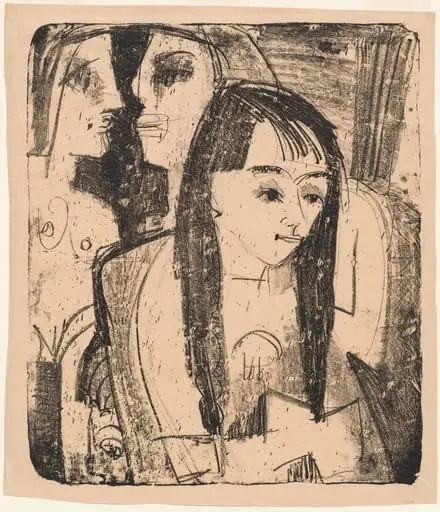
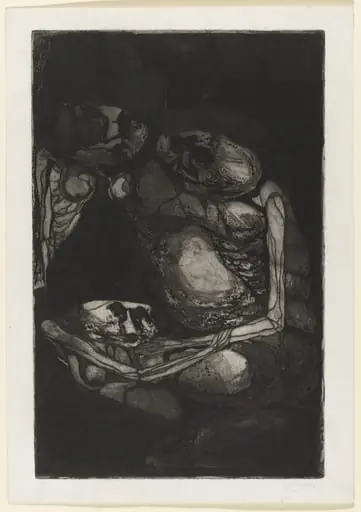
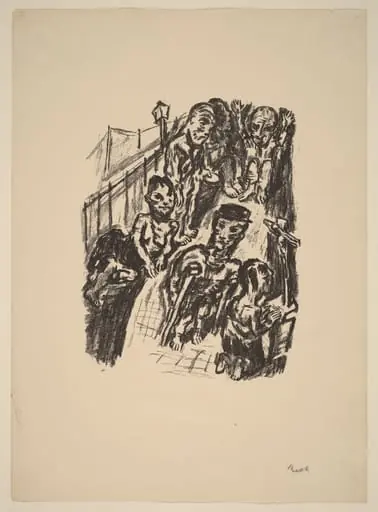
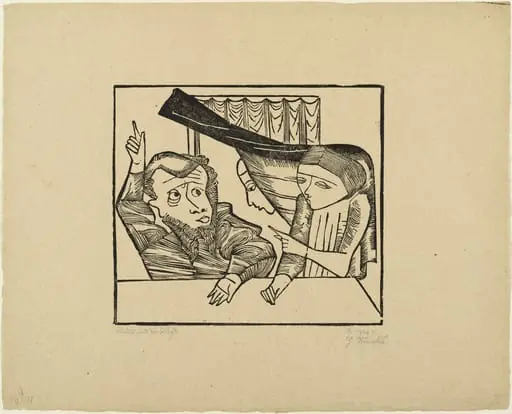
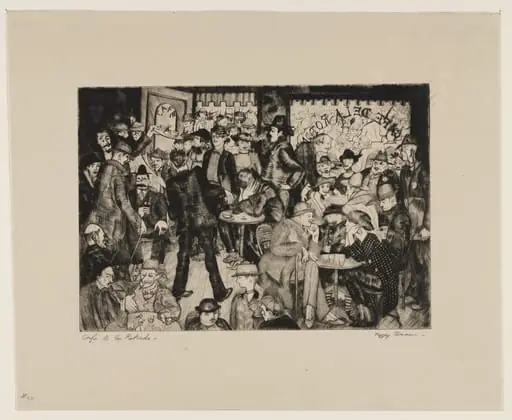
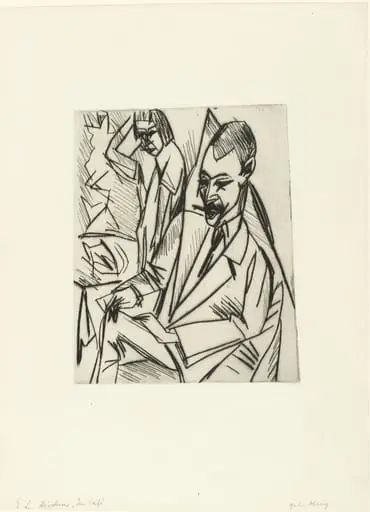
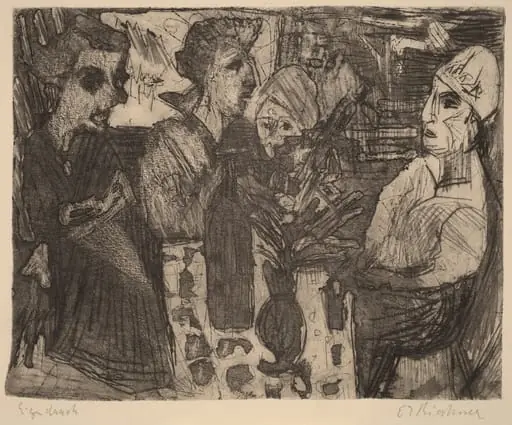
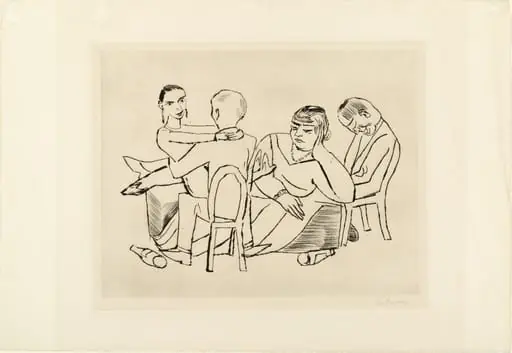
Created in 1947, this aquatint and etching by R. Maxil Ballinger is part of The Museum of Modern Art’s collection. The work is a black-and-white print characterized by precise, angular lines and high contrast. It depicts an intimate interior scene with minimal furnishings and a group of indistinct figures, conveying a sense of quiet tension without overt narrative.
Subject & Meaning
A solitary man is shown bent over a table, intently sketching, while six identical, faceless figures stand in a rigid line behind him. Their uniformity suggests conformity or anonymity, contrasting with the focused individuality of the artist figure. The scene may reflect themes of creative labor amid social pressure, though the artist offers no explicit interpretation.
Technique & Style
Ballinger employed aquatint and etching to achieve sharp tonal contrasts and fine linear detail. The dark, incised lines define forms with a sketch-like immediacy, while the aquatint creates subtle gradations in the background. The absence of color and the emphasis on line reinforce a sense of austerity, aligning the work with mid-century printmaking traditions focused on psychological depth.
History & Provenance
The print was completed in 1947 and entered The Museum of Modern Art’s collection shortly thereafter. No public record details its earlier ownership or exhibition history. Ballinger, a lesser-known figure in mid-century American printmaking, produced a limited body of work, making this piece one of the few documented examples of his practice.
Context
Created in the aftermath of World War II, the work reflects broader cultural anxieties about individuality and mass society. While not overtly political, its imagery resonates with contemporary concerns about conformity, surveillance, and the role of the artist in a bureaucratic age. Similar themes appear in the work of contemporaries like Edward Hopper and Philip Evergood.
Legacy
Though Ballinger did not achieve widespread recognition, this print remains a quiet example of postwar American printmaking’s engagement with psychological and social isolation. It is occasionally referenced in studies of mid-century etching techniques and the representation of the artist as an isolated figure within institutional or societal structures.
Artist & collection