Artwork
The Widow Whitgift and her Sons
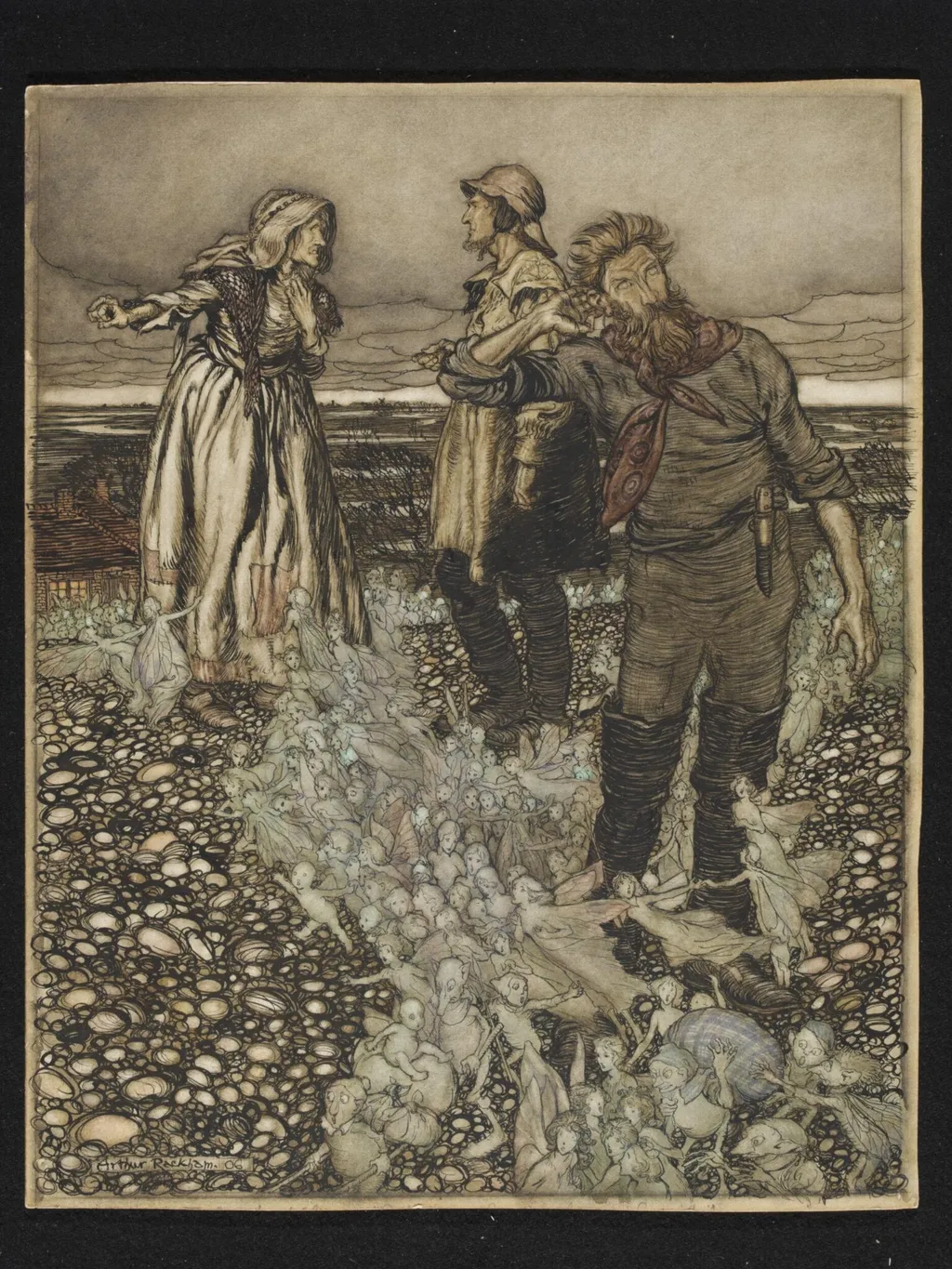
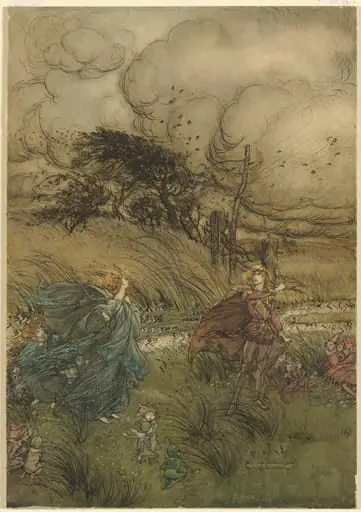
The Widow Whitgift and her Sons is a watercolor work on paper by the Post-Impressionist artist Arthur Rackham. It dates from 1906 and is held in the collection of the Victoria and Albert Museum. This watercolour portrays a woman and two men in a windswept coastal landscape, rendered with delicate washes and muted tones.
About this work
Overview
The composition centers on the figures’ quiet interaction, drawing attention to their posture and spatial relationship rather than narrative spectacle.
This watercolour portrays a woman and two men in a windswept coastal landscape, rendered with delicate washes and muted tones. The figures stand amid rocky outcrops, with a distant village and waterline suggesting the Kent-Sussex marshes. The medium’s transparency lends a fragile, atmospheric quality, emphasizing stillness over drama. The composition centers on the figures’ quiet interaction, drawing attention to their posture and spatial relationship rather than narrative spectacle.
Subject & Meaning
The scene references Rudyard Kipling’s 'Dymchurch Flit,' in which spectral entities seek passage across the sea through the intervention of the widow and her sons. Though the supernatural beings are not visible here, their absence is implied by the figures’ solemn demeanor and the woman’s outstretched gesture. The painting evokes a moment of reluctant duty, where human responsibility intersects with unseen forces, grounding myth in the quiet gravity of everyday presence.
Technique & Style
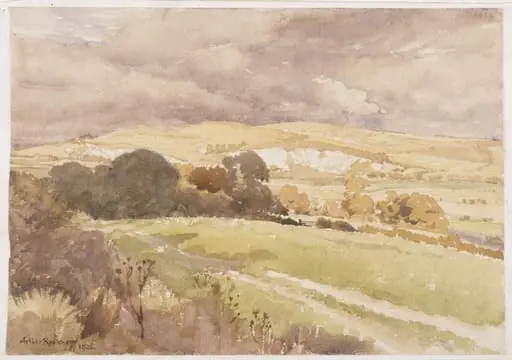
The artist employs watercolour with restrained layering, allowing the paper’s texture to suggest the marsh’s uneven ground and the sky’s haze. Soft edges and minimal detail in the background contrast with the sharper contours of the figures, enhancing their presence. The palette—pale blues, greys, and earth tones—supports a mood of subdued melancholy. Light is diffused, not directional, reinforcing the liminal, dreamlike quality of the scene.
History & Provenance
The work is attributed to a late 19th- or early 20th-century British artist influenced by literary illustration and the Aesthetic movement. Its provenance traces to private collections in southeast England, where Kipling’s regional tales held cultural resonance. The painting remained largely unexhibited until the late 20th century, when interest in illustrated literature and regional symbolism revived its visibility among scholars of British watercolour.
Context
The Romney Marsh, a marshland bordering Kent and Sussex, was a site of folklore and literary fascination in the Victorian era, often associated with isolation and the supernatural. Kipling’s stories drew on its eerie topography, and artists responded with imagery that merged realism with myth. This painting reflects a broader trend of illustrating literary moments in quiet, atmospheric terms, avoiding theatricality in favor of psychological nuance.
Legacy
The painting contributes to a lesser-known strand of British watercolour that prioritized literary allusion and emotional restraint over spectacle. It stands as a quiet counterpoint to more overtly dramatic illustrations of the period, influencing later artists who sought to convey myth through understated gesture and landscape. Its endurance lies in its ability to suggest unseen forces through the stillness of the human form.
Artist & collection
Artist
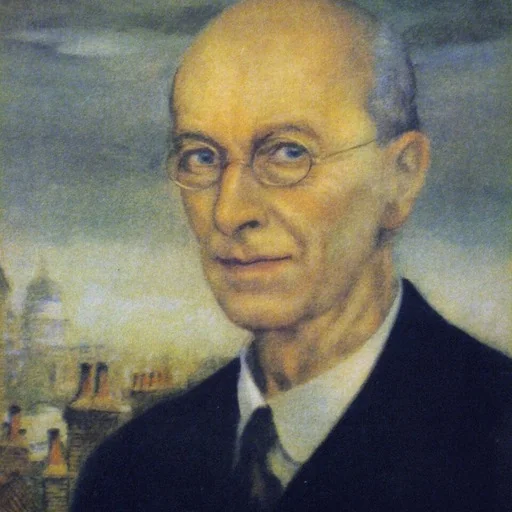
Arthur Rackham (19 September 1867 – 6 September 1939) was an English book illustrator.