Artwork
Why He Cannot Sleep
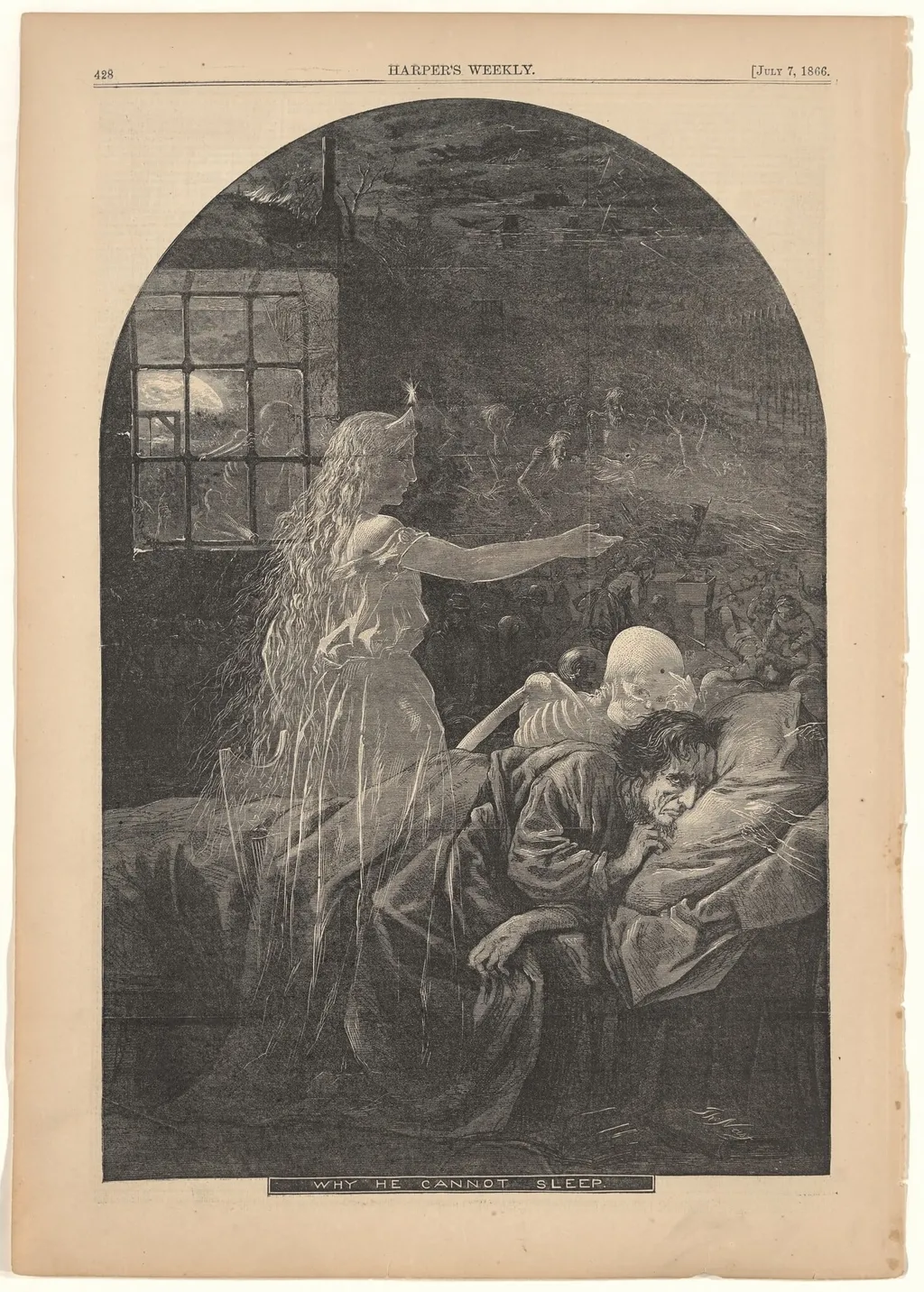
Why He Cannot Sleep is an ink print by the Impressionist artist Thomas Nast. It dates from 1866 and is held in the collection of the National Gallery of Art.
About this work
A small window in the background lets in dim light, and outside you can see trees and a moonlit sky.
This black-and-white drawing shows a ghostly figure hovering over a sleeping man. The ghost has long, flowing hair and is reaching toward the man, who’s curled up under a blanket. A small window in the background lets in dim light, and outside you can see trees and a moonlit sky.
The title at the bottom reads *"Why He Cannot Sleep"*—the ghost is keeping him awake. This was published in *Harper’s Weekly* in 1866, made using wood engraving.
Next, look up engraving to see how artists carved these detailed images.
Overview
Thomas Nast’s 1866 work *Why He Cannot Sleep* is a black‑and‑white wood engraving printed on newsprint. The image was reproduced in the periodical *Harper’s Weekly* the same year it was created, presenting a nocturnal scene that combines the ordinary with the supernatural.
Subject & Meaning
The composition depicts a sleeping figure curled beneath a blanket, while a translucent, long‑haired apparition hovers above, reaching toward the sleeper. A dimly lit window frames a moonlit sky and distant trees, suggesting that the ghost’s presence is the cause of the man’s restless night.
Technique & Style
Executed as a wood engraving, Nast incised fine lines into a wood block to achieve intricate tonal variation. The stark contrast between deep blacks and delicate whites creates a haunting atmosphere, while the precise rendering of the ghost’s flowing hair demonstrates the artist’s skill in manipulating line to suggest ethereality.
History & Provenance
First appearing in the 1866 issue of *Harper’s Weekly*, the print was produced for a mass‑circulation audience, typical of Nast’s work as a political cartoonist and illustrator. Its original paper format—newsprint—reflects the period’s common practice of disseminating visual commentary through inexpensive, widely distributed media.
Context
Created during the post‑Civil War era, the image aligns with contemporary interests in the supernatural and the psychological effects of trauma. While not overtly political, the work echoes broader 19th‑century anxieties about unseen forces disrupting daily life.
Artist & collection


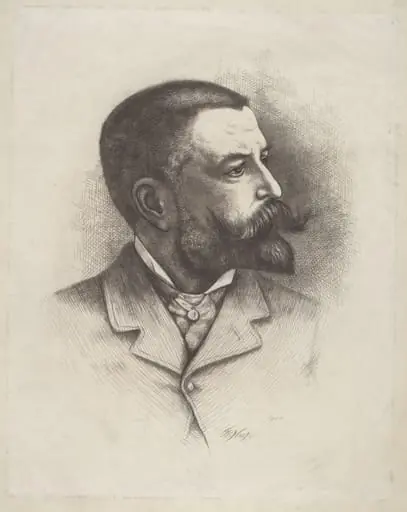 Self-Portrait
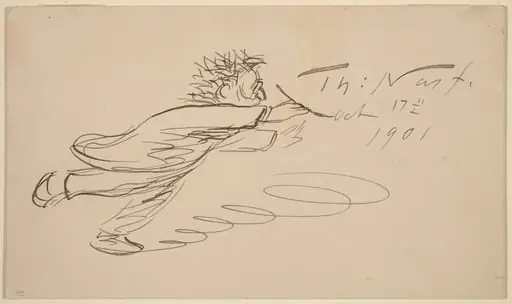 Signature, "TH. Nast, Oct. 17, 1901"
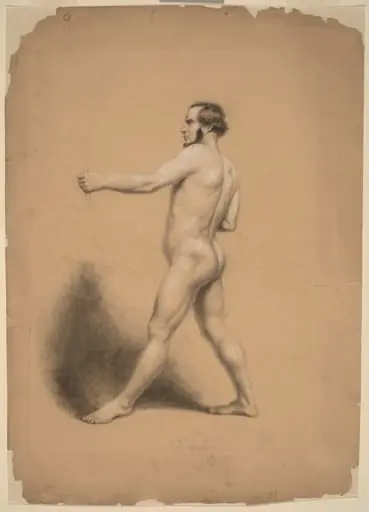 Archer, Nude Study
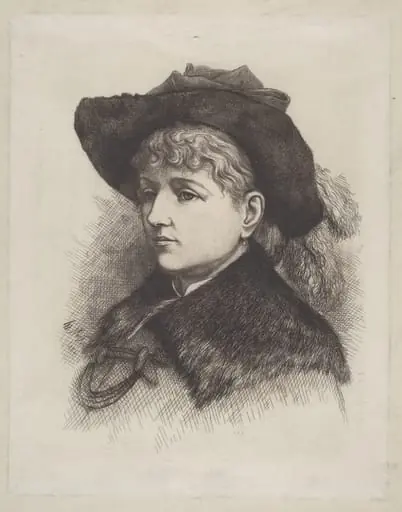 Portrait of the Artist's Wife, Sarah Edwards Nast
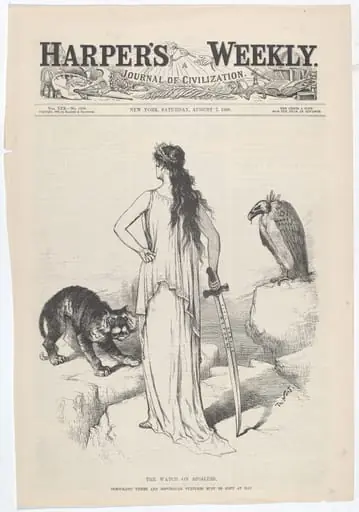 The Watch on Spoilers. The Democratic Tigers and Republian Vultures Must Be Kept at Bay.
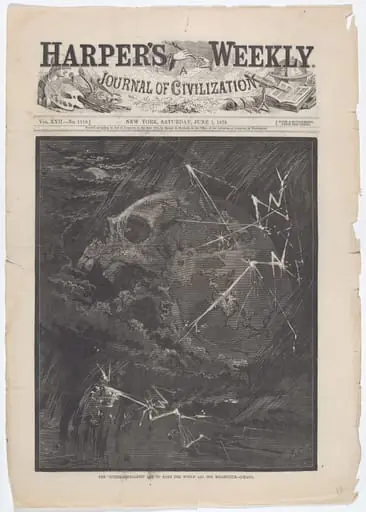 The "Internationalists" Are to Make the World All One Millennium - (Chaos)
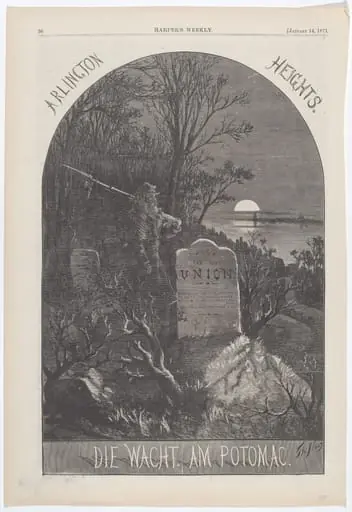 Arlington Heights. Die Wacht. Am Potomac.
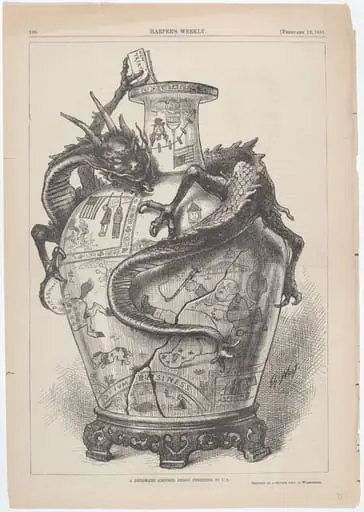 A Diplomatic (Chinese) Design Presented to U.S.
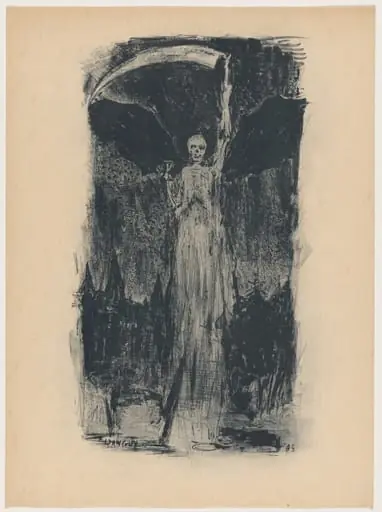 Le château de la mort (The House of the Dead)
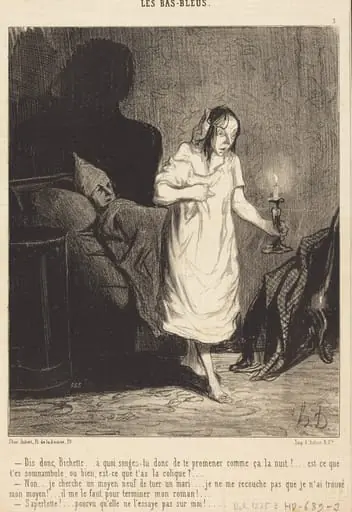 Dis donc, Bichette... a quoi songes-tu donc...
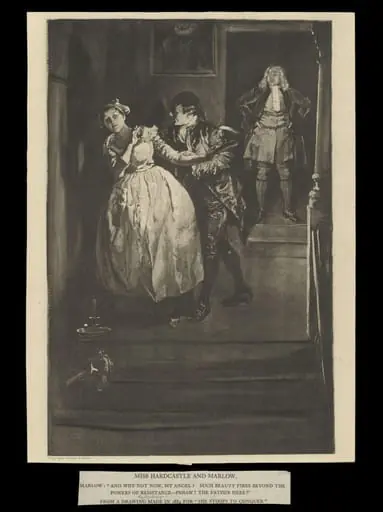 H Beard Print Collection
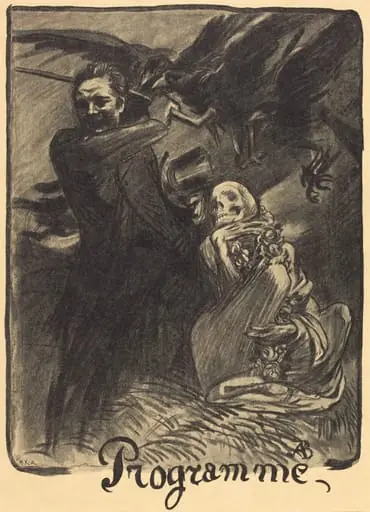 Les Honnêtes femmes; Conférence, Poésies inédites d'Henry Becque; La Parisienne
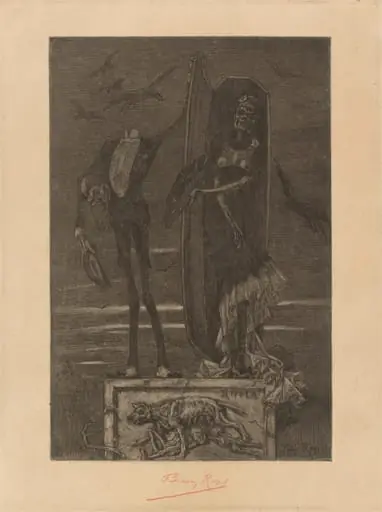 Le Vice suprème: Frontispiece
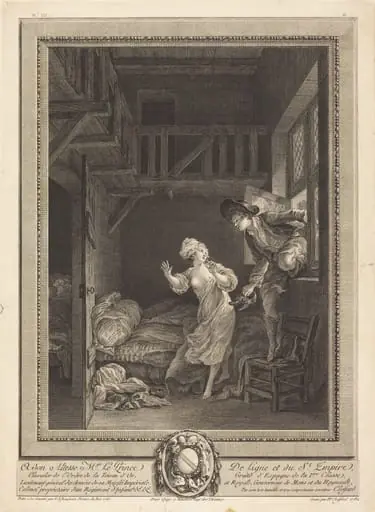 Marchez tout doux, parlez tout bas
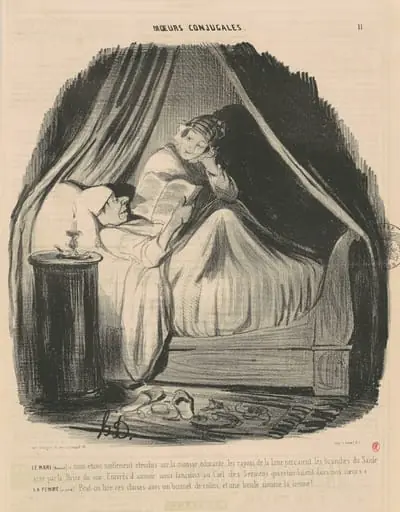 Le mari lisant: nous étions mollement étendus...
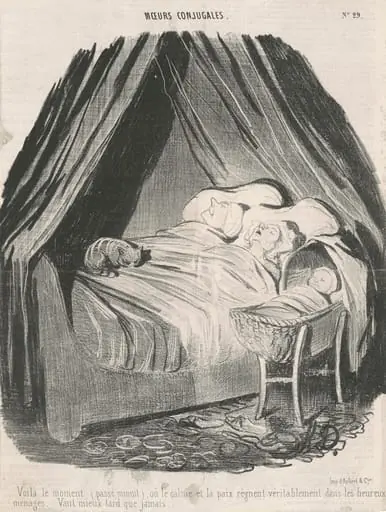 Voilà le moment (passé minuit) o∙ le calme et la paix règnent véritablement dans les heureux ménages. Vaut mieux tard que jamais.
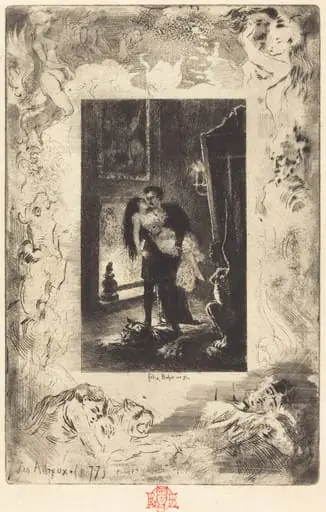 Les Adieux (The Parting)
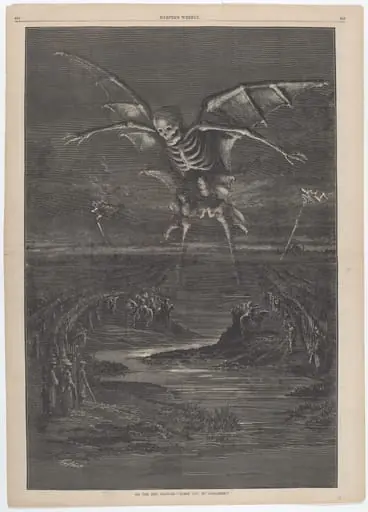 On the Red Danube - "Bless You, My Children!"
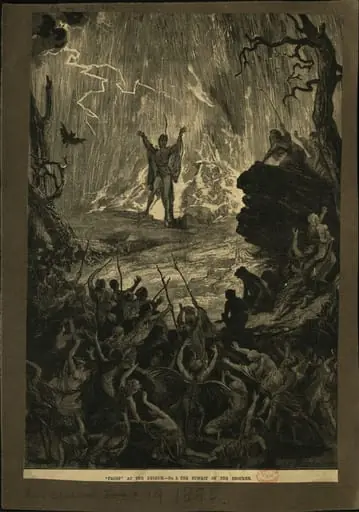 Faust
Faust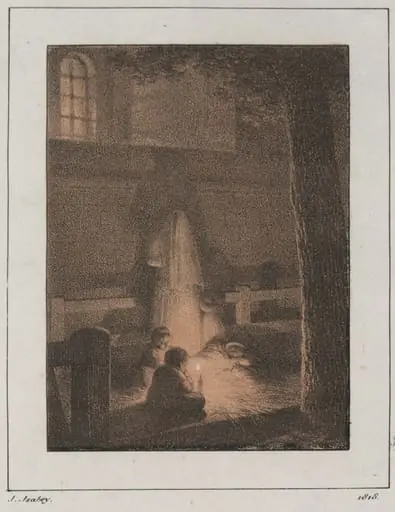 Children with Candle