Artwork
La Patrie en danger
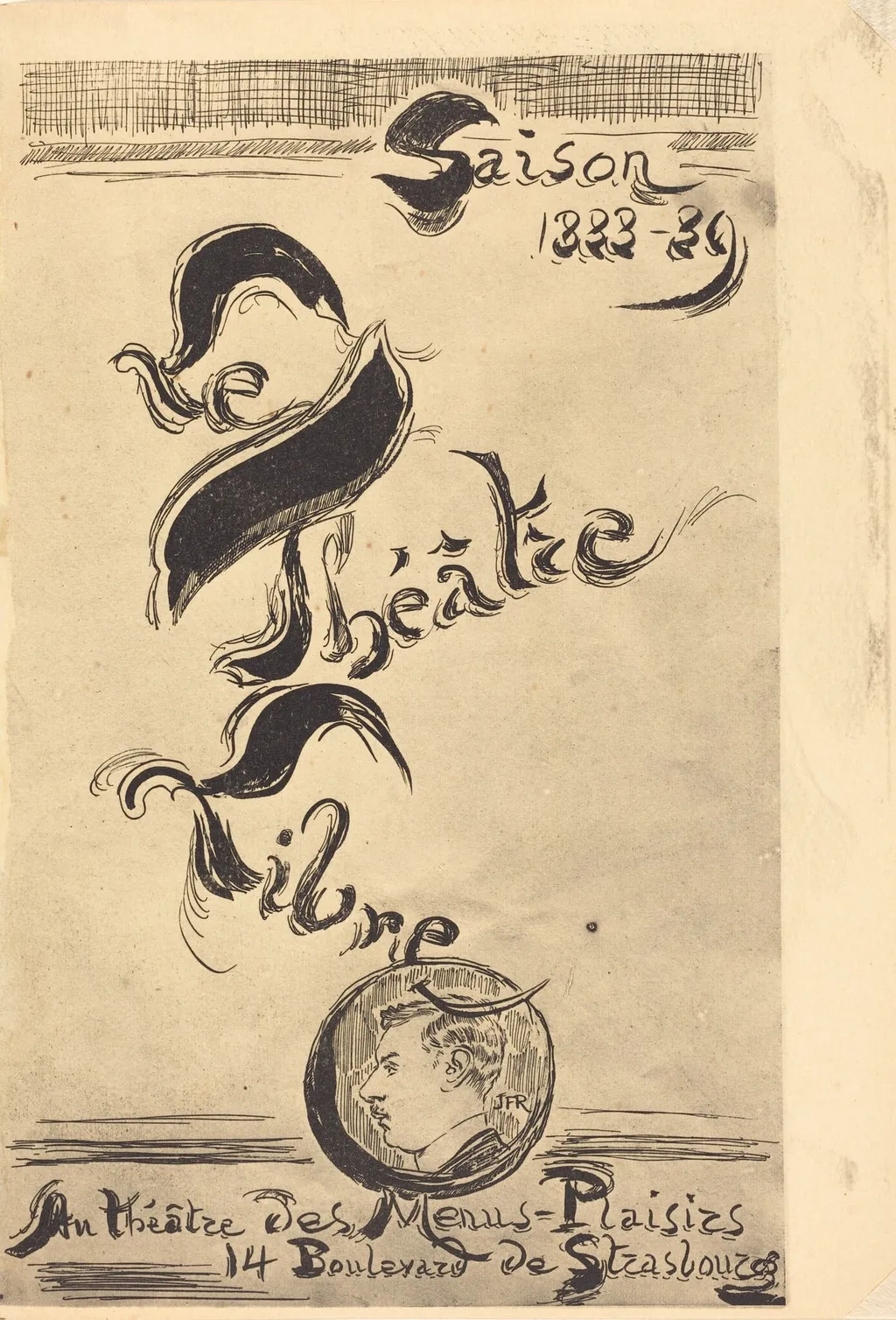
La Patrie en danger is a print by the Impressionist artist Jean François Raffaëlli. It dates from 1889 and is held in the collection of the National Gallery of Art.
About this work
At the top, the word *Saison* is written with a swirling script, followed by the years *1889–90*.
This image is a black-and-white poster with bold, sketchy lines. At the top, the word *Saison* is written with a swirling script, followed by the years *1889–90*. Below it, a dramatic figure with wild hair and a cape is mid-leap, holding a flag. Underneath, a man’s face appears inside a circle, like a pocket watch.
The text says *Théâtre des Menus-Plaisirs* and gives an address in Paris. This was likely a playbill for a theater season in 1889, blending art and performance.
Next, check out the movement: Impressionism, Realism.
Overview
La Patrie en danger is a black‑and‑white collotype print on wove paper produced by French artist Jean‑François Raffaëlli in 1889. The image functions as a theatrical poster, announcing a season at the Théâtre des Menus‑Plaisirs in Paris. Its composition combines bold, sketch‑like lines with typographic elements, presenting a dramatic, leaping figure clutching a flag above a circular portrait that resembles a pocket‑watch face.
Subject & Meaning
The central figure, rendered with wild hair and a billowing cape, appears to embody a patriotic or heroic spirit, suggested by the title’s warning of a nation in peril. The flag reinforces this notion of national defense, while the inset portrait may reference a specific performer or patron associated with the theatrical program, linking visual spectacle to the stage’s offerings.
Technique & Style
Executed as a collotype, the work relies on a photomechanical process that captures fine line work and tonal variation without the use of pigment. Raffaëlli’s handling of the medium yields stark contrasts and a sketch‑like immediacy, aligning the piece with the late‑19th‑century currents of Impressionism and Realism that favored spontaneous drawing and contemporary subject matter.
History & Provenance
Created for the 1889–90 season of the Théâtre des Menus‑Plaisirs, the print originally served as promotional material for the venue’s program. Its survival in museum collections reflects the broader interest in ephemera that document Parisian cultural life at the end of the 19th century, though specific ownership records beyond its theatrical use are limited.
Context
The poster emerged during a period of heightened national sentiment in France, coinciding with the Exposition Universelle of 1889 and the centennial celebrations of the French Revolution. Raffaëlli, known for his depictions of everyday life, applied his realist sensibility to a commercial format, illustrating how fine‑art techniques were employed in mass‑produced visual culture of the Belle Époque.
Artist & collection


 Untitled
 Le Chariot de terre cuite
 Le Chariot de terre cuite
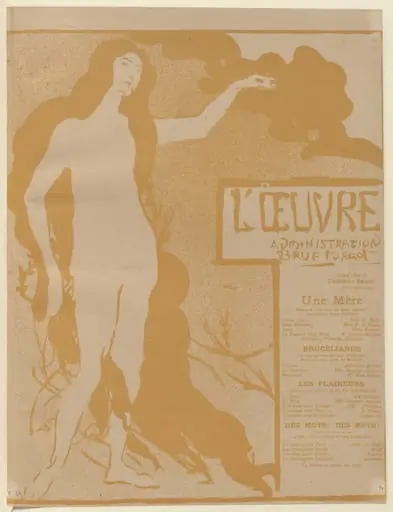 Untitled
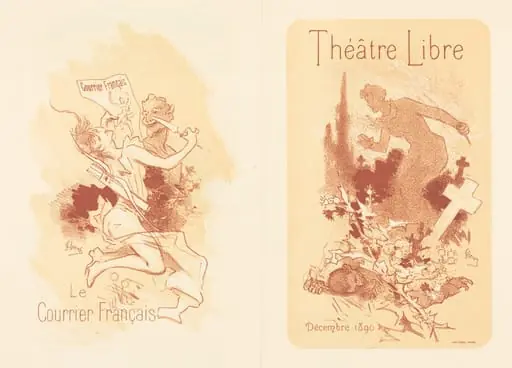 La Fille Élisa; Conte de Noël
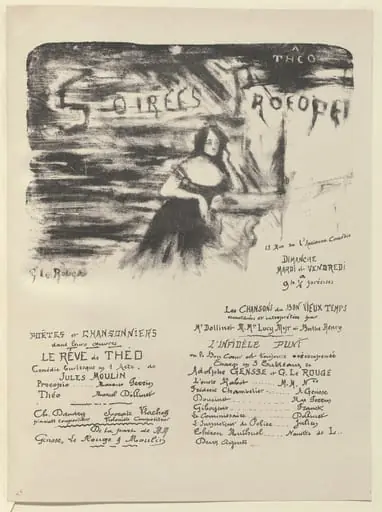 Untitled
 Portrait of a Nobleman
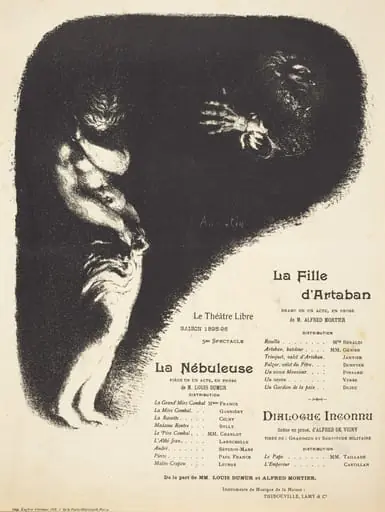 La Fille d'Artaban; La Nébuleuse; Dialogue inconnu
 Untitled
![Dancing Nude and Advertisement for Eugène Verneau's "Estampes décoratives" [verso], by Louis Anquetin](https://artifactworldgallery.com/img/louis-anquetin--dancing-nude-and-advertisement-for-eugene-verneau-s-estampes--204685aaf2d4110c-w320.webp) Dancing Nude and Advertisement for Eugène Verneau's "Estampes décoratives" [verso]
Dancing Nude and Advertisement for Eugène Verneau's "Estampes décoratives" [verso]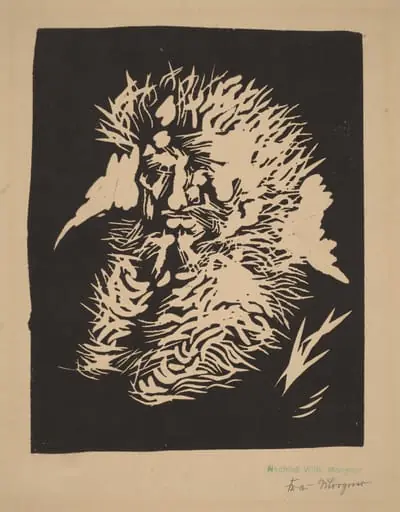 Bärtiger Mann
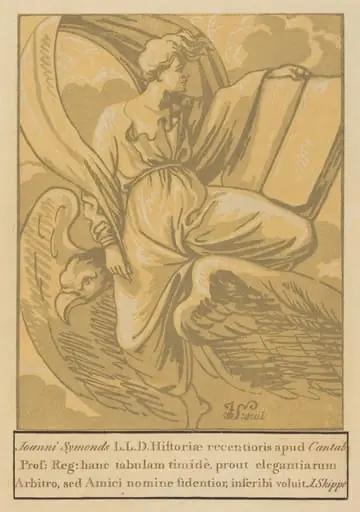 Saint John the Evangelist