Artwork
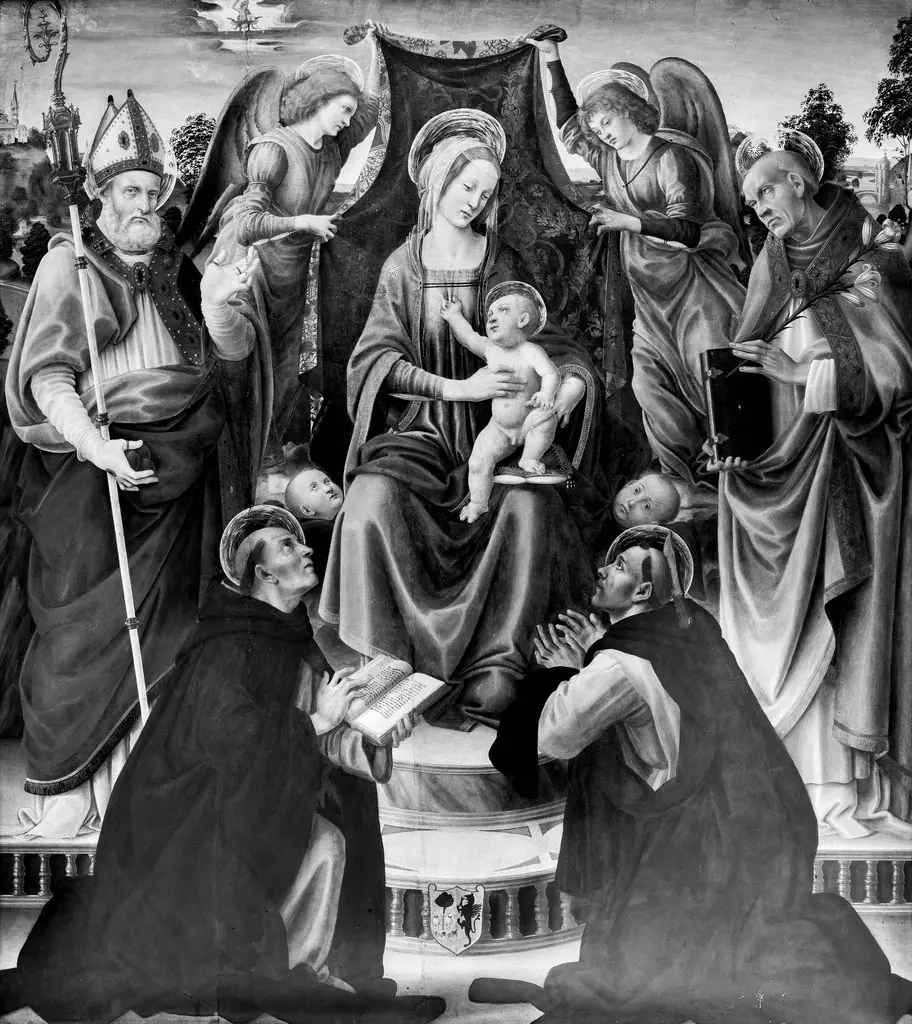
Mary enthroned with the child, two angels and two saints
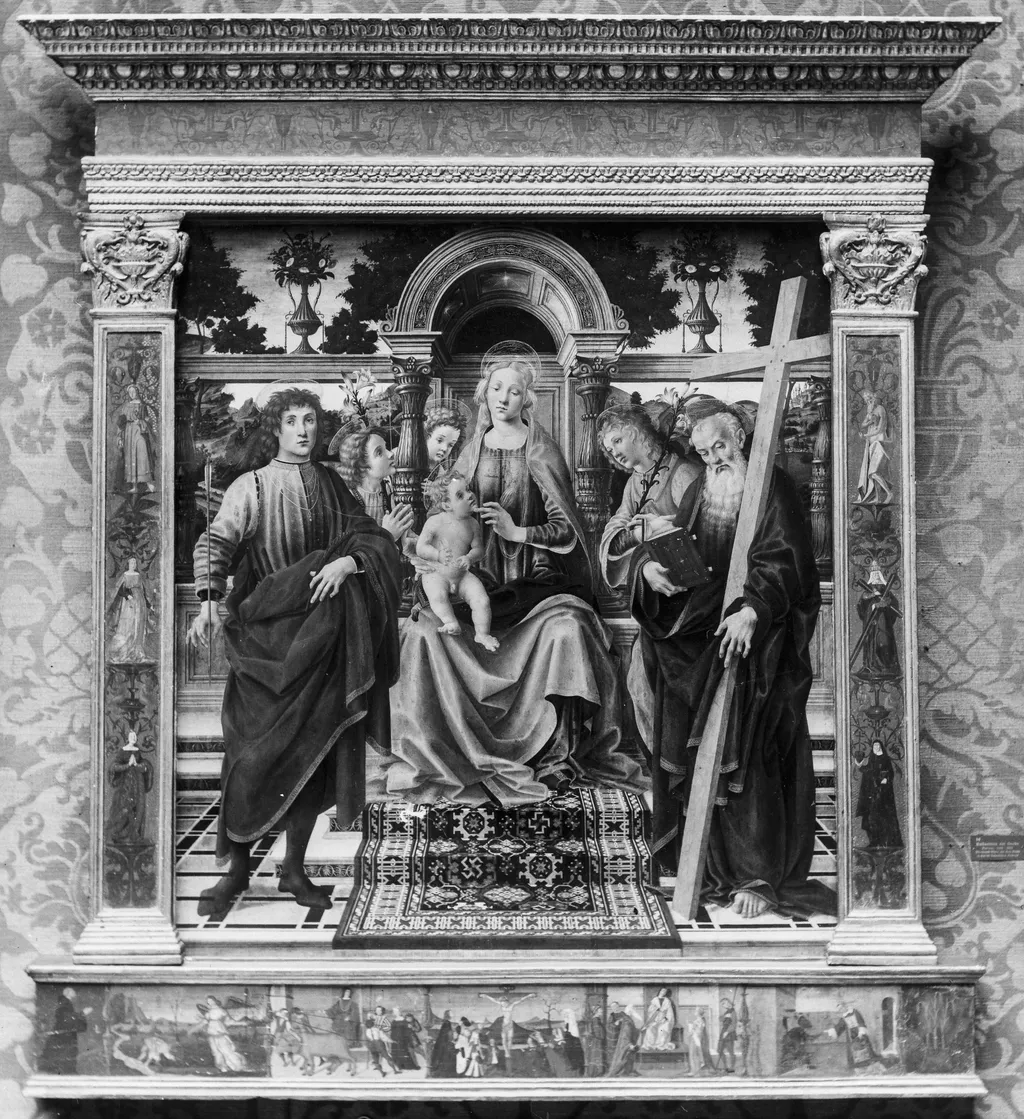
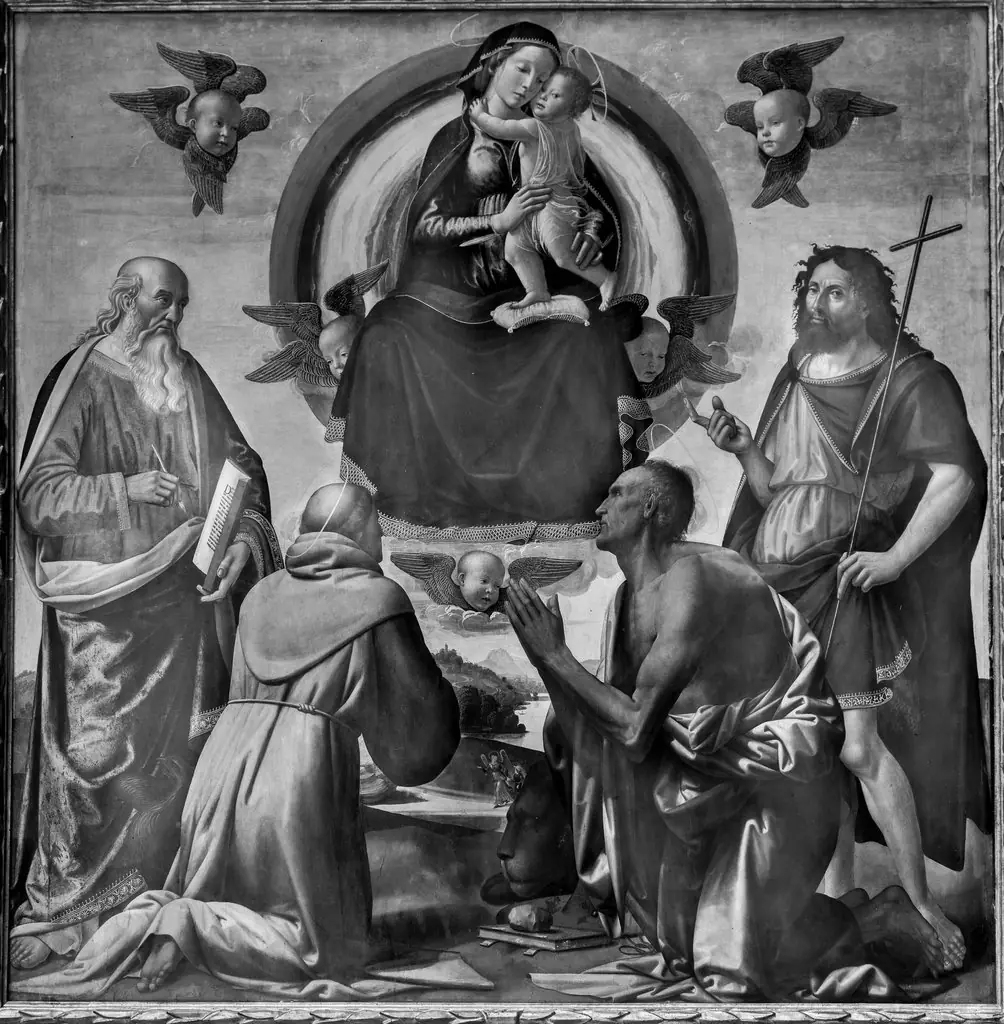
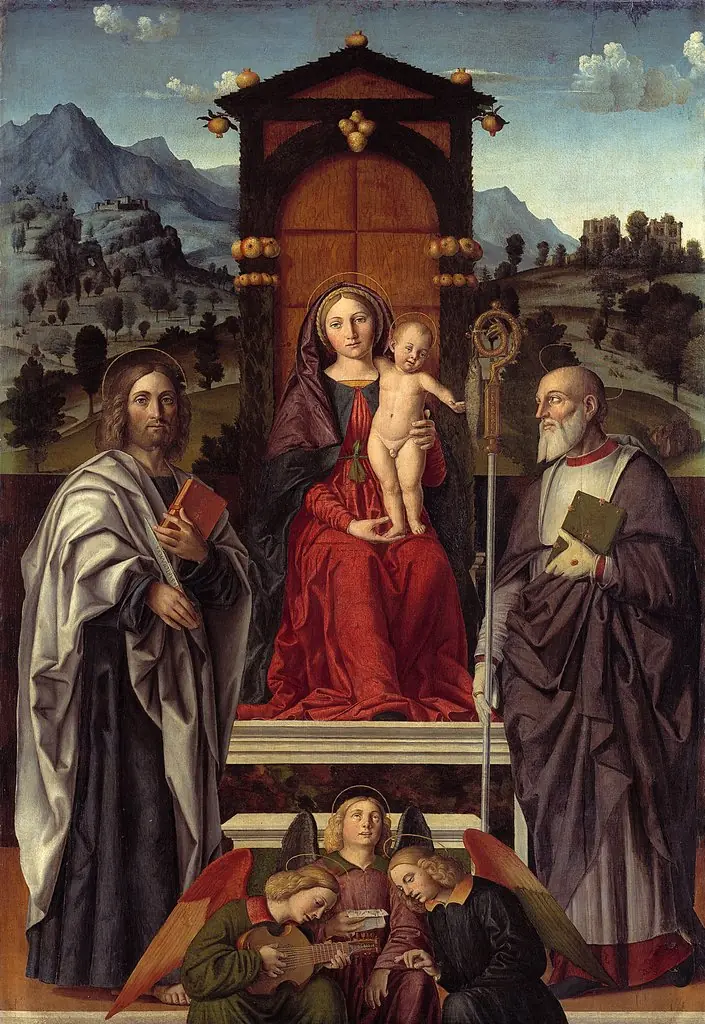
Mary enthroned with the child, two angels and two saints is a paint painting by the Early Renaissance artist Raffaellino del Garbo. It is held in the collection of the Gemäldegalerie Berlin.
About this work
Overview
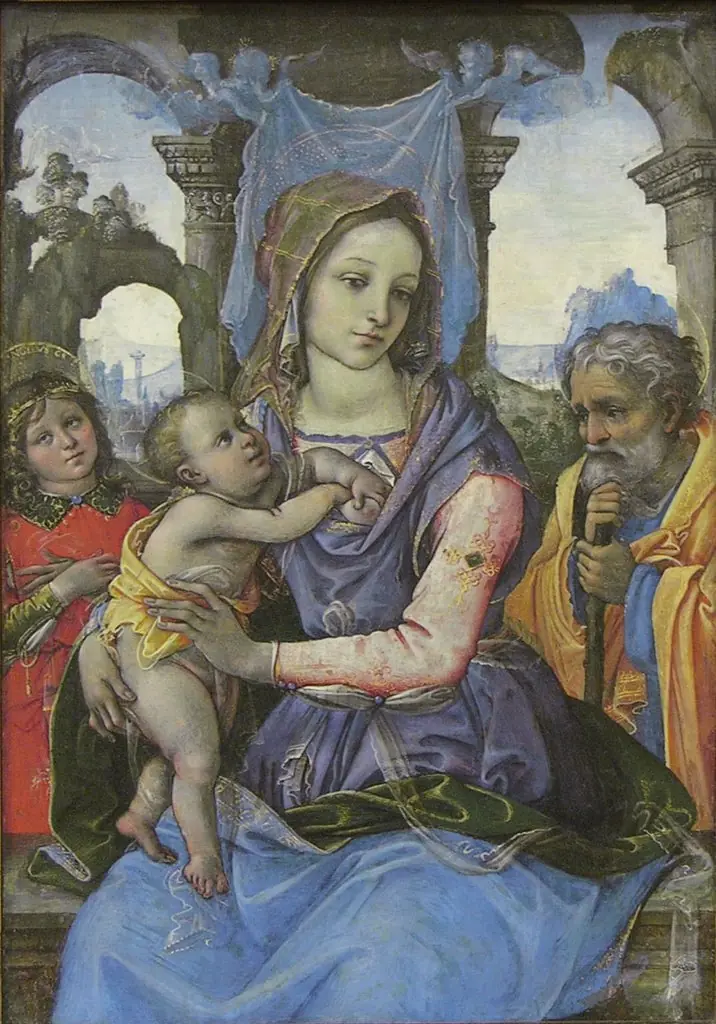
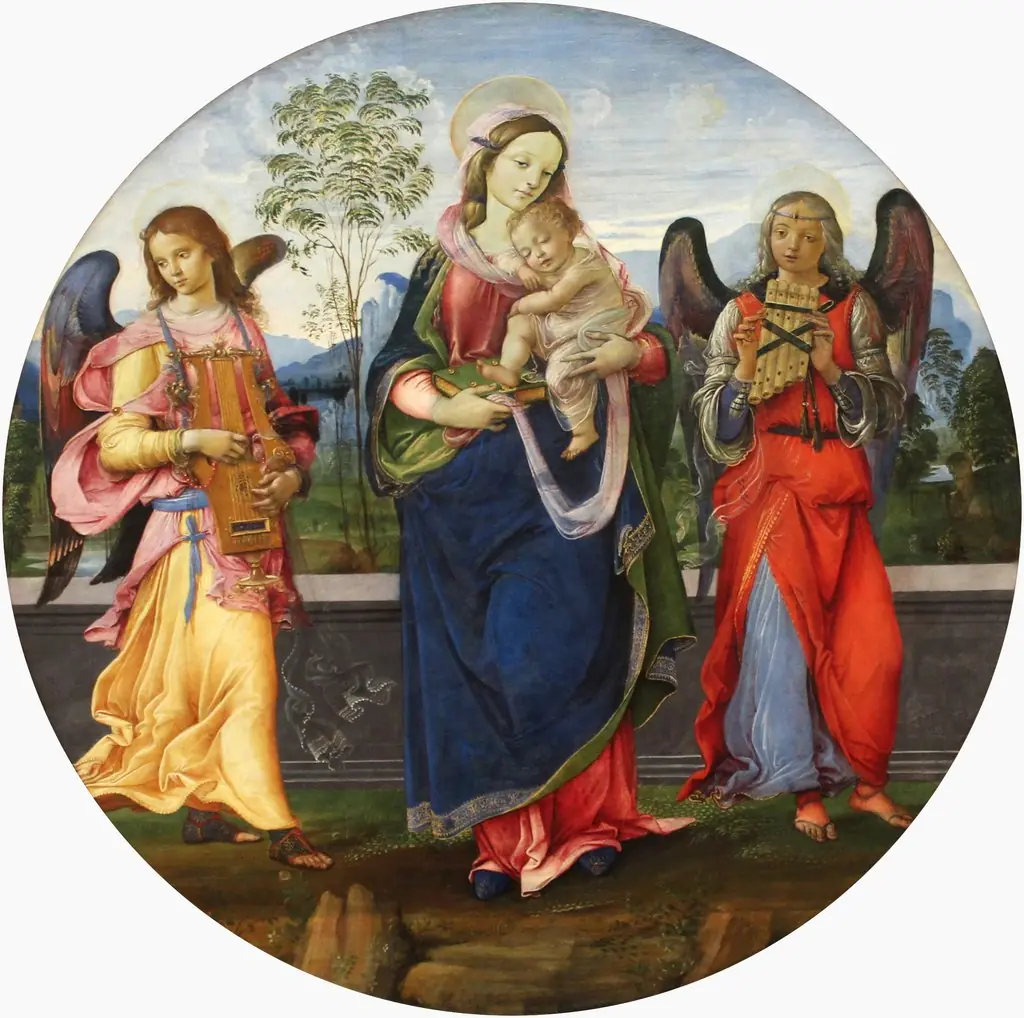
This late 15th-century panel painting, attributed to Raffaellino del Garbo, presents a central Marian figure seated on an ornate throne, cradling an infant. Flanking the throne are two male saints, while two smaller, winged figures—likely angels—hover above. The composition balances devotional intimacy with hierarchical grandeur, characteristic of Florentine religious art of the period.
Subject & Meaning
The work centers on the Virgin Mary and the Christ Child, a common motif in Christian art symbolizing divine motherhood and salvation. The surrounding figures—saints and angels—serve as intercessors, reinforcing themes of protection and sanctity. Their precise identities remain ambiguous, suggesting the painting may have been commissioned for private devotion rather than public liturgy.
Technique & Style
Executed in tempera and oil on panel, the painting reflects the transition from Gothic linearity to Renaissance spatial clarity.
Executed in tempera and oil on panel, the painting reflects the transition from Gothic linearity to Renaissance spatial clarity. Delicate gold leaf embellishes the throne and halos, while the architectural backdrop—arched colonnades opening onto a landscape—demonstrates an emerging interest in perspectival depth. The figures’ drapery folds exhibit the soft modeling typical of late Quattrocento Florentine workshops.
History & Provenance
Dated to 1496, the painting entered the Gemäldegalerie Berlin’s collection in the 19th century, though its earlier ownership remains undocumented. Its survival suggests it was preserved within ecclesiastical or private collections, a common fate for devotional works of this scale. Conservation records indicate minor restorations, primarily to the gilded elements.
Context
Created during Florence’s political and artistic ferment under Savonarola’s influence, the painting reflects both traditional piety and the humanist currents reshaping religious imagery. The throne’s Gothic ornamentation contrasts with the naturalistic treatment of figures, mirroring the era’s tension between inherited forms and innovative techniques. Such works often functioned as focal points for domestic prayer.
Artist & collection