Artwork
Allegory of Love
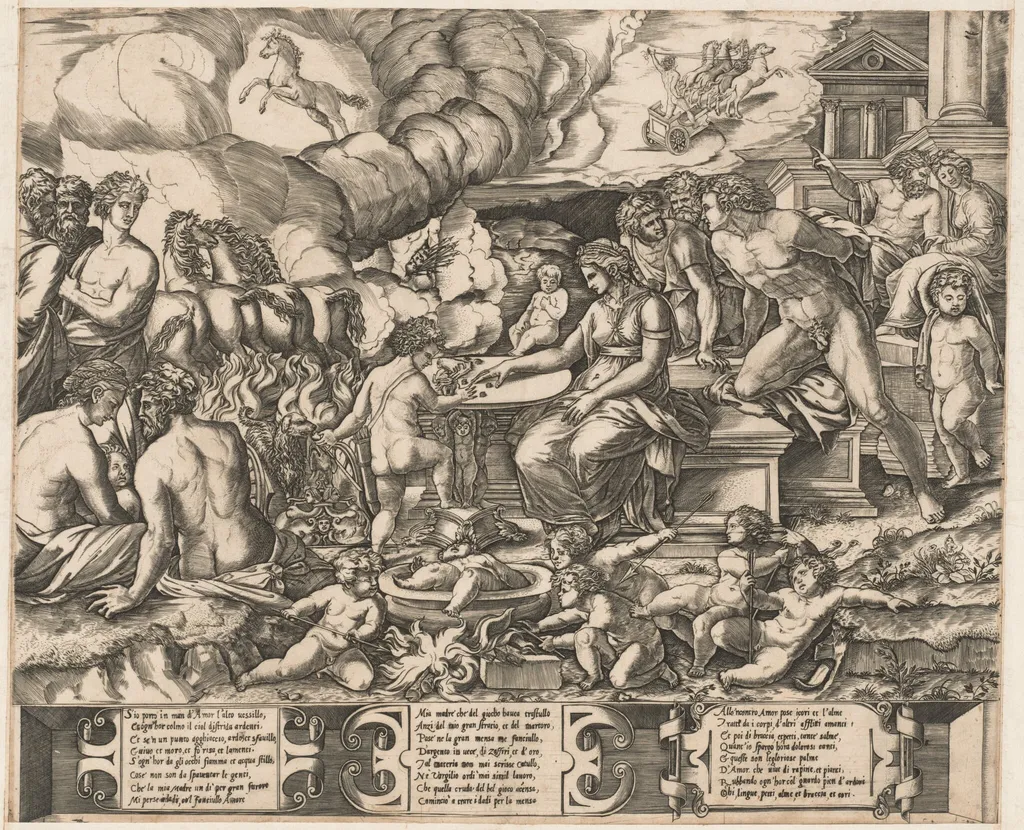
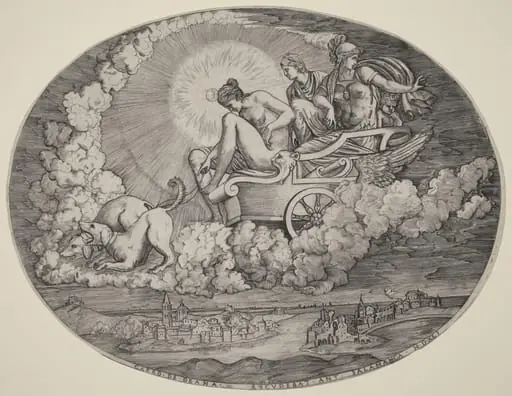
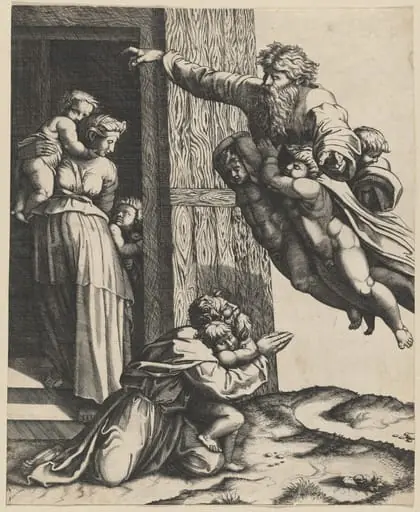
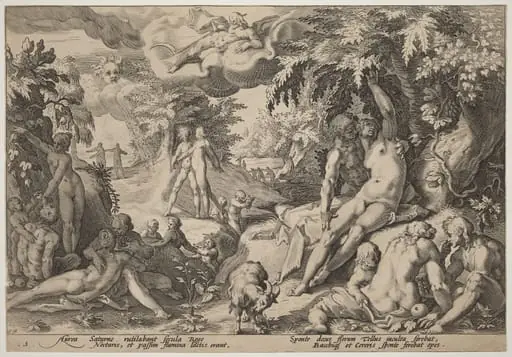
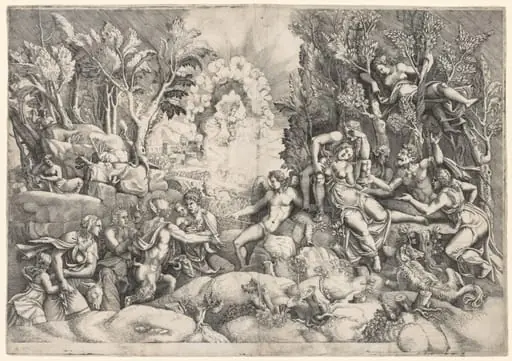
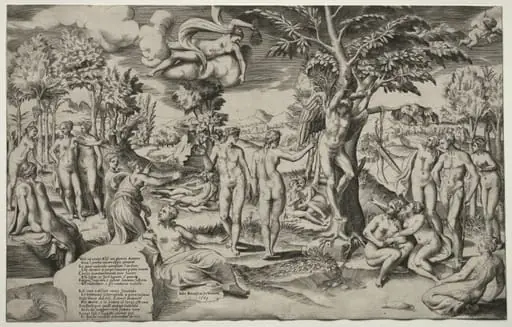
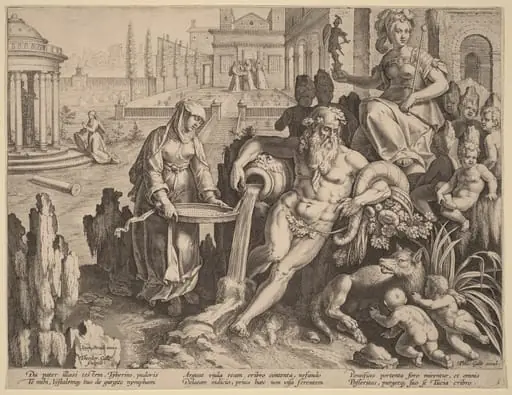
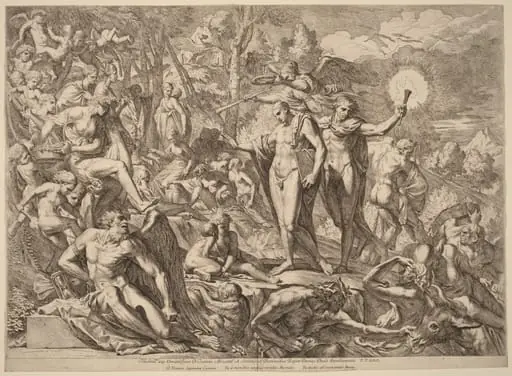
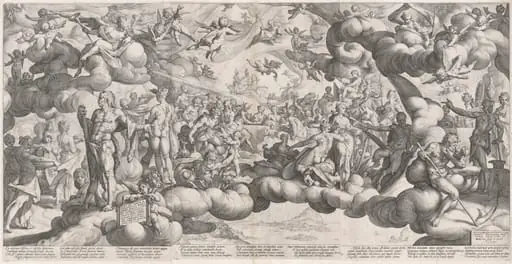
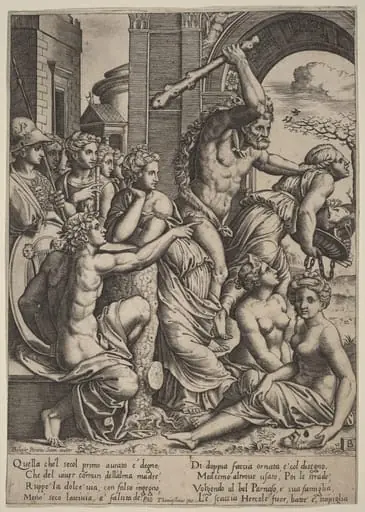
Allegory of Love is an ink print by the Renaissance artist Raimondi School. It dates from 1540 and is held in the collection of the National Gallery of Art.
About this work
Overview
Created around 1540, this engraving on laid paper belongs to the Raimondi School and exemplifies the Mannerist interest in complex, dynamic compositions.
Created around 1540, this engraving on laid paper belongs to the Raimondi School and exemplifies the Mannerist interest in complex, dynamic compositions. The work is a visual narrative composed entirely of fine, interwoven lines, characteristic of reproductive printmaking of the period. Its dense arrangement of figures and movement reflects a deliberate departure from classical balance, favoring expressive energy over spatial clarity.
Subject & Meaning
The central figures—a woman cradling a child and a man leaning toward her—suggest themes of affection or divine love, though the exact allegory remains ambiguous. Surrounding figures, half-naked and in varied poses, imply emotional or spiritual states: some reach upward in longing, others twist in tension. Cherubs flit near the base, reinforcing a celestial or mythological context. The scene resists a single interpretation, inviting contemplation rather than clear moral instruction.
Technique & Style
The artist employed fine, continuous lines to model form and suggest volume, using cross-hatching and delicate stippling to create gradations of light and shadow. The composition is unified by a rhythmic flow of curves that guide the eye across the surface, avoiding static focal points. Every contour and texture is rendered through incised marks, demonstrating mastery of the burin tool and the printmaker’s ability to translate three-dimensional movement into two-dimensional line.
History & Provenance
This engraving emerged from the workshop associated with Marcantonio Raimondi, known for reproducing Raphael’s designs. Though unsigned, its style aligns with prints produced in his circle during the 1530s–1540s. It likely circulated among educated collectors as a decorative and intellectual object, valued for its technical skill and classical allusions. No definitive early ownership records survive, but its survival in multiple institutional collections suggests enduring interest.
Context
Produced during the height of Mannerism, the work reflects a cultural shift away from High Renaissance harmony toward emotional intensity and visual complexity. Printmaking was becoming a respected medium for disseminating artistic ideas beyond painting. This piece aligns with contemporary interest in mythological allegory and the human form in motion, influenced by Raphael’s compositions and the broader intellectual currents of Renaissance humanism.
Legacy
Though not attributed to a single named artist, the engraving contributed to the development of narrative printmaking in 16th-century Italy. Its intricate line work influenced later engravers seeking to convey movement and psychological nuance. It remains a key example of how reproductive prints helped shape public engagement with classical themes and artistic innovation during a period of rapid visual change.
Artist & collection