Artwork
The Wedding of Cupid and Psyche
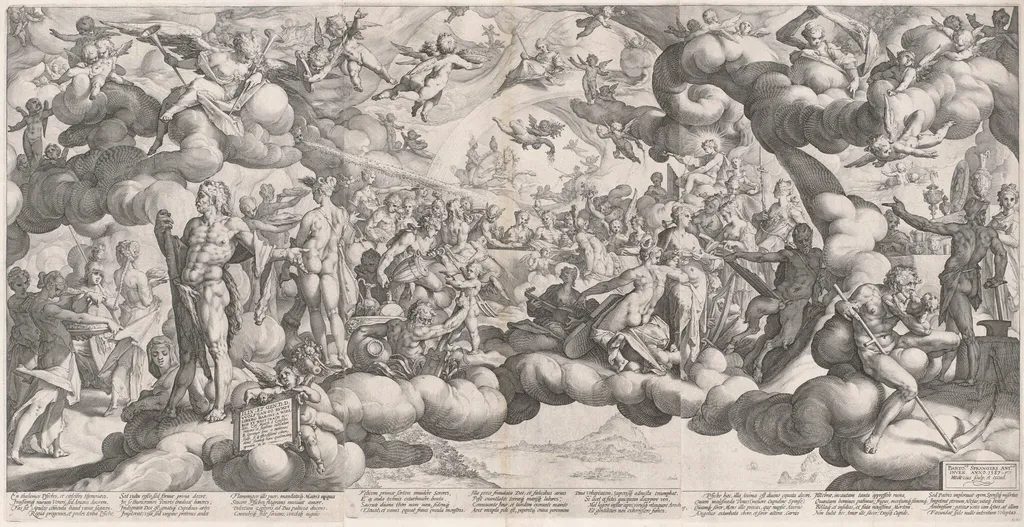
The Wedding of Cupid and Psyche is an ink print by the Renaissance artist Hendrik Goltzius. It dates from 1587 and is held in the collection of the National Gallery of Art.
About this work
Overview
The Wedding of Cupid and Psyche is a 1587 engraving by Hendrick Goltzius, printed on three attached sheets of laid paper. It exemplifies the artist's technical prowess and intricate compositional style, characteristic of Northern Mannerism.
Subject & Meaning
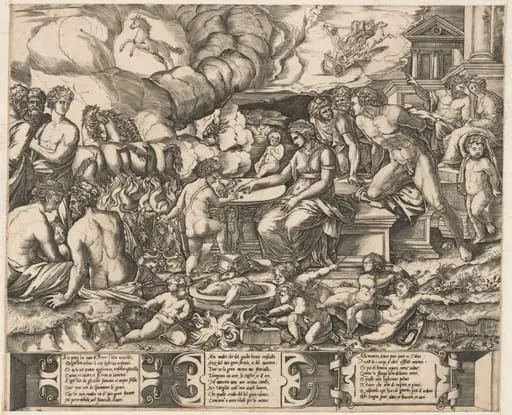
The engraving illustrates the mythological union of Cupid and Psyche, drawn from classical tradition. At its center, the naked couple stands beneath a tree, surrounded by a tumultuous assembly of gods, humans, creatures, cherubs, and warriors.
Technique & Style
Goltzius employed fine lines to achieve depth, with foreground figures rendered sharply and background elements fading into the distance. This technique compensated for the lack of color, creating a sense of spatial hierarchy.
History & Provenance
Created in 1587, the work showcases Goltzius's mastery as the leading Dutch engraver of the early Baroque period. The engraving's provenance is not detailed here, focusing instead on its creation and artistic context.
Context
The piece reflects the Northern Mannerist style, emphasizing complex composition and detailed execution. Its mythological theme was popular among artists of the time, who drew inspiration from classical sources.
Legacy
As a seminal work by Goltzius, The Wedding of Cupid and Psyche influences subsequent generations of printmakers and artists, particularly in the development of Northern European Baroque printmaking.
Artist & collection
Artist
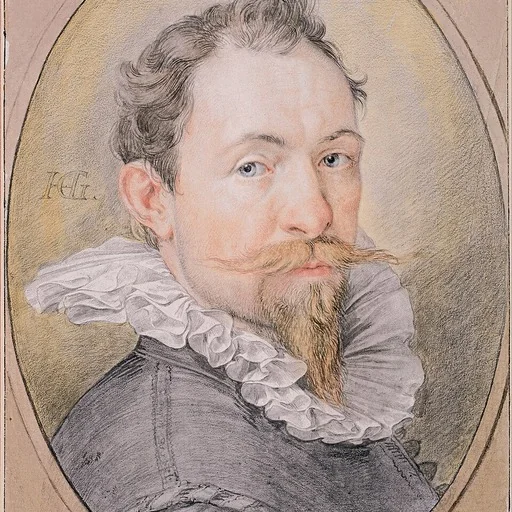
Hendrick Goltzius (German: , Dutch: ; né Goltz; January or February 1558 – 1 January 1617) was a German-born Dutch printmaker, draftsman, and painter.

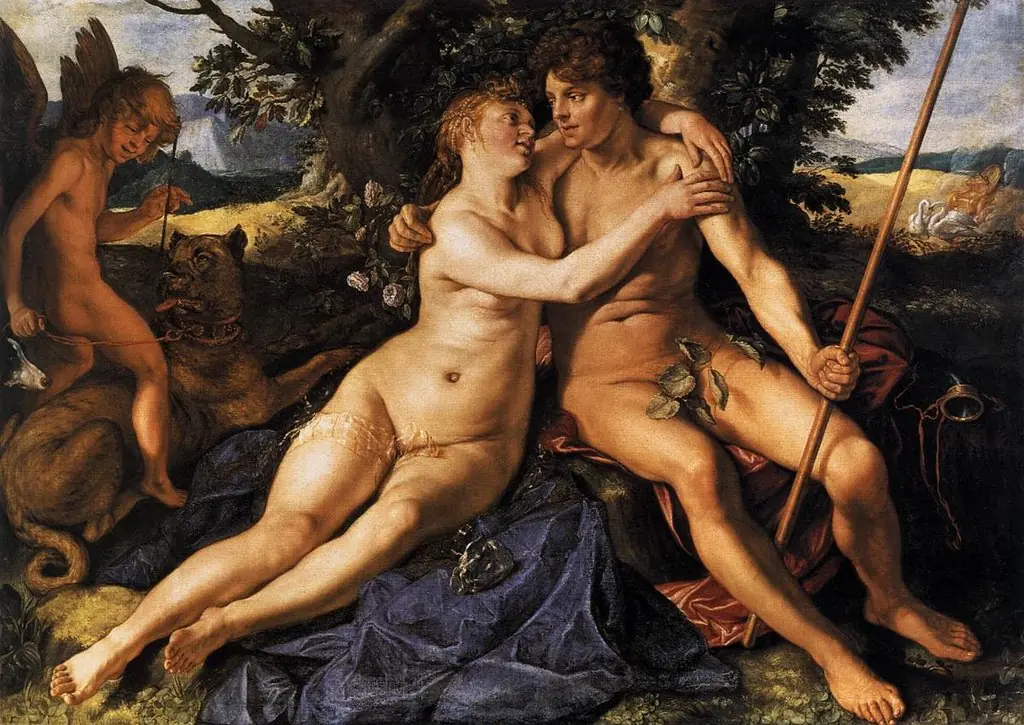
 Allegory of Love
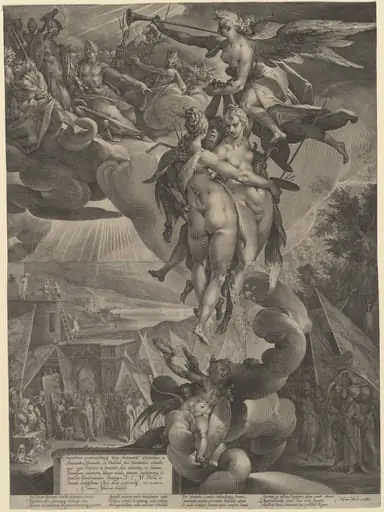 The Apotheosis of the Arts
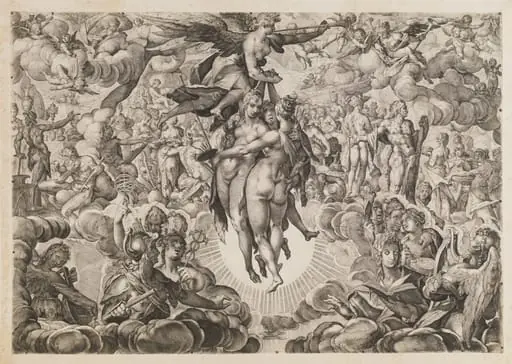 Painting, Sculpture, and Architecture, Banned by the Turks, Withdrawn to Olympus
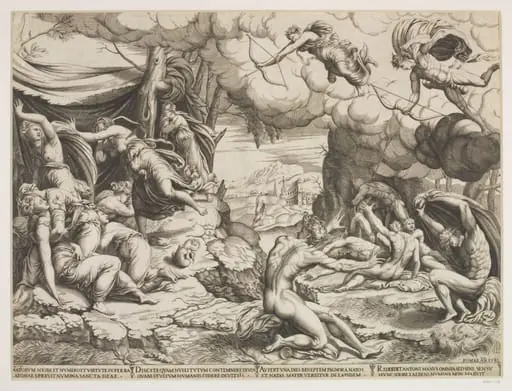 The Daughters of Niobe
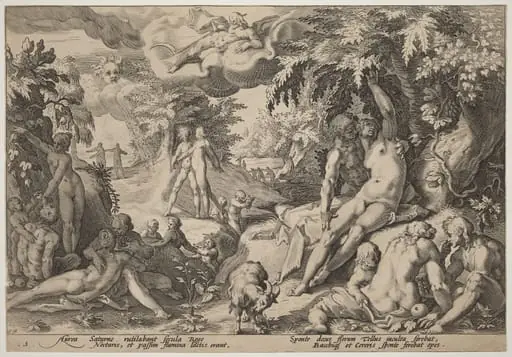 The Golden Age
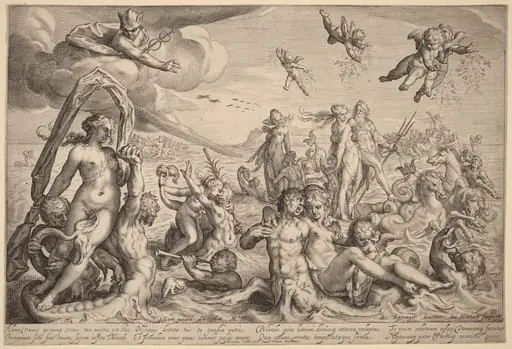 The Triumph of Neptune and Thetis
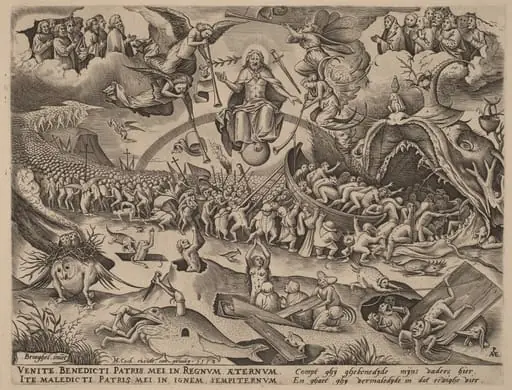 The Last Judgment
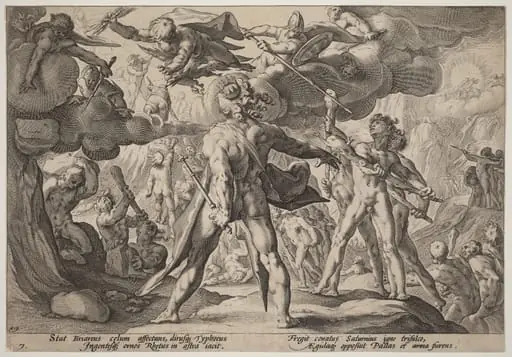 The Giants Climbing the Heavens
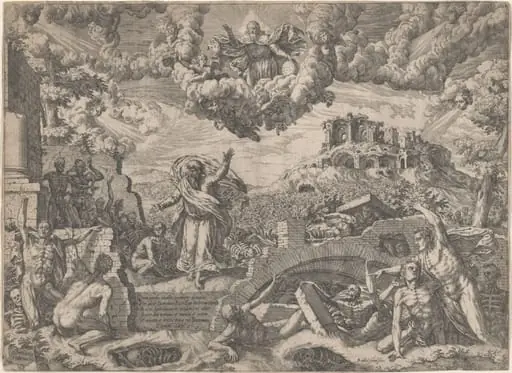 The Vision of Ezekiel
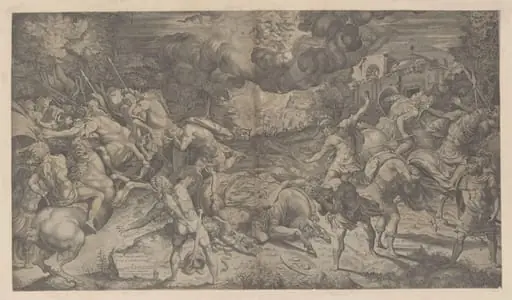 Conversion of Saul
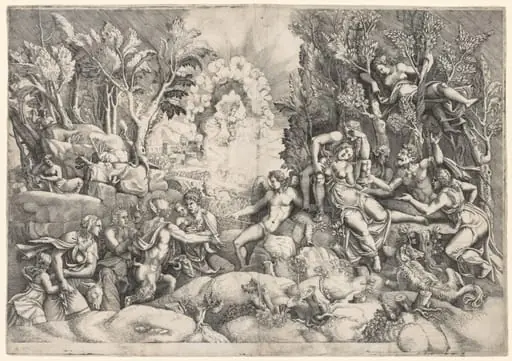 The Death of Procris
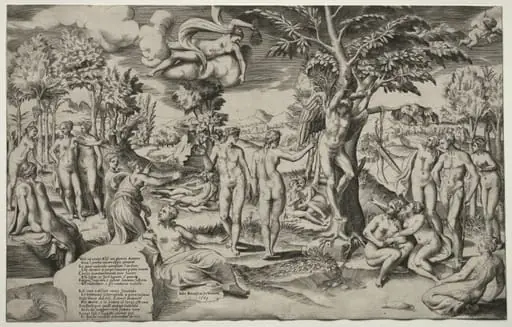 Love in the Elysian Fields