Artwork
Managing staff of Meprs. Glover & Co. at Sindh Bridge (recto, top); Untitled: Woman on horse (verso, right)
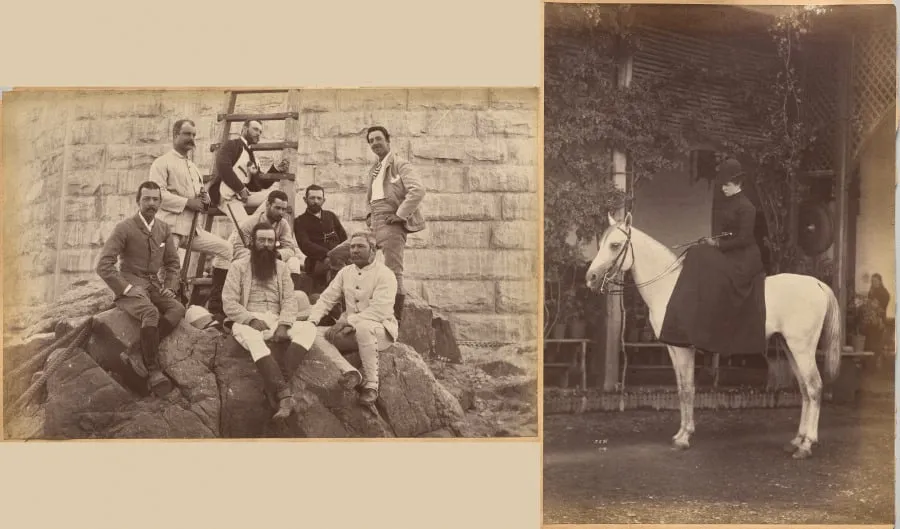
Managing staff of Meprs. Glover & Co. at Sindh Bridge (recto, top); Untitled: Woman on horse (verso, right) is a photography by the Impressionist artist Raja Deen Dayal. It dates from 1884 and is held in the collection of the Cleveland Museum of Art. The sheet contains two black‑and‑white photographs taken between 1885 and the summer of 1887 in British‑ruled India.
About this work
He worked for British officials, but his lens also caught everyday life—like this woman on horseback, who might be royalty or just someone passing by.
You see two photos on one sheet: a group of men in suits standing at a bridge, and a woman riding a horse.
These were taken by India’s first major Indian photographer. He worked for British officials, but his lens also caught everyday life—like this woman on horseback, who might be royalty or just someone passing by. The bridge scene shows the mix of British and Indian workers running the colony.
To see more photos like this, look up Raja Deen Dayal (Indian, 1844–1905).
Overview
The sheet contains two black‑and‑white photographs taken between 1885 and the summer of 1887 in British‑ruled India. On the front, a group of men in formal attire stands on a bridge; on the reverse, a woman is depicted riding a horse. Both images belong to a larger, now fragmented album of roughly 105 photographs that document the social world of the colonial elite and upper‑class Indians.
Subject & Meaning
The bridge scene captures a mixed gathering of British officials and Indian staff, illustrating the collaborative yet hierarchical nature of colonial administration. The solitary rider, a woman on horseback, suggests a figure of status—potentially royalty or a member of the upper class—highlighting the visibility of elite women in public spaces during the period.
Technique & Style
The photographs were produced by Raja Deen Dayal, recognized as India’s first prominent native photographer. Using large‑format glass plate negatives, he achieved a high degree of detail and tonal range, allowing both the architectural elements of the bridge and the textures of clothing and horse tack to be rendered with clarity.
History & Provenance
The images were likely commissioned around 1888 by a British civil servant as a personal record of his time in India. The museum’s collection includes an additional set of 37 photographs from the same album (accession 2016.266), confirming the album’s original scope and its subsequent dispersal.
Context
These photographs provide visual evidence of the intertwined lives of British administrators and Indian aristocracy during the late nineteenth century. As part of Deen Dayal’s extensive body of work, they exemplify the role of Indian photographers in shaping colonial visual culture while also preserving moments of everyday elite life.
Artist & collection

Artist
Raja Lala Deen Dayal, famously known as Raja Deen Dayal) was an Indian photographer.

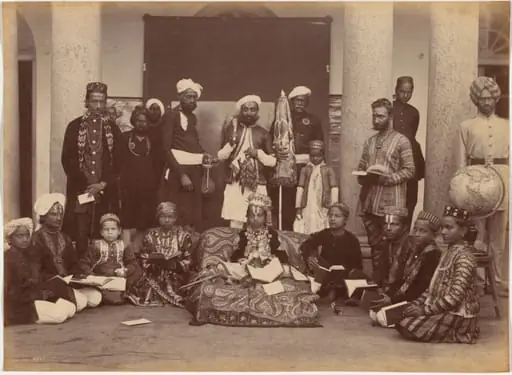 Maharaja of Rewa and Classmates
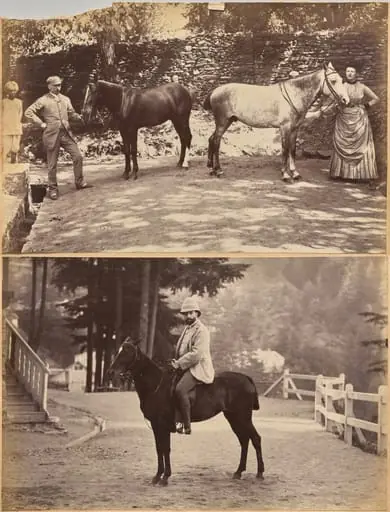 Col. F. G. Oldham (recto, top); Mr. Nowell, Shimla (recto, bottom)
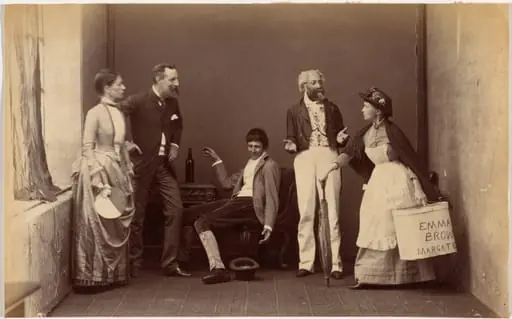 Fancy Group, Indore I
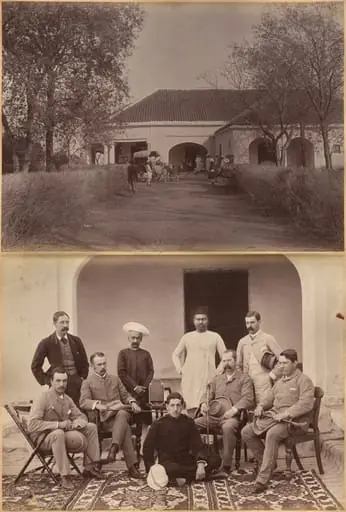 Civil officers at Jhansi (recto); Mr. William's House, Jhansi (verso)
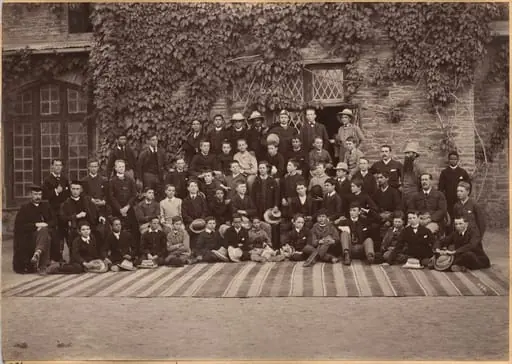 Middle Class Students and Staff, Bishop Cotton School, Shimla (verso)
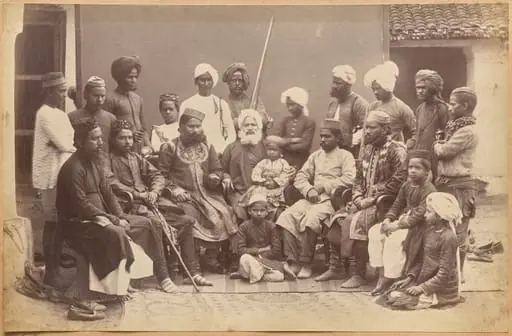 Mowhri Rahman Alli Khan family, Rewa (recto, bottom)
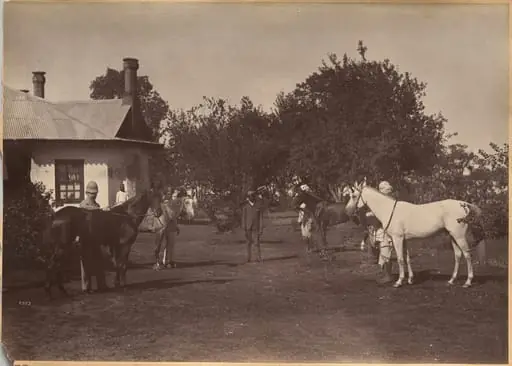 Lord William Beresford's horses
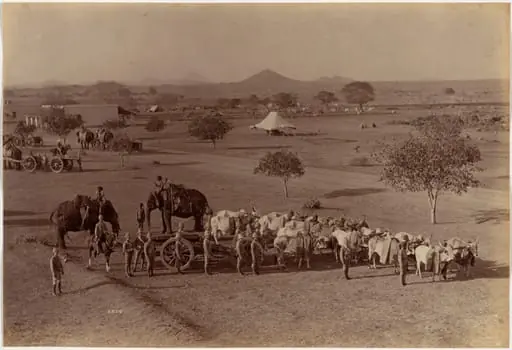 Heavy Field Battery, Jhansi
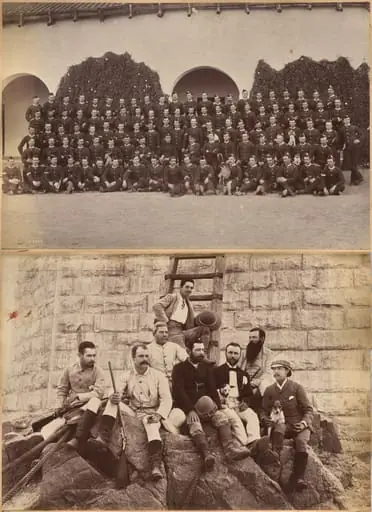 B. c/o Devonshire Regiment, Jhansi (recto); Staff of Messrs. Glover & Co., Sindh Bridge (verso)
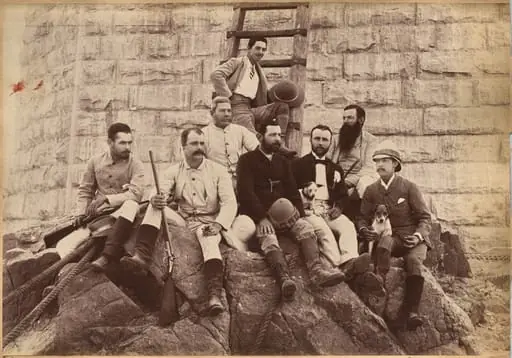 Staff of Messrs. Glover & Co., Sindh Bridge (verso)
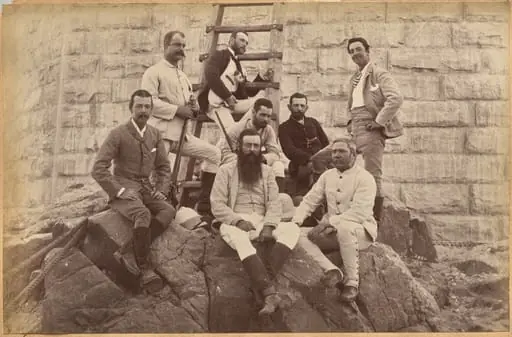 Managing staff of Meprs. Glover & Co. at Sindh Bridge (recto, top)
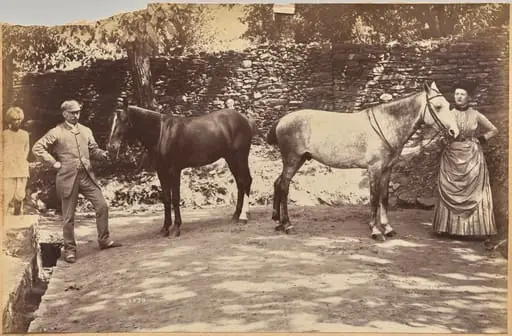 Col. F. G. Oldham (recto, top)
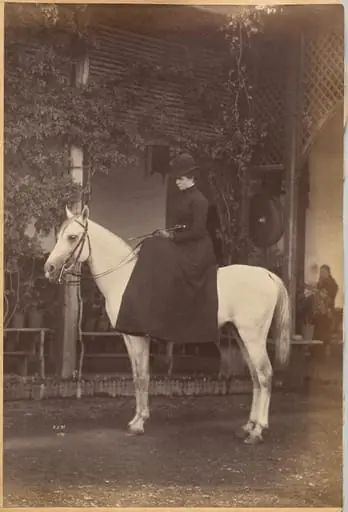 Untitled: Woman on horse (verso, right)
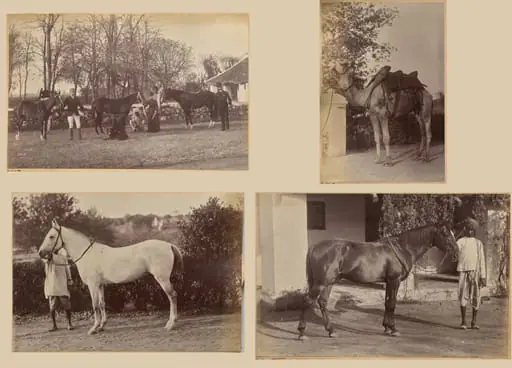 Captain Brown's horses, Jhansi (recto, top); Captain Bailward's horses (recto, bottom); Captain Bailward's camel (verso, left); Captain Bailward's horse, Jhanso (verso, right)
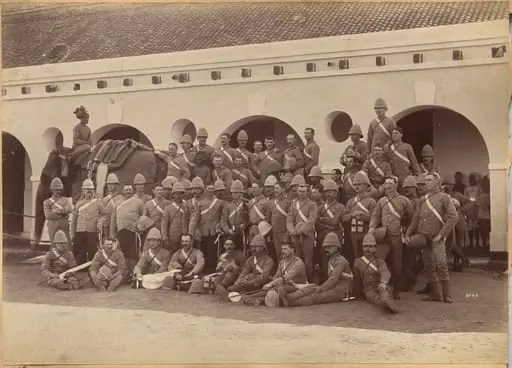 Men of Elephant Battery, Jhansi (verso)