Artwork
Maharaja of Rewa and Classmates
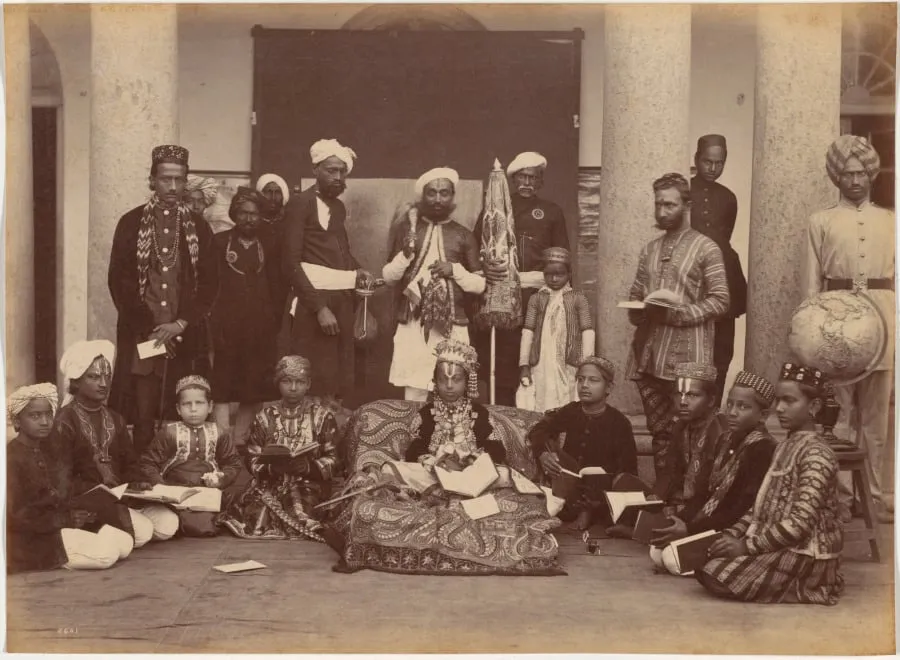
Maharaja of Rewa and Classmates is a photography by the Impressionist artist Raja Deen Dayal. It dates from 1886 and is held in the collection of the Cleveland Museum of Art.
About this work
Overview
Both compositions emphasize his central position, reflecting his status and the dual cultural expectations placed upon him during British colonial rule.
This pair of photographs by Raja Deen Dayal captures the young Maharaja of Rewa in two distinct educational settings. One image shows him surrounded by Indian military officials in a formal portrait; the other depicts him in a classroom with Indian instructors. Both compositions emphasize his central position, reflecting his status and the dual cultural expectations placed upon him during British colonial rule.
Subject & Meaning
The Maharaja is portrayed as both a traditional Indian ruler and a modern prince shaped by colonial education. In the first image, his placement among sardars underscores his authority; in the second, his engagement with Western tools like a globe and bound books signals the hybrid identity imposed by British policy. The images together convey the tension between indigenous sovereignty and colonial assimilation.
Technique & Style
Deen Dayal employs careful staging and spatial hierarchy to direct attention to the Maharaja. Symmetry, centered composition, and controlled lighting isolate the subject against architectural backdrops. The use of formal portraiture conventions—common in 19th-century studio photography—elevates the subject while subtly reinforcing social order. The clarity and detail reflect the technical precision of late colonial Indian photography.
History & Provenance
Taken in the late 19th century, these photographs originate from the court of Rewa, a princely state in central India. Raja Deen Dayal, a renowned Indian photographer, was commissioned by royalty and British officials alike. The images were likely produced for internal court use or diplomatic presentation, documenting the Maharaja’s education as part of a broader colonial strategy to align Indian elites with British norms.
Context
After 1858, British authorities restructured the education of Indian princes to blend European curricula with local traditions. This was intended to produce loyal intermediaries. The presence of Western educational tools alongside Indian teachers illustrates this policy in practice. The architecture in the background—European-style columns and furnishings—further signals the cultural hybridity enforced under colonial governance.
Legacy
Deen Dayal’s photographs remain valuable records of how Indian royalty navigated colonial modernity. They reveal the quiet negotiation of identity under imperial pressure, where tradition and imposed Western norms coexisted in carefully composed scenes. These images contribute to broader understandings of photography’s role in shaping and preserving colonial-era power dynamics in South Asia.
Artist & collection

Artist
Raja Lala Deen Dayal, famously known as Raja Deen Dayal) was an Indian photographer.

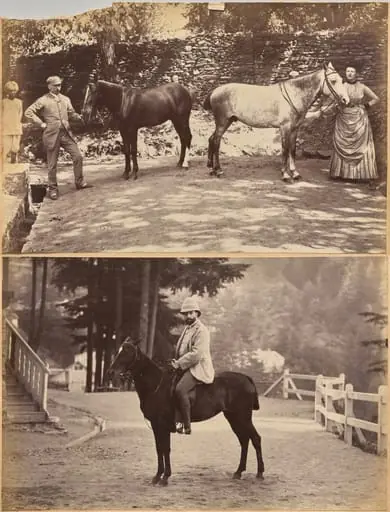 Col. F. G. Oldham (recto, top); Mr. Nowell, Shimla (recto, bottom)
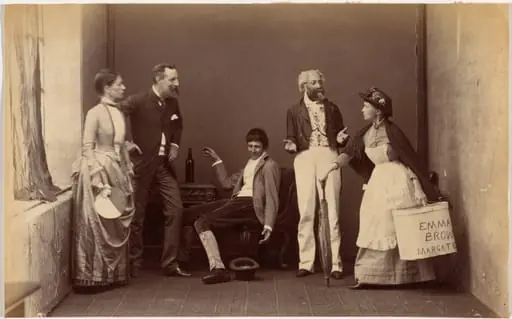 Fancy Group, Indore I
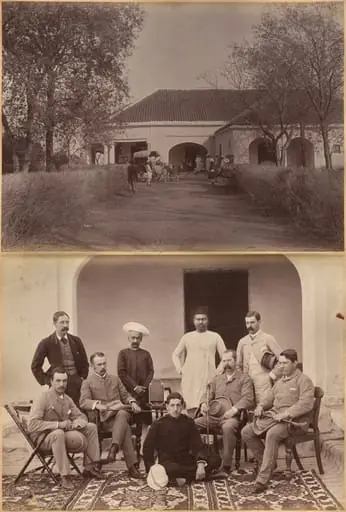 Civil officers at Jhansi (recto); Mr. William's House, Jhansi (verso)
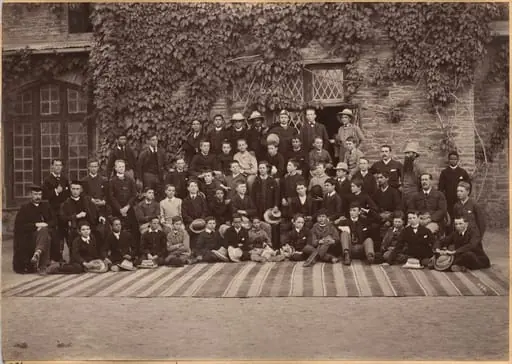 Middle Class Students and Staff, Bishop Cotton School, Shimla (verso)
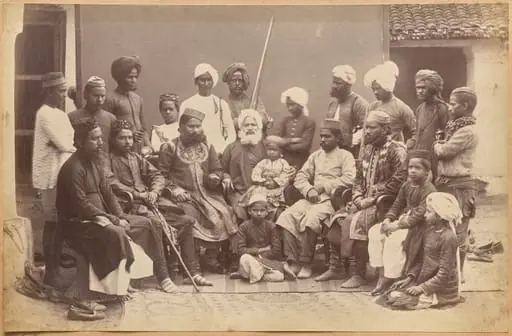 Mowhri Rahman Alli Khan family, Rewa (recto, bottom)
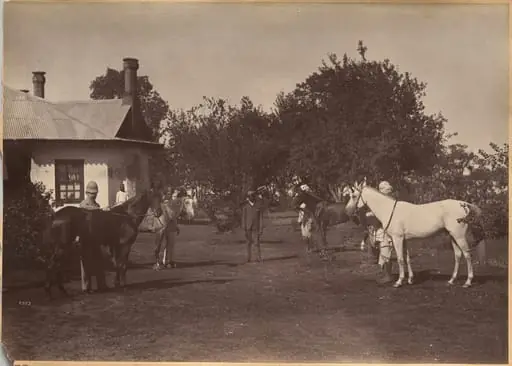 Lord William Beresford's horses
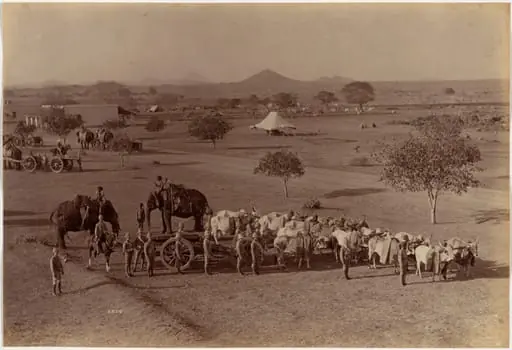 Heavy Field Battery, Jhansi
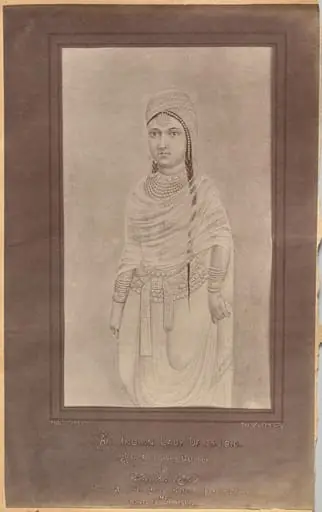 Indian Lady 250 BC (verso, right)
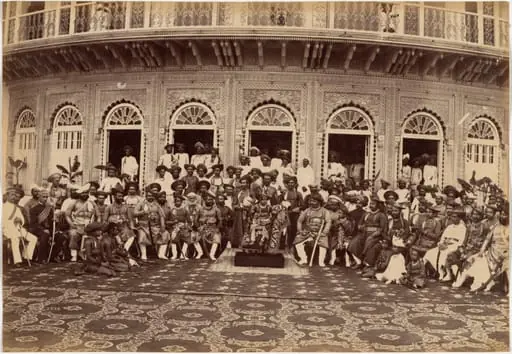 Maharaja Scindia, Nobles, and High Officials, Gwalior
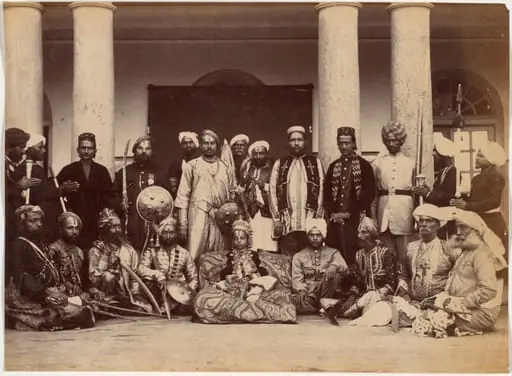 Maharaja of Rewa and Sardars
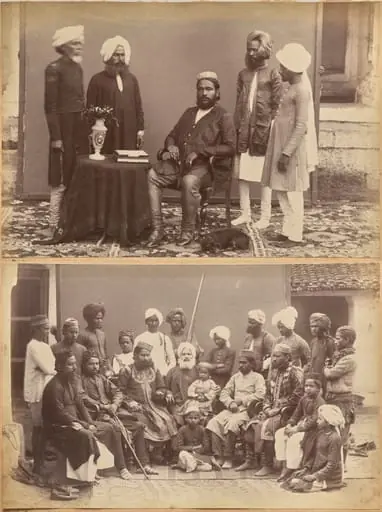 Ramkishore Singh, Rewa (recto, top); Mowhri Rahman Alli Khan family, Rewa (recto, bottom)
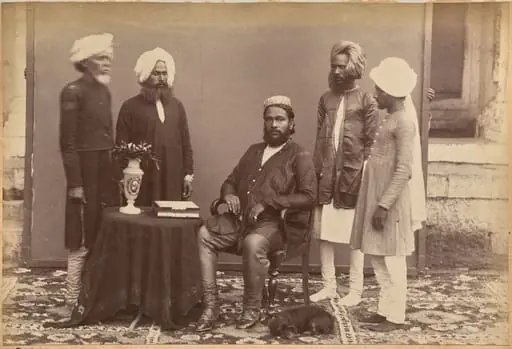 Ramkishore Singh, Rewa (recto, top)
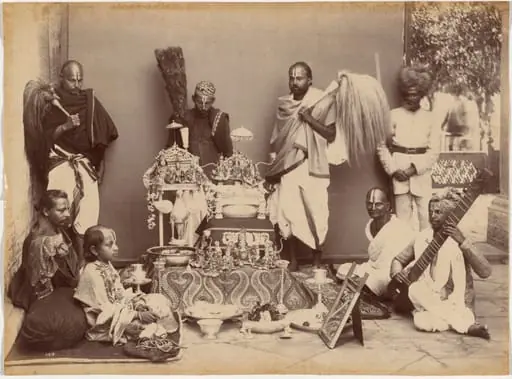 Maharaja of Rewa in Prayer
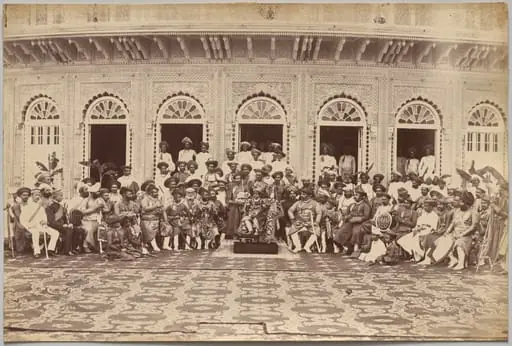 Maharaja of Scindia, nobles, and high officials, Gwalior
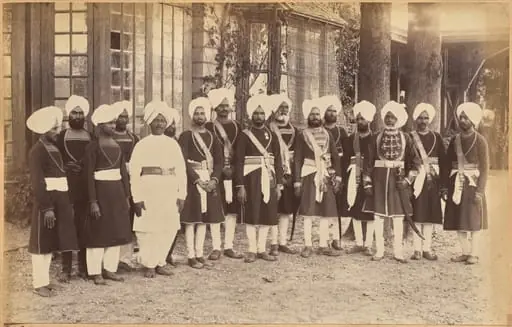 Servants of His Honor the Gov. of Punjab
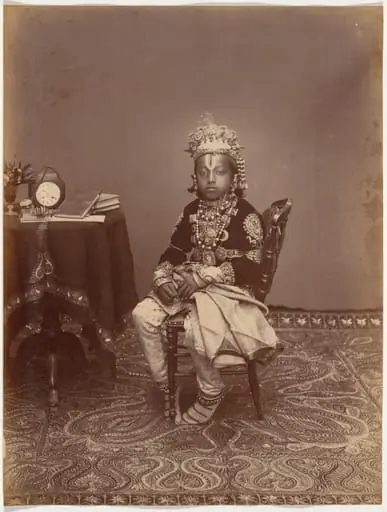 His Highness the Maharaja of Rewa
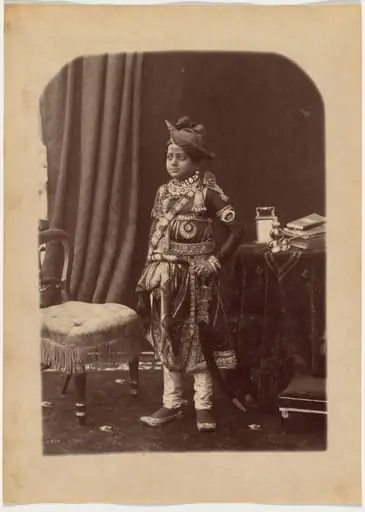 His Highness Maharaja Scindia of Gwalior
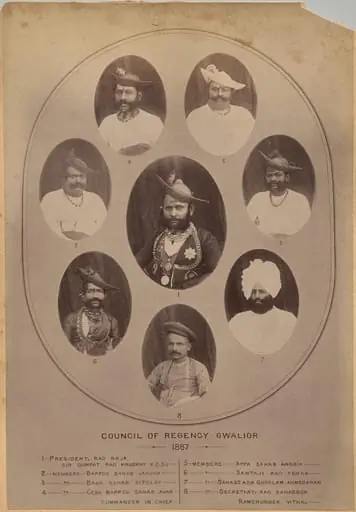 Council of Regency, Gwalior
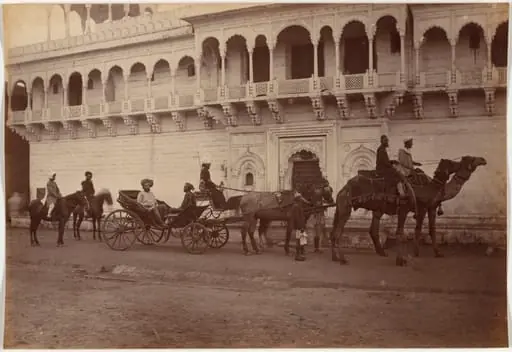 Ramkishore Singh of Rewa