Artwork
A Fashionable Couple Seen from Behind
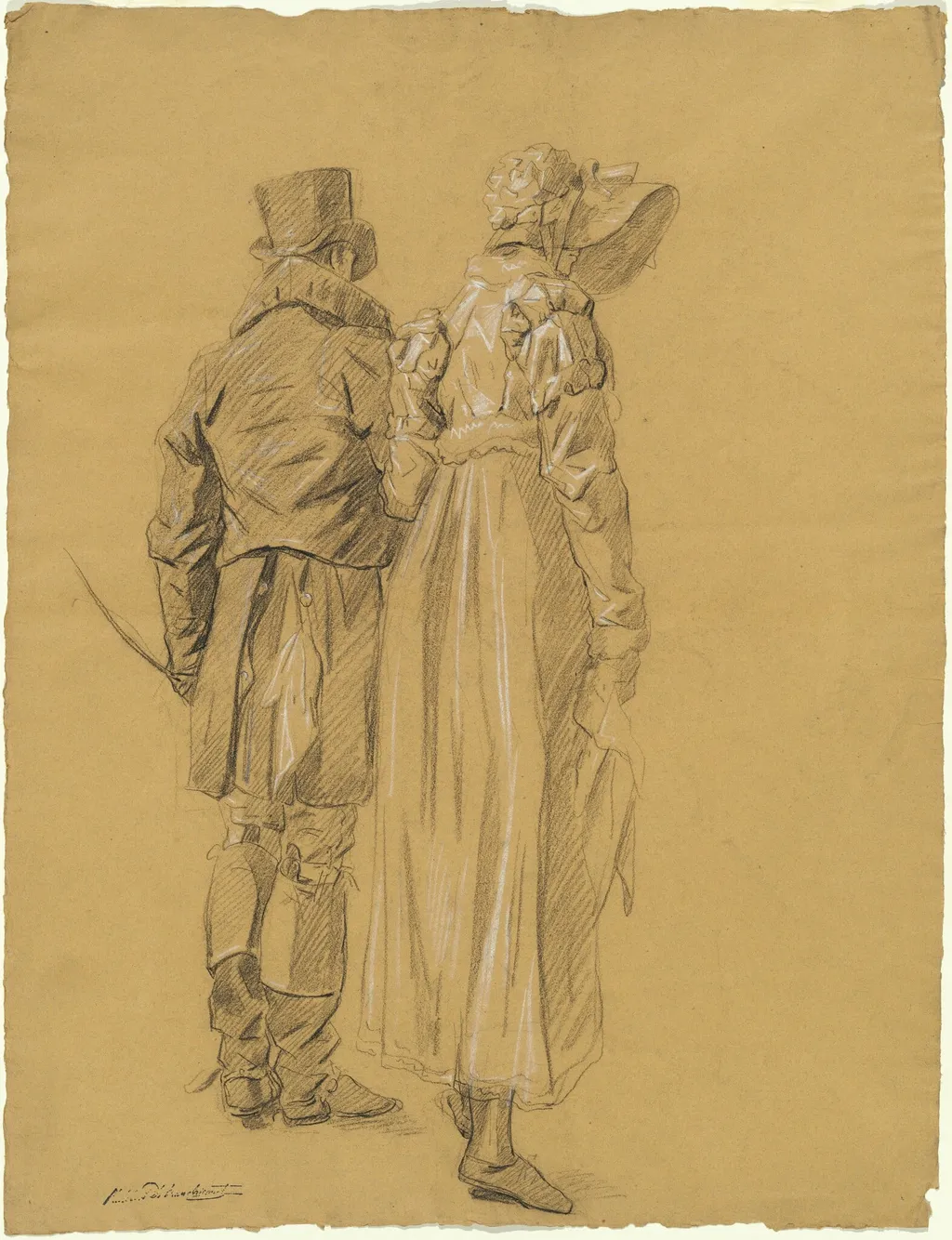
A Fashionable Couple Seen from Behind is a chalk drawing by the Romanticist artist Philibert d'Amiens de Ranchicourt. It dates from 1810 and is held in the collection of the National Gallery of Art.
About this work
Overview
The choice of colored paper enhances the contrast of the chalk, while the rapid, uneven lines suggest spontaneity rather than polished finish.
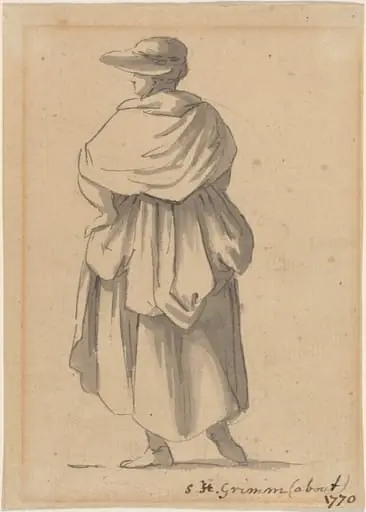
This drawing, dated around 1810, is a small-scale sketch in black and white chalk on yellow paper by Philibert d'Amiens de Ranchicourt. It captures a pair of figures from behind as they walk, their identities obscured. The choice of colored paper enhances the contrast of the chalk, while the rapid, uneven lines suggest spontaneity rather than polished finish. The work belongs to a body of informal studies focused on contemporary urban life.
Subject & Meaning
The figures—a man in a long coat and hat, a woman in a full-skirted dress adorned with feathered headwear—represent Parisian fashion of the early 19th century. By omitting their faces, the artist shifts focus to posture, movement, and attire as markers of social identity. The composition implies a private, fleeting moment, evoking the anonymity and rhythm of city strollers without narrative or emotional emphasis.
Technique & Style
Ranchicourt employed quick, gestural strokes in chalk to suggest fabric folds, hat shapes, and the curve of shoulders. The yellow ground acts as a mid-tone, allowing the darker chalk to define contours while leaving areas of paper exposed for light. The absence of blending or refinement creates a sense of immediacy, characteristic of his observational sketches made in public spaces rather than in the studio.
History & Provenance
The drawing is attributed to Ranchicourt based on stylistic comparison with his other known works, though no documented ownership history precedes its modern acquisition. It has been preserved as part of a collection of 19th-century French drawings, valued for its informal quality and insight into daily life rather than as a finished composition. Its survival reflects a growing interest in sketches as autonomous works.
Context
Created during the Bourbon Restoration, the drawing reflects a cultural moment when public appearances and fashion signaled social status. Artists like Ranchicourt turned from grand historical themes to intimate, everyday scenes, influenced by the rise of urban leisure and the popularity of sketching as a personal practice. This work aligns with a broader trend of capturing transient moments in the modern city.
Legacy
Though Ranchicourt was not widely known in his lifetime, this drawing exemplifies a quiet shift in artistic priorities toward observation over idealization. His sketches, once considered preparatory, are now appreciated for their directness and sensitivity to movement and dress. This piece contributes to the reassessment of minor artists whose work documents the texture of ordinary life in early 19th-century France.
Artist & collection

Artist
Philibert d'Amiens de Ranchicourt
Philibert d'Amiens de Ranchicourt (1810–1812) was an artist.

 Young Woman Climbing a Step
 Study of Ezekiel for "Frieze of Prophets"
 Portrait Study: Miss Charlotte R. Williams
 Figure of a Woman
 Study of a girl with an infant in her arms
 Two Peasants
 Venetian Water-Carrier
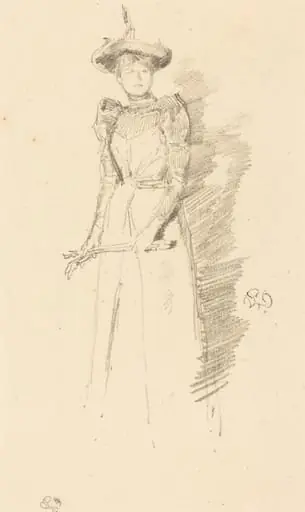 Gants de Suède
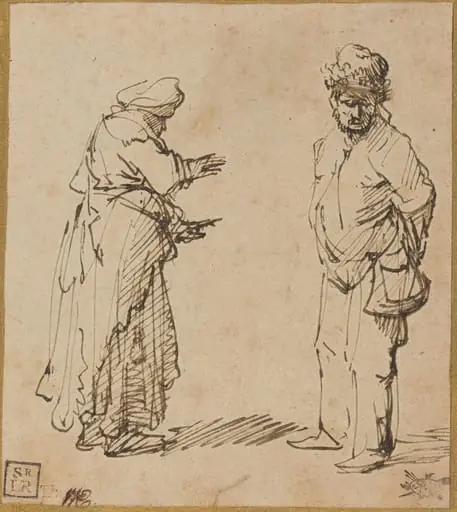 Beggar Man and Woman
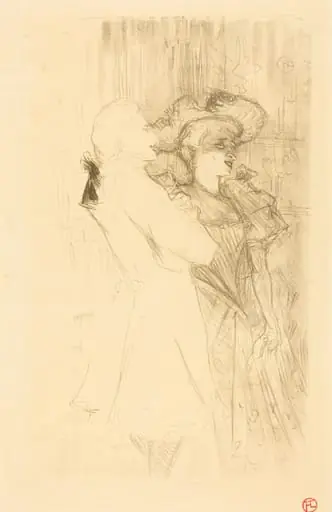 Lender and Auguez in "La chanson de fortunio" (Lender et Auguez dans "La chanson de fortunio")
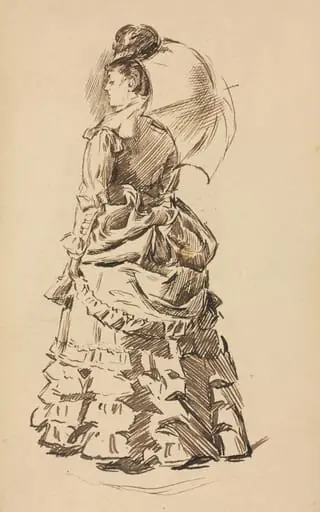 Study for "Mind and Matter"
 A Peasant Woman