Artwork
A Peasant Woman
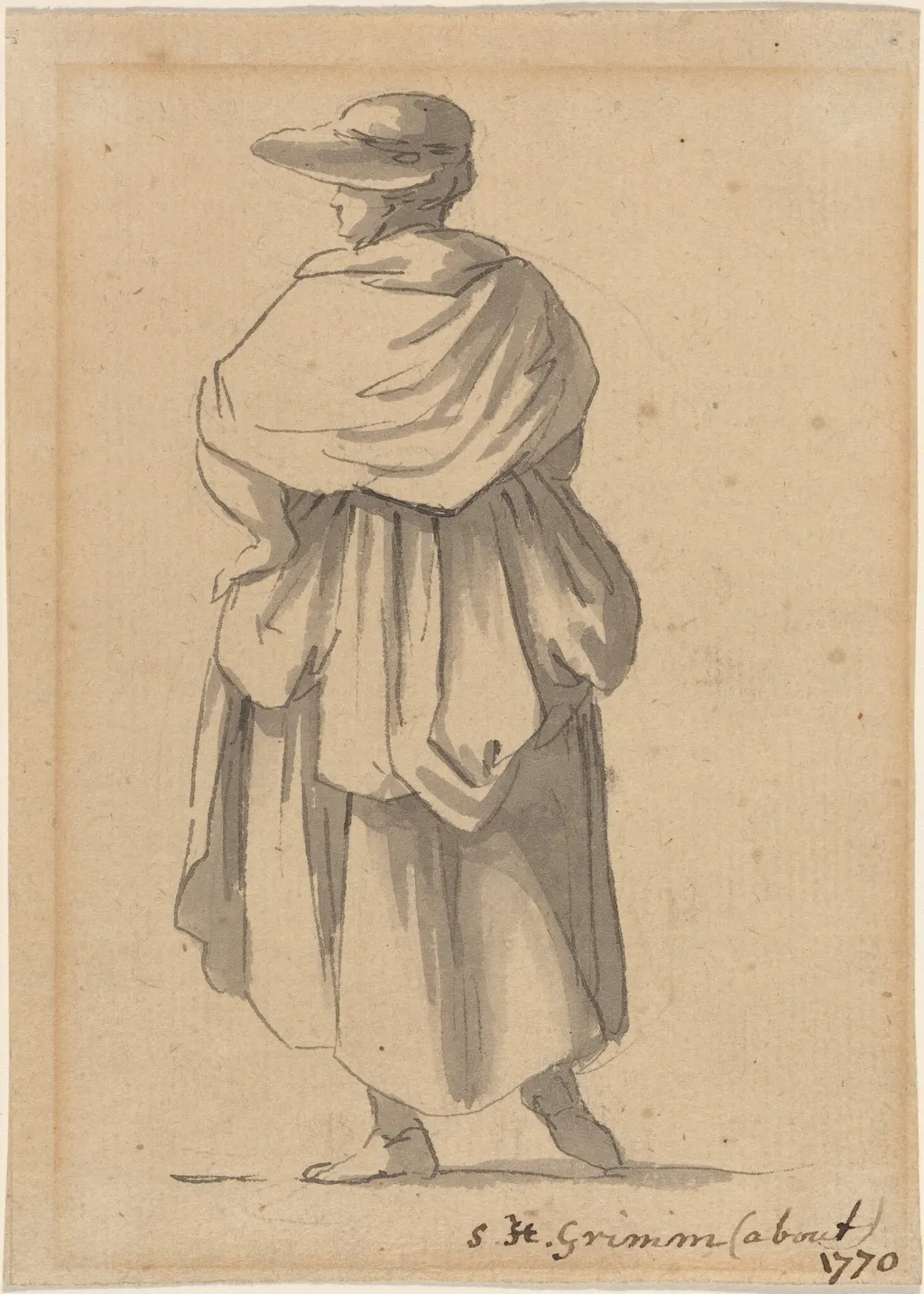
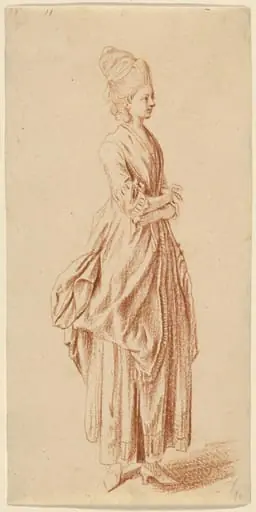
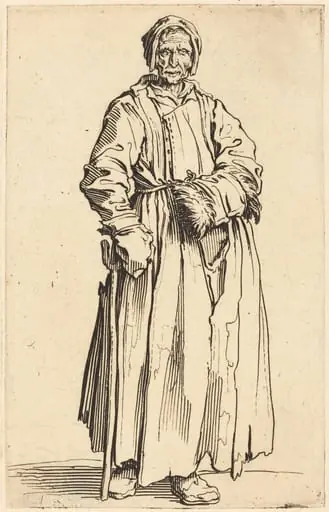
A Peasant Woman is an ink drawing by the Romanticist artist Samuel Hieronymus Grimm. It dates from 1770 and is held in the collection of the National Gallery of Art.
About this work
Overview
Grimm, a Swiss artist active in England, used such drawings to document everyday life with precision, often as visual supplements to scholarly texts.
Created around 1770, this drawing by Samuel Hieronymus Grimm captures a rural woman in quiet repose. Executed in pen and black ink with gray wash over graphite on laid paper, it belongs to a body of work focused on observational record rather than idealized representation. Grimm, a Swiss artist active in England, used such drawings to document everyday life with precision, often as visual supplements to scholarly texts.
Subject & Meaning
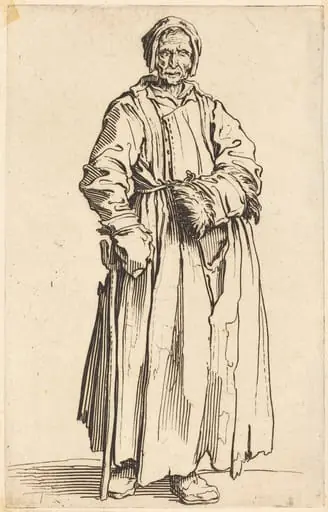
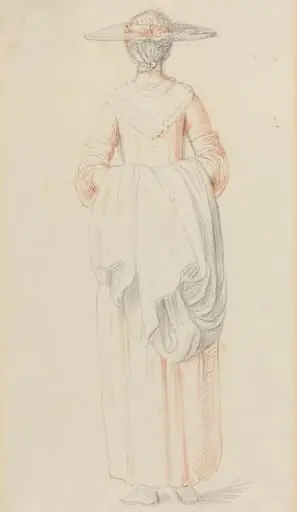
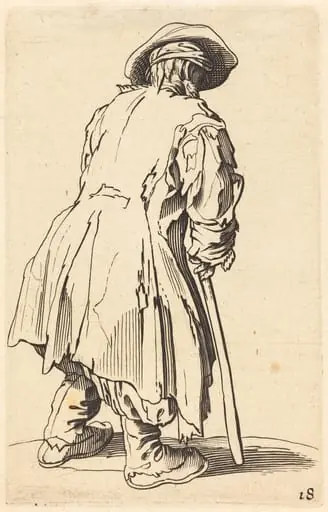
The figure is a peasant woman, dressed in a long robe with a broad collar and a simple hat, her arms folded before her. Her turned head and subdued expression suggest introspection rather than narrative action. The absence of context or activity shifts focus to her presence alone, emphasizing dignity in ordinary existence. Grimm’s choice to isolate her implies a documentary intent—to preserve the appearance of common people without embellishment.
Technique & Style
Grimm employed graphite underdrawing to define form, then layered pen lines and diluted gray washes to model volume and texture. Subtle tonal gradations suggest fabric folds and facial contours without sharp outlines. The washes create soft transitions between light and shadow, enhancing three-dimensionality. Cross-hatching appears sparingly, used only to deepen shadows, reinforcing a restrained, observational aesthetic over dramatic effect.
History & Provenance
The drawing originates from Grimm’s extensive travels across England, where he was commissioned to record architectural and social scenes. Though not part of a published volume, it aligns with his work for antiquarians and naturalists, including illustrations for Gilbert White’s writings. Its survival as a standalone sheet suggests it was valued as a study, possibly kept in the artist’s personal archive before entering institutional collections.
Context
In late 18th-century Britain, there was growing interest in documenting rural life as industrialization transformed the landscape. Grimm’s drawings contributed to this trend, offering visual records of regional dress and demeanor. Unlike theatrical genre scenes, his figures lack sentimentality; they are observed with neutrality, reflecting Enlightenment ideals of empirical accuracy over romanticized storytelling.
Legacy
Grimm’s drawings, including this one, remain valuable as historical documents of 18th-century English rural society. Their technical restraint and attention to detail influenced later topographical artists and ethnographic illustrators. Though not widely exhibited in his lifetime, these works now serve as primary sources for scholars studying material culture, costume, and the evolution of observational drawing in the pre-photographic era.
Own this work as a print
Artist & collection

Artist
Samuel Hieronymus Grimm (18 January 1733 – 14 April 1794) was an 18th-century Swiss landscape artist who worked in oils (until 1764), watercolours, and pen and ink media.

![Portrait of a Procurator [verso], by Alessandro Longhi](https://artifactworldgallery.com/img/alessandro-longhi--portrait-of-a-procurator-verso--b1f9a8462c76ecbe-w320.webp)