Artwork
Study of Ezekiel for "Frieze of Prophets"
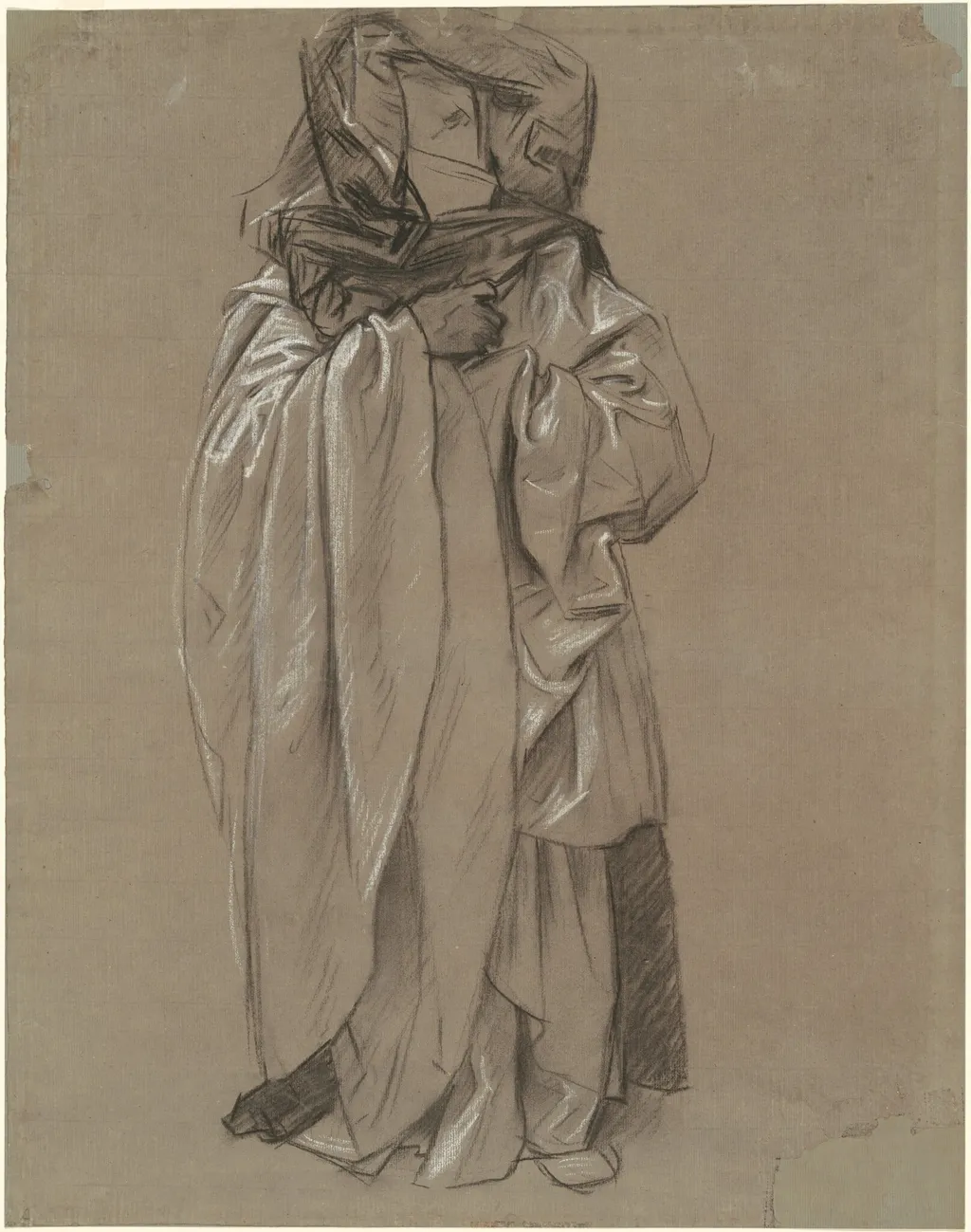
Study of Ezekiel for "Frieze of Prophets" is a charcoal drawing by the Impressionist artist John Singer Sargent. It dates from 1891 and is held in the collection of the National Gallery of Art.
About this work
The artist used charcoal and white chalk on gray laid paper, which is an interesting combination of materials.
The painting is called "Study of Ezekiel for 'Frieze of Prophets'" by John Singer Sargent.
It was created between 1890 and 1892.
The artist used charcoal and white chalk on gray laid paper, which is an interesting combination of materials.
This study is part of a larger work, showing Sargent's process and attention to detail.
You can learn more about the artist's style and techniques by looking at the work of Sargent, John Singer.
Overview
John Singer Sargent’s drawing titled *Study of Ezekiel for “Frieze of Prophets”* was executed around 1891. Rendered in charcoal and white chalk on a gray laid paper support, the work functions as a preparatory study for a larger decorative frieze. It captures a solitary figure of the biblical prophet, rendered with careful tonal modulation, and exemplifies Sargent’s interest in religious subject matter during this period.
Subject & Meaning
The composition focuses on the prophet Ezekiel, a figure from the Hebrew Bible known for his visionary experiences. By isolating Ezekiel in a stark monochrome setting, Sargent emphasizes the contemplative intensity of the prophet’s role as a messenger, allowing viewers to consider the spiritual weight of the narrative that the completed frieze would later convey.
Technique & Style
Sargent employs a limited palette of charcoal and white chalk, exploiting the contrast between deep, velvety blacks and luminous highlights. The gray laid paper provides a mid‑tone ground that unifies the drawing’s values. Loose yet precise strokes suggest musculature and drapery, while the subtle gradations reveal the artist’s mastery of drawing as a means of shaping volume without color.
History & Provenance
Created between 1890 and 1892, the study formed part of Sargent’s preparatory work for the ambitious “Frieze of Prophets,” a commission that never reached full realization. The drawing remained in the artist’s studio inventory before entering a private collection in the early 20th century, later passing to a museum through donation in the 1970s.
Context
During the late 19th century, Sargent, an American expatriate trained in Paris, expanded his repertoire beyond portraiture to include large‑scale decorative schemes. The “Frieze of Prophets” project reflected contemporary interest in integrating historicist and religious motifs into public and private interiors, aligning Sargent with other artists who explored monumental narrative cycles at the turn of the century.
Artist & collection
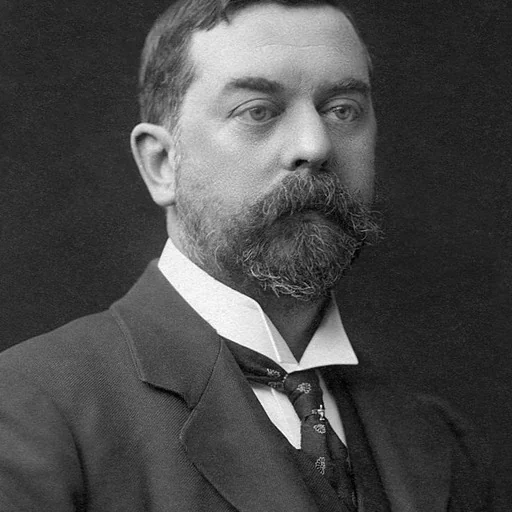
Artist
John Singer Sargent (; January 12, 1856 – April 15, 1925) was an American expatriate artist, considered the "leading portrait painter of his generation" for his evocations of Belle Époque and Edwardian-era luxury.

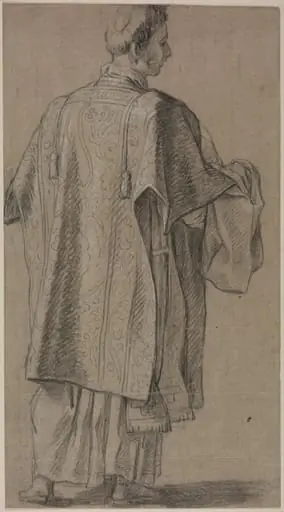 Ecclesiastic Seen from Behind
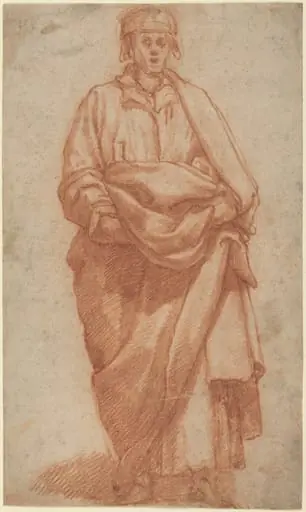 Standing Man
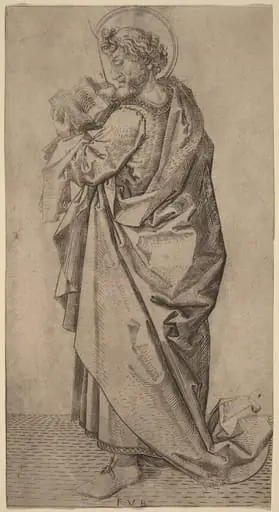 Saint Bartholomew
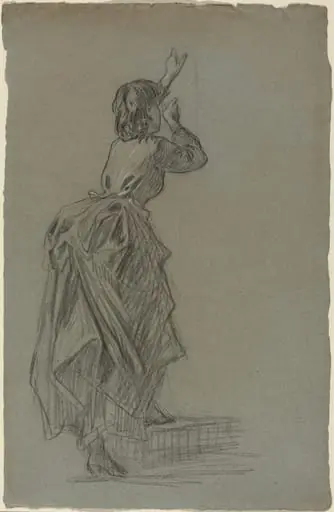 Young Woman Climbing a Step
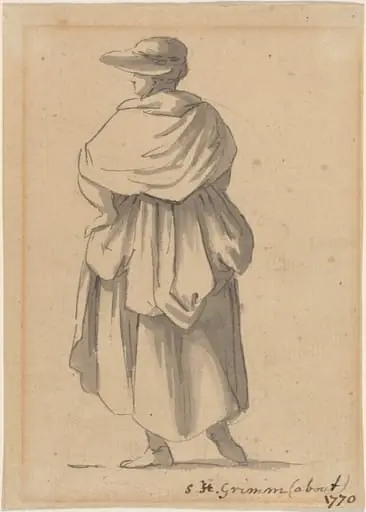 A Peasant Woman
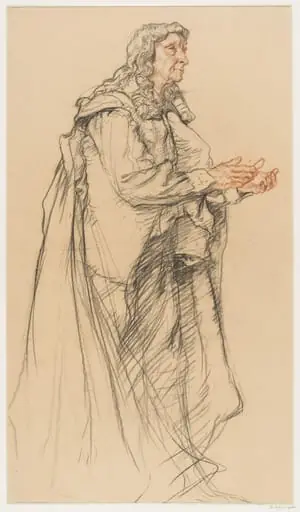 Prince Rupert receiving the Charter of the Hudson Bay Company from Charles II
![Portrait of a Procurator [verso], by Alessandro Longhi](https://artifactworldgallery.com/img/alessandro-longhi--portrait-of-a-procurator-verso--b1f9a8462c76ecbe-w320.webp) Portrait of a Procurator [verso]
Portrait of a Procurator [verso] Women of Algiers
 Study of a Standing Woman
 A Young Woman Looking in a Mirror
 An Arab Rider on Camelback
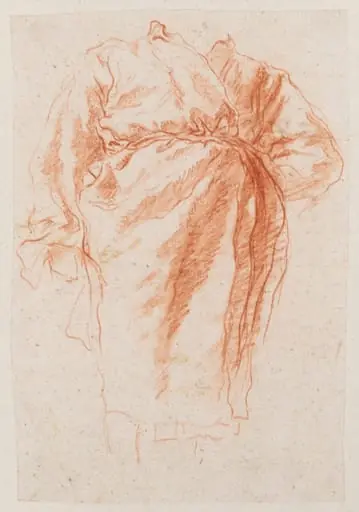 Study of a Draped Figure