Artwork
Theology
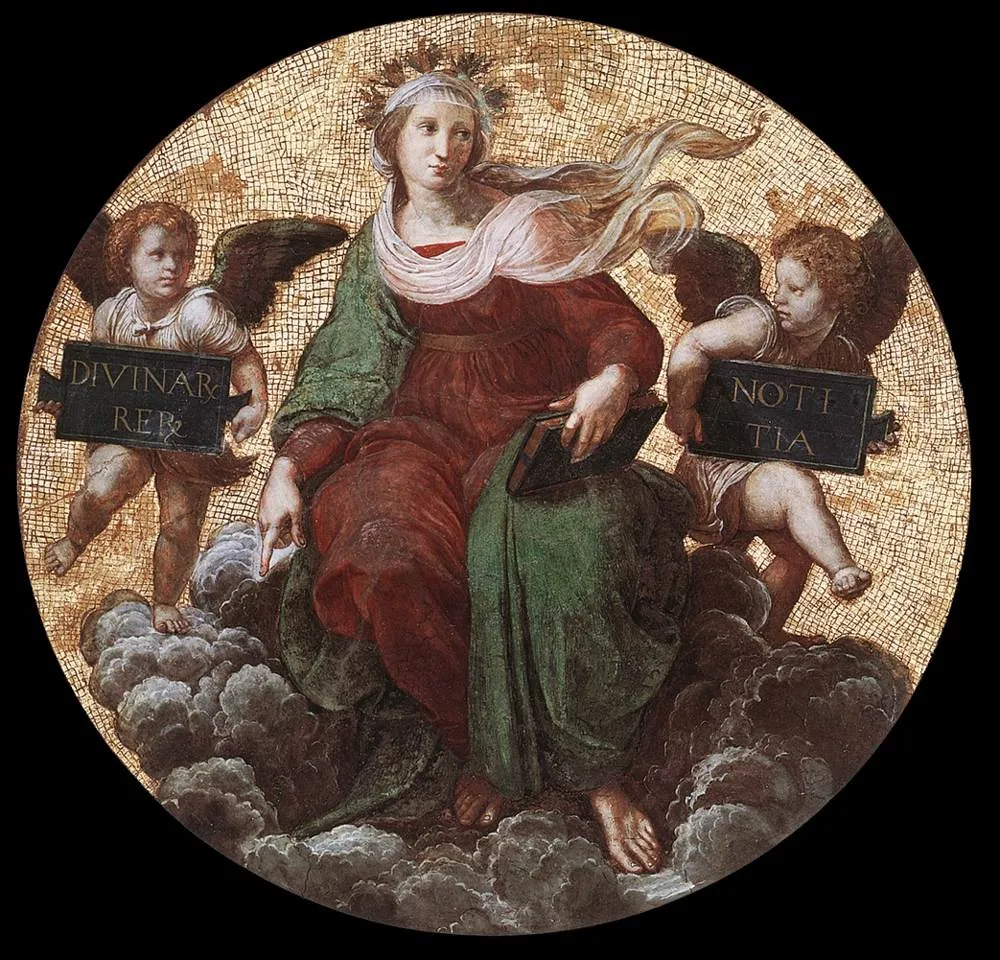
Theology is a fresco painting by the High Renaissance artist Raphael. It dates from 1508 and is held in the collection of the Vatican Museums.
About this work
Overview
Created in 1508, this fresco by Raphael forms part of the decorative program of the Vatican’s Stanza della Segnatura. Executed in the High Renaissance style, the work remains in the Vatican Museums, where it is displayed alongside other allegorical panels that celebrate the intellectual virtues of the papal court.
Subject & Meaning
The composition presents a seated female figure, embodying Theology, perched upon a cloud and attended by two cherubic angels. She wears a red dress beneath a green mantle and a white headscarf, holding a book in her left hand while gesturing toward a black tablet bearing gold lettering that the angels support. The serene expression and downward gaze suggest contemplation of divine truth.
Technique & Style
Rendered as a true fresco, the pigments were applied to wet plaster, allowing the colors to become integral to the wall surface. Raphael’s characteristic clarity of form, balanced arrangement, and subtle modeling of flesh are evident, while the golden mosaic background adds a luminous, decorative texture that enhances the heavenly atmosphere.
History & Provenance
Commissioned by Pope Julius II as part of a series of personifications of the liberal arts, the panel has remained in the Vatican collections since its completion. It was transferred to the Vatican Museums during the 19th‑century reorganization of the papal galleries, where it continues to be viewed by scholars and visitors alike.
Context
The fresco belongs to a broader decorative scheme that includes allegories of Philosophy, Poetry, and Law, each reflecting the intellectual ambitions of the Renaissance papacy. Raphael’s integration of classical compositional principles with Christian iconography exemplifies the synthesis of antiquity and faith that defined the period.
Artist & collection
Artist
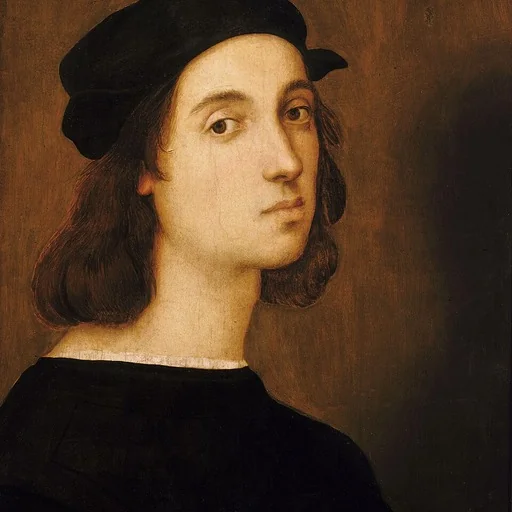
Raphael was born Raffaello Sanzio in Urbino on April 6, 1483, the son of Giovanni Santi, a painter and poet attached to the ducal court.

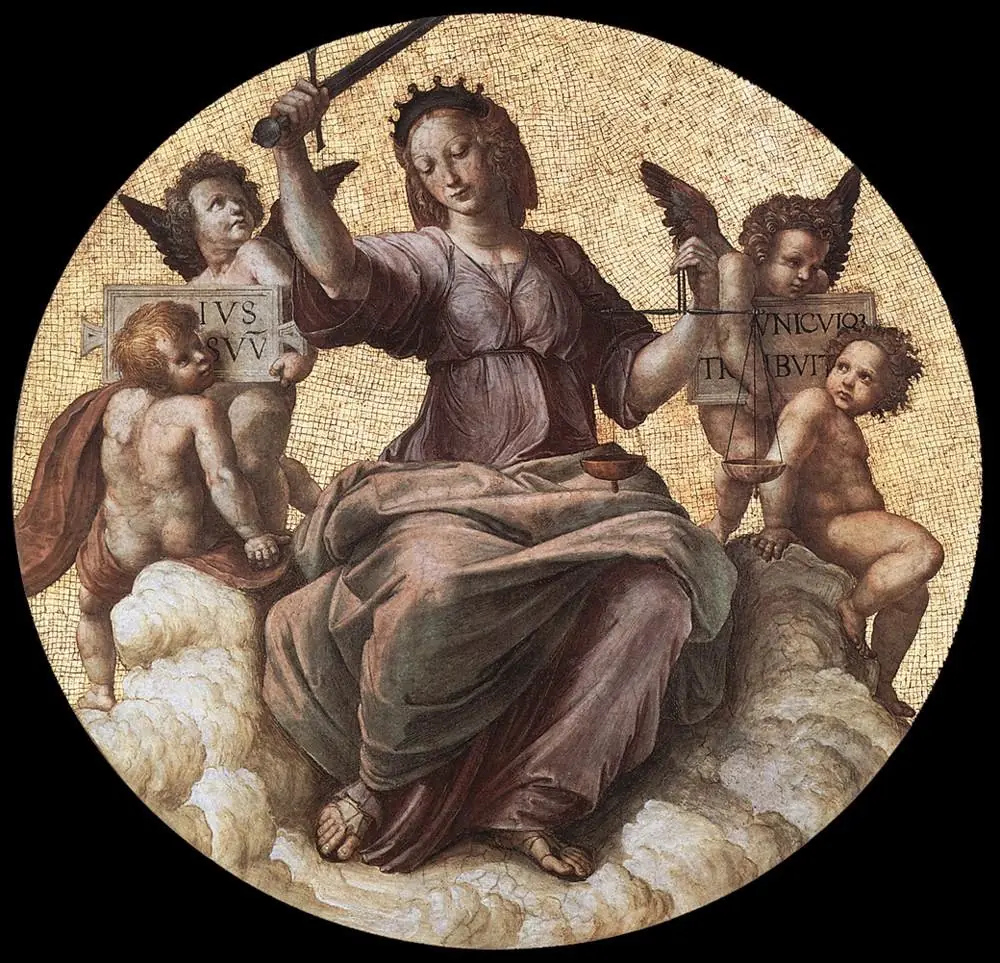 Justice
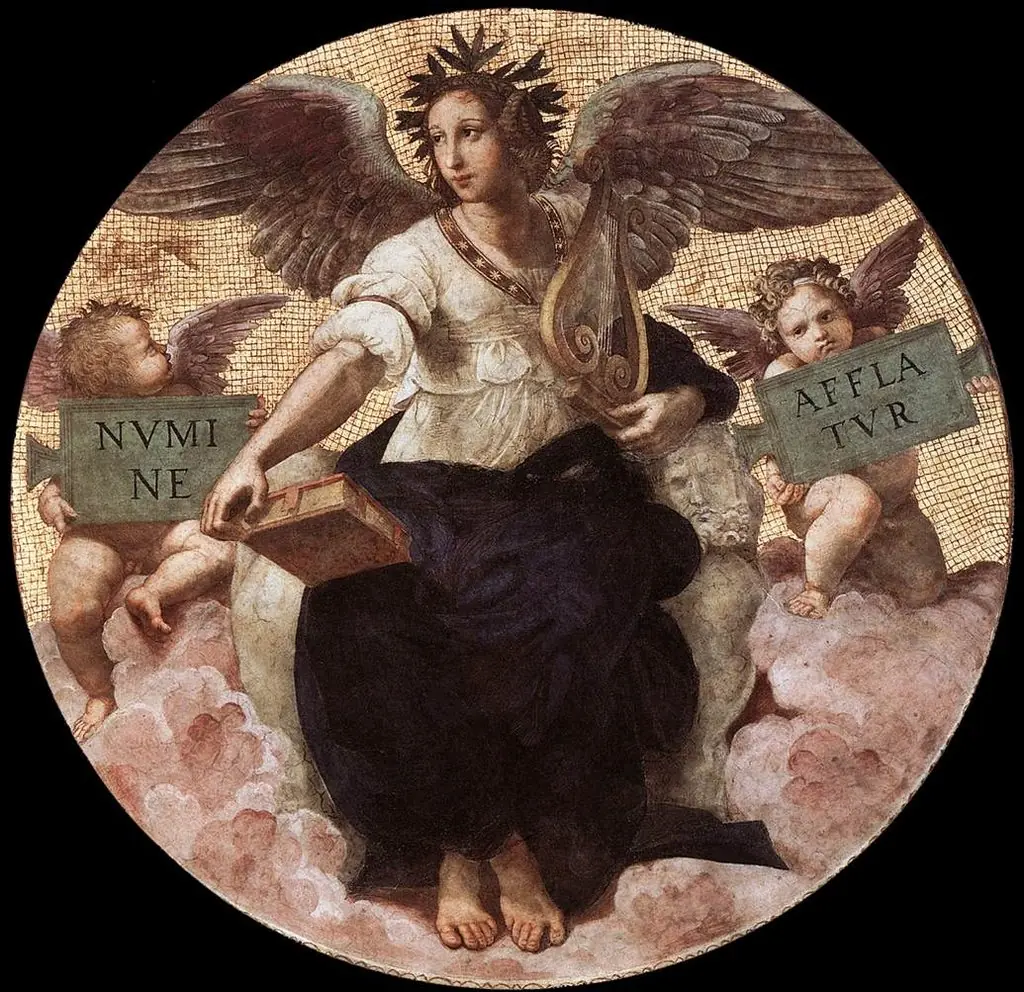 Poetry
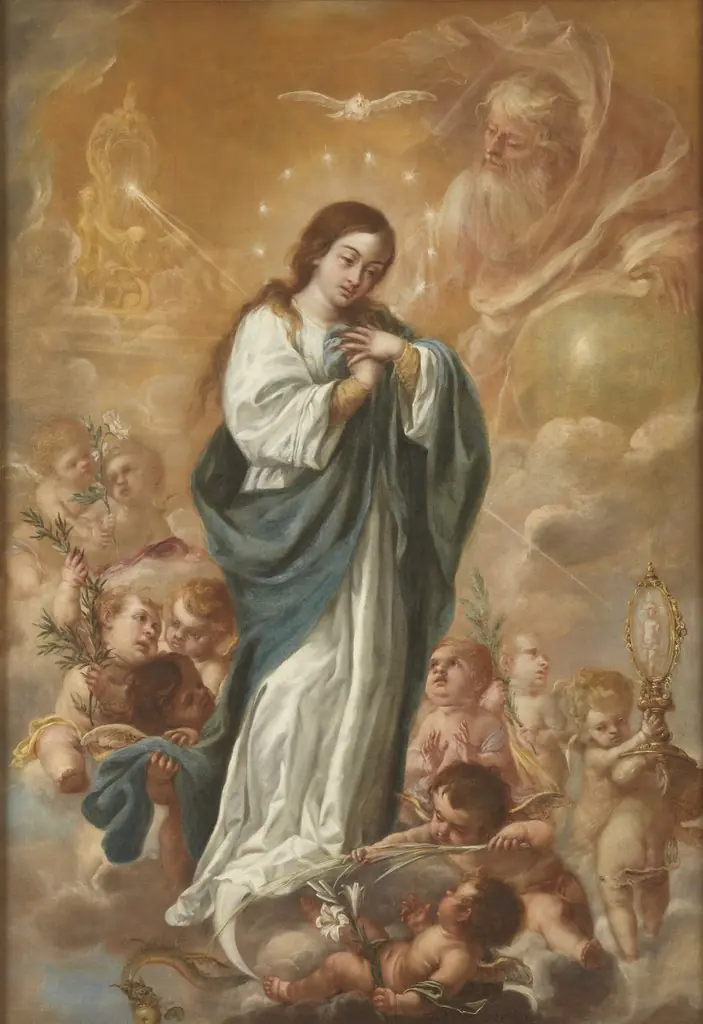 Immaculate Conception
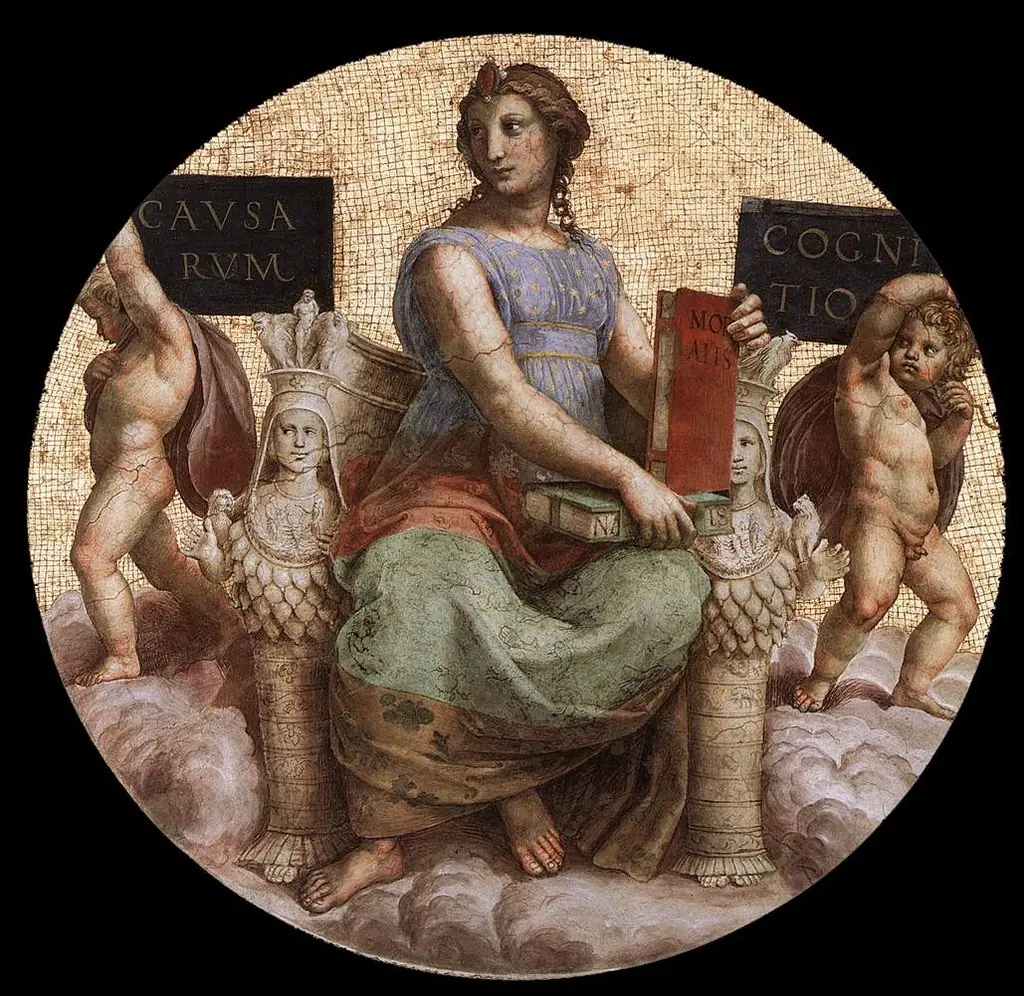 Philosophy
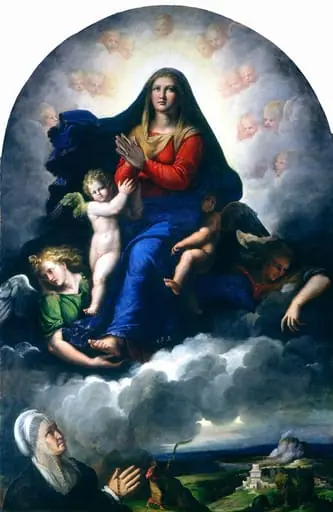 The Apparition of the Virgin
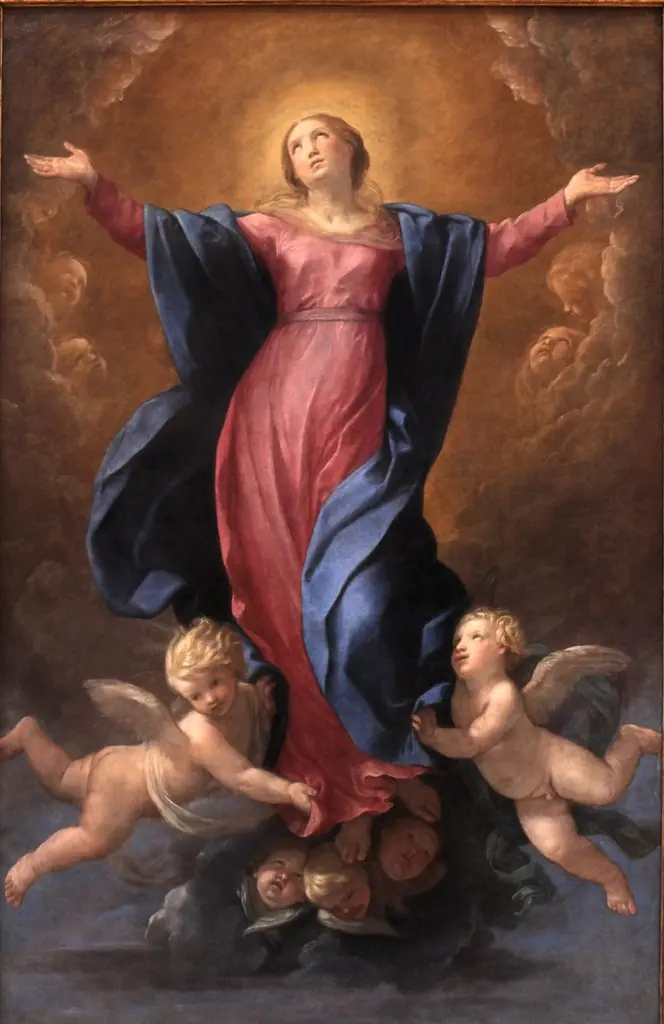 Assumption of the Virgin
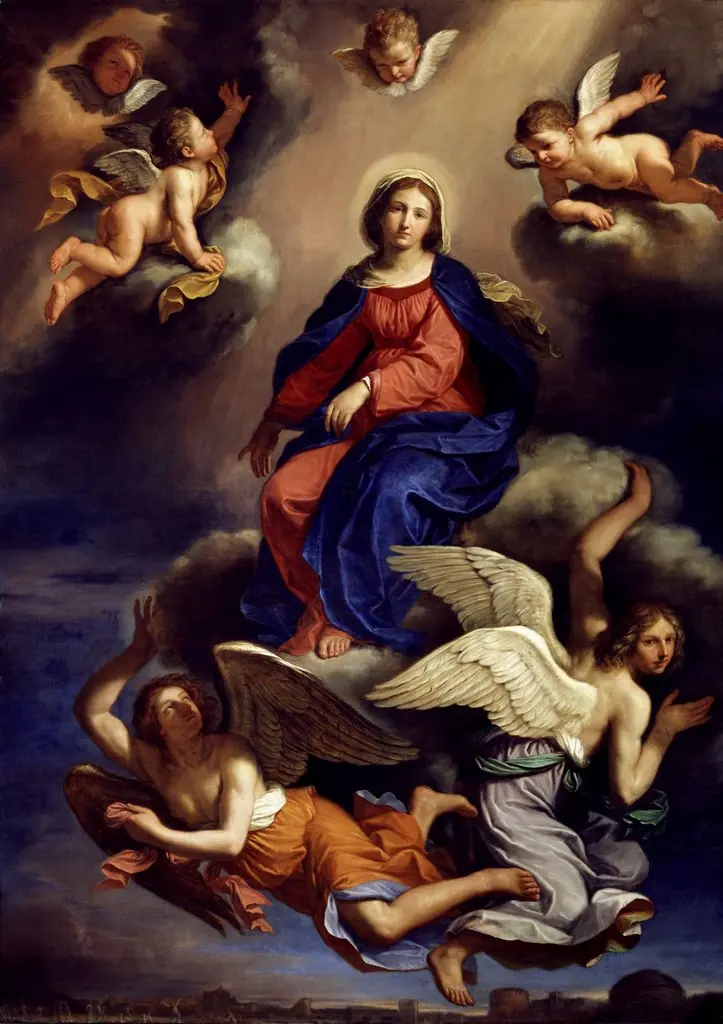 Assumption of the Virgin
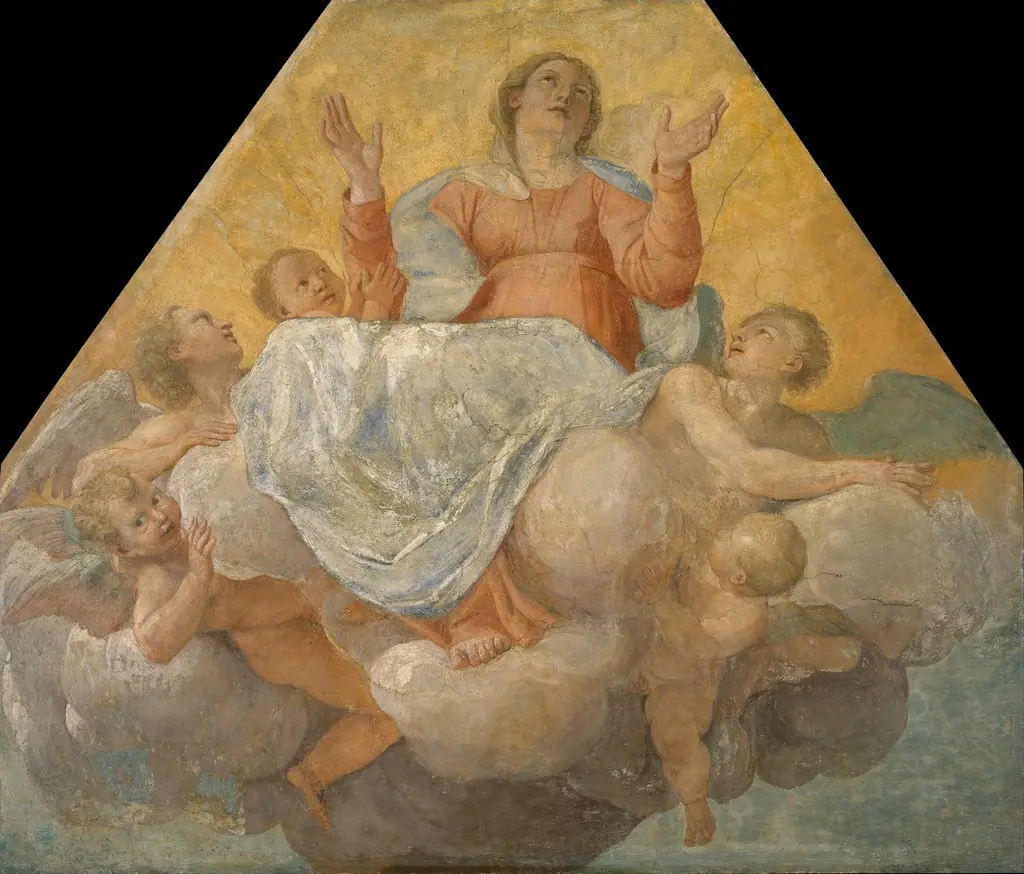 Assumption of the Virgin Mary
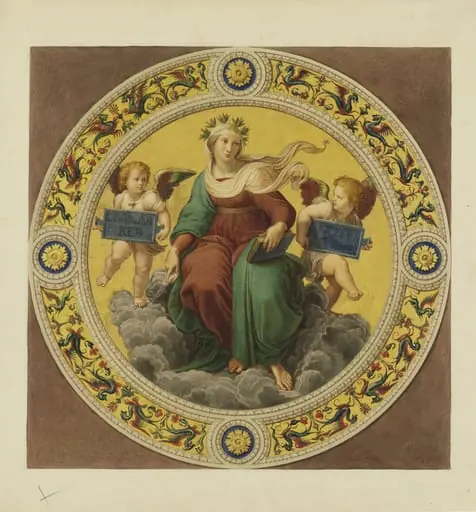 Copy after Raphael’s ceiling fresco representing ‘Theology’ in the Stanza della Segnatura (Vatican Palace, Rome,1508-09), 1864.
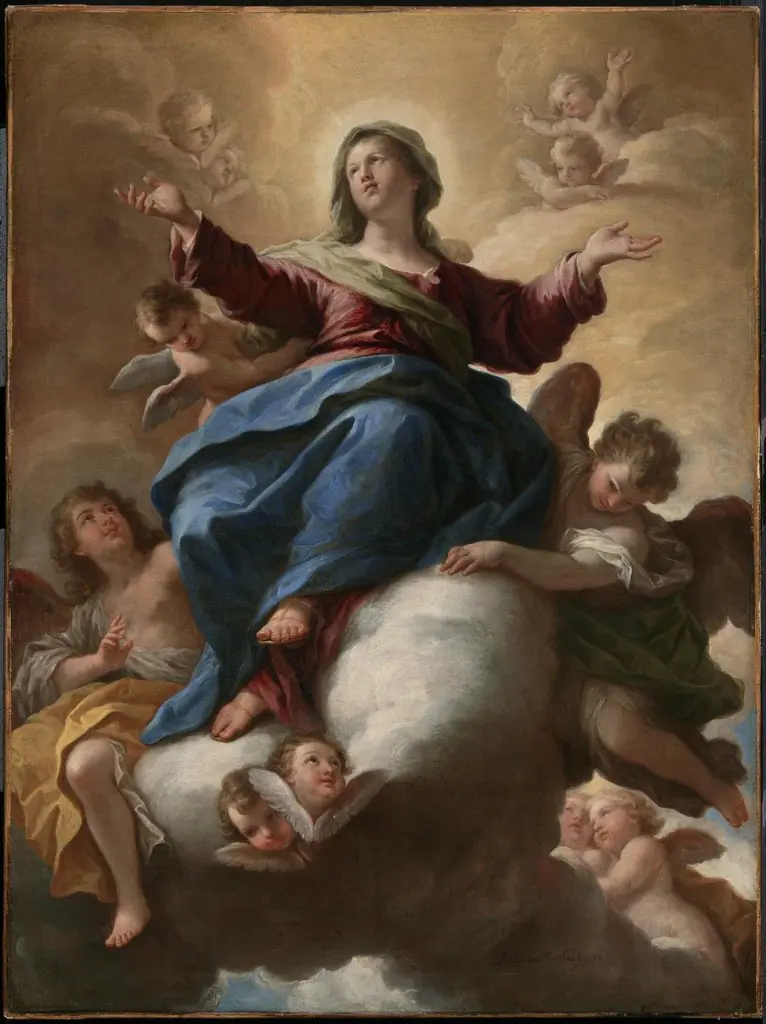 Assumption of the Virgin
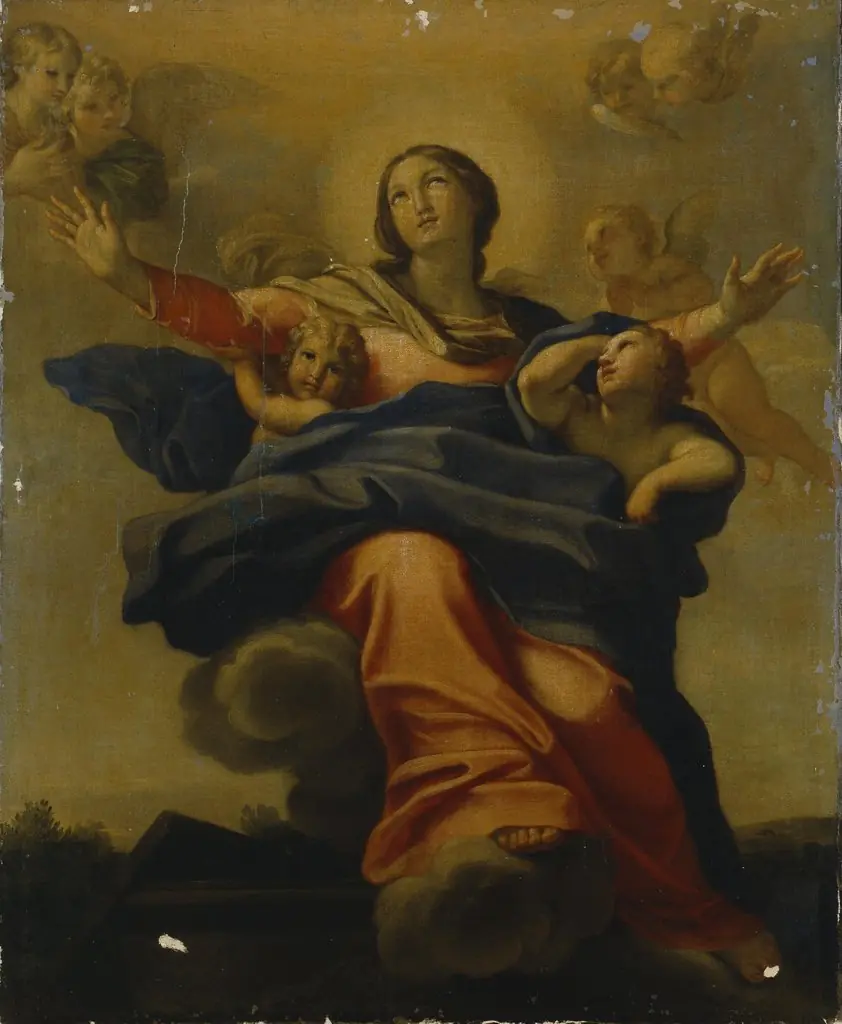 Assumption of the Virgin Mary
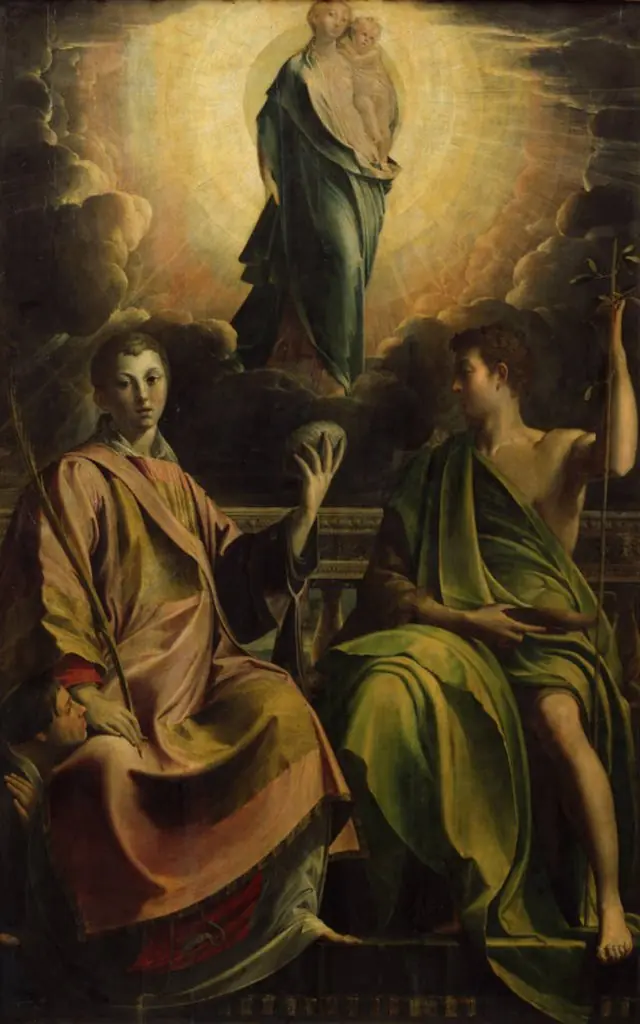 Madonna and child with Saints Stephen and John the Baptist