Artwork
Blonde
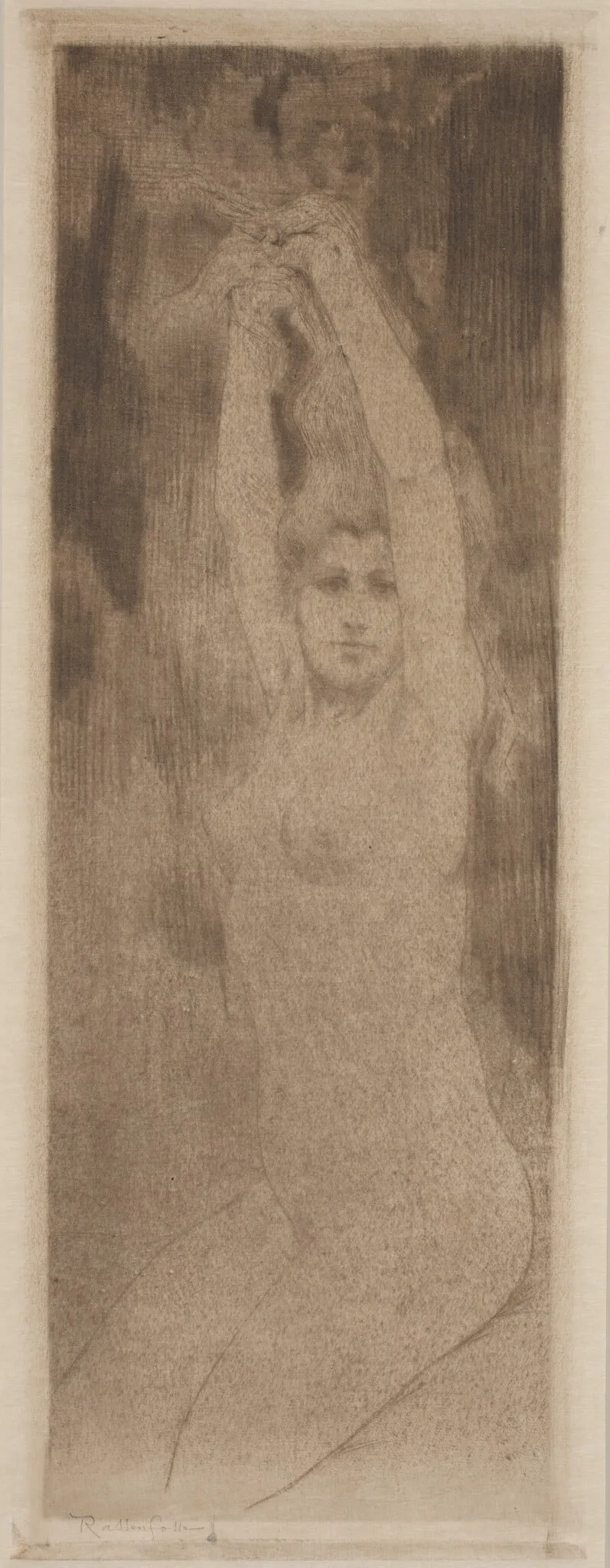
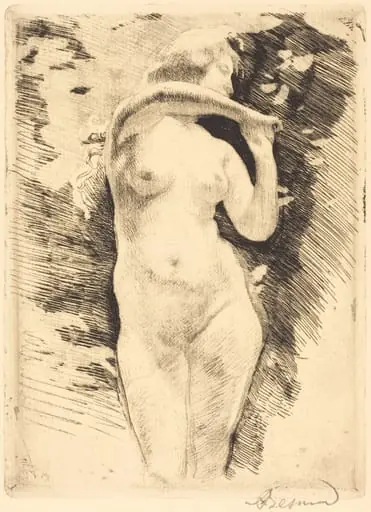
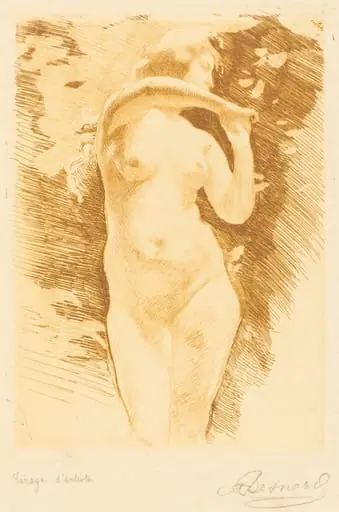
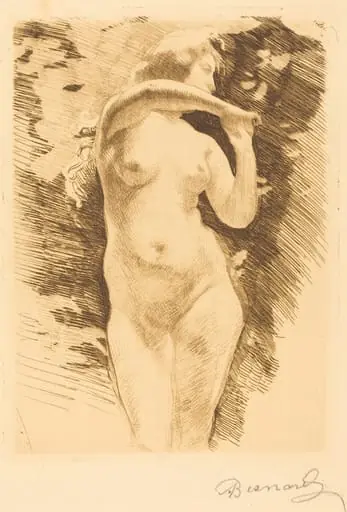
Blonde is an ink print by Armand Rassenfosse. It dates from 1901 and is held in the collection of the National Gallery of Art.
About this work
Overview
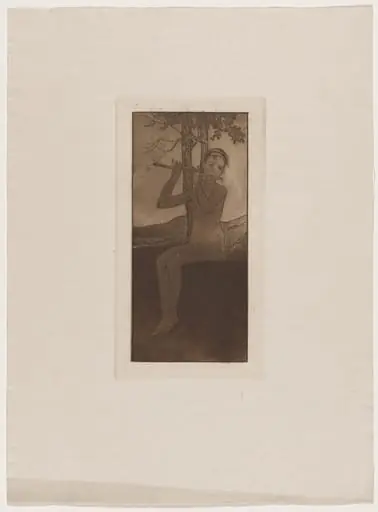
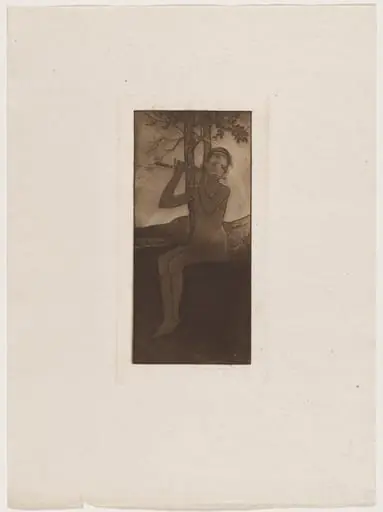
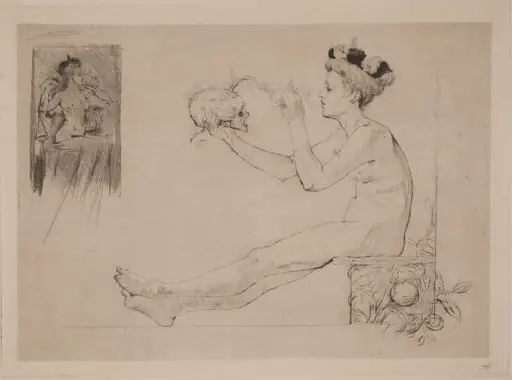
Created in 1901 by Armand Rassenfosse, Blonde is a print combining etching, drypoint, and roulette on japan paper. The work presents a solitary female figure in naturalistic pose, rendered with delicate line work and tonal variation. Its intimate scale and restrained palette emphasize quietude over drama, reflecting the artist’s interest in the subtle interplay of light and form.
Subject & Meaning
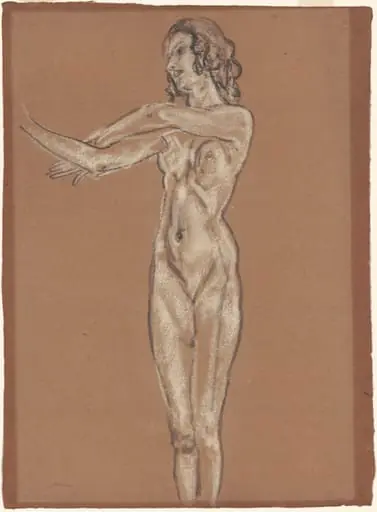
The figure is a nude woman with blonde hair, drawn back from her face, holding an indistinct object above her head. Her posture is still, her gaze directed outward, inviting quiet engagement rather than narrative interpretation. The ambiguity of the object and the lack of context shift focus to the presence of the body itself, suggesting themes of introspection and unadorned humanity.
Technique & Style
Rassenfosse employed etching for fine lines, drypoint for rich, velvety textures, and roulette to create soft, granular tones across the skin and background. The use of japan paper enhanced the delicacy of the ink absorption, allowing subtle gradations to emerge. The technique avoids bold contrasts, favoring a muted, atmospheric rendering that aligns with Symbolist sensibilities.
History & Provenance
The print was produced during Rassenfosse’s mature period, when he was deeply engaged with printmaking and the human figure. It was likely part of a limited edition, circulated among collectors and artists in Belgium and France. No documented exhibition history is widely recorded, but its technical refinement suggests it was intended for connoisseurs of graphic art.
Context
Created at the turn of the century, Blonde reflects the broader European interest in intimate, non-narrative figuration. While contemporaries explored psychological depth or social commentary, Rassenfosse focused on tactile presence and quiet beauty. His work aligns with Symbolist and Art Nouveau currents, yet resists ornamentation, favoring restraint and material sensitivity.
Legacy
Blonde remains a representative example of Rassenfosse’s mastery in graphic media. Though not widely reproduced in public collections, it is cited in scholarly studies of Belgian printmaking for its technical nuance and emotional subtlety. The work continues to inform discussions on the expressive potential of etching beyond traditional narrative frameworks.
Artist & collection