Artwork
Le chant de la cigale
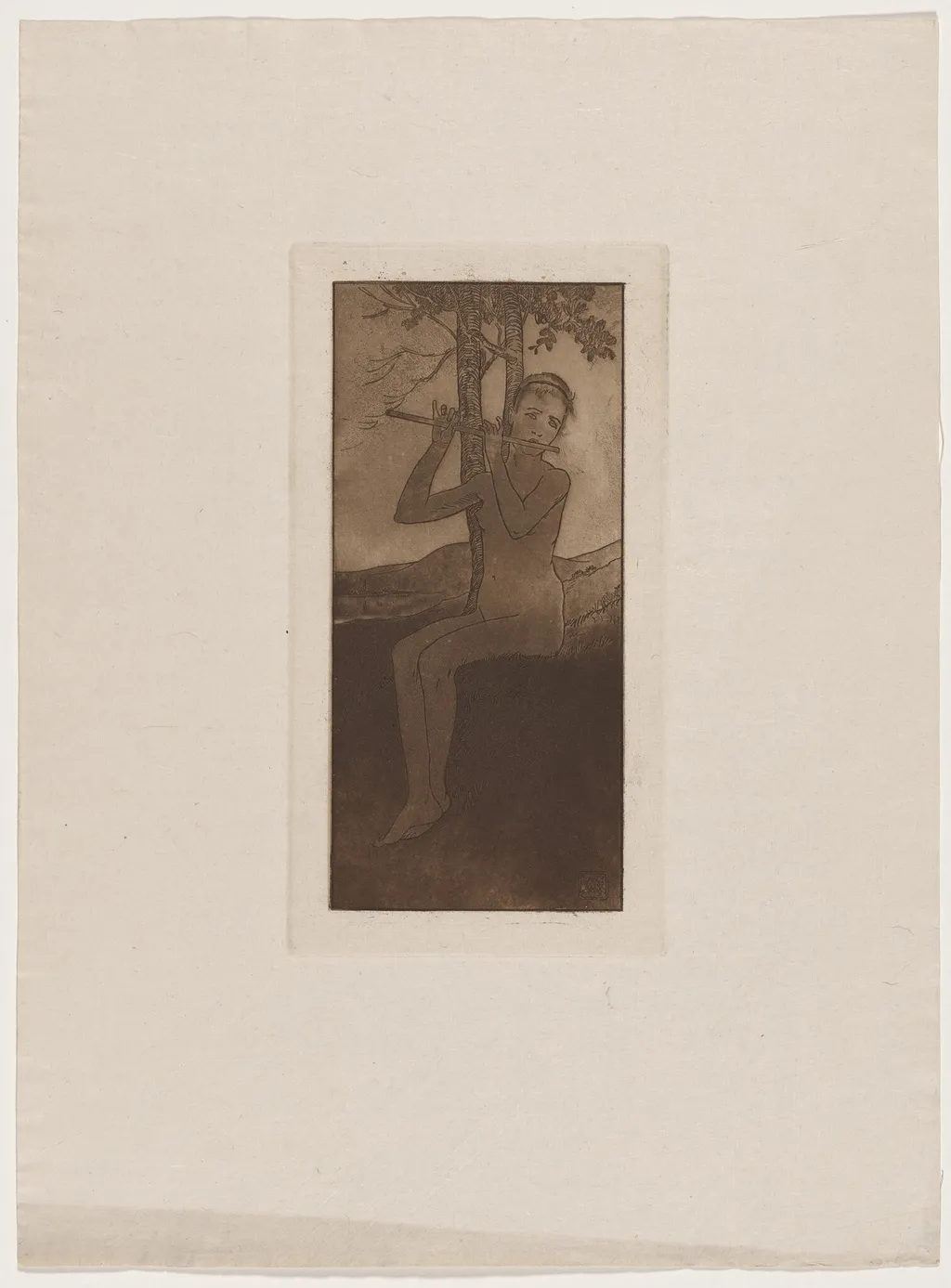
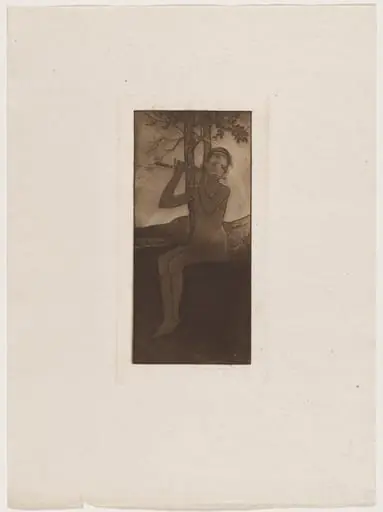
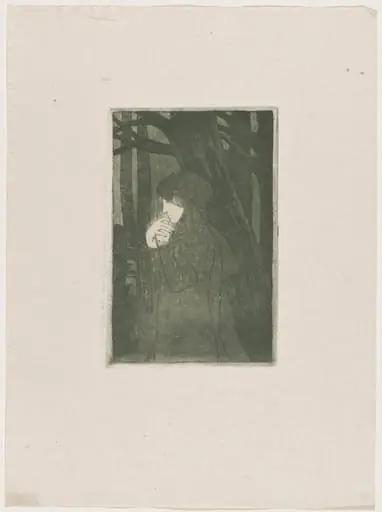
Le chant de la cigale is an ink print by the Impressionist artist Armand Rassenfosse. It dates from 1895 and is held in the collection of the National Gallery of Art.
About this work
Overview
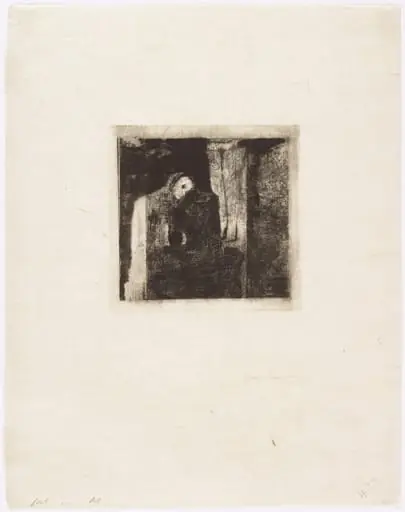
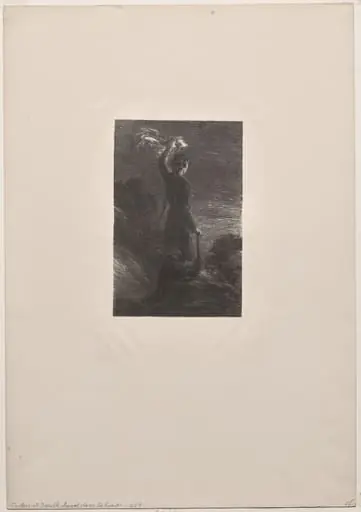
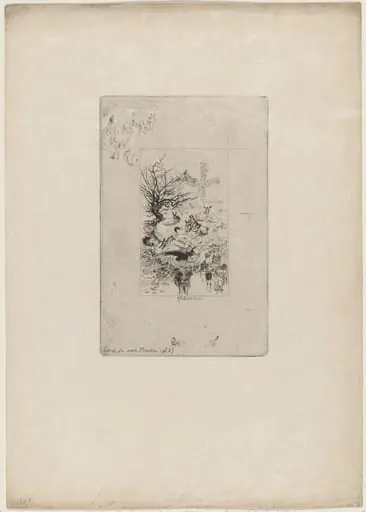
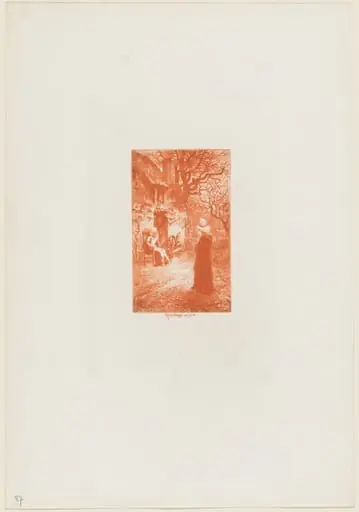
The work captures a solitary figure in repose beneath a tree, rendered with subtle tonal gradations that emphasize form against the pale ground.
Le chant de la cigale is a 1895 print by Belgian artist Armand Rassenfosse, executed in etching and aquatint using brown ink on china paper. The work captures a solitary figure in repose beneath a tree, rendered with subtle tonal gradations that emphasize form against the pale ground. Its quiet composition and restrained palette reflect the artist’s interest in intimate, contemplative scenes rather than dramatic narratives.
Subject & Meaning
The figure, barefoot and clad in loose garments, leans against a tree while playing a flute, evoking a moment of stillness and introspection. The title, referencing the song of the cicada, suggests a connection between human music and natural sound. The absence of detail in the background reinforces a sense of solitude, inviting interpretation as a meditation on solitude, nature, or the ephemeral quality of song.
Technique & Style
Rassenfosse employed etching and aquatint to achieve soft, atmospheric tones, using fine lines and controlled ink washes to model the figure and tree. The china paper’s delicate surface enhanced the subtlety of the brown ink, allowing for nuanced shading without harsh contrasts. The minimal background—suggested by a few strokes of grass and sky—focuses attention on the figure’s form and the quiet rhythm of the scene.
History & Provenance
Created in 1895 during Rassenfosse’s active period in Belgium, the print emerged from a circle of artists exploring printmaking as a medium for personal expression. While specific early ownership records are limited, the work aligns with late 19th-century European interest in intimate, lyrical imagery. It was likely produced in small editions, consistent with the artist’s practice of limited, hand-pulled prints.
Context
In the 1890s, European printmakers moved away from industrial reproduction toward handcrafted, expressive techniques. Rassenfosse, influenced by Symbolist ideals and Japanese woodcuts, sought emotional resonance over realism. Le chant de la cigale reflects this shift, embracing simplicity and mood, and aligning with contemporaries who found poetry in quiet, everyday moments rather than grand historical themes.
Legacy
The print endures as an example of Rassenfosse’s mastery of tonal printmaking and his ability to convey introspection through minimal means. Though not widely exhibited, it remains referenced in studies of Belgian Symbolist printmaking. Its restrained aesthetic continues to inform discussions on how subtle technique can evoke profound stillness in art.
Artist & collection