Artwork
Büsser
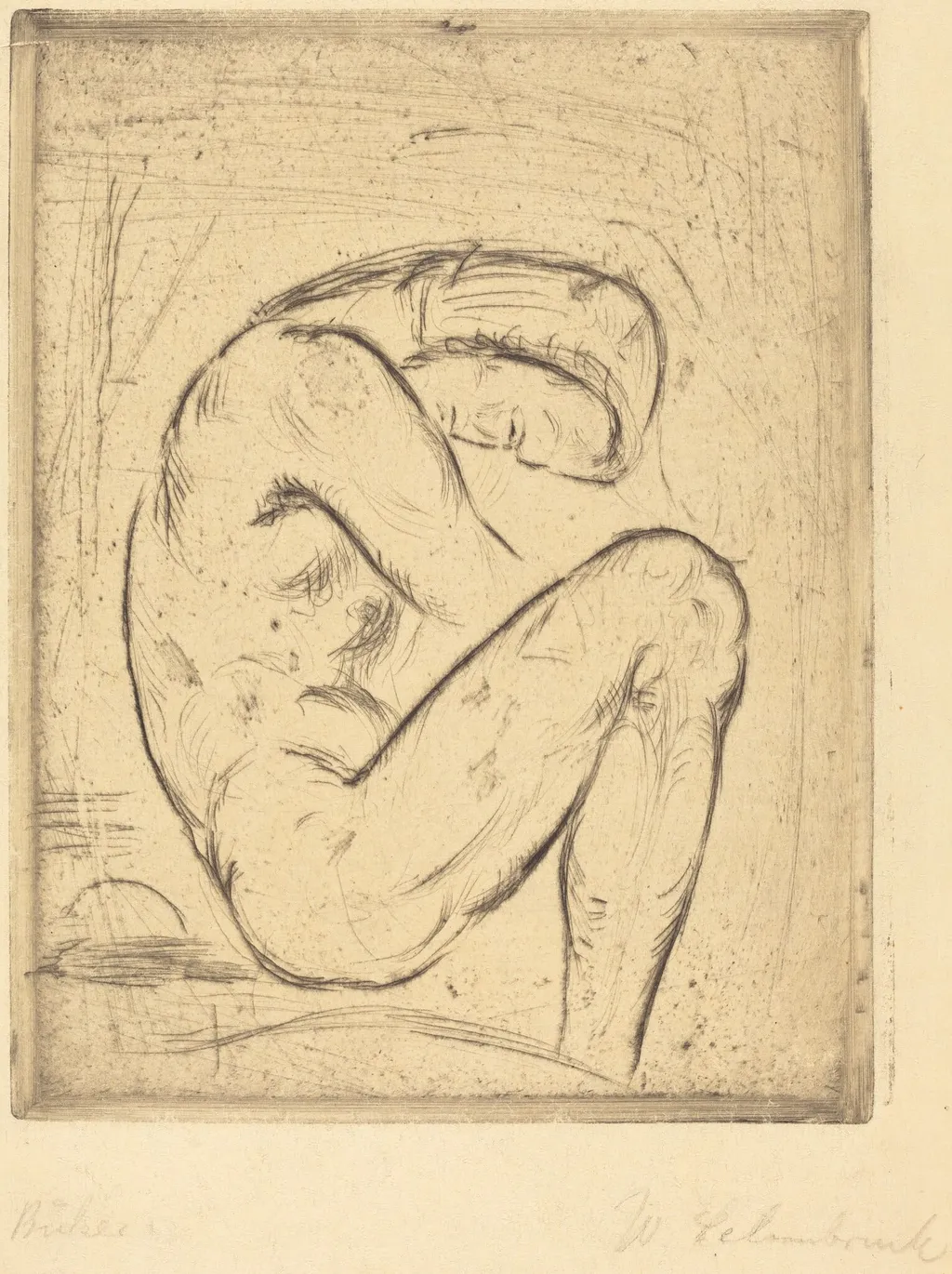
Büsser is an ink print by Wilhelm Lehmbruck. It dates from 1912 and is held in the collection of the National Gallery of Art.
About this work
Overview
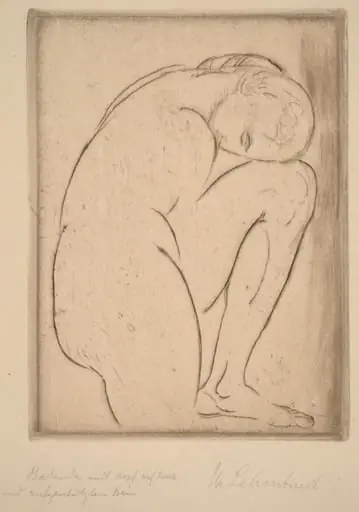
Created in 1912, *Büsser* is a drypoint print executed by German artist Wilhelm Lehmbruck. Rendered in black on wove paper, the image presents a solitary nude figure curled inward, its limbs drawn close to the torso. The composition is set against a muted, tan ground that subtly frames the central form.
Subject & Meaning
The work depicts a human body folded into a protective pose, with the head resting on the forearms and knees drawn to the chest. This introspective stance conveys a sense of vulnerability and inner contemplation, aligning with the artist’s interest in exploring psychological states through the body’s contorted gestures.
Technique & Style
Lehmbruck employed drypoint, incising lines directly into a metal plate to produce rich, velvety blacks and delicate tonal variations. The resulting marks create fluid contours and soft shading that suggest movement despite the figure’s stillness. The print’s expressionist qualities emerge from the exaggerated curvature and emotive line work, emphasizing feeling over anatomical precision.
History & Provenance
The piece belongs to Lehmbruck’s early period, when he was transitioning from realist sculpture toward a more expressionist language. Though primarily known for his three‑dimensional works, this print demonstrates his engagement with graphic media. *Büsser* has been held in several European collections, reflecting the artist’s growing reputation in the pre‑World War I avant‑garde.
Artist & collection
Artist
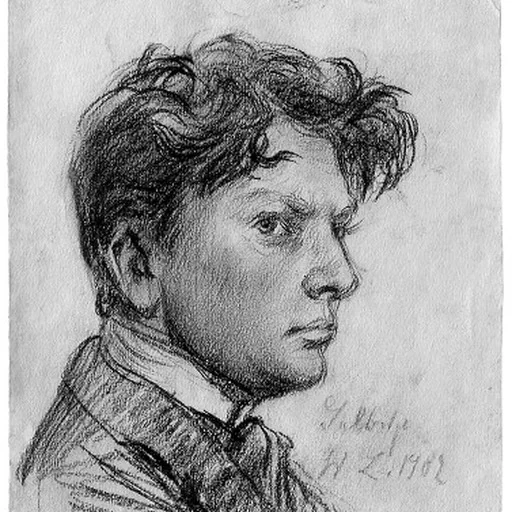
Wilhelm Lehmbruck (4 January 1881 – 25 March 1919) was a German sculptor. One of the most important of his generation, he was influenced by realism and expressionism.

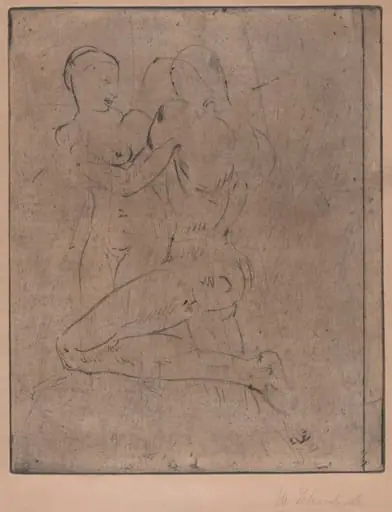
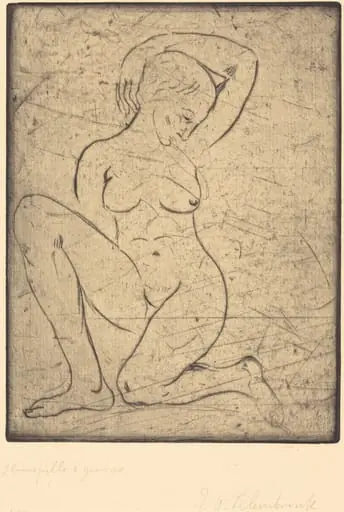
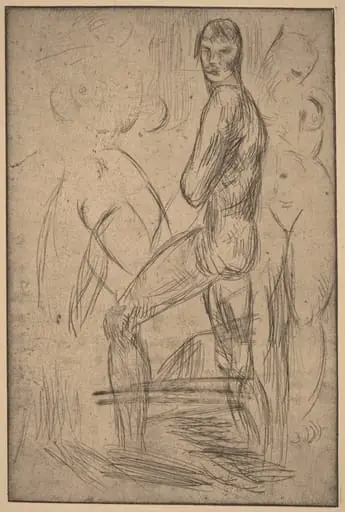 Standing Male Nude and Two Female Nudes
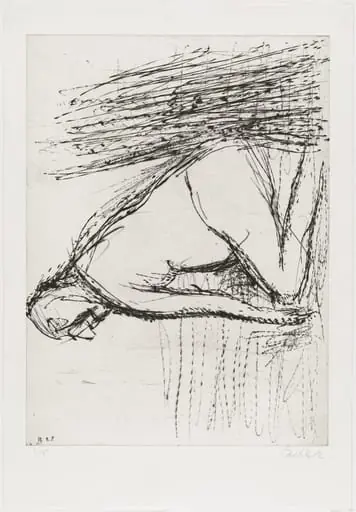 Untitled
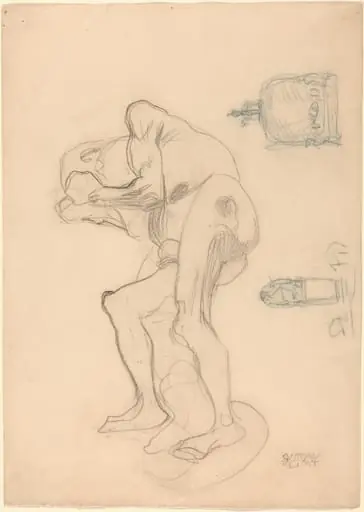 Study of a Nude Old Woman Clenching Her Fists, and Two Decorative Objects
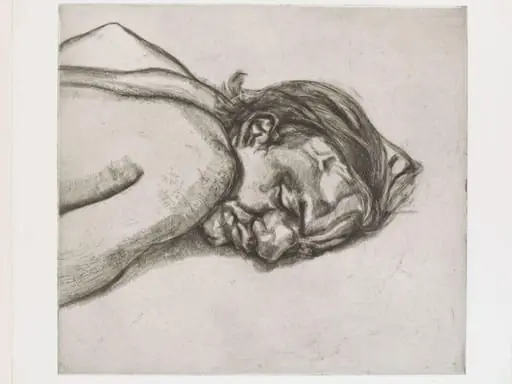 Man Resting
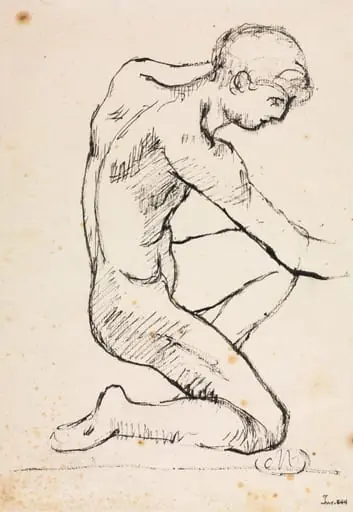 Study of a Male Nude
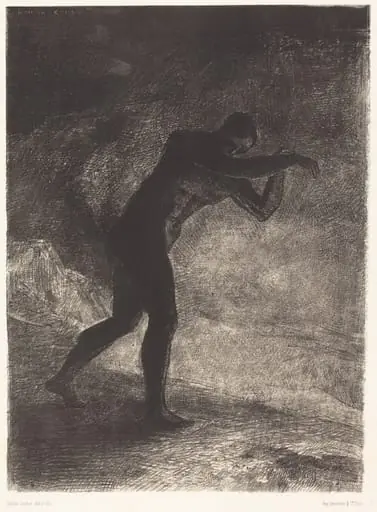 Et l'homme parut, interrogeant le sol d'ou il sort et qui l'attire, il se fraya la voie vers (And Man appeared; questioning theearth from which he emerged and which attracts hi m, he made his way toward somber brightness)
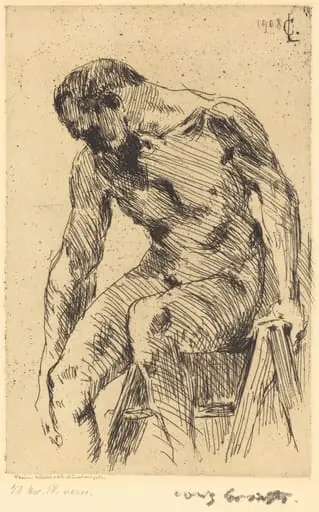 Sitzender Männlicher Akt (Seated Male Nude)
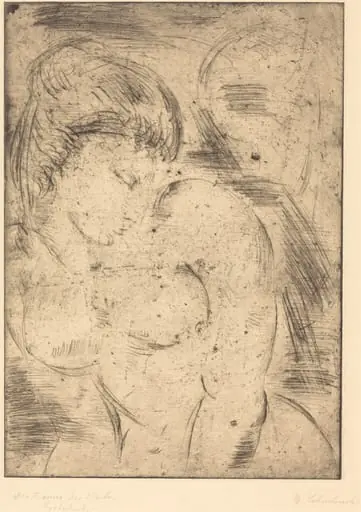 Woman's Dream (Der Traum des Weibes)
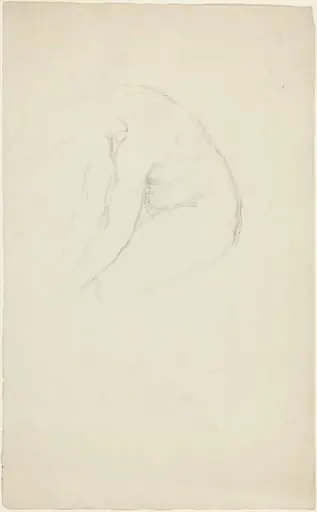 Seated Figure Bending Forward
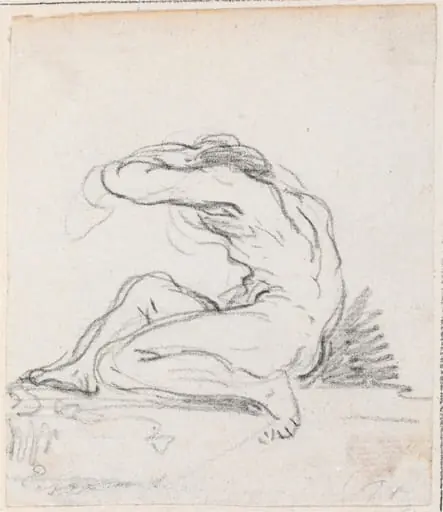 Seated Male Nude with Arm over Head, Seen from the Side
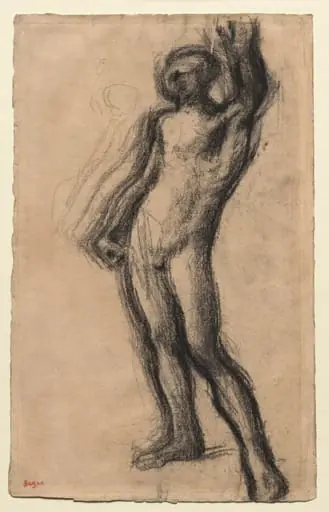 Nude Man Standing, with Left Hand Raised