Artwork
Pollard Willows (Les saules tetards)
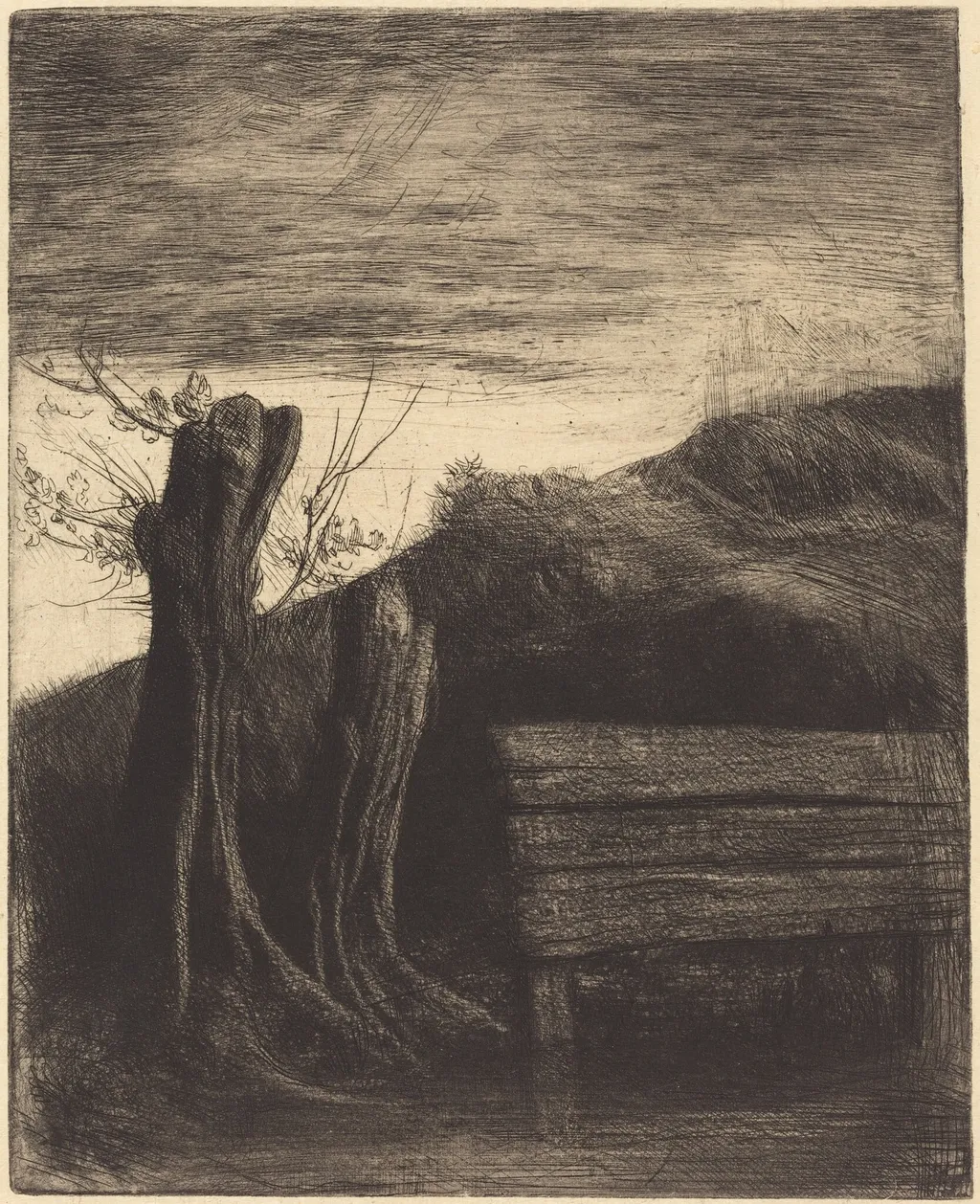
Pollard Willows (Les saules tetards) is an ink print by the Romanticist artist Alphonse Legros. It dates from 1874 and is held in the collection of the National Gallery of Art.
About this work
Overview
Created in 1874, *Pollard Willows (Les saules têtards)* is a print by Alphonse Legros, a French artist who moved to London in 1863 and later became a British citizen. The work belongs to a body of etchings and drypoints in which Legros explored rural landscapes, contributing significantly to the revival of printmaking in Victorian Britain through both his practice and teaching.
Subject & Meaning
The subject reflects Legros’s interest in the relationship between human intervention and natural form, capturing the resilience of trees shaped by labor.
The image portrays pollarded willows—trees pruned regularly to encourage dense, twisted growth—standing against a dark, possibly architectural structure. The bare branches and stillness of the scene suggest a quiet, weathered countryside, devoid of human presence. The subject reflects Legros’s interest in the relationship between human intervention and natural form, capturing the resilience of trees shaped by labor.
Technique & Style
Legros employed drypoint and etching to build texture and tone, using a sharp needle to scratch directly into the metal plate, creating rich, velvety lines. The rough ground and tangled branches emerge through dense, irregular strokes, while the sky is softly rendered with faint, blurred etched lines. The contrast between the dark, detailed trees and the hazy, pale sky enhances the sense of atmospheric stillness.
History & Provenance
The print was made during Legros’s early years in England, a period when he was actively engaged with the Royal Academy and teaching at Slade School. Though specific early ownership records are sparse, the work aligns with his broader output of landscape prints, which were circulated among collectors and students, helping to reestablish etching as a serious artistic medium in Britain.
Context
In the 1870s, British art was undergoing a shift toward realism and the revival of traditional print techniques. Legros’s focus on rural scenes, influenced by French Barbizon painters and Dutch engravers, stood apart from prevailing academic subjects. His depictions of pollarded trees resonated with contemporary interest in agricultural landscapes and the marks of human stewardship on nature.
Legacy
Legros’s prints, including *Pollard Willows*, influenced a generation of British etchers by demonstrating how subtle tonal variation and expressive line could convey mood without narrative. His technical rigor and commitment to direct engraving helped establish etching as a legitimate medium for serious artistic expression, moving it beyond mere reproduction into the realm of original creation.
Artist & collection

Artist
Alphonse Legros (French pronunciation: ; 8 May 1837 – 8 December 1911) was a French, later British, painter, etcher, sculptor, and medallist.

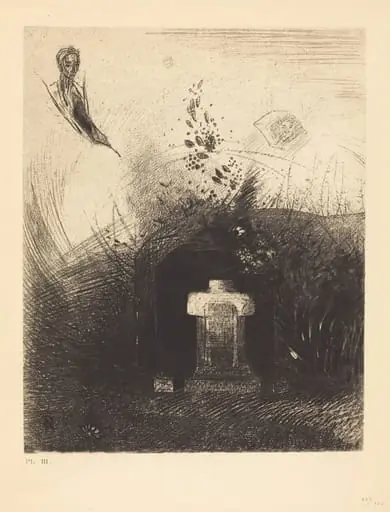 Si par une nuit lourde et sombre, un bon chretien, par charite, derriere quelque vieux decombre, enterre votre corps voute (If on a close dark night a good Christian, out of charity, behind some old ruin, buries your arched body)
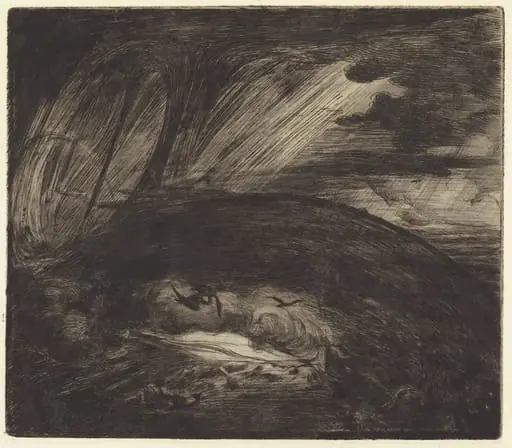 Le Chaos (Chaos)
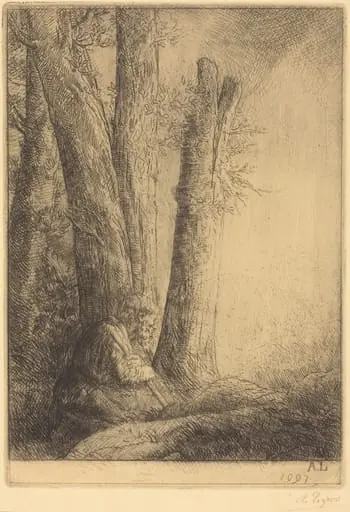 Study for the Prodigal Son (Etude pour L'enfant prodigue)
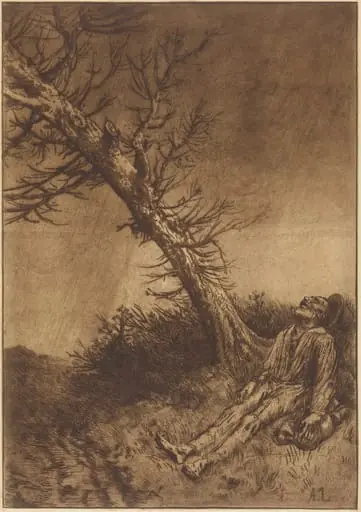 Death of the Vagabond (La mort du vagabond)
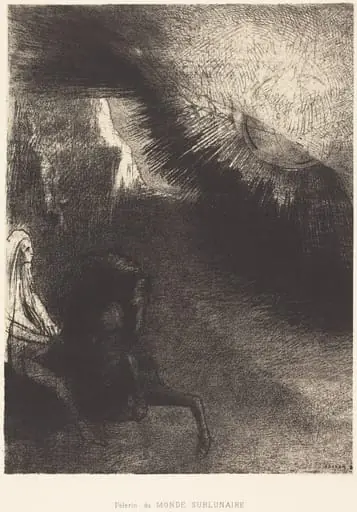 Pélerin du monde sublunaire (Pilgrim of the sublunary world)
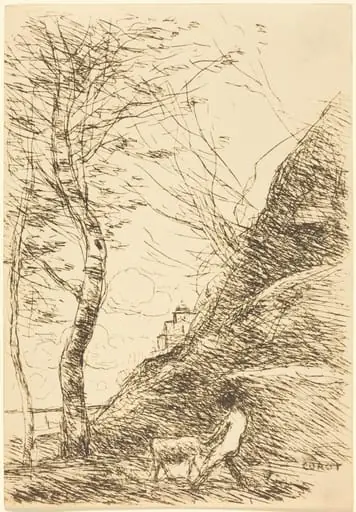 Shepherd Struggling with a Goat (Berger luttant avec sa chevre)
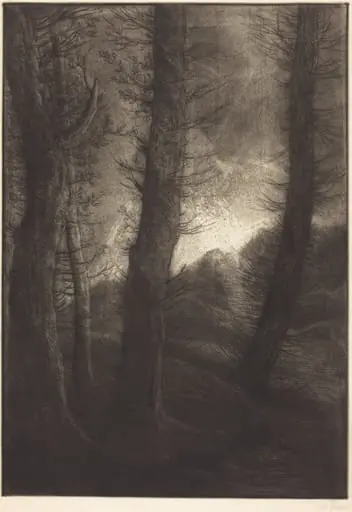 Large Trees Seen against the Sun (Les grandes arbres: Effet du soir)
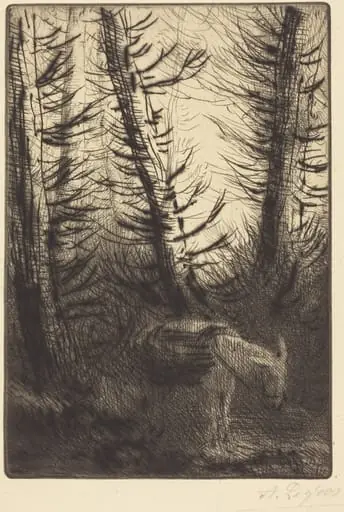 Farmer and His Donkey (Le fermier et son ane)
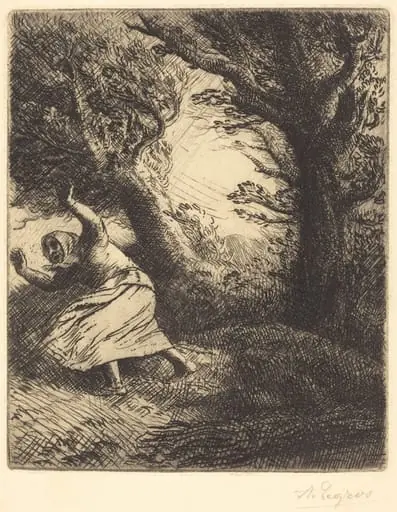 Thunder (Un coup de foudre)
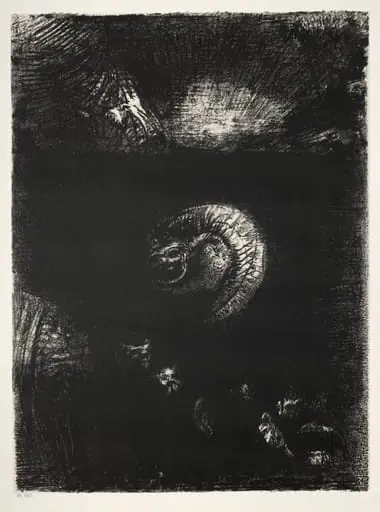 And All Manner of Frightful Creatures Arise
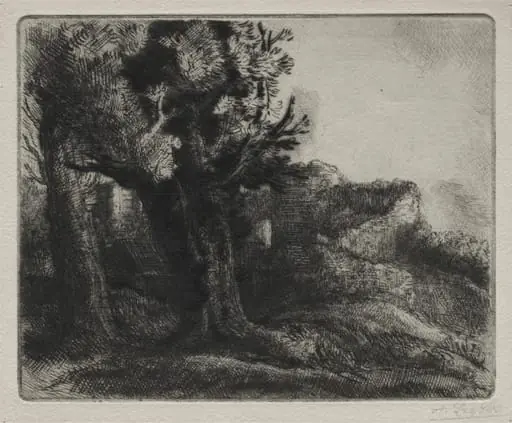 In the Ruins
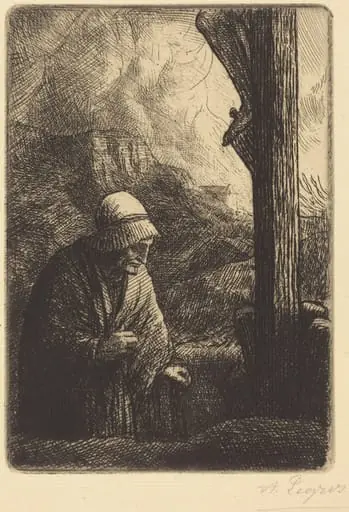 Woman at the Foot of the Cross (Femme au calvaire)