Artwork
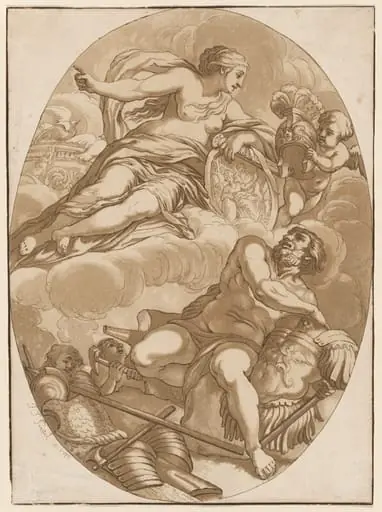
Jupiter and Juno
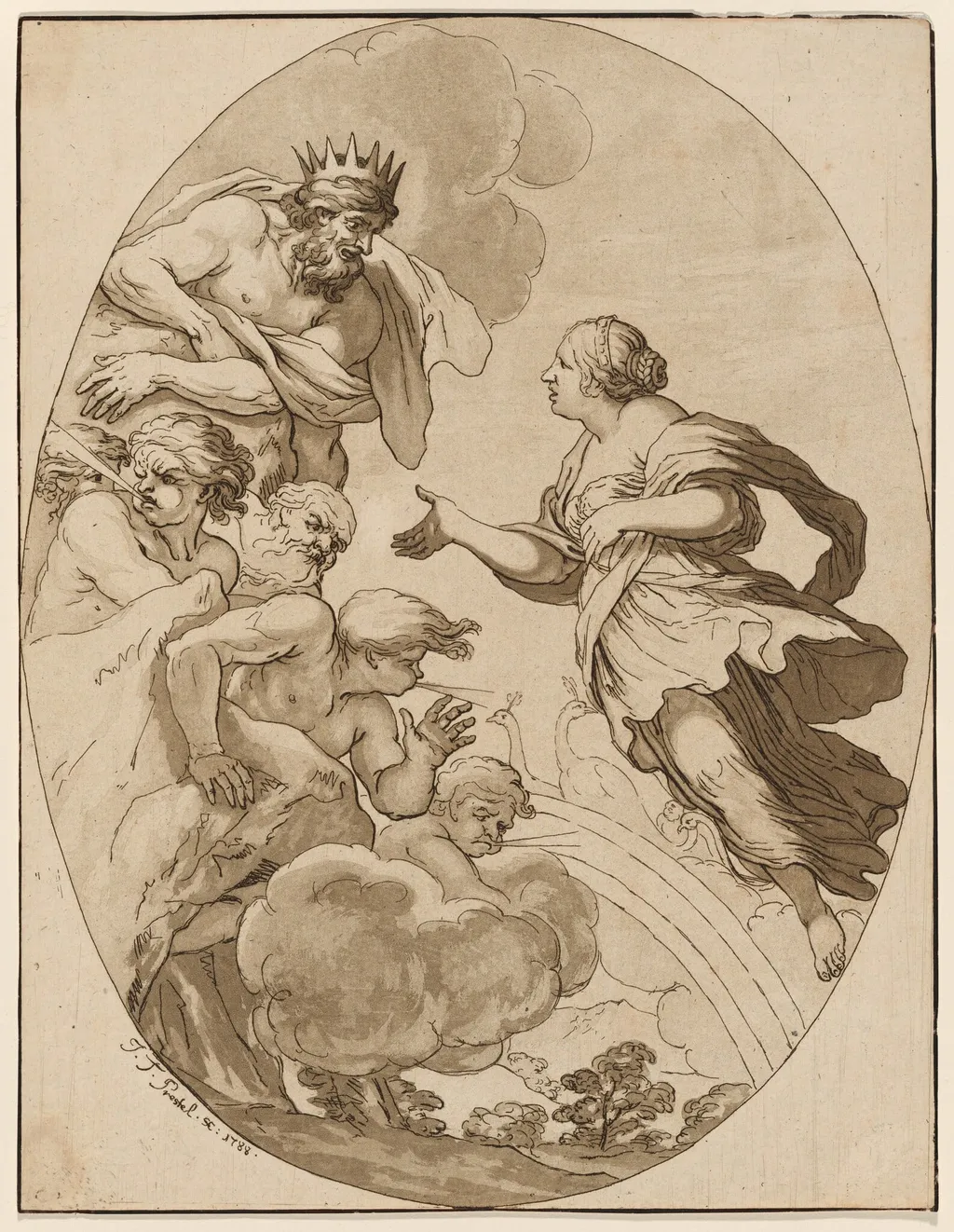
Jupiter and Juno is an ink print by the Romanticist artist Johann Gottlieb Prestel. It is held in the collection of the National Gallery of Art.
About this work
Overview
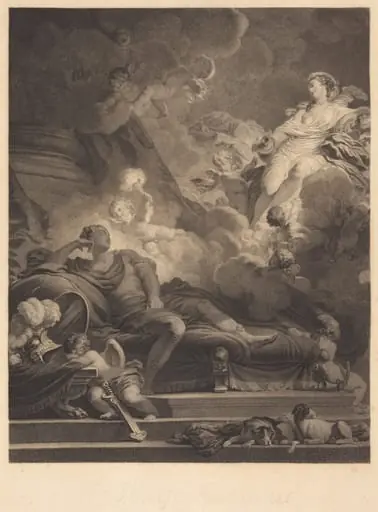
The central pair—Jupiter and Juno—are framed by surrounding figures in motion, their gestures and postures suggesting narrative tension.
Jupiter and Juno is an 1788 etching and aquatint on laid paper by Johann Gottlieb Prestel. The work resides in the National Gallery of Art, Washington, D.C. Rendered in monochrome, it depicts a mythological scene with multiple figures arranged in a dynamic, circular formation. The central pair—Jupiter and Juno—are framed by surrounding figures in motion, their gestures and postures suggesting narrative tension. Fine linear detail and tonal gradations create a sense of spatial depth and movement.
Subject & Meaning
The scene illustrates Jupiter, king of the gods, and his wife Juno, surrounded by attendants and celestial beings. Juno extends her hand toward Jupiter, possibly signaling reconciliation or divine authority. Figures around them react with varied expressions—some gaze upward in reverence, others turn away or descend, evoking a moment of cosmic order or divine judgment. The composition reflects classical themes of power, union, and hierarchy within Roman mythology.
Technique & Style
Prestel employed etching and aquatint to achieve subtle tonal variations and intricate line work. The use of aquatint allows for soft gradations in the clouds and drapery, while etched lines define figures and architectural elements with precision. The circular arrangement of figures directs the viewer’s eye toward the central pair, enhancing narrative focus. The monochrome palette emphasizes texture and form over color, characteristic of 18th-century printmaking traditions.
History & Provenance
Created in 1788, the print was produced during Prestel’s active period as a German engraver and publisher. It entered the collection of the National Gallery of Art in Washington, D.C., through established acquisition channels, likely as part of a broader collection of European prints. Its preservation reflects its significance within the tradition of mythological print series popular among collectors of the late Enlightenment.
Context
Prestel’s work emerged during a time when mythological subjects were frequently adapted for print circulation, serving both educational and decorative purposes. The composition aligns with neoclassical ideals, drawing from ancient sources while adapting them to contemporary aesthetic sensibilities. Such prints were often used to disseminate classical narratives to a growing literate public, bridging scholarly interest and popular culture.
Legacy
Though not widely reproduced in modern scholarship, the print remains a representative example of late 18th-century German printmaking. It illustrates how mythological themes were visually interpreted through technical precision and compositional balance. Its presence in a major public collection ensures continued access for study and comparison with contemporaneous works in the genre.
Artist & collection


 The Genius of Franklin (Au Génie de Franklin)
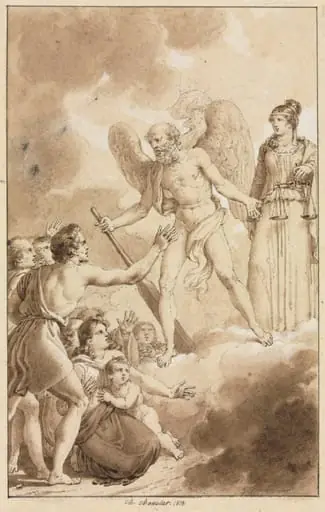 Allegory
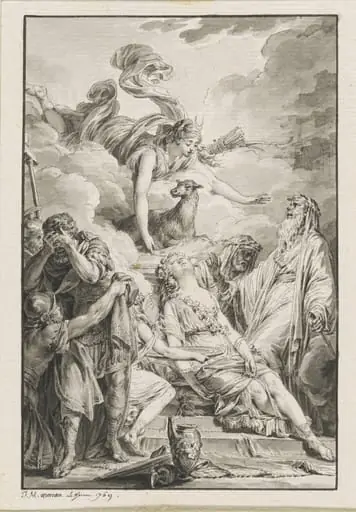 The Sacrifice of Iphigenia
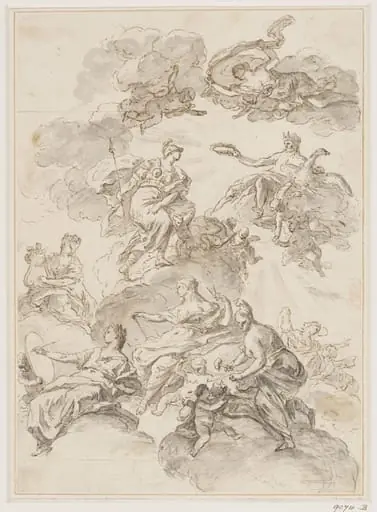 Minerva commending the arts of sculpture, architecture, painting and music to Jupiter
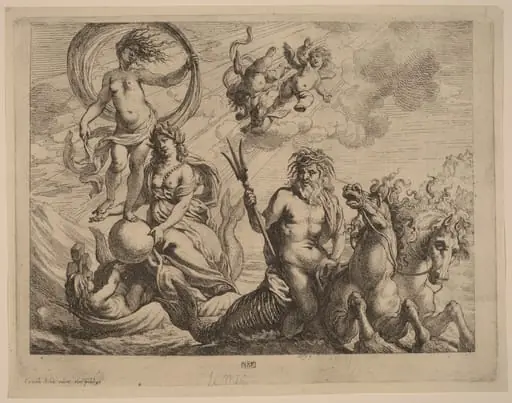 Neptune with Two Horses on the Sea
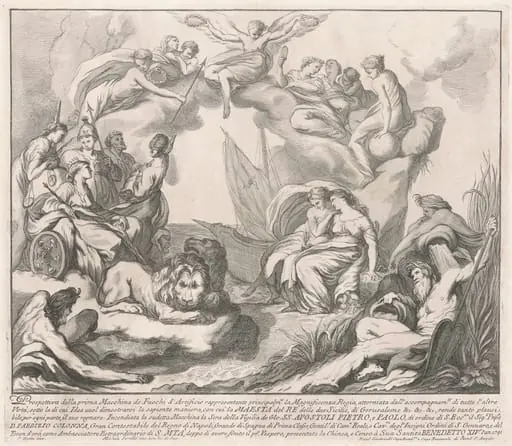 The Prima Macchina for the Chinea of 1741: Allegory of Regal Magnificence
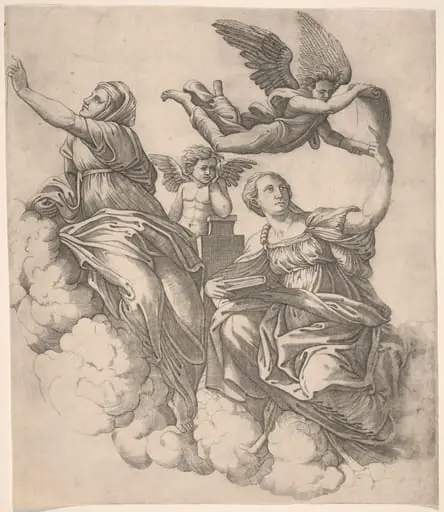 Two Sibyls and an Angel
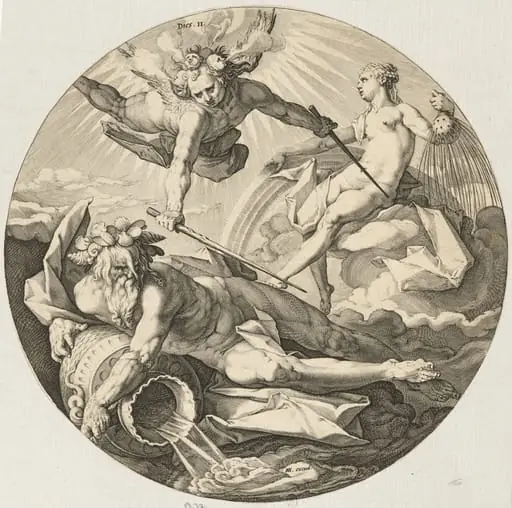 Dies II (Second Day)
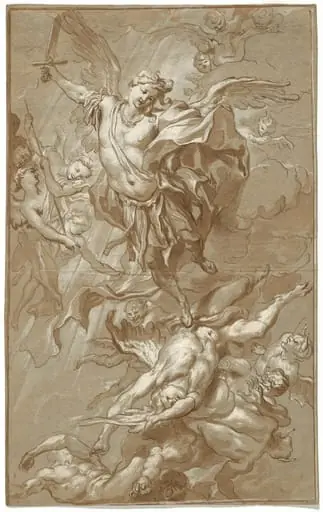 Saint Michael and the Rebel Angels
 Le Songe d'Amour (Love's Dream)
 Juno
Juno