Artwork
The Sacrifice of Iphigenia
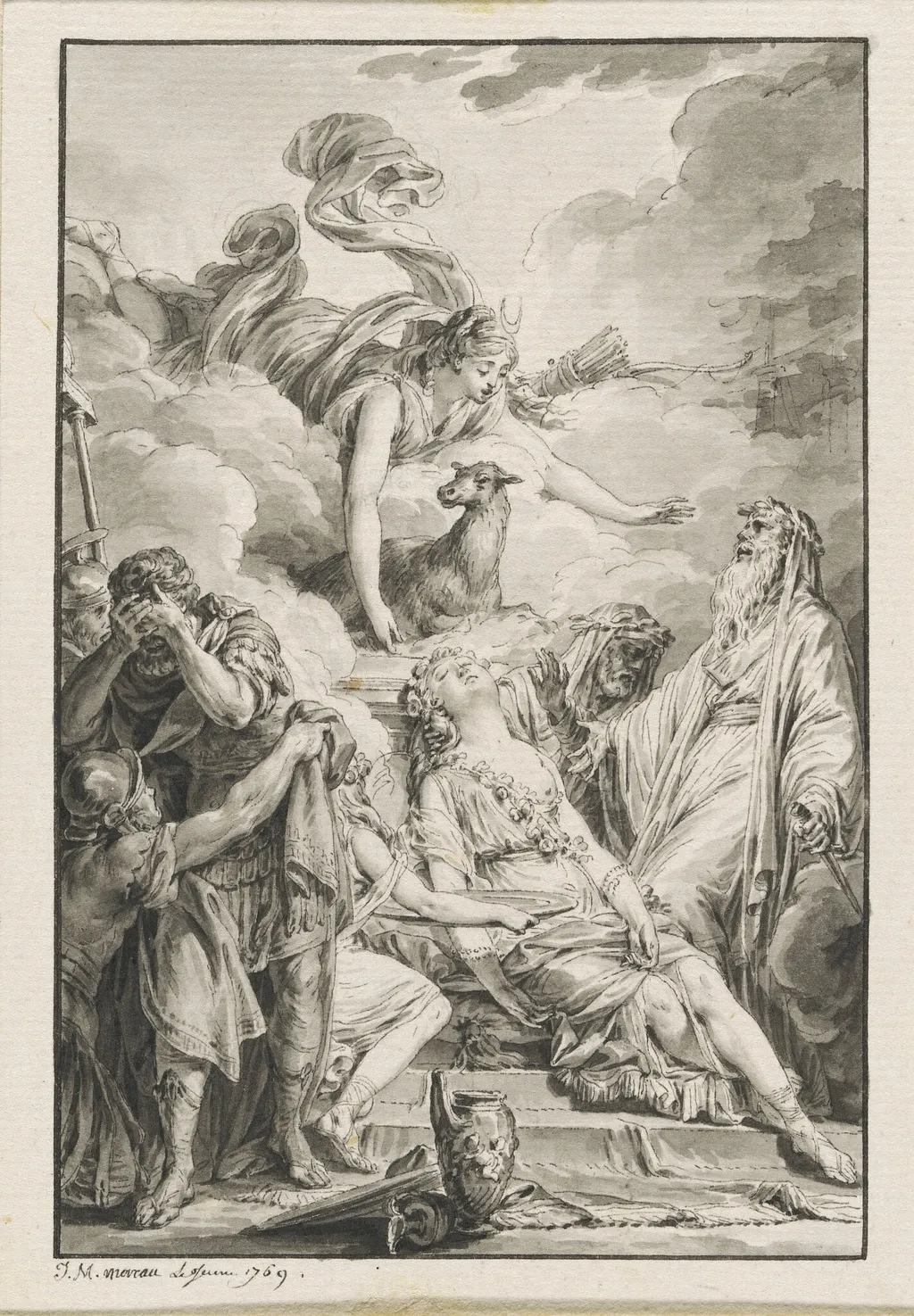
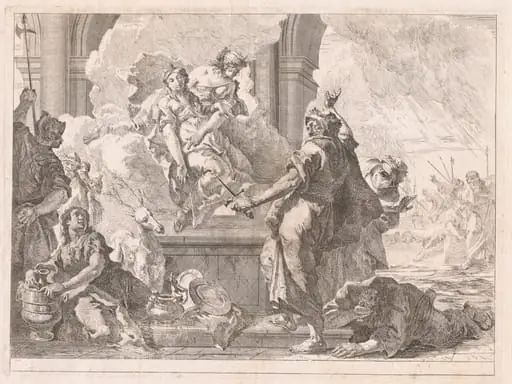
The Sacrifice of Iphigenia is an ink drawing by the Romanticist artist Jean-Michel the Younger Moreau. It dates from 1769 and is held in the collection of the National Gallery of Art. Created in 1769 by Jean-Michel Moreau the Younger, this drawing depicts the mythological moment of Iphigenia’s sacrifice.
About this work
Overview
Executed in pen and brush with black ink and gray wash over graphite, it is rendered on laid paper with a faint border line.
Created in 1769 by Jean-Michel Moreau the Younger, this drawing depicts the mythological moment of Iphigenia’s sacrifice. Executed in pen and brush with black ink and gray wash over graphite, it is rendered on laid paper with a faint border line. The composition captures a tense, theatrical scene, blending human figures with a celestial presence, all conveyed through fluid, expressive lines that suggest motion and emotional urgency.
Subject & Meaning
The scene illustrates the myth in which Iphigenia, daughter of Agamemnon, is prepared for sacrifice to appease the goddess Artemis. A winged figure hovers above, offering a sheep in place of the girl, signaling divine intervention. Surrounding figures react with grief, hesitation, or awe, emphasizing the moral weight of the moment. The inclusion of both mortal and divine elements underscores the tension between human fate and divine will.
Technique & Style
Moreau employed rapid, sketch-like strokes to convey movement and emotional intensity. The ink and wash technique creates subtle gradations of light and shadow, while the underlying graphite traces suggest preliminary planning. Cross-hatching and loose contours define drapery and form without heavy detail, prioritizing expressive energy over finish. The atmospheric sky, rendered in swirling washes, enhances the drama without literal depiction.
History & Provenance
The drawing was made in 1769 during Moreau’s early career, likely as a preparatory study for a larger commission, possibly a painting or tapestry. It remained in private collections until entering a public institution in the 19th century. Its survival as a standalone work reflects its artistic merit, though it was never intended as a final piece. Documentation links it to the artist’s work for French royal projects.
Context
In late 18th-century France, classical mythology remained a favored subject for artists trained in the Académie. Moreau, associated with the Rococo and emerging Neoclassical styles, often illustrated literary and mythological themes for court patrons. This drawing aligns with contemporary interest in emotionally charged narratives drawn from ancient sources, reflecting both academic training and evolving tastes in dramatic storytelling.
Legacy
Though not widely exhibited in its time, the drawing exemplifies Moreau’s skill in translating narrative tension into intimate graphic form. It influenced later draftsmen interested in expressive line and emotional immediacy. Today, it stands as a representative example of French academic drawing, valued for its compositional clarity and the quiet power of its understated technique.
Artist & collection

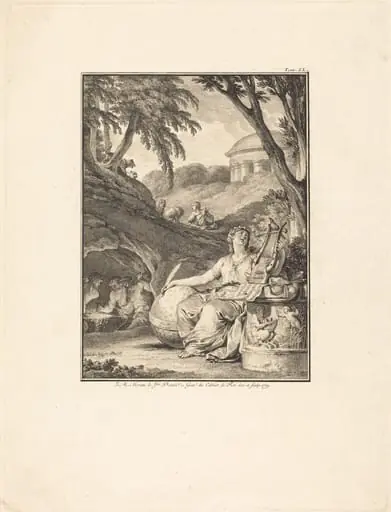
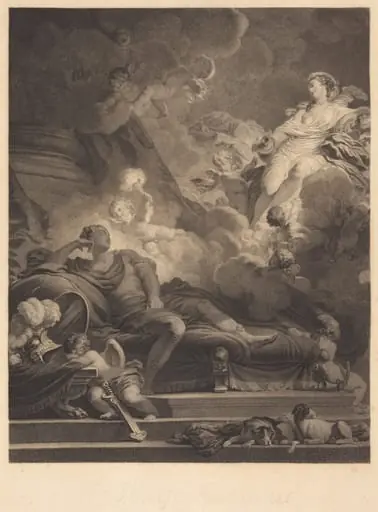 Le Songe d'Amour (Love's Dream)
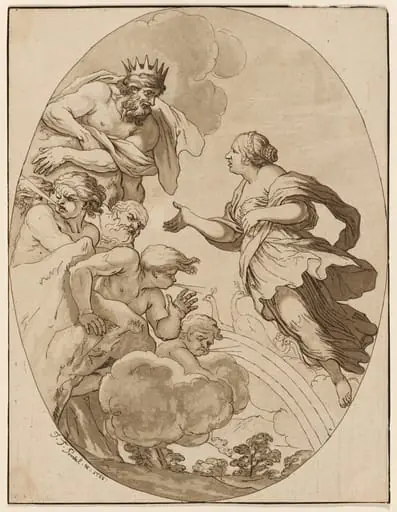 Jupiter and Juno
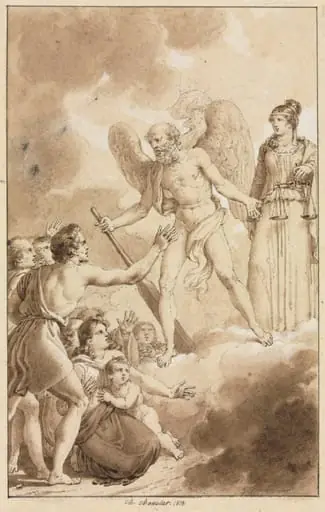 Allegory
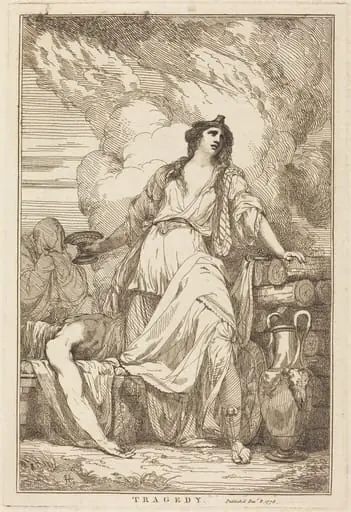 Tragedy
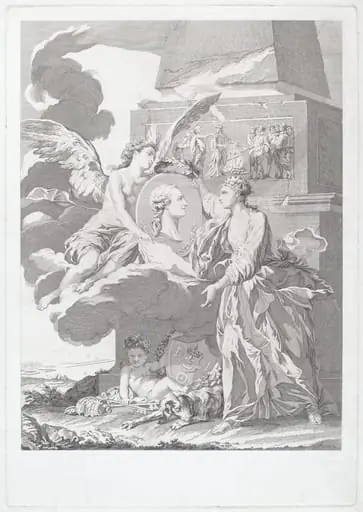 Allegorical Portrait of Pierre Buirette de Belloy
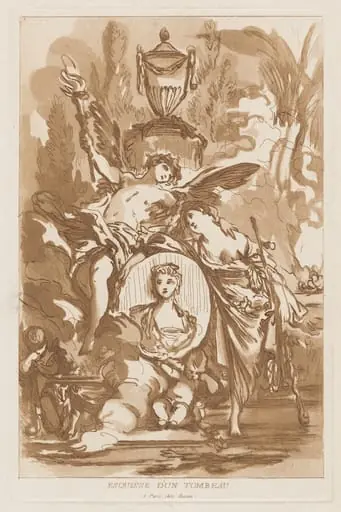 Esquisse d’un tombeau (Sketch for a Tomb)
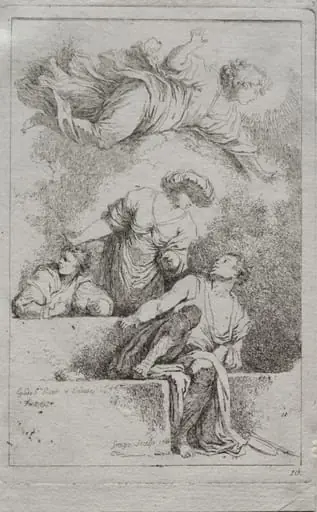 The Disciples at the Tomb
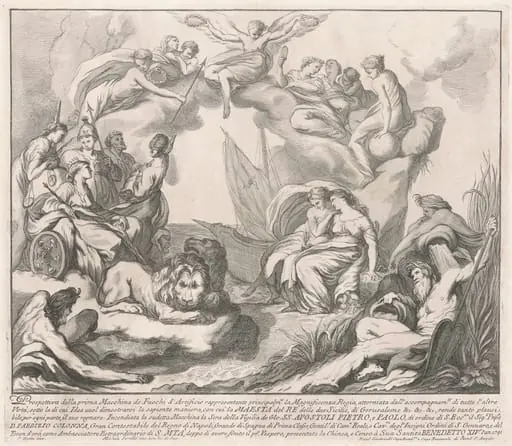 The Prima Macchina for the Chinea of 1741: Allegory of Regal Magnificence
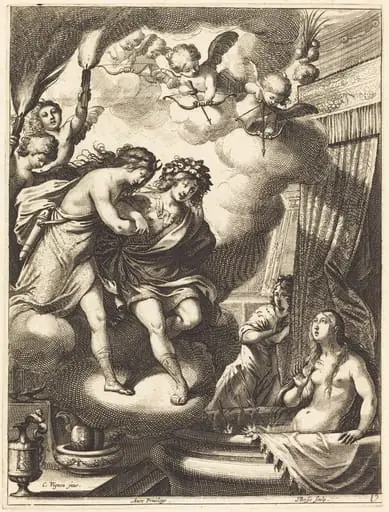 Illustration to Jean Desmarets' "L'Ariane"
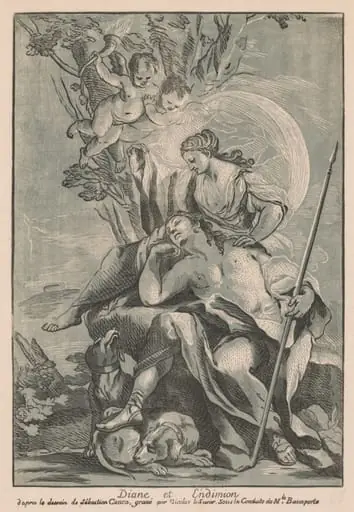 Diana and Endymion
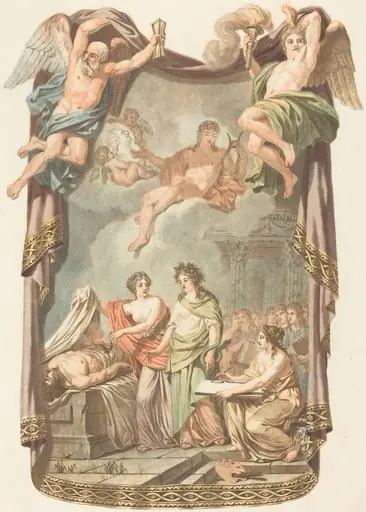 Study Revealing Anatomy to Medicine and Art
 The Sacrifice of Iphigenia