Artwork
Endpaper with Scenes of the Trades
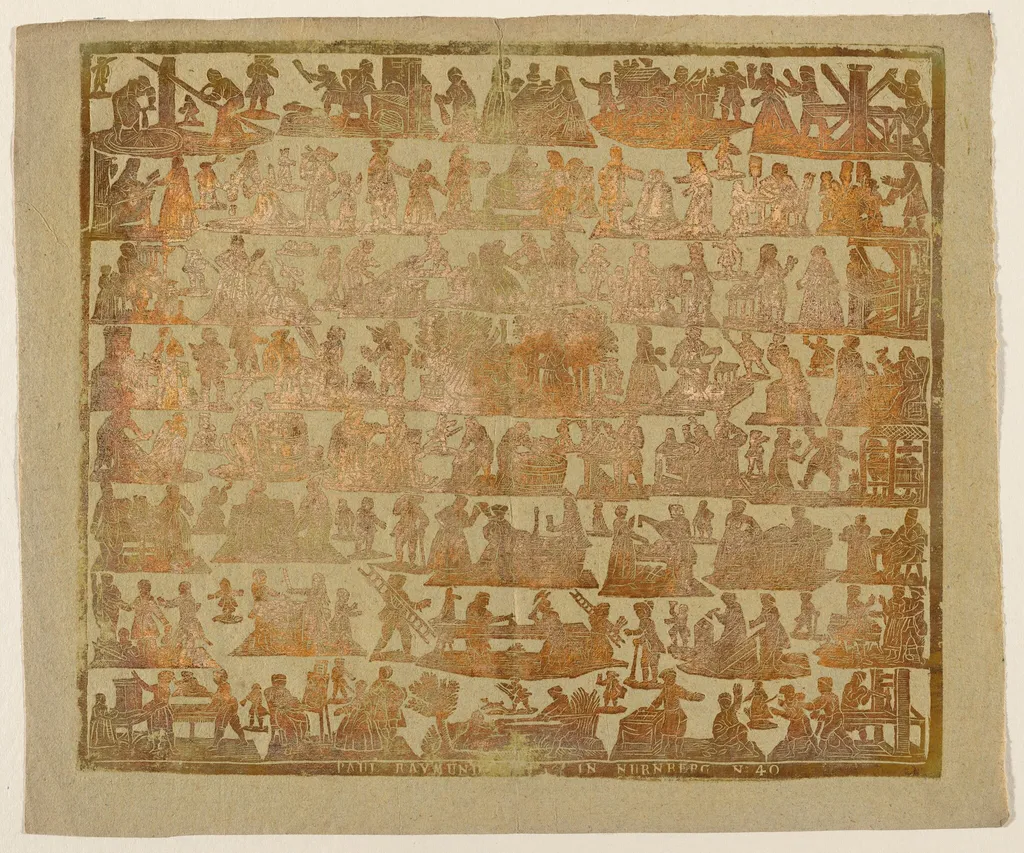
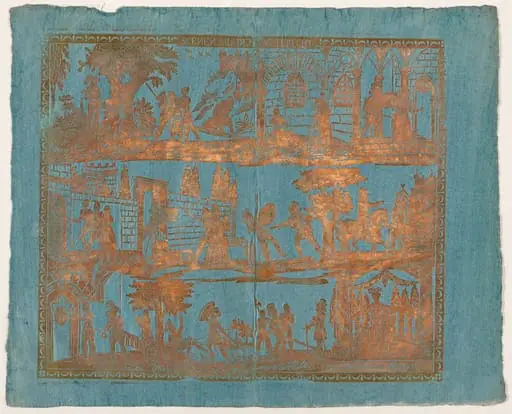
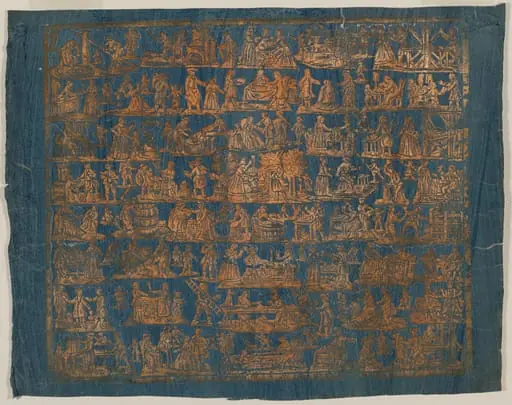
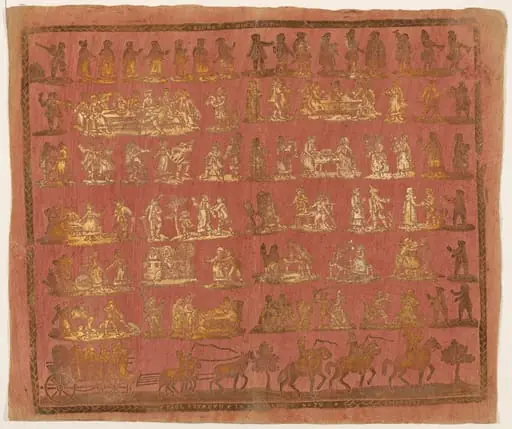
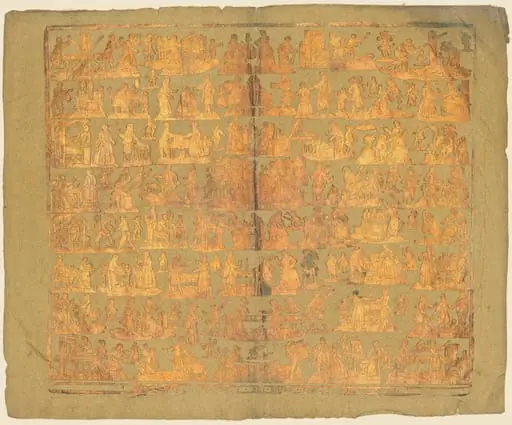
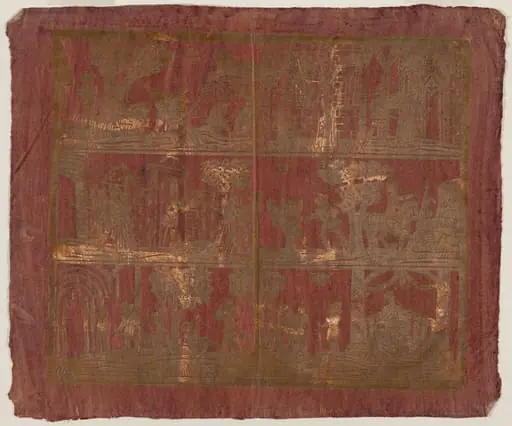
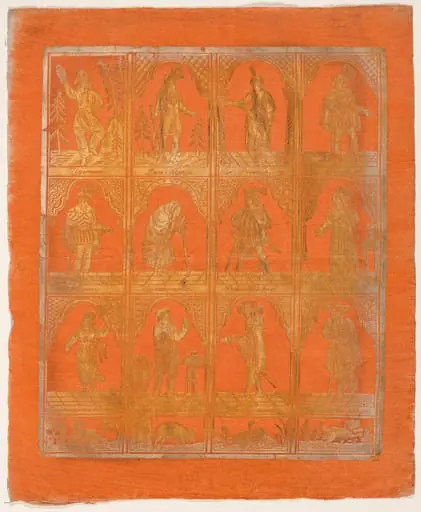
Endpaper with Scenes of the Trades is an ink print by the Romanticist artist Paul Reimund. It dates from 1800 and is held in the collection of the National Gallery of Art.
About this work
Overview
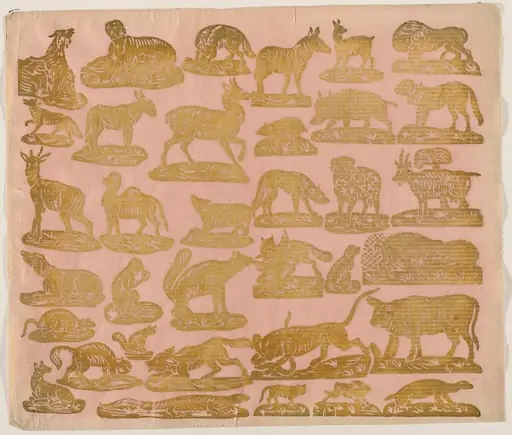
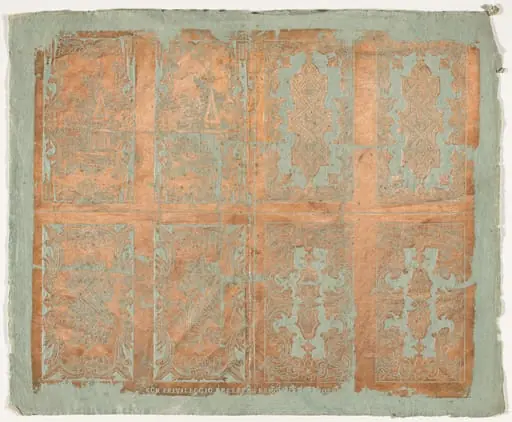
Paul Reimund’s woodcut, dated around 1800, serves as an endpaper illustration featuring a multitude of occupational vignettes. Executed in gold metallic ink on a hand‑washed, pale‑yellow sheet, the work presents a dense array of small scenes that collectively document everyday labour.
Subject & Meaning
Each miniature tableau depicts a distinct trade, ranging from agricultural tasks to artisanal crafts. The figures are shown both in solitary effort and in collaborative settings, offering a visual catalogue of early‑nineteenth‑century work life without imposing a narrative hierarchy.
Technique & Style
The image is produced by woodcut, a relief printing method in which the design is carved into a wooden block, inked, and pressed onto paper. The use of gold metallic ink on a lightly textured, hand‑washed paper enhances the contrast and lends a subtle sheen to the intricate line work.
History & Provenance
Created circa 1800, the print was likely intended as a decorative endpaper for a bound volume, a common practice for adding visual interest to books of the period. Its attribution to Reimund is based on stylistic comparison with other signed works from the same workshop.
Context
The work reflects the Enlightenment‑era fascination with cataloguing human activity and the growing interest in documenting the variety of occupations that underpinned society. Its format aligns with contemporary encyclopedic projects that sought to illustrate the breadth of everyday labour.
Artist & collection