Artwork
Endpaper with Twenty-One Standing Figures
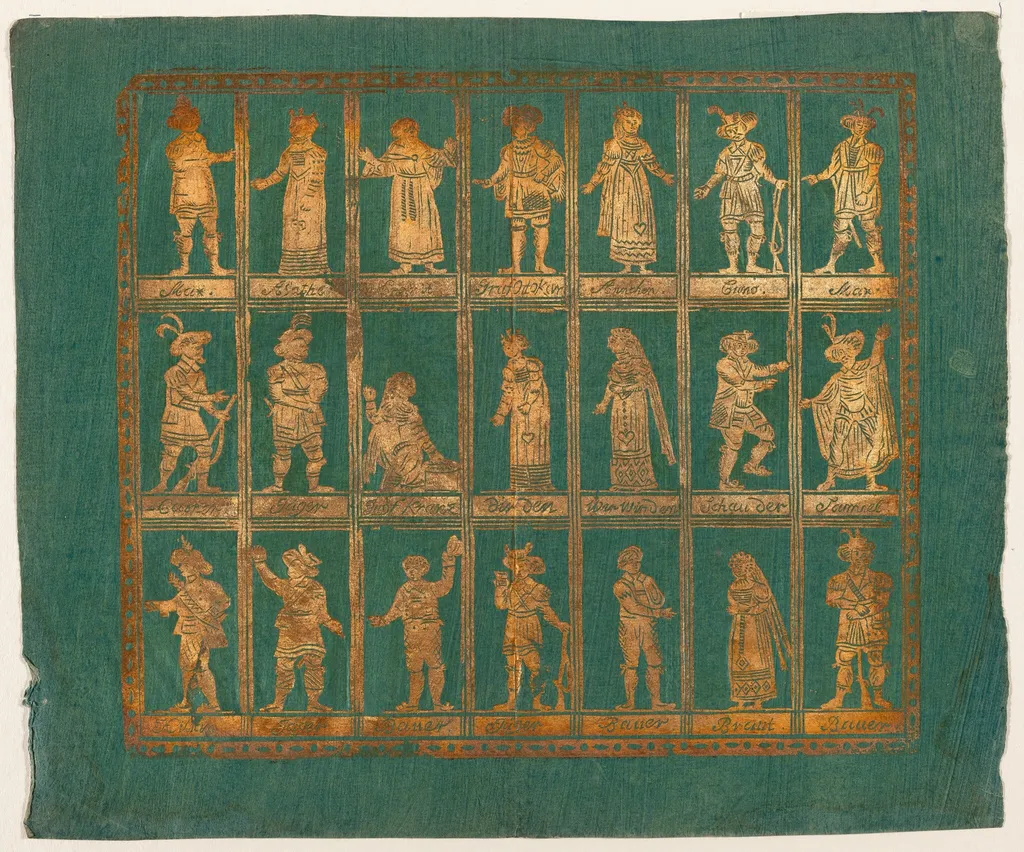
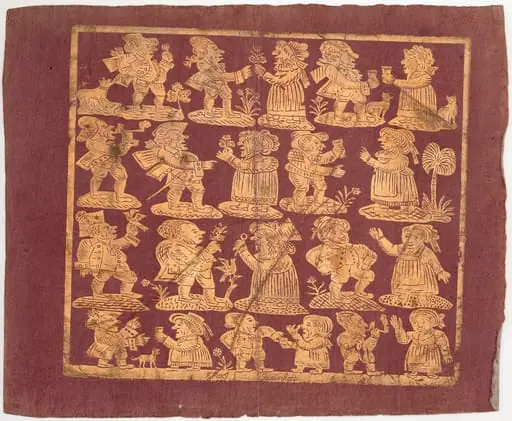
Endpaper with Twenty-One Standing Figures is an ink print by the Baroque artist German 18th Century. It dates from 1750 and is held in the collection of the National Gallery of Art.
About this work
Overview
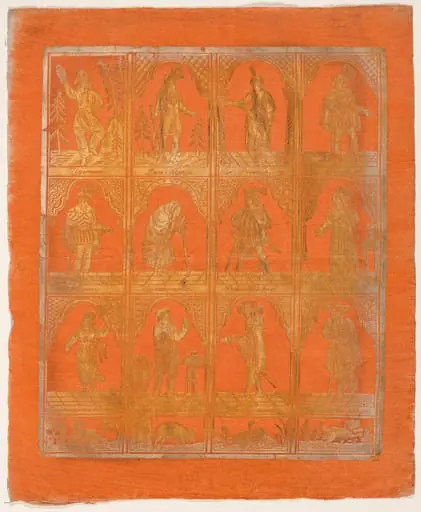
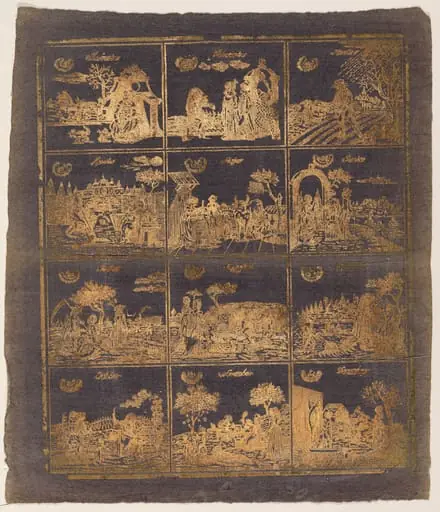
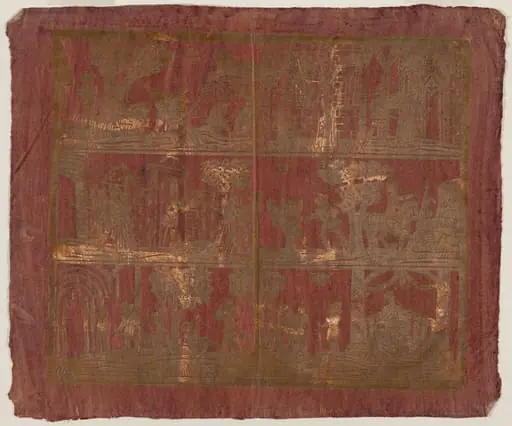
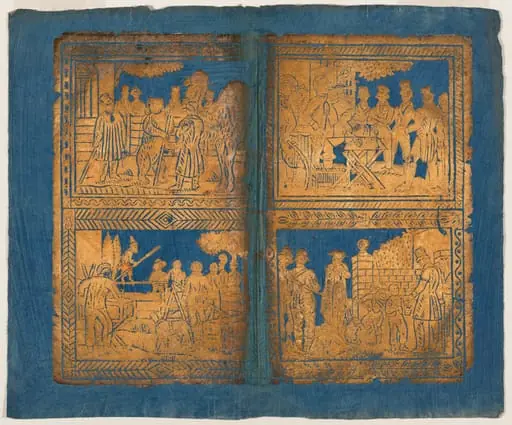
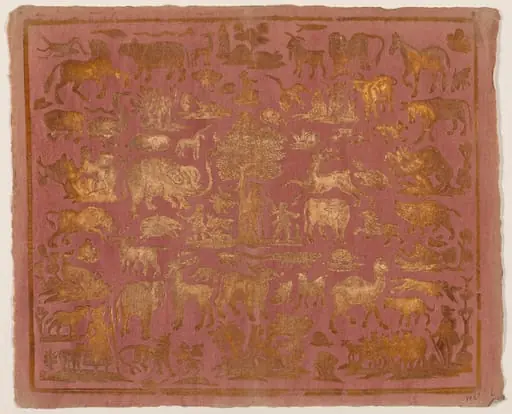
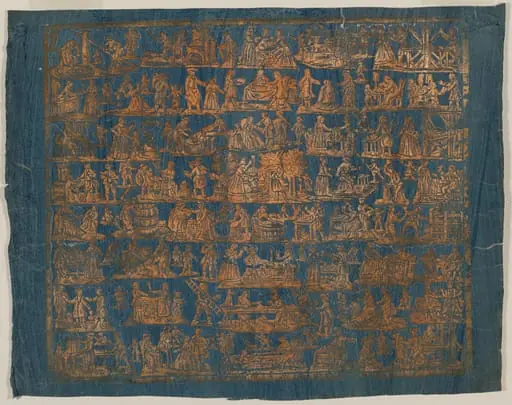
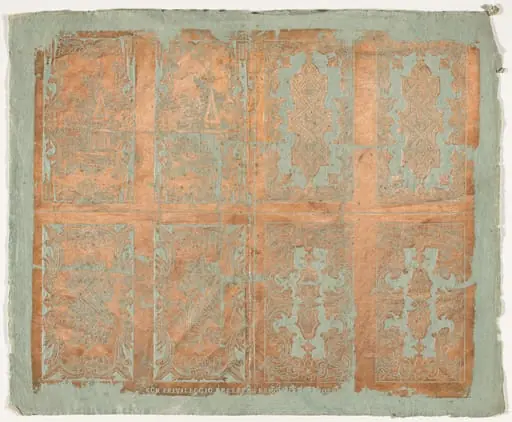
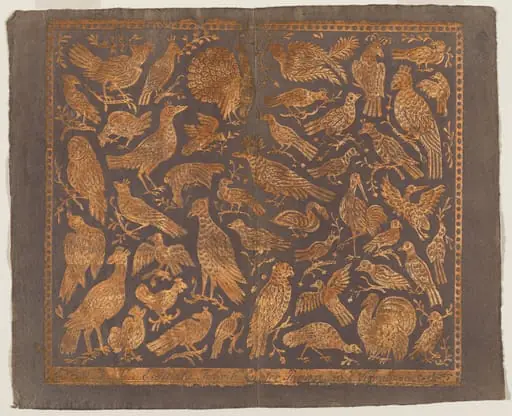
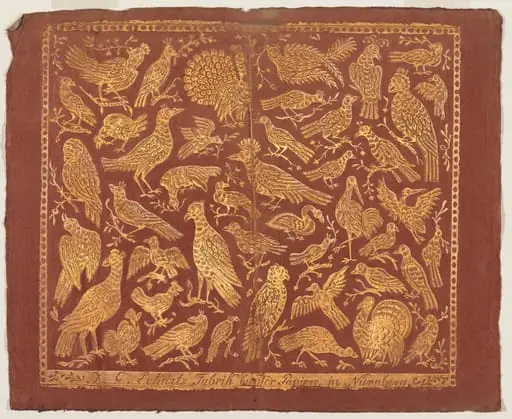
Endpaper with Twenty-One Standing Figures is a woodcut print executed in gold metallic ink on hand-washed blue-green paper. The composition features 21 small, distinct figures arranged in neat rows, each adorned in varied attire, including military, noble, and jester costumes. Names are inscribed in tiny gold letters beneath each figure, all enclosed within a decorative border.
Subject & Meaning
The subject of the print is a diverse assembly of 21 named individuals, differentiated by their clothing. The inclusion of soldiers, nobles, and jesters may suggest a commentary on social hierarchy or the coexistence of different classes. The specific identities or relationships among the figures, however, are not immediately clear from the image alone.
Technique & Style
The print utilizes a woodcut technique with gold metallic ink, applied to hand-washed blue-green paper. The figures are rendered with simple yet detailed forms, characterized by bold outlines and flat, metallic colors. The contrast between the gold ink and the blue-green background creates a striking, carved appearance.
Context
This technique involves carving a design into wood, inking the carved block, and pressing it onto paper to transfer the image.
Understanding the context of 'Endpaper with Twenty-One Standing Figures' requires knowledge of woodcut printing. This technique involves carving a design into wood, inking the carved block, and pressing it onto paper to transfer the image. The use of gold ink and hand-washed paper in this piece adds a layer of luxury and craftsmanship, suggesting it may have been intended for a special edition or decorative purpose.
Legacy
The legacy of 'Endpaper with Twenty-One Standing Figures' is not explicitly detailed in the provided information. However, its unique blend of traditional woodcut technique with luxurious materials (gold ink, hand-washed paper) may have influenced subsequent printmaking practices, particularly in the use of metallic inks and high-quality paper for artistic and possibly illustrative ends.
Artist & collection
Artist
This artist kept meticulous endpapers—like secret notebooks—filled with tiny gold figures standing in a row.